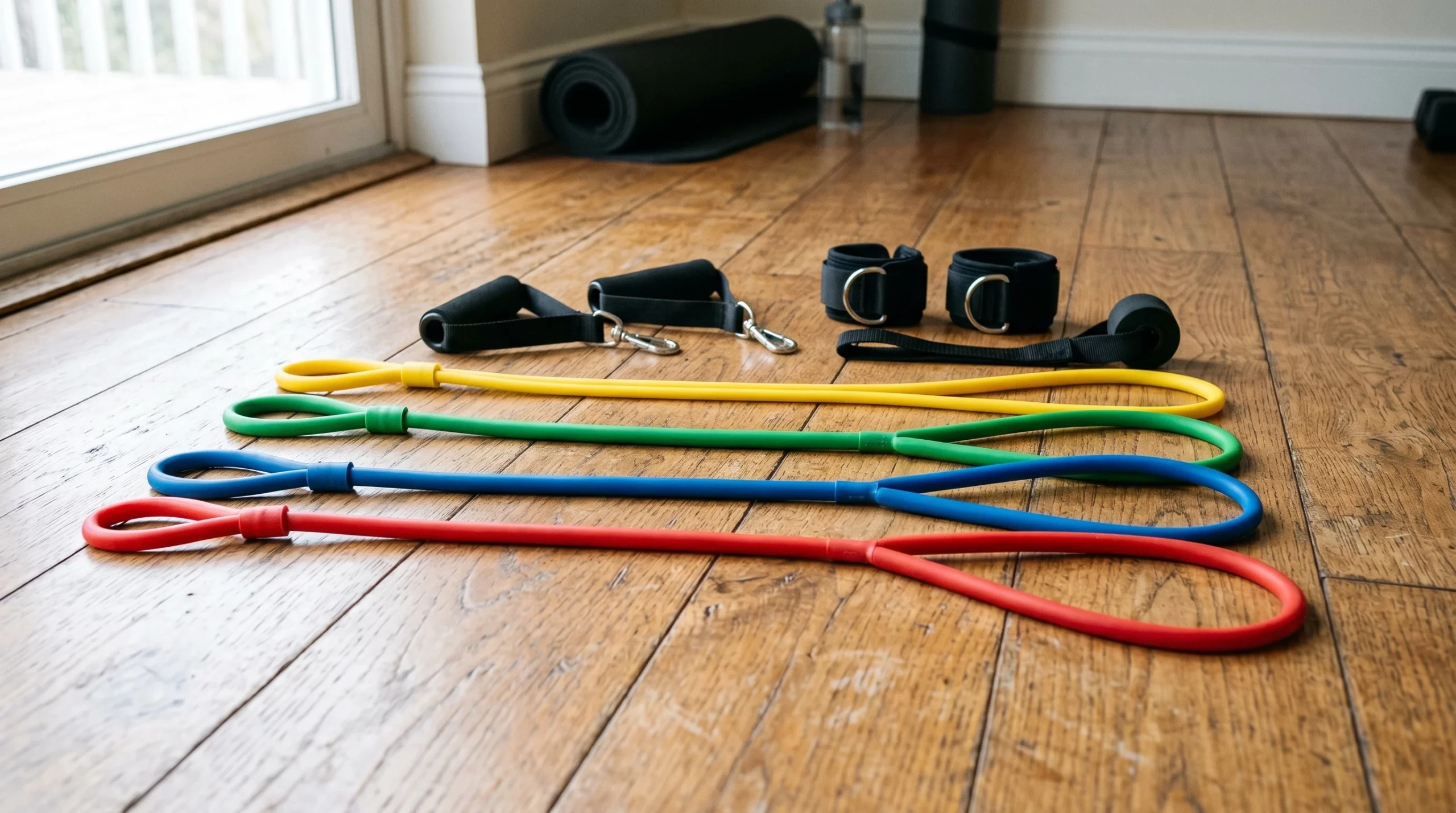
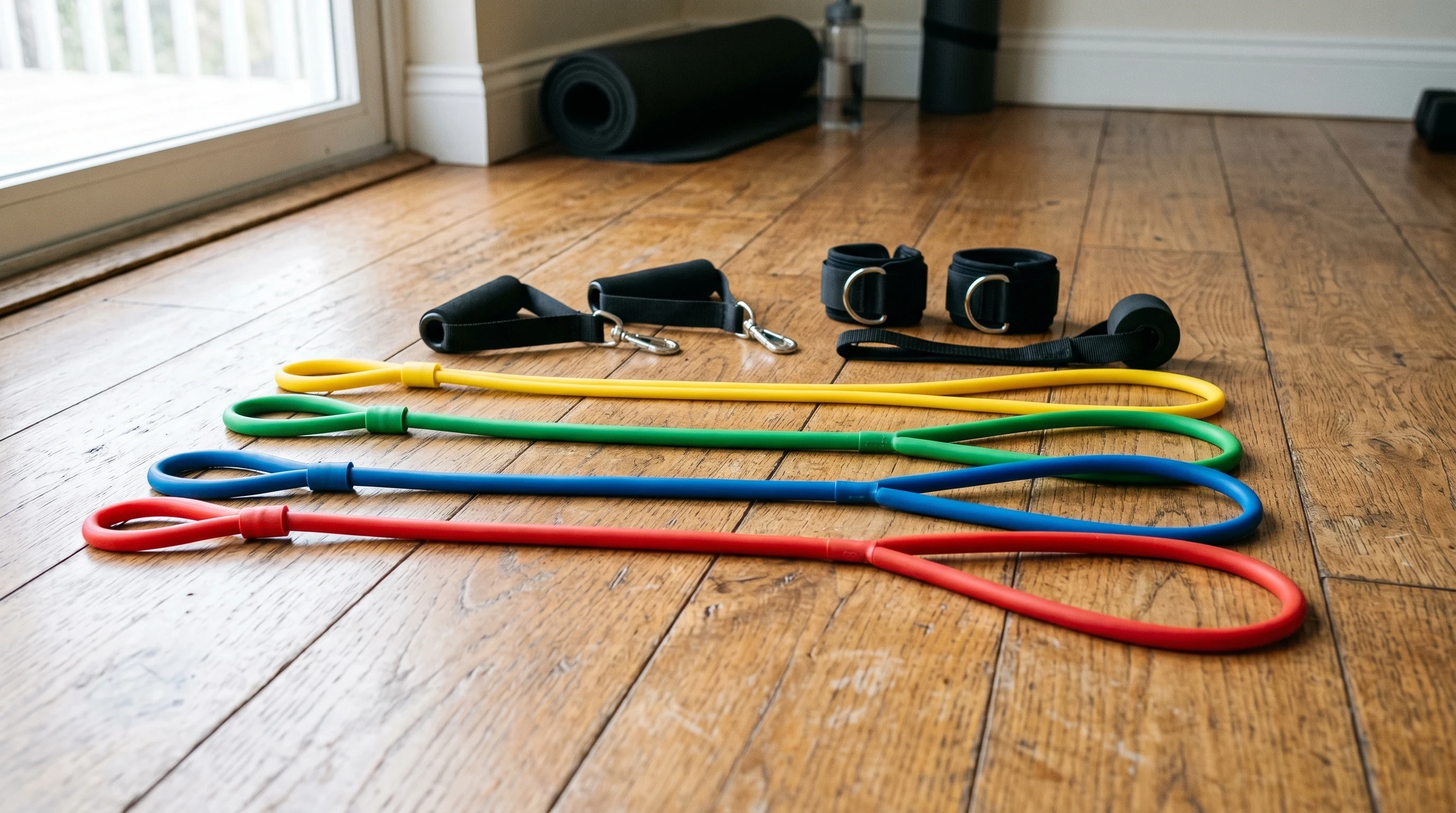
Starting strength training at home can feel confusing for many beginners, especially without access to heavy equipment or a gym environment. Resistance bands offer an affordable, space-saving way to build muscle and strength from home—even if you are totally new to working out. The key to seeing progress is training in a structured way, focusing on good habits, and sticking with routines built on muscle-building principles that work.
Many beginners wonder if resistance bands are enough for full-body workouts and real muscle growth. The simple answer is yes, when you use the right approach. Bands create real muscle tension. They let you train hard, recover, and improve at your own pace, often with less risk of injury or feeling intimidated than in a crowded gym. With a little effort and basic knowhow, you can make real changes, right in your living room.
Quick Answer
Yes — beginners can build muscle at home with resistance bands when workouts are structured around progressive overload, proper effort, recovery, and consistency.
Resistance bands create meaningful muscle tension that can effectively challenge the muscles without requiring expensive gym equipment. For many beginners, resistance band training offers a practical, affordable, and beginner-friendly way to build strength and muscle safely at home.
Table of Contents
- Quick Answer
- Can Beginners Build Muscle With Resistance Bands?
- How Progressive Overload Works With Resistance Bands
- Beginner-Friendly Home Resistance Band Full-Body Workout
- Good Technique and Proper Effort: What Beginners Need To Know
- Common Beginner Mistakes With Bands
- Resistance Bands vs Dumbbells For Beginners
- How Often Should Beginners Train With Resistance Bands?
- Answers To Common Beginner Questions
- Sustainable Muscle-Building: Putting It All Together
- Beginner Bodybuilding Guides On Lift & Nurture
- References
- About the Author
The Basics: Can Beginners Build Muscle With Resistance Bands?
Many beginners wonder whether resistance bands are actually effective enough for building muscle. Many beginner strength training principles emphasize mechanical tension as an important driver of muscle growth. That means challenging your muscles close to their strength limit in each set, whether you use weights, your own body, or a simple resistance band. Many beginner programs and strength training educators recognize that resistance bands can effectively challenge the muscles when exercises are performed with enough effort, proper form, and progressive overload.
You do not need expensive gym equipment or super heavy bands to start building muscle as a beginner. Bands can create meaningful resistance by stretching them further, using thicker bands, or slowing down each part of the lift for more control. So, not only are bands easy to get and use at home, but they actually help you learn good form and focus on steady improvement.
To build muscle as a beginner, three things really matter:
- Training each muscle with enough effort (pushing close to your strength limit)
- Using good exercise technique
- Sticking with a routine that lets you get stronger and recover over time
Besides these basics, as someone just getting started, you might find that resistance bands help you gain awareness of your body. Because bands increase tension the further you stretch them, you naturally learn to control your movements, which improves your overall coordination and muscle engagement. For many new to fitness, this added control builds a solid foundation for more advanced exercises later on. Bands also bring a gentler resistance curve compared to dumbbells or barbells. This feature helps reduce joint strain and can make movements feel more comfortable, lowering your chance of discomfort if you’re new to strength routines.
How Progressive Overload Works With Resistance Bands
The idea of progressive overload just means stressing your muscles a little more over time. In doing so, they get a signal to grow stronger and bigger. With bands, you have several beginner-friendly ways to make workouts harder step by step, without getting injured or discouraged.
Practical Ways For Beginners To Progress With Bands
- Adding reps: If you could do 10 band squats last week, try for 11 or 12 this week.
- Increasing band tension: Stand further away from your anchor point, or switch to a thicker band. Both increase resistance.
- Improving form: Focus on technique. Pausing at the hardest part, controlling the tempo, or moving through a fuller range of motion.
- Increasing sets: Many beginners start with 2 sets per exercise. Over time, bumping up to 3 or 4 sets helps you do more total work.
- Reducing rest time: Shortening rest by 15 to 30 seconds (once you can handle it) makes the workout tougher without needing extra equipment.
If you keep these methods in mind and avoid rushing, you’ll see progress. Picking one method at a time makes your workouts manageable and clear, which is a huge help when building consistency as a beginner.
To get more out of your workouts, try tracking which overload method you use each week. Recording your improvements helps you spot which tweaks give you the best results and keeps you motivated to keep moving forward.
Beginner-Friendly Home Resistance Band Full-Body Workout
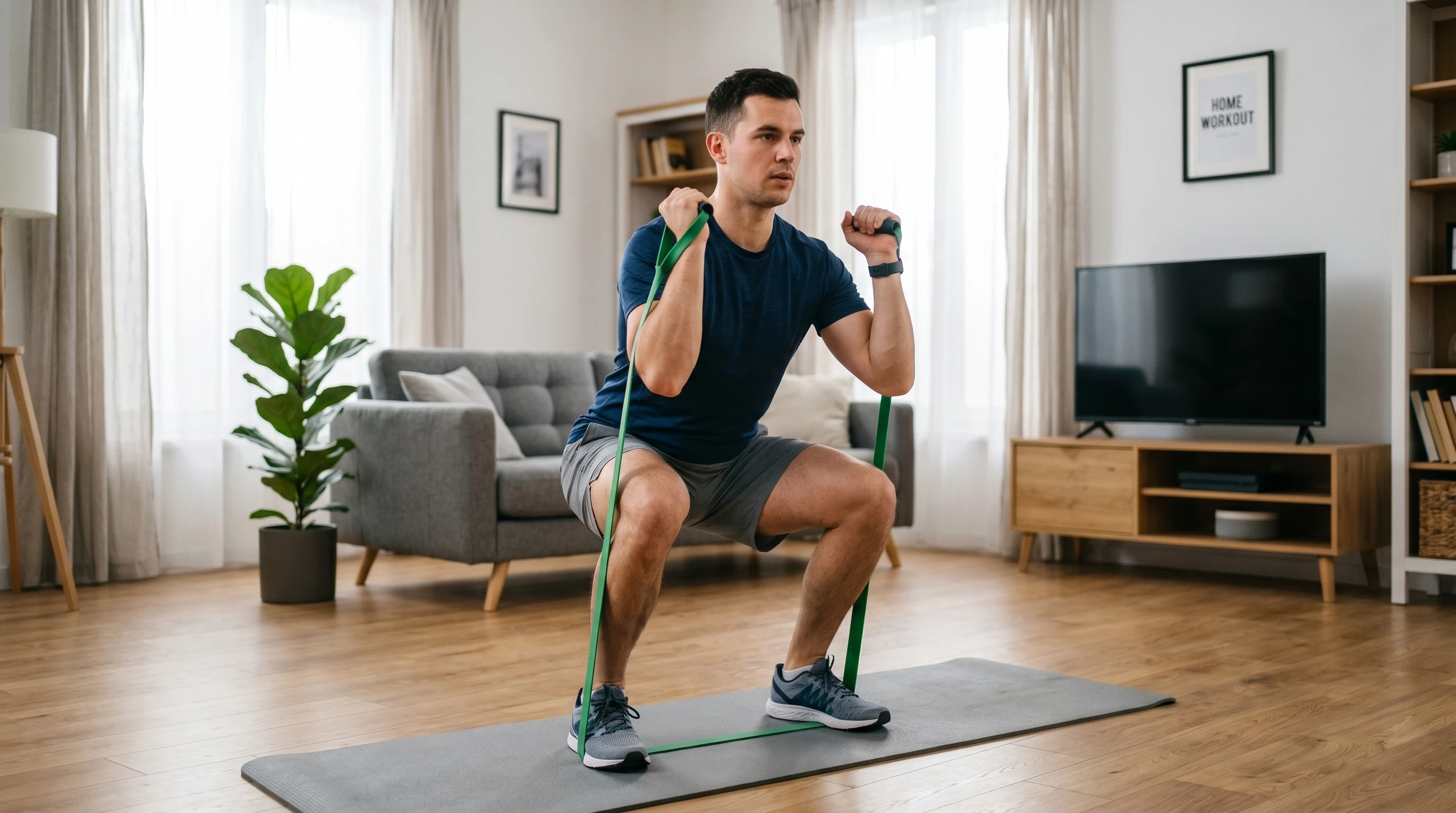
Full-body workouts give beginners the best mix of efficiency, muscle growth, and balanced strength. You hit all your main muscle groups two or three times per week and recover well. Using mostly big, compound movements with a few isolation moves is super helpful as you learn. Here’s a beginner-friendly example of how a structured full-body resistance band workout at home can look:
DISCLAIMER: If you have pain, an injury, or a medical condition, check with a qualified professional before starting a new workout routine.
Beginner Full-Body Resistance Band Workout
- Band Squat – 2 to 3 sets of 10 to 15 reps (rest: 60 to 90 seconds)
- Band Chest Press – 2 to 3 sets of 10 to 15 reps (rest: 60 to 90 seconds)
- Band Row – 2 to 3 sets of 10 to 15 reps (rest: 60 to 90 seconds)
- Band Romanian Deadlift – 2 to 3 sets of 10 to 15 reps (rest: 60 to 90 seconds)
- Band Shoulder Press – 2 sets of 8 to 12 reps (rest: 60 to 90 seconds)
- Band Glute Bridge – 2 sets of 12 to 20 reps (rest: 60 to 90 seconds)
- Band Bicep Curl – 2 sets of 12 to 20 reps (rest: 45 to 60 seconds)
- Band Tricep Extension – 2 sets of 12 to 20 reps (rest: 45 to 60 seconds)
Estimated Workout Duration: Most beginners can complete this workout in about 35 to 55 minutes, including warm-up time and normal rest periods between exercises. As you become more comfortable with the exercises and transitions, workouts often become slightly faster and more efficient.
This routine trains every major muscle group using beginner-safe movements you can learn at home. Most beginners do well starting with 2 sets per movement and adding a third set as you build up your strength and stamina.
How To Progress: When you can do the top number of reps with steady technique, make the exercise harder by advancing one of the overload steps above, like adding reps, adding tension, adding a set, or slowing down your tempo.
Simple Warm-Up Before Your Resistance Band Workout
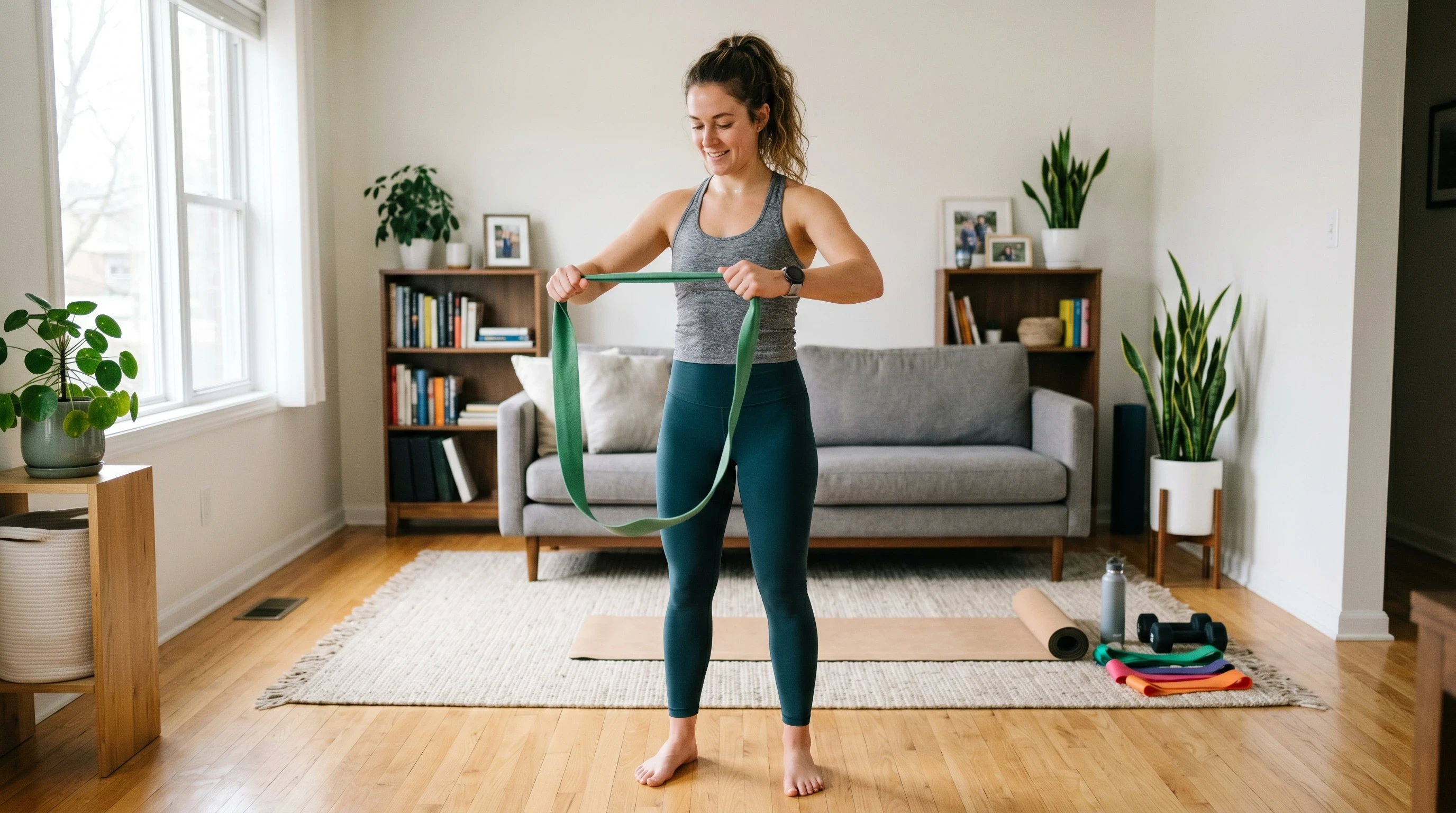
Before starting your workout, spend about 5 to 10 minutes warming up your body. A proper warm-up helps increase body temperature, improve movement quality, and prepare your muscles and joints for training.
For most beginners, a simple warm-up is enough. The goal is not to exhaust yourself before training, but to feel loose, awake, and ready to move.
Beginner-Friendly Warm-Up Example:
- 3 to 5 minutes of light movement (walking, marching in place, stationary bike, or light treadmill walking)
- 10 arm circles forward and backward
- 10 arm swings
- 10 front-to-back leg swings per leg
- 10 side-to-side leg swings per leg
- 1 light practice set before your first exercise
For example, before band squats, perform 1 easy set using lighter tension or fewer reps before starting your harder working sets.
Your warm-up should leave you feeling more prepared and focused — not tired.
It’s also helpful to switch things up every month or so. While the above exercises give you a solid start, introducing new movements—like reverse lunges, face pulls, or single-leg deadlifts—can keep your workouts fresh and help you target smaller, supportive muscles. If you have access to handles or door anchors for your bands, throw in moves like kneeling lat pulldowns or standing chest flyes now and then. This extra variety stops your routine from getting stale and provides new training variety.
Good Technique and Proper Effort: What Beginners Need To Know
Using the right form is one of the best ways to avoid injury and make sure your muscles get the challenge they need to grow. Many beginner training programs recommend focusing on these technique and effort fundamentals:
- Move at a controlled speed (avoid jerking the bands or moving too fast)
- Keep your joints safe (don’t lock out your elbows or knees at the top)
- Work close to failure. Stop a set when you feel you could only do 1 to 3 more reps with clean form.
- Focus on quality, not just quantity.
For beginners, training to the point where you feel your muscles working hard but not totally exhausted or shaky, is a safe and reliable starting point. This way, you get stronger without risking your recovery.
If you aren’t sure whether you’re using good form, it can be helpful to check your movements in a mirror or record yourself on your phone. Watching yourself train reveals extra details, like swaying or incomplete ranges of motion, that you might not notice otherwise. Alternatively, find a reputable video demonstration to compare your technique with a professional or coach.
Common Beginner Mistakes With Bands
Most progress stalls happen because of small, fixable mistakes. Here are some common beginner mistakes that can slow progress and how to avoid them:
- Using bands with too little resistance. For real progress, the last few reps of each set need to feel challenging.
- Poor form. Using momentum or skipping the full range of motion makes the moves less effective.
- Progressing too quickly. Adding too much too soon often leads to burnout or injury.
Beginner Tip: Many beginners make better progress by training consistently with moderate effort instead of constantly trying to make workouts harder every session. Focus on learning the movements, improving technique, and building sustainable habits first. Muscle-building progress comes from steady improvement over time, not from rushing.
- Inconsistent training. Skipping sessions or changing routines too often can stall early gains.
- Ignoring rest and recovery. Your muscles need recovery to grow. Too much training without enough rest slows everything down.
- Stopping sets too early. Quitting when you still have 5 to 6 reps left won’t challenge your muscles enough for growth.
- Relying only on random YouTube workouts. Structured plans help you see steady progress.
Catching these early helps a lot as you build muscle and stay motivated.
Resistance Bands vs Dumbbells For Beginners
As a beginner, one of the most common questions is whether it’s better to train with resistance bands or dumbbells. Both work if you use them right, but each has a few pros and cons:
Resistance Bands
- Affordable and portable, easier for small spaces
- Allow for variable tension and smooth resistance
- Good for joint-friendly training and learning form
- Some exercises may feel awkward at first due to band positioning
Dumbbells
- Easy to track progress by adding weight
- Can train most movements with a stable resistance curve
- Cost and storage are often higher, especially for heavier sets
- Not as portable or user-friendly in small living spaces
Bands are a great choice for beginners because they are low-cost, take up little space, and help you learn the basics of muscle-building before moving to heavier equipment. You can always switch or add dumbbells later if you want. The main thing is to choose equipment you’ll actually use consistently.
It’s also worth knowing that resistance bands offer unique training angles and can be attached to doors or sturdy furniture. This feature allows you to do pulling exercises—like band rows or face pulls—even if you don’t have a lot of extra equipment on hand. On the other side, if you enjoy the solid feel of dumbbells and the ability to directly add weight, blending both tools in your routine could give you the best of both worlds.
How Often Should Beginners Train With Resistance Bands?
For most beginners, full-body resistance band workouts 2 to 3 times per week across the week is enough for solid results. With at least one rest day between workouts, your muscles get the recovery they need without burning out.
Here is what a typical week might look like:
- Monday – Full-Body Resistance Band Workout
- Wednesday – Full-Body Resistance Band Workout
- Friday or Saturday – Full-Body Resistance Band Workout
Consistency is more important than finding the “perfect” training frequency. Missing a workout occasionally will not hurt your progress, but keeping a steady pattern helps build habits and confidence. On rest days, light movement, walking, or stretching helps keep your body loose and ready for the next session.
If your week gets especially busy, doing even a single, well-performed workout can help you hold onto your gains and stay on track. Sticking to simple routines during busy or stressful weeks supports long-term success, as the key is not perfection, but showing up as regularly as possible. Remember, rest and sleep are just as important as training hard; muscles grow stronger when you recover well.
Answers To Common Beginner Questions
Are resistance bands truly effective for muscle growth?
Yes. Recent studies and experience show resistance bands are great for beginners who follow a structured program. It’s the tension and effort, not the type of resistance, that matters most.
What are the best resistance band exercises for beginners?
The most helpful beginner moves hit the big muscle groups with simple movements: band squats, rows, chest press, shoulder press, Romanian deadlifts, glute bridges, bicep curls, and tricep extensions. Mastering these first sets you up for safe, balanced muscle gains.
How many reps should beginners do with resistance bands?
Most beginners do best with 8 to 20 reps per set for most exercises. Choose a band tension that gets you close to failure with good technique by the last rep. For smaller muscles (like biceps or triceps), rep ranges of 12 to 20 help you build up training stamina.
How do beginners progressively overload with resistance bands?
Add a rep or two each week, use more band tension, slow down your tempo, add a set every few weeks, or make the movement a little harder. Focusing on just one at a time helps you stay consistent.
Are resistance bands enough for full-body results at home?
For beginners, resistance bands offer a simple, safe, and effective way to build muscle and strength across the whole body. Sticking with a full-body plan two or three times a week helps you see results without investing in costly equipment.
Sustainable Muscle-Building: Putting It All Together
Building muscle at home as a beginner does not need to be complicated or expensive. Resistance bands make real progress available to anyone willing to show up and learn good habits. Success comes from doing simple things well: consistent training, pushing for progress week by week, giving your muscles time to recover, and using a plan that fits into your life.
It’s also beneficial to combine your resistance band training with general movement throughout your day. Being physically active outside of your designated workouts—such as walking, cycling, taking the stairs, or playing with kids or pets—keeps your body primed for muscle growth and boosts your energy. Over time, small daily habits like these support your bigger fitness goals and contribute to your progress.
Your Action Steps For Getting Started:
- Pick up a set of resistance bands and clear a small workout space at home.
- Start with the full-body beginner workout above 2 to 3 times each week.
- Track your progress: write down your sets, reps, and changes you make.
- Focus on good form and steady progress, not just adding more, more, more.
- Rest, eat well, and enjoy the simple wins as you go.
With patience and consistency, you’ll be surprised at what you can achieve right at home.
Beginner Bodybuilding Guides On Lift & Nurture
If you want to continue building muscle with structured beginner-friendly training, these guides may help:
- Beginner Bodybuilding Workout Plan (12-Week Foundation Blueprint)
- 3 Day Workout Schedule For Beginners: A Complete Full Body Plan
- How To Implement Progressive Overload For Beginners
- Muscle Recovery Tips for Beginners
- Beginner Weight Training Sets And Reps
- Full Body Workout Plan For Beginners
- Beginner Bodyweight Workout Plan To Build Muscle At Home
- 3 Day At Home Workout Routine For Beginners
- No Equipment Full Body Workout For Beginners At Home
- Beginner Dumbbell Workout At Home For Muscle Growth
References
American College of Sports Medicine (ACSM)
National Strength and Conditioning Association (NSCA)
Centers for Disease Control and Prevention (CDC) Physical Activity Basics
https://www.cdc.gov/physicalactivity/basics/index.htm
About the Author
Angel Carcamo is the founder of Lift & Nurture, a beginner bodybuilding platform focused on structured training, muscle growth fundamentals, and long-term progress.
As someone building Lift & Nurture around beginner-friendly research and structured training principles, Angel creates guides that simplify widely accepted strength training concepts into clear, practical steps.
His guides focus on key fundamentals like progressive overload, recovery, and nutrition, helping beginners build muscle without confusion, shortcuts, or unrealistic expectations.
Start here: Beginner Bodybuilding Roadmap
Foundation guide: Beginner Bodybuilding Workout Plan (12-Week Foundation Blueprint)