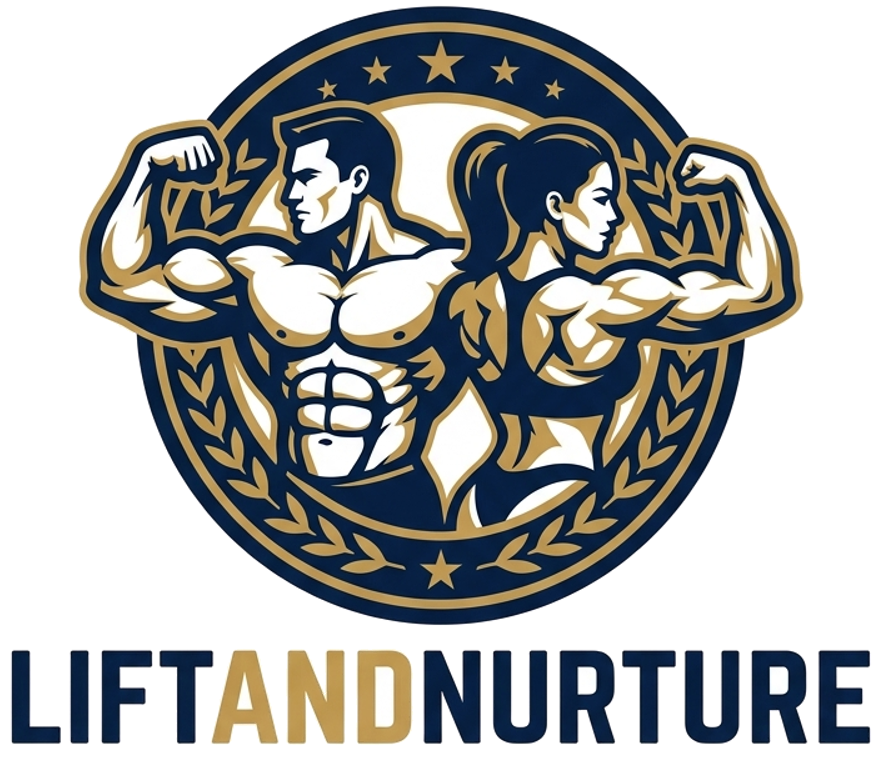
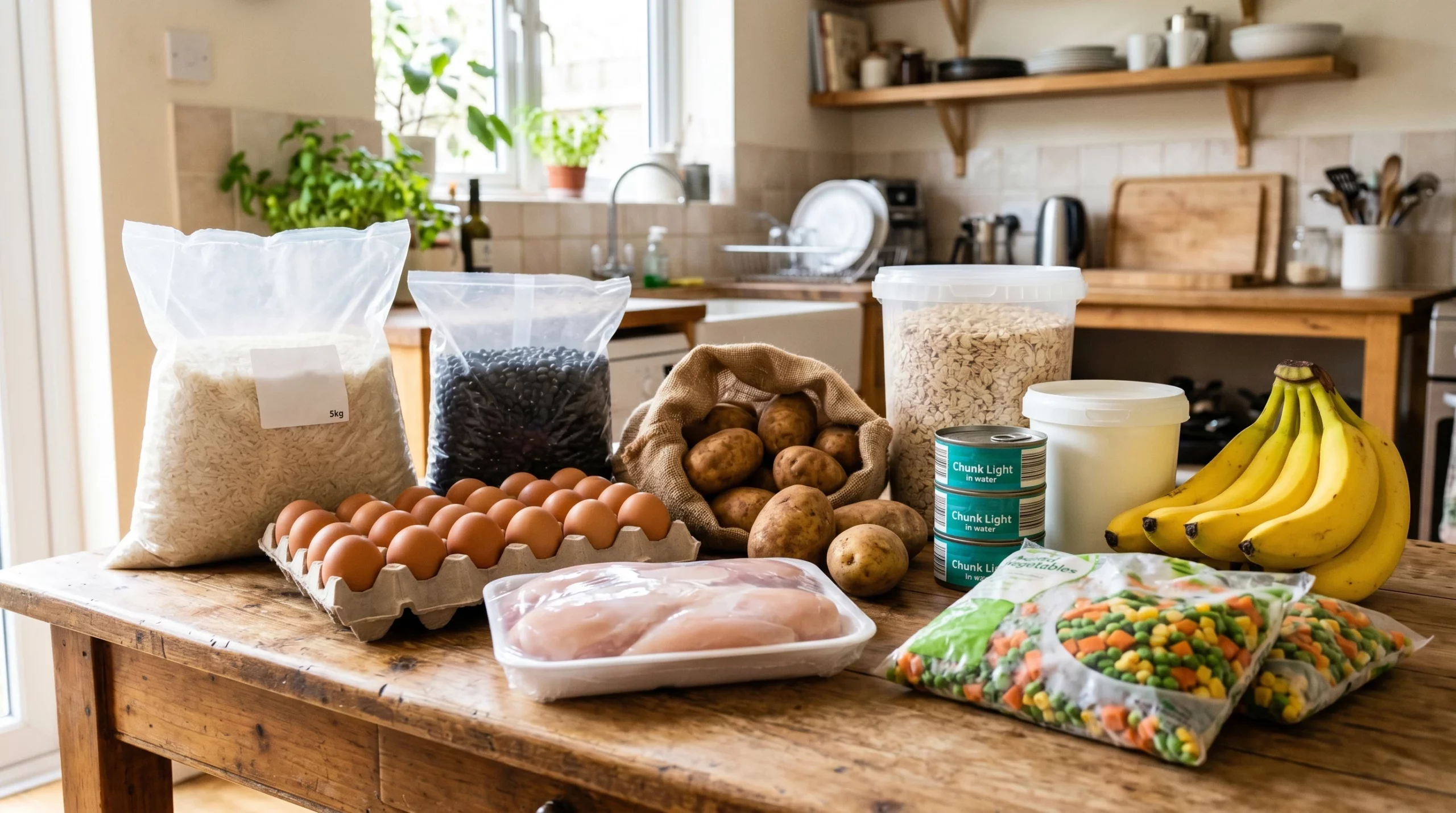
Eating well for muscle growth on a budget does not need to be complicated. Many new lifters believe they need pricey supplements or special foods, but research and practical experience show that consistent habits with basic, affordable foods matter most. For beginners, the goal is not to eat perfectly. The goal is to make affordable meals repeatable enough to support training, recovery, and long-term consistency. This guide breaks down how beginners can get started with cheap bulk meal recipes that support muscle building while saving money.
Quick Answer
Cheap bulk meal recipes for beginners should focus on affordable, high-protein foods such as eggs, chicken, rice, oats, potatoes, beans, Greek yogurt, and canned tuna. Building muscle on a budget does not require expensive supplements or specialty foods. Most beginners can support muscle growth by eating enough calories, prioritizing protein at each meal, and using simple meal prep strategies to reduce food costs while staying consistent.
Table of Contents
- Understanding Budget Friendly Muscle Building Basics
- Calories, Protein, and Budget Muscle Building: The Fundamentals
- Affordable Protein Sources for Bulk Meals
- Affordable Carb Sources to Power Your Training
- Healthy Fats on a Budget
- Building Your Own Cheap Bulk Meal Recipes
- Sample Full Day of Eating On a Budget
- Money Saving and Meal Prep Strategies for Beginners
- Common Mistakes Beginners Make with Bulk Meal Prep
- Why Cheap Bulking Meals Work For Beginners
- Frequently Asked Questions
- Beginner Bodybuilding Guides On Lift & Nurture
- Final Thoughts
Understanding Budget Friendly Muscle Building Basics
Trying to build muscle as a beginner often brings two main worries: How do I eat enough for growth and how do I avoid emptying my wallet? Most strength and muscle gain comes from eating enough calories and getting plenty of protein. You do not need expensive powders or pre-cooked high protein snacks. Simple whole foods do the job, and buying in bulk can save a lot of money over time. Many studies, including those from the International Society of Sports Nutrition (ISSN), suggest that getting total calories and hitting your protein each day has the biggest impact. To dig into the science, check out recent guides from reputable nutrition organizations—the evidence consistently puts food habits first.
The truth is, the grocery list for gaining muscle does not have to look any different from what you might already buy, just with a few key changes. Focusing on affordable staples, planning ahead, and sticking to a weekly prep schedule all make a real difference. Building your meals around protein ensures your body has what it needs for muscle repair and growth, while carbohydrates provide energy for tough gym sessions, and fats help with hormone health and staying full. None of this needs to be expensive or overwhelming. If you keep an eye out for sales and seasonal deals, your meal plan can be both simple and effective.
Calories, Protein, and Budget Muscle Building: The Fundamentals
Muscle growth happens when you give your body enough energy to repair and build new tissue after training. This means eating in a calorie surplus, or at least maintenance, instead of undereating. For most beginners, aiming to eat slightly more than they burn every day (often around 250-500 extra calories) helps to support steady progress without too much fat gain. Creating a meal log with free apps or a simple notebook can help you track your intake and spot patterns early.
Protein sits at the heart of any muscle building plan. Scientific reviews commonly recommend beginners eat about 1.6–2.2 grams of protein per kilogram of bodyweight per day. For a 70kg (about 150lb) person, this lands between 112–154 grams of protein daily. Evidence-based bodybuilding nutrition recommendations commonly support using adequate protein, enough calories, and consistent training as the foundation for muscle growth. Consistency is key, and even if you do not track calories every day, building a routine with protein-rich meals keeps you on target.
Making this work affordably comes down to knowing your sources. Affordable protein options, like eggs, canned tuna, and chicken breast, cost much less than eating out or buying specialty bars or drinks. When you buy these foods in bulk, freeze, or batch cook, they can be very practical for staying on track all week.
Affordable Protein Sources for Bulk Meals
Many beginners ask what foods give the biggest protein “bang for your buck.” Here is a rundown of the most wallet friendly protein options commonly used in beginner meal prep:
- Eggs: One of the cheapest and most versatile. Each large egg has about 6g of protein. Great for breakfasts, snacks, or adding to rice or potatoes.
- Chicken breast and thighs: Buying in bulk or on sale cuts the price down. Chicken breast contains about 25g of protein per 100g cooked.
- Ground turkey: Lean, high in protein (about 22g per 100g), and easy to cook in one big pan for several meals.
- Canned tuna or salmon: Packed with protein and often cheaper than fresh fish. A can has roughly 20-25g protein.
- Nonfat Greek yogurt: Lots of protein (up to 20g per serving) and cheap when you grab a large tub.
- Low-fat cottage cheese: Also portable and filling, with about 12g protein per ½ cup.
- Beans and lentils: Lower in protein per gram than meat but packed with fiber and very affordable, especially dried.
- Protein rich plant foods: Tofu, tempeh, and even peanut butter can add up over the course of the day.
Most budget muscle building diets lean on a mix of these sources. Protein distribution across three or more meals helps maximize muscle growth, and many beginner routines suggest getting at least 20g protein per meal for best results. Mixing plant and animal sources gives you all the amino acids needed for growth, and helps keep meals interesting all week.
Affordable Carb Sources to Power Your Training
Carbohydrates give your muscles the fuel they need to push harder and recover faster. They are also cheap and easy to buy in bulk. The main sources I see recommended for beginners are:
- Rice (white or brown): Rice is very affordable when bought in large bags and works with almost any protein source.
- Pasta: Offers quick energy, stores well, and is ready in minutes. Great for pre or post workout meals.
- Oats: Oatmeal is filling, rich in fiber, and works for breakfast or snacks. Bulk oats are extremely affordable.
- Potatoes (white or sweet): One of the cheapest carb sources per calorie, just scrub, chop, and bake or boil.
- Bread (whole wheat or white): A good addition in sandwiches or even alongside eggs and beans.
- Frozen corn, peas, or mixed vegetables: Affordable, convenient, and add extra nutrients and flavor to any meal.
- Bananas and seasonal fruit: Inexpensive and excellent for snacks, smoothies, or quick carb boosts.
Building muscle is not about avoiding carbs. In fact, most meal plans for beginners suggest using them to fill out bulk recipes. During busy weeks, mixing rice, pasta, or potatoes with canned beans and chicken can create a meal in under 30 minutes. If you want more flavor, toss in a homemade sauce or herbs.
Healthy Fats on a Budget
Dietary fats keep you full and help with hormone balance. You only need moderate amounts, so even budget friendly options last a while. Some sources that fit into cheap bulk meals include:
- Vegetable oil or olive oil: Buy large bottles and use in cooking or salad dressing.
- Natural peanut butter: Contains healthy fats and some protein. Great in smoothies or sandwiches.
- Egg yolks: Eating the whole egg provides healthy fats and more vitamins.
- Canned fish (like sardines): Omega 3 rich and cheaper than most fresh fish.
- Avocados and nuts: Best bought on sale or in bulk for cost savings.
When tracking fats, remember they are calorie dense. Most beginners need about 0.5–1 gram per kg of bodyweight per day. Adding a spoon of oil to a pan or a handful of nuts to breakfast is usually enough. Portion control here goes a long way towards hitting your calorie goals without overspending.
Building Your Own Cheap Bulk Meal Recipes
The easiest way to build bulk meals is to pick a protein, add a carb, and mix in vegetables or healthy fats for flavor and extra nutrients. Sticking to this template keeps shopping simple and makes meal prep fast.
These are simple meal templates, not strict rules. Beginners can adjust portions, swap ingredients, and change seasonings based on budget, taste preferences, and calorie needs.
Here are some basic recipes many beginners use each week:
- Eggs, oatmeal, and banana: Scramble two eggs, cook half a cup of oatmeal, and slice in a banana for a super affordable breakfast (about 18g protein).
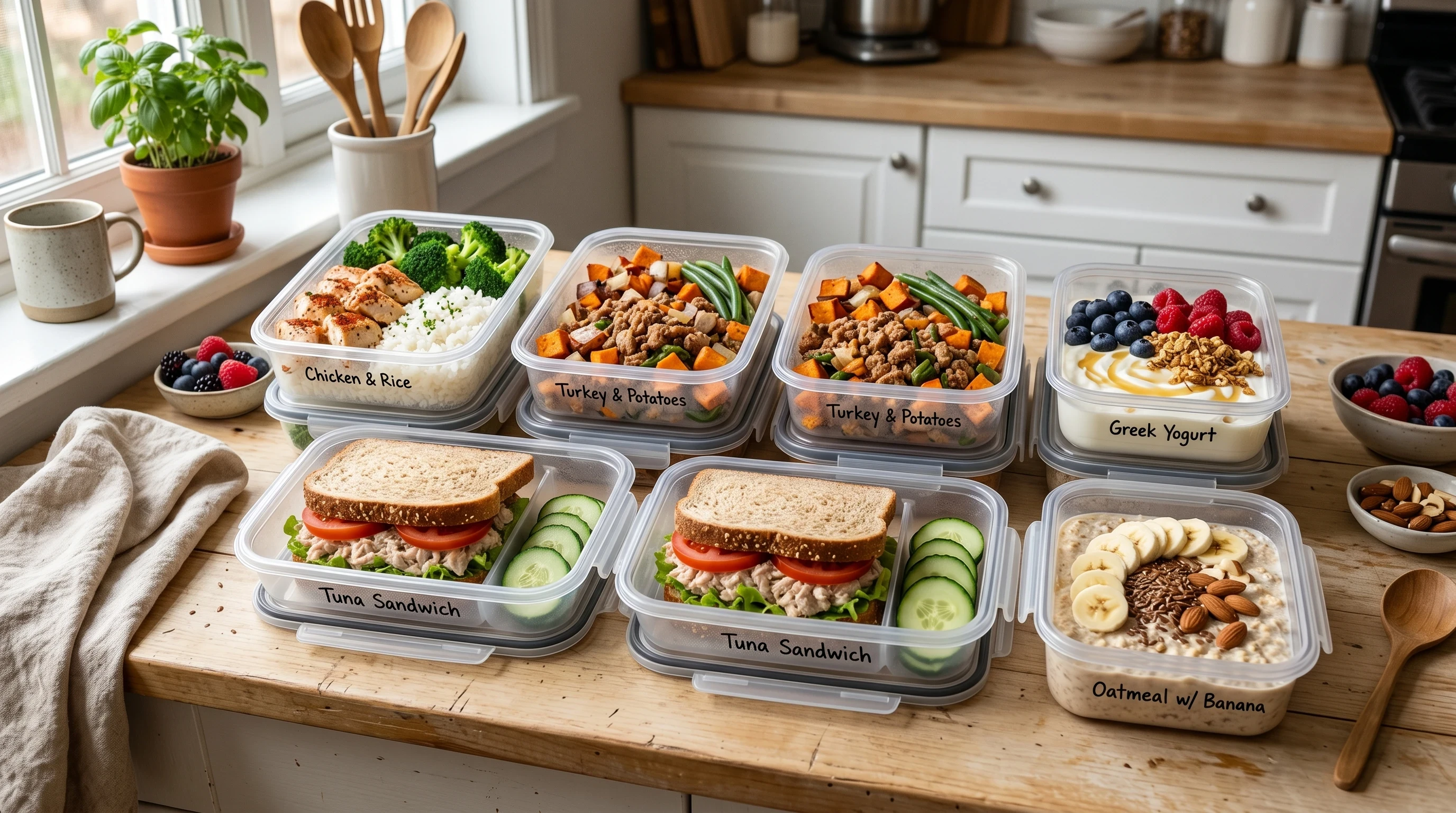
- Chicken and rice: Bake or pan cook chicken breast, serve over white or brown rice with any frozen or canned vegetables (about 30g protein per serving).
- Ground turkey and potatoes: Brown ground turkey in a pan, add diced potatoes and onions for a one pan meal (about 25g protein per serving).
- Rice, beans, and chicken: Layer cooked rice, canned or cooked beans, and shredded or cubed cooked chicken. Top with salsa for extra flavor (25-30g protein per serving).
- Tuna sandwich: Mix canned tuna with a little mayo or yogurt, spread on whole wheat bread with lettuce and tomato (20g protein per sandwich).
- Greek yogurt bowl: Scoop one cup of nonfat Greek yogurt, add frozen berries and oats (20g protein and fills you up).
- Peanut butter banana smoothie: Blend one banana, scoop of peanut butter, and one cup of milk or yogurt (10–15g protein depending on ingredients).
- Pasta with lean ground beef: Cook pasta and top with browned lean beef and tomato sauce. Easy to make in bulk and packs about 25g protein per plate.
You can double or triple these recipes for batch meal prep and store them in the fridge. Swapping out proteins or carbs helps you mix in some variety all week without spending more. If you get bored with a meal, experiment with spices or quick homemade sauces to make meals more eye catching and tasty.
Sample Full Day of Eating On a Budget
Putting all of this together, here is a sample day of muscle building meals that beginners use, and most grocery stores carry everything:
- Breakfast: 2 scrambled eggs, 1 cup oatmeal with banana and spoon of peanut butter (about 23g protein)
- Lunch: Chicken breast (120g, cooked), 1 cup cooked rice, 1 cup frozen mixed vegetables (about 35g protein)
- Snack: Greek yogurt bowl with ½ cup oats and frozen berries (20g protein)
- Dinner: Ground turkey (100g), 2 medium potatoes, sautéed onions/peppers (25g protein)
- Snack: Tuna sandwich (20g protein) or a peanut butter banana smoothie (10–15g protein)
This plan generally lands around 110–120g protein per day with room to add extra eggs, yogurt, or beans depending on your size and goals. All meals can be made in large batches and stored to save time and money. Try adjusting portion sizes or swapping in plant based proteins to match your preferences and stay on budget.
Beginner Tip:
The sample meal plan above is only an example. Depending on your body weight, activity level, and muscle-building goals, you may need more calories or protein. Adjust portion sizes, add extra protein-rich foods, or include an additional meal if needed to support steady progress.
Money Saving and Meal Prep Strategies for Beginners
Stretching your grocery budget is much easier when you shop smart and cook in advance. Here are some practical tips research and beginner programs recommend:
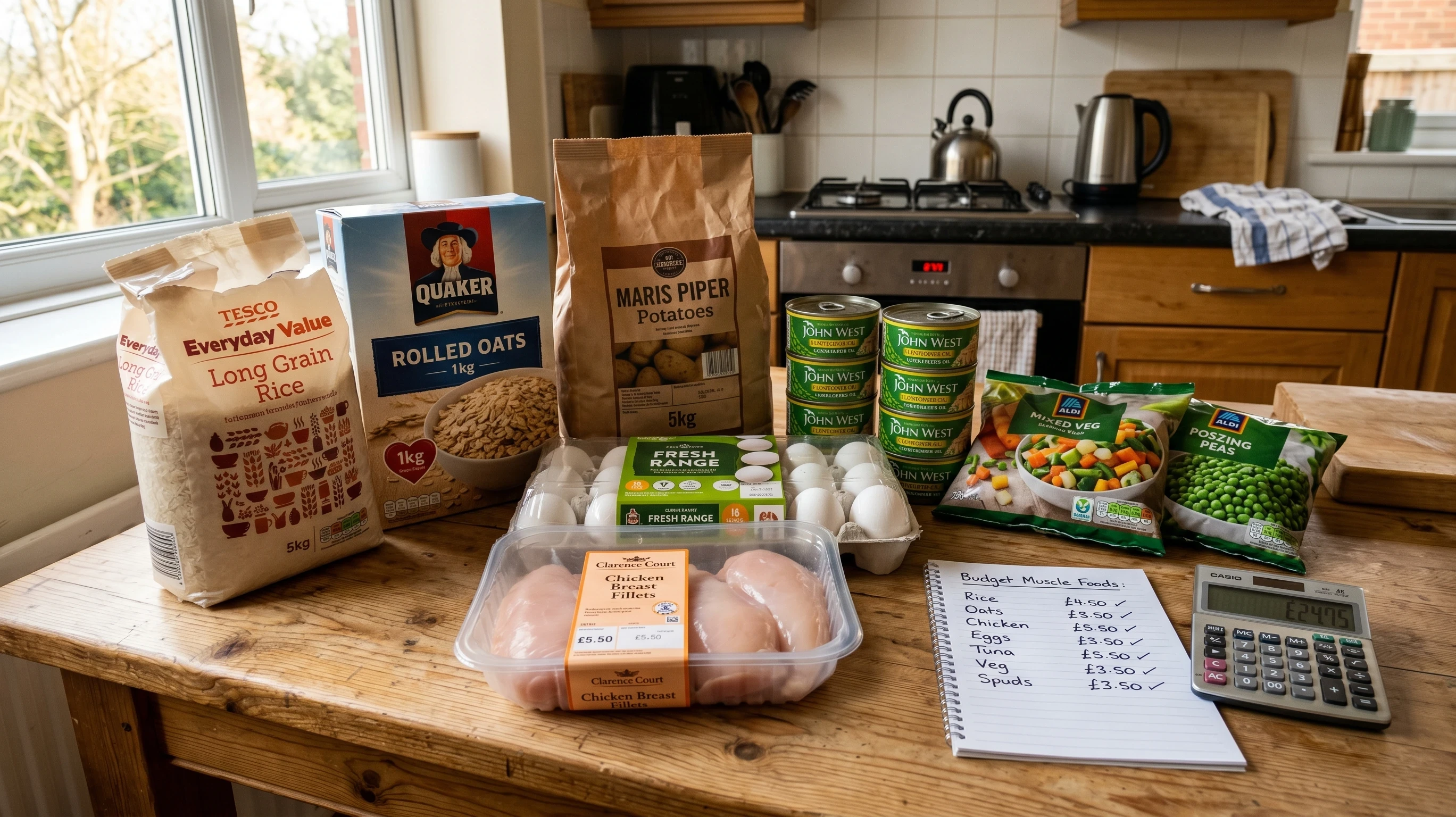
- Buy in bulk: Foods like rice, oats, eggs, and frozen veggies cost much less per serving when bought in larger packages.
- Choose store brands: Most basics offer no difference in quality, but can be much cheaper than name brands.
- Use frozen options: Frozen vegetables and fruits are just as nutritious, last longer, and almost always cost less than fresh.
- Plan recipes ahead: Knowing what you will cook helps avoid wasting money on foods you will not use.
- Meal prep once or twice a week: Make several meals at one time, store in containers, and grab them on the go. This helps skip expensive takeout.
- Batch cook proteins: Cooking a week of chicken or ground meat in one go uses less time and energy, and you can freeze extra servings.
- Reduce supplements: Most protein needs can be met with food. Buying big tubs of Greek yogurt or eggs is often far more budget friendly than using shakes for every meal.
If your store offers loyalty savings or coupons, use those to lower costs even more. Many beginners share that making a habit of prepping on Sundays (or your least busy day) keeps meals cheap, simple, and portable for the week ahead. Keep a running list of your favorite recipes, and adjust as prices and seasons change.
Common Mistakes Beginners Make with Bulk Meal Prep
Mistakes with meal planning or budget muscle building often come from following advanced advice, copying influencers, or misunderstanding the basics. Some traps to watch for:
- Overspending on supplements: Most beginners do not need expensive protein powders, “muscle” snacks, or pre workout drinks. Real food takes you further for less money.
- Under eating calories: Trying to eat very “clean” can accidentally cut calories too low for growth. Eating simple, hearty meals is usually better for muscle gain.
- Forgetting protein: Skipping protein at breakfast or in snacks makes it hard to reach daily goals. Build meals around protein.
- Buying expensive “fitness” foods: Specialty bars, drinks, and frozen meals cost much more than cooking with bulk basics.
- Not prepping ahead: Busy days often lead to last minute fast food purchases or missing meals entirely. Regular meal prep fixes this.
Why Cheap Bulking Meals Work For Beginners
Many beginners assume building muscle requires expensive foods, supplements, or complicated meal plans. In reality, muscle growth is primarily driven by consistent resistance training, sufficient calories, adequate protein intake, and recovery.
Affordable foods such as eggs, chicken, rice, potatoes, oats, beans, and Greek yogurt can provide everything most beginners need to support muscle growth. Focusing on these basics often produces better long-term results than relying on expensive products or constantly changing nutrition strategies.
For most beginners, consistency with simple, budget-friendly meals will outperform a perfect nutrition plan that is difficult to maintain.
Frequently Asked Beginner Questions
What are the cheapest meals for building muscle?
Eggs with toast or oatmeal, chicken and rice bowls, ground turkey with potatoes, tuna sandwiches, and bean and rice combinations are commonly recommended for beginners. These meals give plenty of protein per dollar, can be made in large batches, and use simple ingredients found anywhere.
Can you build muscle on a budget?
Many beginners make their best progress just by sticking to a simple meal prep routine, buying affordable staples in bulk, and aiming for enough calories and protein daily. Focusing on consistency with whole foods is more important than supplements or complicated diets.
What foods should beginners buy for bulking?
Most grocery lists for muscle gain include eggs, chicken, lean ground beef or turkey, canned tuna, oats, rice, potatoes, frozen vegetables, nonfat yogurt, beans, peanut butter, and seasonal fruit. These foods are priced for bulk shopping and support building muscle without breaking the bank.
How much protein do beginners need to build muscle?
The most common guideline is 1.6–2.2 grams per kilogram of bodyweight, split over several meals. For beginners, this often means 110–150 grams per day. Meeting this target with food is usually possible if you include protein at every meal.
Is chicken and rice good for muscle growth?
Chicken and rice is one of the most popular choices for muscle gain due to its high protein, easy prep, and very low cost per serving. Adding beans, frozen vegetables, or sauce keeps it filling and helps you hit nutrition goals.
What are affordable high protein foods?
Eggs, chicken breast, ground turkey, Greek yogurt, beans, cottage cheese, and canned fish are all cheap, easy to find, and work great in bulk meal recipes. Tofu and tempeh are also good plant based options.
Can you bulk without supplements?
Most beginners can reach their calorie and protein targets through whole foods like eggs, chicken, yogurt, or beans. Supplements like whey may be helpful in a pinch but are not essential for making progress.
What should a beginner eat to gain muscle?
Stick to meals that include a protein source, a carbohydrate, and some healthy fat. Meals cooked in bulk like chicken and rice, bean chili, or potato and eggs keep costs low and energy high for workouts.
How can I meal prep cheaply for muscle gain?
Buy proteins like chicken or turkey in bulk, choose longer lasting carbs like rice and oats, cook everything at once, and freeze extra portions. Using store brands, frozen vegetables, and buying sale items cuts costs further.
What are the best budget foods for bulking?
Rice, oats, potatoes, eggs, beans, chicken thighs or breast, canned tuna, ground beef, natural peanut butter, nonfat yogurt, and frozen vegetables are the most common. These make up the base for almost any bulk muscle building recipe on a budget.
Beginner Bodybuilding Guides On Lift & Nurture
If you’re learning how to build muscle as a beginner, these guides can help you create a complete muscle-building plan:
- How Much Protein For Beginners To Build Muscle?
- How Many Calories Should Beginners Eat To Build Muscle?
- Muscle Building Nutrition Guide For Beginners
- Best Foods For Building Muscle For Beginners
- Muscle Building Grocery List For Beginners
- Pre-Workout Nutrition For Muscle Growth
- What To Eat After Gym For Muscle Recovery
- How To Meal Prep For Muscle Gain Beginners
- Beginner Bodybuilding Workout Plan
Building muscle becomes much easier when proper training, nutrition, recovery, and consistency work together.
Consistency Matters More Than “Perfect” Meals
Building muscle as a beginner is about forming steady habits, eating enough, hitting your protein, and making meals you actually enjoy. Consistent meal prep and shopping smart are super important if you want to stick with it long term. No single meal or fancy supplement replaces the benefits of planning ahead and making the most out of simple foods. If you miss a meal or go off plan, just get back on track at the next one—what counts is showing up again and again.
Trying out these strategies and beginner friendly recipes can make a real difference, both in the gym and in your bank account. Every week you prepare a few cheap bulk meals, you get closer to your muscle and budget goals at the same time. Wrapping up, what matters most is consistency and working with foods that fit your life and wallet.
References
- International Society of Sports Nutrition (ISSN). Position Stand: Protein and Exercise. Available at: https://jissn.biomedcentral.com/articles/10.1186/s12970-017-0177-8
- Helms ER, Aragon AA, Fitschen PJ. Evidence-Based Recommendations for Natural Bodybuilding Contest Preparation: Nutrition and Supplementation. Journal of the International Society of Sports Nutrition. Available at: https://jissn.biomedcentral.com/articles/10.1186/1550-2783-11-20
- International Society of Sports Nutrition (ISSN). Position Stand: Diets and Body Composition. Available at: https://link.springer.com/article/10.1186/s12970-017-0174-y
- United States Department of Agriculture (USDA) FoodData Central. Available at: https://fdc.nal.usda.gov
- Academy of Nutrition and Dietetics. Nutrition and Athletic Performance Position Statement. Available at: https://www.jandonline.org/article/S2212-2672(15)01802-X/fulltext
About the Author
Angel Carcamo is the founder of Lift & Nurture, a beginner bodybuilding platform focused on structured training, muscle growth fundamentals, and long-term progress.
As someone building Lift & Nurture around beginner-friendly research and structured training principles, Angel creates guides that simplify widely accepted strength training concepts into clear, practical steps.
His guides focus on key fundamentals like progressive overload, recovery, and nutrition, helping beginners build muscle without confusion, shortcuts, or unrealistic expectations.
Start here: Beginner Bodybuilding Roadmap
Foundation guide: Beginner Bodybuilding Workout Plan (12-Week Foundation Blueprint)