If you’re searching for straightforward, realistic guidance on how to build muscle at home, especially as a beginner, you’re in the right place. At Lift & Nurture, I keep things honest and simple so anyone can understand, even without a fitness background. The good news is you don’t need a full gym or fancy machines to make real muscle gains from home. You just need a structured approach, consistent effort, and some basic equipment—sometimes just your bodyweight is enough. Here, I’m breaking down the key steps, science-backed principles, and practical routines to help you start building muscle confidently and safely.
Quick Answer
Yes — beginners can absolutely build muscle at home using bodyweight exercises, resistance bands, dumbbells, or basic home equipment.
The most important factors for building muscle at home are:
- progressive overload
- consistent resistance training
- enough protein and calories
- proper recovery
- structured workouts
- training close enough to muscular failure
Most beginners make excellent progress with simple full body workouts performed 2–4 times per week while gradually increasing reps, resistance, or exercise difficulty over time.
You do not need fancy equipment, advanced programs, supplements, or a gym membership to start building muscle effectively at home.
Table of Contents
- Quick Answer
- Can Beginners Really Build Muscle at Home?
- Why Home Workouts Can Build Muscle Effectively
- Best Equipment for Building Muscle at Home
- How Progressive Overload Works at Home
- Best Home Workout Structure for Beginners
- Nutrition Basics for Successful Home Muscle Building
- Common Beginner Mistakes That Slow Progress
- Beginner Action Plan
- Frequently Asked Questions
- Final Thoughts on Building Muscle at Home as a Beginner
- Beginner Bodybuilding Guides on Lift & Nurture
- Disclaimer
- References
- About the Author
Muscle Building at Home: How It Works for Beginners
Research from organizations like the American College of Sports Medicine shows that beginners can make great progress building muscle at home with consistency, basic equipment, and a smart plan. Whether you use bodyweight moves, bands, or dumbbells, you can stimulate muscle growth just as well as at a gym if you focus on challenging yourself and progressing over time. Home workouts are especially effective for new lifters, since nearly any type of resistance training will spur muscle gains in the early stages.
Many science-backed training philosophies, like those promoted by Jeff Nippard and Layne Norton, agree: progressive overload and hard work matter more than specific tools. Here are a few basics all beginners should know:
- Progressive Overload: Doing more over time (reps, sets, or resistance) is key to muscle growth.
- Full Body Workouts: Training all major muscle groups several times per week helps you get better results quicker.
- Good Recovery: Rest and sleep allow your muscles to repair and grow after each session.
- Proper Nutrition: Eating enough protein and overall calories provides the building blocks for new muscle.
Beginners don’t need to get bogged down with advanced training splits or fancy gear. Starting with proper technique and a realistic schedule sets a strong foundation and minimizes risk of injury.
Essential Equipment and Alternatives for Home Muscle Building
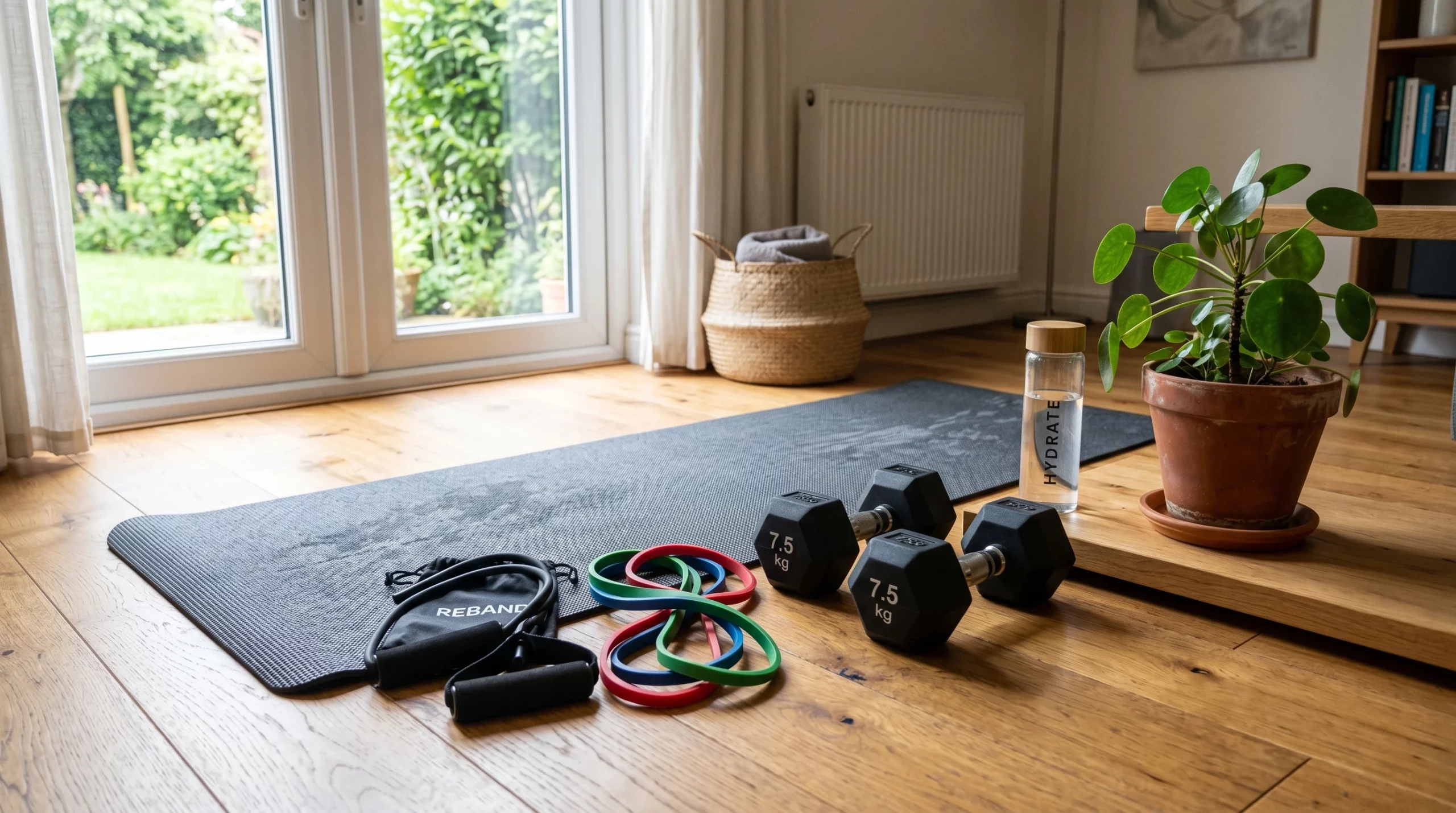
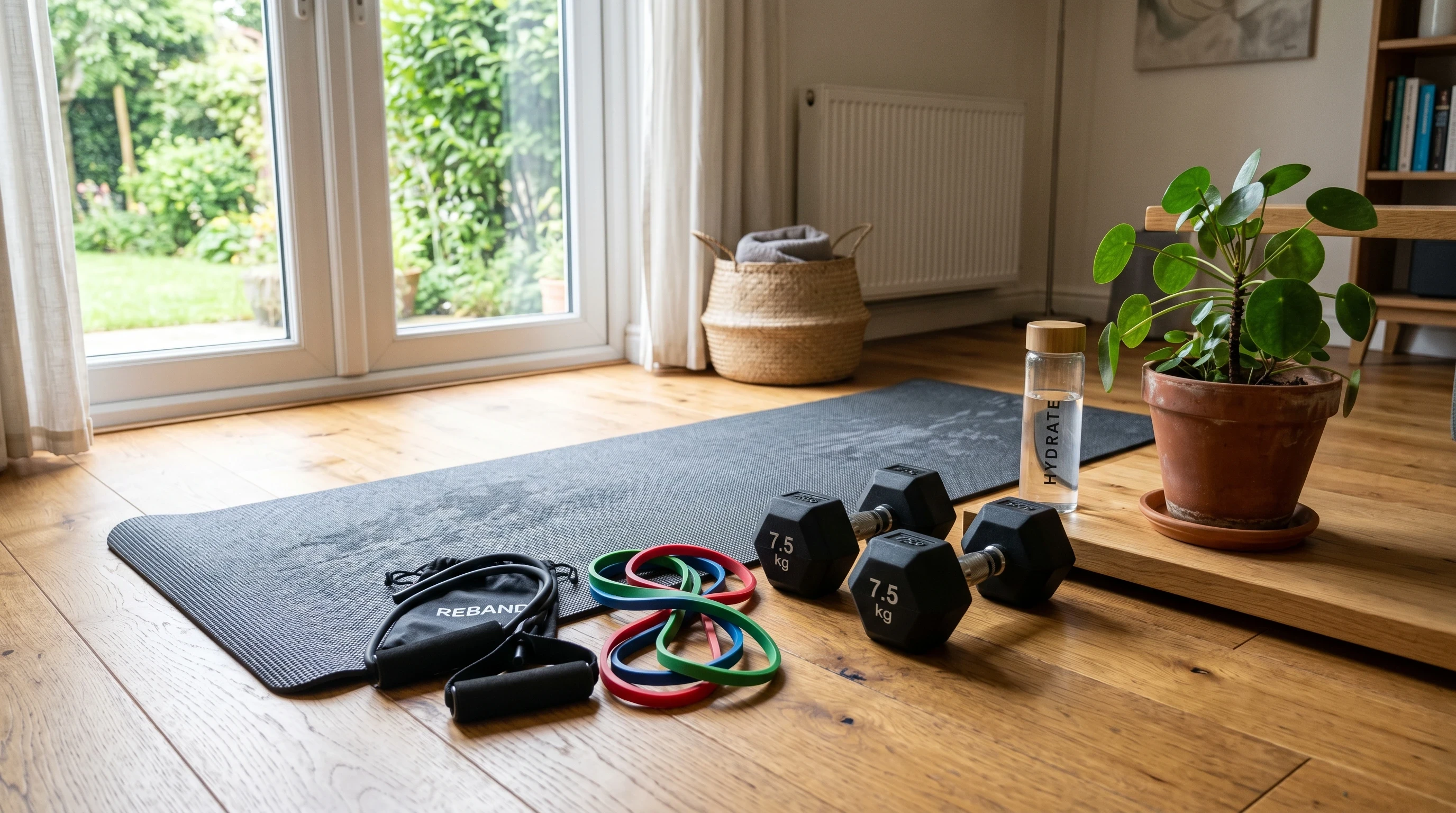
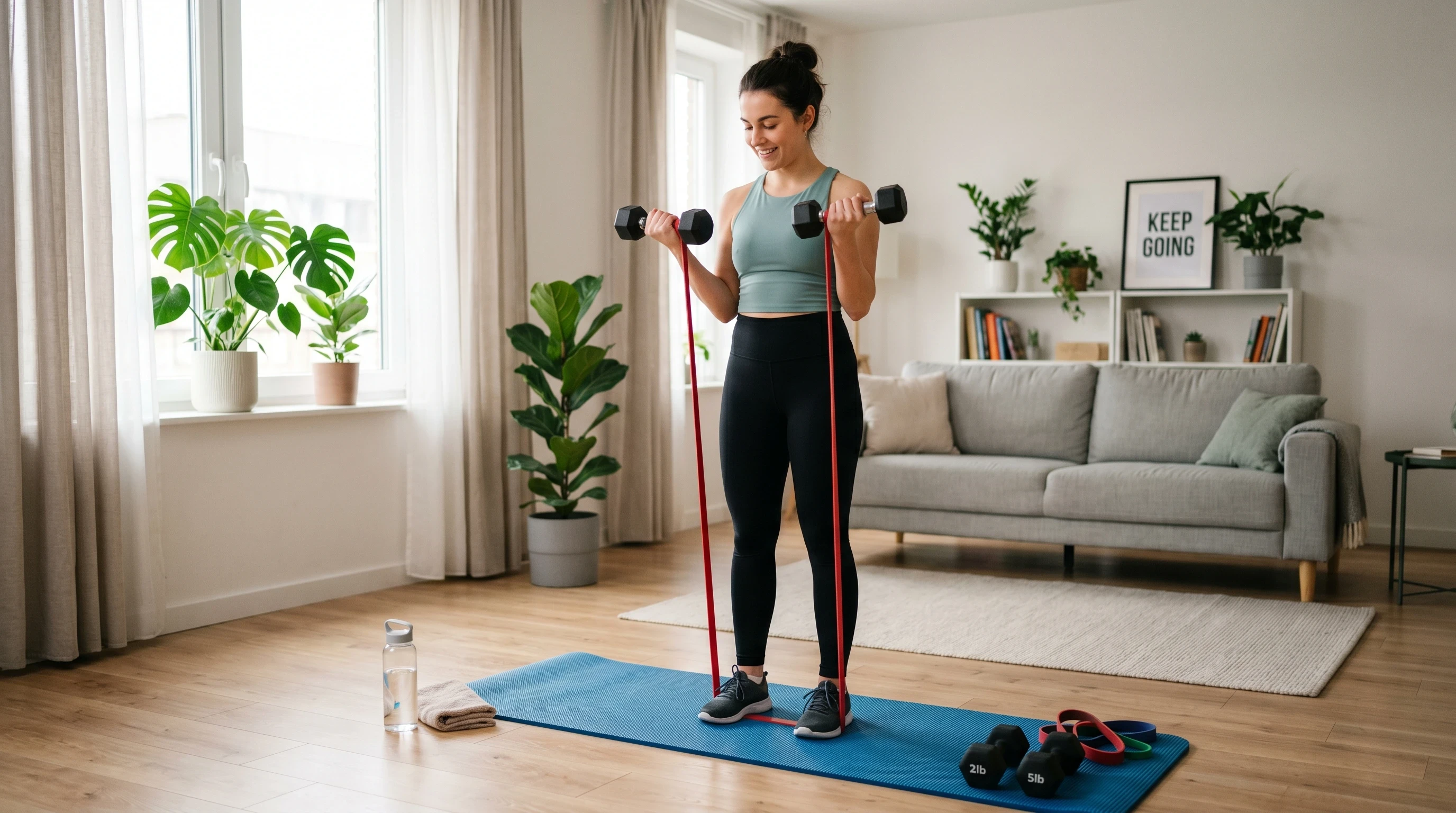
You don’t need a whole room of machines or heavy barbells to build muscle at home. Most beginners start with bodyweight training, resistance bands, or a couple pairs of dumbbells. Using just your bodyweight can be surprisingly tough and effective if you know how to progress. Bands and dumbbells add variety and make it easy to adjust resistance as you get stronger.
- Bodyweight Exercises: Great for beginners on a budget. Pushups, squats, lunges, planks, and glute bridges all build muscle and improve technique.
- Resistance Bands: Portable and affordable, they can add resistance to almost any move. They are especially useful for people with limited space or for targeting muscles like your back and biceps.
- Dumbbells: Useful for increasing load over time and adding challenge. A pair of adjustable dumbbells is versatile and suits many strength levels.
Other options like kettlebells or even filled backpacks can work, but aren’t essential. Many people worry that a gym is necessary, but research on resistance training suggests that basic tools can still support real progress when exercises are challenging and progressed over time. For more information, check out our beginner bodyweight workout plans and dumbbell workouts at home.
Muscle Growth Fundamentals Every Beginner Should Know
Every new lifter does well to grasp a few science-based basics about how muscle actually grows. It starts when you challenge your muscles with resistance: lifting, pushing, or pulling against something difficult. That resistance causes tiny tears in your muscle fibers. As your body repairs these fibers, they come back stronger and thicker. Here’s what beginners should focus on:
- Training Intensity: Each set should feel tough by the last couple reps, even if you’re using just your bodyweight.
- Volume: You need enough weekly training volume for each muscle group to grow effectively—usually 8–15 sets per muscle group per week is just right for beginners.
- Frequency: Hitting each muscle group 2-3 times a week gives the best results for most people.
- Rest: Muscles need downtime between workouts to rebuild and get stronger.
Whether your goal is to get stronger or change your appearance, these fundamentals apply to everyone. Many beginners are surprised to see noticeable changes simply by sticking to basic science-backed principles over time.
Setting Realistic Expectations: How Fast Can Beginners Build Muscle?
Building muscle takes a bit of patience, even with the best plan. Beginners often progress quicker during their first six to twelve months of structured training before gains begin to slow. It’s common to gain 1–2 pounds of muscle per month under ideal conditions in the early stages. This pace slows down if you don’t eat enough, skip workouts, or miss sleep.
Focus on steady progress and small wins: move up in reps, increase resistance, or try tougher exercise variations. Muscle growth is never instant, but slow and steady efforts add up. Many get discouraged by comparing their progress to advanced athletes or expecting overnight changes, but research confirms that consistent, gradual growth is normal and sustainable. Remember, lasting progress comes from small efforts repeated over time.
Structuring an Effective Beginner Home Workout Program
Most beginners make the best progress with simple full body workouts done two or three times per week. Each session can be 30–60 minutes. To put together an easy, structured routine, keep these points in mind:
- Pick Big Compound Moves: Prioritize exercises that work multiple muscle groups at once—pushups, rows, squats, lunges, dips, and planks. They get more done in less time and burn more calories.
- Plan Your Schedule: Aim for two or three full body sessions a week, such as Monday/Thursday or Monday/Wednesday/Friday. This gives muscles time to recover while still training them enough.
- Choose Sets and Reps: For each exercise, perform 2–4 sets of 8–20 reps. Higher reps are great for home workouts if the last few reps feel challenging.
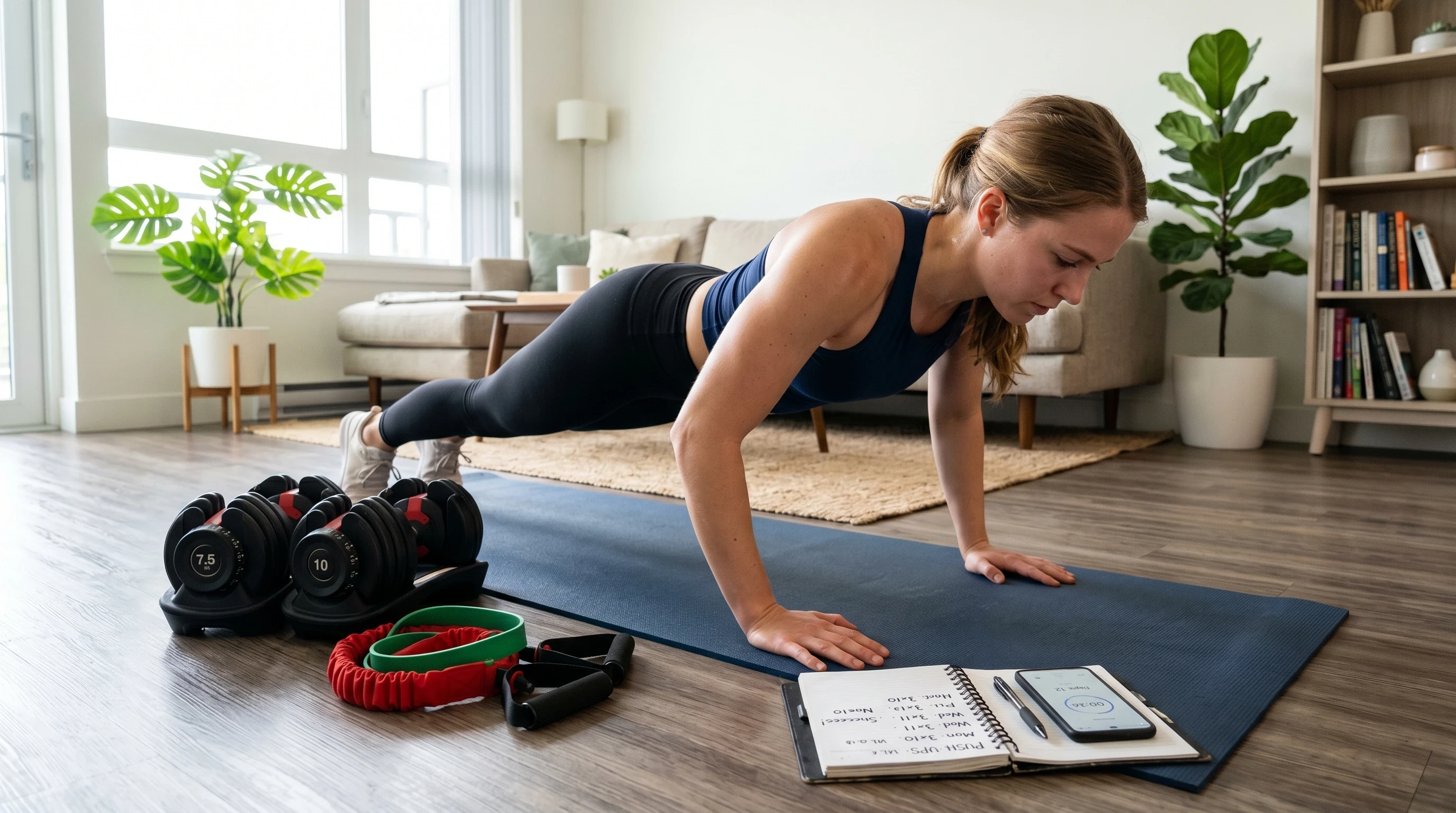
- Track Your Progress: Write down your workouts each week so you can gradually add reps, sets, or resistance.
Full body and no equipment full body workouts work very well for new trainees. There’s no need for complex routines; keep it clear, repeatable, and focused on form and improvement.
How Progressive Overload Works at Home
Progressive overload is the most important muscle-building principle for beginners. In simple terms, it means doing a bit more as the weeks go on, prompting your muscles to keep growing and adapting. At home, you can apply this in several beginner-friendly ways without heavy gym weights. Here’s how to do it:
- Add More Reps: Increase the reps you do per set as you get stronger. For example, move from 10 to 15 pushups per set as weeks go by.
- Increase Resistance: Use heavier dumbbells, thicker resistance bands, or even add a loaded backpack.
- Improve Technique: Do each rep with better control, slower tempo, and full range of motion.
- Make Exercises Harder: Move to tougher variations—like progressing from pushups to decline pushups, or from regular squats to single leg squats.
- Add More Sets: Slowly go from two to four sets per exercise over several months.
Most experts agree that sticking with progressive overload (rather than changing your workout randomly every week) drives real muscle growth. It’s a science-backed approach many solid trainers recommend.
Beginner Tip:
Don’t worry about making your home workouts “perfect.”
Most beginners build muscle successfully by consistently following a simple routine, training with good effort, recovering properly, and gradually improving over time.
A basic structured workout repeated consistently usually works far better than constantly switching programs every week.
Recovery and Sleep: Why They Matter Just as Much as Training
Many beginners forget about recovery and think that more is always better. In reality, muscles grow during downtime. Overtraining or high volume without proper rest stalls progress—especially for new lifters. Giving your body a break allows your muscles to repair themselves.
- Sleep at least 7–9 hours each night, since most muscle repair happens while you sleep.
- Take at least a full day off between tough sessions for the same muscle group.
- If muscle soreness lasts more than a few days, ease up a bit. More soreness is not always better.
For busy people, recovery is crucial for muscle growth, performance, and long-term consistency. It keeps your gains coming and your body safe from overuse injuries.
Nutrition Basics for Successful Home Muscle Building
Muscles don’t grow from exercise alone—they need the right food. Studies show that both protein and calorie intake are vital for adding muscle. Here’s what all beginners should know:
- Protein Intake: Get around 0.7–1 gram of protein for each pound of bodyweight daily. Protein helps repair and build new muscle tissue. Top sources are meats, dairy, eggs, tofu, beans, and if you want, protein powders.
- Calorie Surplus: Eating a bit more calories than you burn gives the best environment for muscle growth. Even a small surplus goes a long way. There’s no need to “bulk up” rapidly; slow and steady is safest and most effective.
- Meal Timing: Beginners shouldn’t stress about exact timing, but spreading protein evenly across meals can give your muscles a steady supply for growth.
Supplements are not needed for most beginners. A regular, balanced diet with enough protein is enough. For more details, read our guide to protein intake for beginners and how to set your calorie intake.
Common Beginner Mistakes and How to Avoid Them
Beginners tend to fall into a few common traps. Knowing what to avoid can save frustration and help you get results sooner:
- Doing random workouts instead of following a plan.
- Inconsistency—skipping sessions or switching routines too often.
- Not upping reps, sets, or resistance over time.
- Expecting quick results after just a handful of workouts.
- Ignoring rest, recovery, and getting enough sleep.
- Not tracking what you do and missing out on progress.
- Failing to eat enough protein or calories.
- Doing too much cardio that zaps your energy for strength work.
- Not training hard enough—if you can do way more than your usual reps, step it up for real results.
Consistent hard work with gradual progress, a solid plan, and regular tracking will keep you moving in the right direction.
Beginner Action Plan
If you are starting from zero, keep your first plan simple:
- Choose a full body workout you can repeat 2–3 times per week.
- Start with bodyweight exercises, dumbbells, or resistance bands.
- Track your reps, sets, and resistance each workout.
- Try to improve one small thing over time.
- Eat enough protein and avoid extreme dieting.
- Sleep enough and take rest days seriously.
You do not need to master everything immediately. Start with a simple routine, stay consistent, and build gradually.
Beginner Muscle Building FAQ
Can beginners build muscle at home?
Absolutely! Research shows that beginners can gain plenty of muscle at home with just bodyweight moves, bands, or dumbbells as long as you focus on progressive overload and stick with it.
Do you need weights to build muscle at home?
No, starting with bodyweight exercises is more than enough for most people. As you get stronger, you can add bands or weights for more challenge.
Are bodyweight workouts enough?
Most beginners respond very well to bodyweight training, especially if you keep pushing up the challenge by adding reps, trying more difficult exercise variations, or moving slowly with control.
How long does it take to build muscle at home?
You’ll start noticing your strength and muscle tone change in 1–2 months, and see real muscle gains in about 3–6 months. Beginners generally make faster progress in their first year.
How often should beginners train?
Two to three times a week is great for beginners. It gives your muscles time to rest and grow between workouts.
Can resistance bands build muscle?
Yes! Bands can be tough enough for muscle growth. Heavier or double bands help when you want to push further as you advance.
Are dumbbells better than bodyweight exercises?
Both get results. Dumbbells let you add more resistance as you go, but harder bodyweight progressions (like single leg squats or decline pushups) also work really well.
Do beginners need supplements?
No supplements are necessary. Focus first on getting enough protein and calories. Only try protein powder if you really struggle to meet your needs from food alone.
How important is protein?
Protein is vital for muscle growth! Experts say around 0.7–1 gram for each pound of body weight daily is just right for most beginners.
What is the best home workout split for beginners?
Full body routines, twice or three times per week, tend to be the easiest and most effective. They simplify scheduling and make recovery easier.
Can you build muscle without a gym?
Absolutely. Research and real life show that a well-put-together home routine gives beginners everything they need for growth with just simple tools.
Should beginners train to failure?
You don’t always have to go to the absolute limit, but aim to finish each set when you have just a couple reps left in you. That’s hard enough for results.
How much recovery do beginners need?
At least one solid rest day between hard sessions. Lingering soreness is a sign to slow down a little, but muscle tenderness for a day or two is normal.
Final Thoughts on Building Muscle at Home as a Beginner
The science and real-life experience agree: beginners can absolutely build muscle at home with basic strategies and the right mindset. Stick to structured routines, focus on progressive overload, eat enough protein, and make time for sleep. Avoid extreme programs and be patient with yourself—you’ll get stronger, move better, and build muscle you can be proud of. That’s all possible from your own living room.
Building muscle at home for beginners does not require perfection or expensive equipment. With consistency, progressive overload, proper nutrition, and realistic expectations, beginners can make impressive progress from home.
If you’re prepared to start, check out Lift & Nurture’s plans for bodyweight workouts, resistance band routines, and loads more no-nonsense muscle-building advice.
Beginner Bodybuilding Guides On Lift & Nurture
If you want to continue learning how to build muscle effectively as a beginner, these guides may help:
- Beginner Bodybuilding Workout Plan (12-Week Foundation Blueprint)
- Beginner Bodyweight Workout Plan To Build Muscle At Home
- Beginner Dumbbell Workout At Home
- Resistance Band Workout For Beginners At Home
- No Equipment Full Body Workout
- 3 Day Bodyweight Workout Routine
- How To Implement Progressive Overload For Beginners
- How Much Protein For Beginners To Build Muscle?
- How Many Calories Should Beginners Eat To Build Muscle?
- Muscle Recovery Tips For Beginners
- Beginner Weight Training Sets And Reps
- Full Body Workout Plan For Beginners
Disclaimer
Lift & Nurture provides beginner fitness education and is not a substitute for medical advice. Speak with a qualified healthcare professional before starting a new exercise or nutrition program.
References
- Schoenfeld BJ. The mechanisms of muscle hypertrophy and their application to resistance training. Journal of Strength and Conditioning Research.
- American College of Sports Medicine (ACSM): https://www.acsm.org/
About the Author
Angel Carcamo is the founder of Lift & Nurture, a beginner bodybuilding platform focused on structured training, muscle growth fundamentals, and long-term progress.
As someone building Lift & Nurture around beginner-friendly research and structured training principles, Angel creates guides that simplify widely accepted strength training concepts into clear, practical steps.
His guides focus on key fundamentals like progressive overload, recovery, and nutrition, helping beginners build muscle without confusion, shortcuts, or unrealistic expectations.
Start here: Beginner Bodybuilding Roadmap
Foundation guide: Beginner Bodybuilding Workout Plan (12-Week Foundation Blueprint)