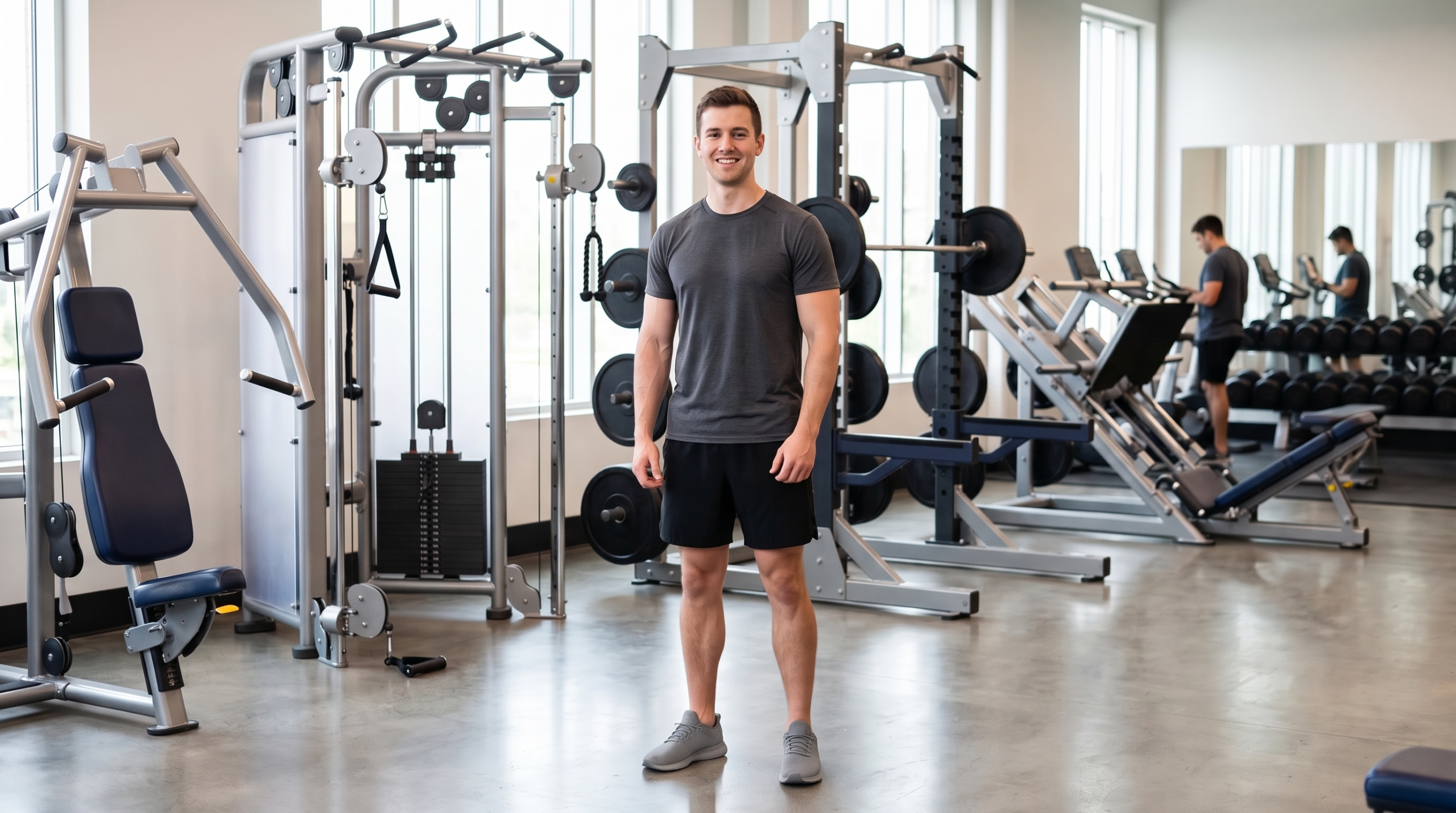
If you want to train four days per week but do not know how to organize those workouts, a simple upper/lower split is one of the easiest places to start.
A well-designed 4 Day Workout Routine For Beginners does not need dozens of exercises, complicated intensity techniques, or a new workout every week. The fundamentals matter much more: choosing exercises you can perform consistently, training them hard enough, doing enough weekly work to stimulate progress, gradually improving over time, and recovering well enough to repeat the process.
That is exactly what this guide is designed to help you do.
The plan below uses four weekly workouts:
- two upper-body workouts;
- two lower-body workouts;
- moderate beginner-friendly training volume;
- mostly stable machine, cable, and dumbbell exercises;
- clear rep ranges;
- reps in reserve (RIR);
- exercise-specific warm-up guidance;
- rest periods;
- substitutions;
- technique cues;
- and a simple progression system.
You will also learn exactly how to choose your starting weights, how hard your sets should feel, when to increase the weight, what to do if an exercise is unavailable, how to handle missed workouts, how to combine cardio with the routine, and when it may be time to change the program.
The goal is not to make training unnecessarily complicated. It is to give you enough information that you can walk into the gym and understand what you are doing, why you are doing it, and how to progress from it.
If you are still deciding whether four workouts per week fits you better than three, my guide on how to choose a workout split for beginners can help you compare your options.
If you want a broader starting point that explains beginner training as a whole, see the Beginner Bodybuilding Workout Plan.
Important note: This article is for general educational purposes and is written for generally healthy adults. If you have an injury, medical condition, unexplained pain, or any reason to question whether resistance training is appropriate for you, speak with an appropriately qualified healthcare professional before starting or modifying an exercise program.
Quick Answer: 4 Day Workout Routine For Beginners
A practical four-day workout routine for beginners is an upper/lower split performed approximately like this:
| Day | Workout |
|---|---|
| Monday | Upper Body A |
| Tuesday | Lower Body A |
| Wednesday | Rest |
| Thursday | Upper Body B |
| Friday | Lower Body B |
| Saturday | Rest or optional cardio |
| Sunday | Rest |
This structure allows the major muscle groups to receive training across two weekly sessions while spreading the total workload across four manageable workouts.
The basic training rules for this program are:
- perform mostly 2–3 working sets per exercise;
- use moderate rep ranges that fit each exercise;
- keep approximately 1–3 good repetitions in reserve on most working sets;
- use longer rest periods for demanding exercises and shorter rests for smaller isolation exercises;
- record your weights and repetitions;
- increase repetitions before increasing weight on most exercises;
- keep your technique consistent as you progress;
- and do not add random exercises or sets just because a workout did not leave you exhausted.
The 2026 American College of Sports Medicine position stand concluded that resistance training reliably improves strength and muscle size and that higher weekly volume can enhance hypertrophy. It also emphasized that many different approaches work and that variables such as equipment type and training to momentary failure do not consistently determine results by themselves. [1]
That gives us an important principle for this entire plan:
Consistency with a sensible program matters more than trying to make every programming detail perfect.
Is a 4-Day Workout Routine Right for a Beginner?
Yes, a beginner can train four days per week.
You do not have to complete a three-day program first and “graduate” to four days.
Four training days can work well even for someone who is new to structured resistance training, provided that:
- four gym visits realistically fit your schedule;
- the workouts use an appropriate amount of volume;
- you can recover between sessions;
- you are willing to learn the exercises;
- and you can follow the routine consistently.
A 2024 systematic review and meta-analysis comparing split and full-body resistance-training routines found similar strength and muscle-growth outcomes when training volume was equated. That means the name of your split is less important than whether the program allows you to train effectively and consistently. [3]
A 4-day upper/lower split may be a great fit if:
- you genuinely enjoy going to the gym four days per week;
- you prefer dividing upper- and lower-body training into separate sessions;
- you want a little more room for exercise variety than a shorter full-body workout provides;
- you like having a predictable Monday, Tuesday, Thursday, Friday schedule;
- or four somewhat shorter sessions fit your life better than three longer full-body sessions.
A 3-day routine may fit you better if:
- getting to the gym four times every week would be difficult;
- your schedule changes constantly;
- you want the simplest possible training week;
- you are returning after a long break and want a lower-frequency entry point;
- or you know you are more likely to stay consistent with three workouts.
If that sounds more like you, the 3 Day Workout Schedule For Beginners may be the better option.
If you are returning after months or years away from regular training, you can also review Beginner Fitness Plans After A Break before jumping straight into normal training volume.
The important point is this:
Four days is not automatically better than three days. It is better only if four days lets you train consistently, progress, and recover.
Why Use an Upper/Lower Split?
An upper/lower split separates the body into two broad training categories.
Upper-body workouts train muscles such as your:
- chest;
- back;
- shoulders;
- biceps;
- and triceps.
Lower-body workouts emphasize your:
- quadriceps;
- hamstrings;
- glutes;
- calves;
- and core.
With four weekly sessions, the structure fits neatly into:
Upper → Lower → Rest → Upper → Lower
That is one reason it works so well in practice.
Training each muscle twice per week is useful—but not magical
You will often hear that training a muscle exactly twice per week is “optimal.”
The evidence is more nuanced.
A 2026 meta-regression found a clear positive relationship between weekly resistance-training volume and muscle growth, although the benefits showed diminishing returns as volume increased. The independent relationship between higher training frequency and hypertrophy was much less certain. [2]
In simple terms:
Frequency mainly helps us organize and distribute productive training volume.
For example, instead of performing ten challenging quadriceps sets in one enormous leg session, this routine can distribute roughly that workload across two lower-body workouts.
That can make individual sessions easier to manage while maintaining good exercise quality.
How This 4 Day Workout Routine For Beginners Is Designed
Before looking at the exercises, understanding a few programming terms will make the entire routine much easier to follow.
Working sets
A working set is a challenging set that counts toward your actual training workload.
Warm-up sets are different.
If you perform:
- 50 pounds × 10 as a warm-up;
- 70 pounds × 5 as another warm-up;
- then 90 pounds × 10 for your first real set;
only the 90-pound set is counted as a working set.
Rep range
A rep range gives you a lower and upper repetition target.
For example:
3 sets × 8–12 reps
does not mean you must get exactly the same number of repetitions on every set.
You could perform:
- Set 1: 11 reps
- Set 2: 10 reps
- Set 3: 9 reps
That is completely fine.
All three sets landed inside the target range.
RIR: reps in reserve
RIR estimates how many additional good repetitions you probably could have performed before reaching muscular failure.
A simple scale looks like this:
| RIR | Meaning |
|---|---|
| 4 RIR | About 4 good reps remained |
| 3 RIR | About 3 good reps remained |
| 2 RIR | About 2 good reps remained |
| 1 RIR | About 1 good rep remained |
| 0 RIR | No additional full rep was possible with acceptable technique |
RIR is an estimate. Beginners should not expect to judge it perfectly.
The goal is simply to become better at recognizing the difference between an easy set, a challenging productive set, and an all-out set.
Current evidence suggests muscle growth tends to increase as sets are terminated closer to failure, but the exact optimal distance from failure remains uncertain. Research also does not show that taking every set all the way to momentary muscular failure is necessary for hypertrophy. [4,5]
That is why this beginner program keeps most work around 1–3 RIR instead of forcing failure training.
Early-set RIR and last-set RIR
In the workout tables, early sets simply means every working set before the final set.
If an exercise says:
3 sets
then:
- Set 1 = early set
- Set 2 = early set
- Set 3 = last set
The last set is sometimes allowed to come slightly closer to failure because there are no additional sets of that exercise to protect.
Rest
Rest refers to the time between working sets.
You do not need to start your next set exactly when the timer hits a certain number.
The listed times are practical starting points.
If you are still breathing heavily, your technique would clearly suffer, or you know you are not ready to repeat a high-quality set, rest a little longer.
Substitutions
Each exercise has alternatives.
You do not perform every exercise in the substitution column.
Choose the main exercise whenever it works well for you. If you cannot perform it because of equipment availability, discomfort, anatomy, or another practical reason, choose one listed substitute.
Then keep that substitute consistent instead of changing exercises every workout.
The Weekly Schedule
The default weekly setup is:
Monday — Upper Body A
Chest, back, shoulders, biceps, and triceps.
Tuesday — Lower Body A
Quadriceps, hamstrings, glutes, calves, and core.
Wednesday — Rest
Walking, normal daily activity, mobility work, or easy cardio are fine if desired.
Thursday — Upper Body B
A second upper-body session using complementary exercise angles.
Friday — Lower Body B
A second lower-body session with a different emphasis.
Saturday — Rest or Optional Cardio
Keep harder cardio appropriately managed if your legs are still recovering.
Sunday — Rest
Then repeat the schedule Monday.
You do not need to use these exact weekdays.
For example:
- Sunday — Upper A
- Monday — Lower A
- Wednesday — Upper B
- Thursday — Lower B
would also work.
The important part is preserving the general pattern and giving yourself enough recovery to perform well.
Optional Beginner On-Ramp: Your First 2 Weeks
If you are completely new to structured training—or returning after a long layoff—do not feel obligated to perform the full listed workload immediately.
Your first goal should be learning the movements.
Week 1
For every exercise:
- perform 2 working sets;
- keep roughly 3 RIR;
- use conservative weights;
- focus heavily on setup and technique;
- write down what you used.
Do not worry about maximizing muscle growth during your first four workouts.
You are learning.
Week 2
Continue with approximately:
- 2 working sets per exercise;
- around 2–3 RIR;
- the same exercises;
- similar loads unless something was obviously too light or too heavy.
Try to make each exercise feel more familiar.
Week 3 and Beyond
If you are:
- recovering well;
- performing the movements comfortably;
- experiencing manageable soreness;
- and feeling ready for more;
move to the full set prescriptions in the tables below.
If you already have enough recent resistance-training experience to feel comfortable with the exercises, you can begin with the normal prescription instead.

Complete 4 Day Workout Routine For Beginners
The plan below prioritizes stable, repeatable exercises that make progression easy to measure.
Machines are used frequently on purpose.
Machines are not “less real” than free weights. The 2026 ACSM review found that equipment type did not consistently determine overall training outcomes, and both machine and free-weight resistance training can be effective. [1]
If you are unfamiliar with machine setup, see the Guide To Gym Machines For Beginners.
Exercise video demonstrations: Each exercise or substitution marked with ▶ links to a visual demonstration showing how to perform the movement. If an exercise is unfamiliar to you, watch the demonstration before your warm-up sets so you can review the setup, movement path, range of motion, and basic execution. Use the videos as visual references alongside the coaching notes in this program; the sets, reps, RIR targets, rest periods, and progression guidelines in this article are still the instructions for the routine. Because equipment designs and individual anatomy can vary, adjust machine settings, stance, grip, and range of motion as needed to find a controlled and comfortable setup.
Upper Body A
| Exercise | Sets | Reps | Warm-Up Sets | Early Sets RIR | Last Set RIR | Rest | Substitution | Key Cue |
|---|---|---|---|---|---|---|---|---|
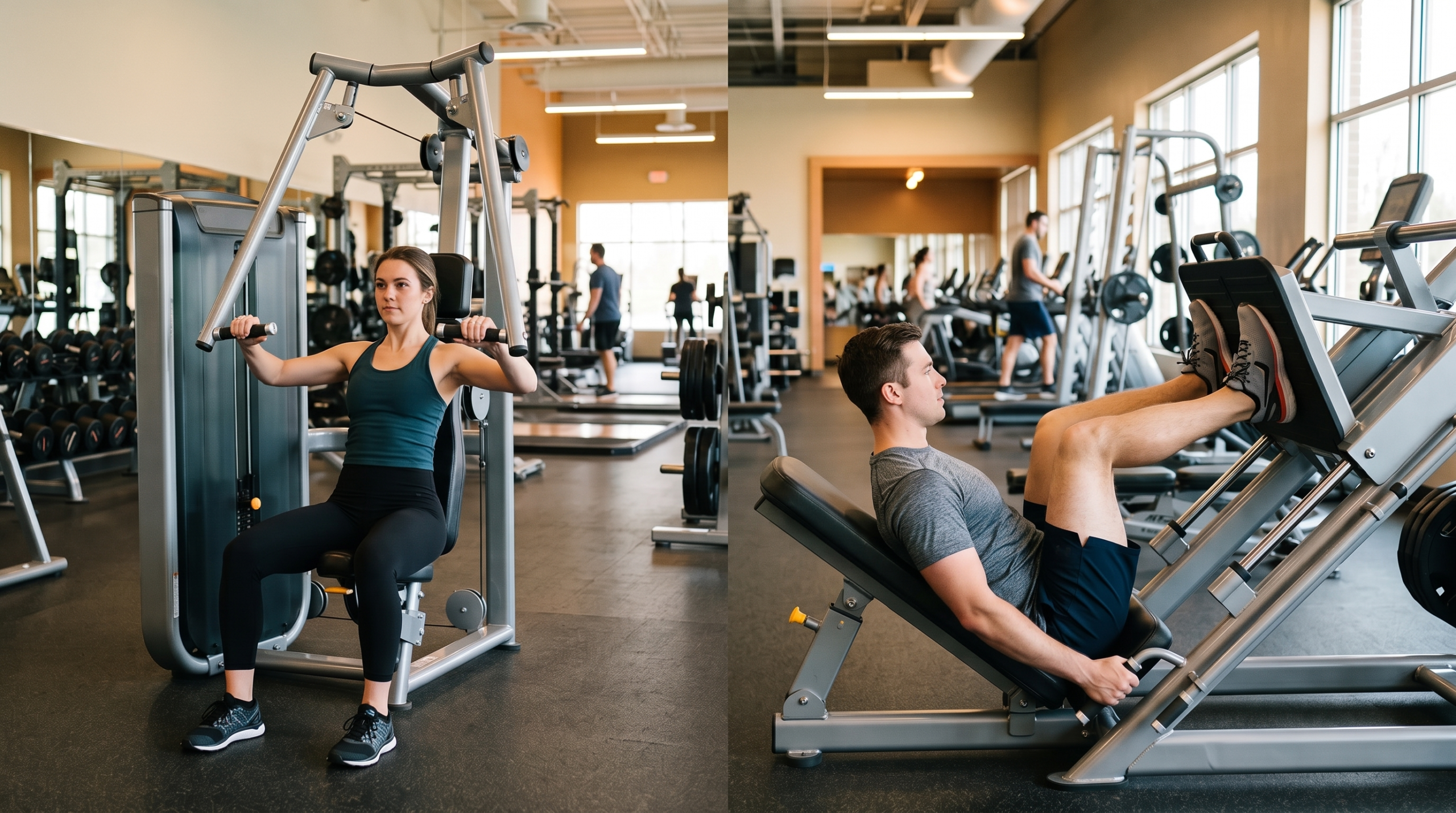
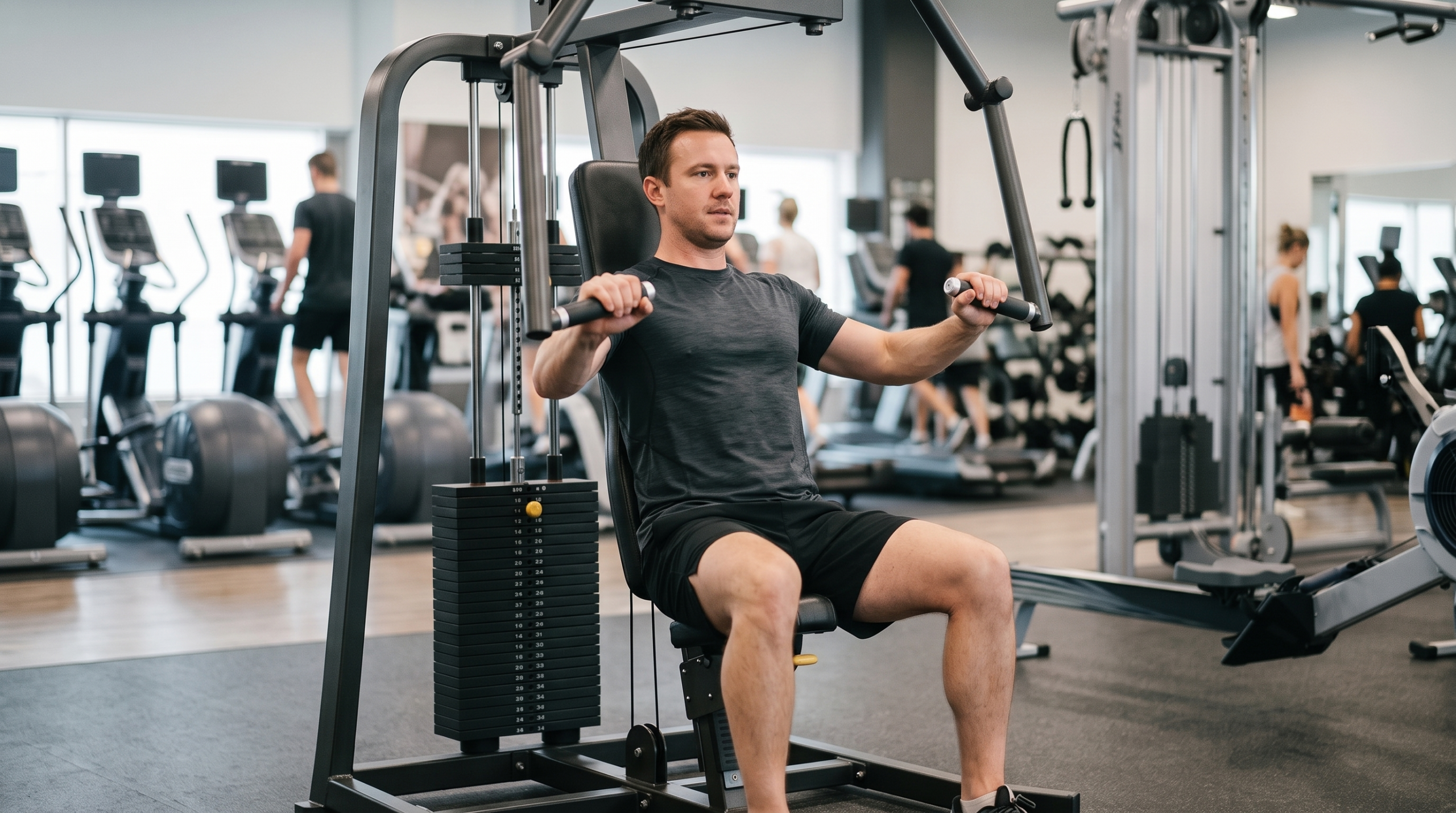
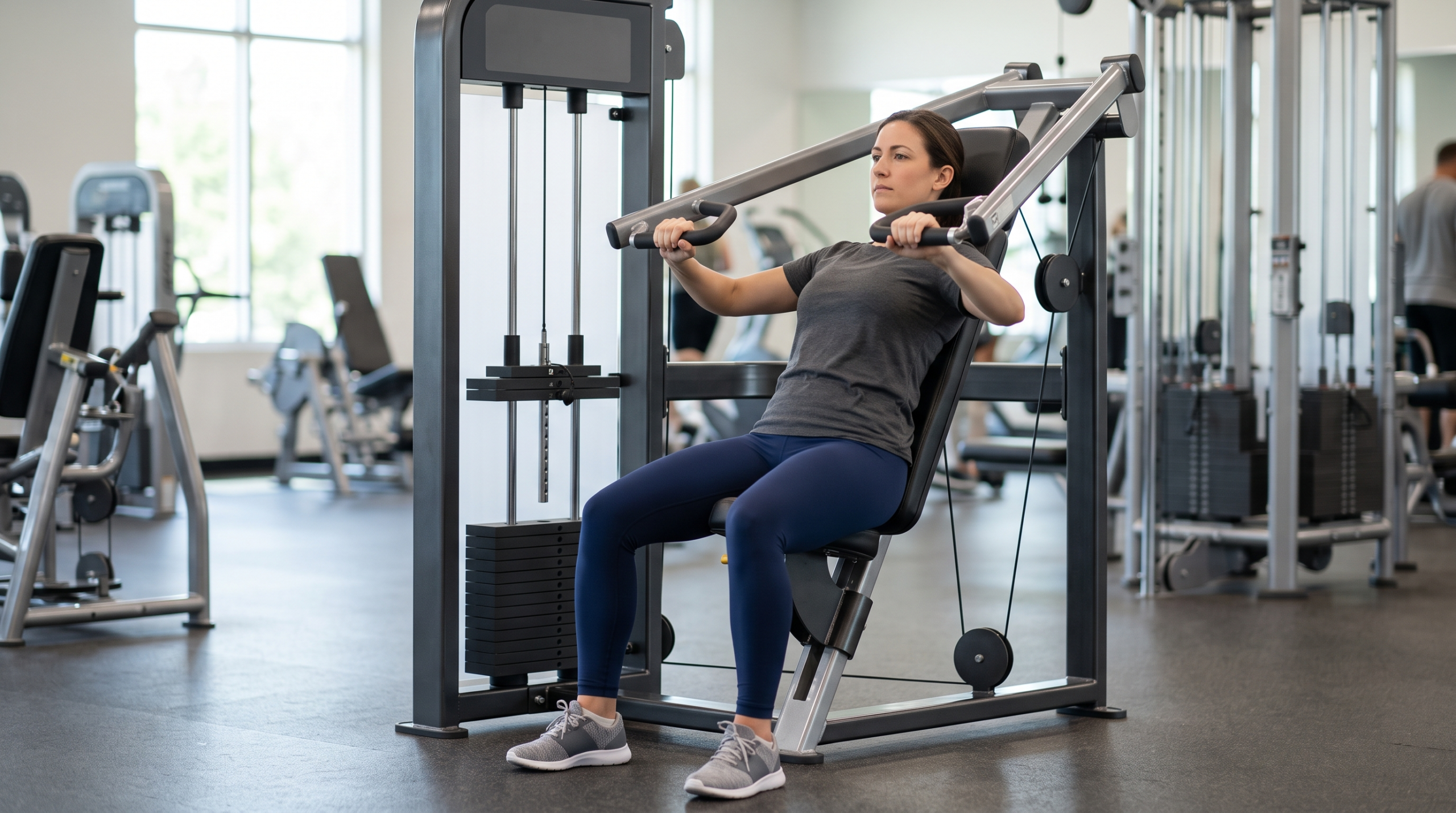
| Machine Chest Press ▶ | 3 | 6–10 | 2 | 3 | 2 | 2–3 min | Dumbbell Bench Press ▶ / Smith Bench Press ▶ | Keep your upper back stable and lower under control |
| Chest-Supported Row ▶ | 3 | 8–12 | 1–2 | 3 | 2 | 2–3 min | Seated Cable Row ▶ / Machine Row ▶ | Pull your elbows back without jerking your torso |
| Lat Pulldown ▶ | 2 | 8–12 | 1 | 2–3 | 1–2 | 2 min | Assisted Pull-Up ▶ / Neutral-Grip Lat Pulldown ▶ | Drive your elbows down rather than simply pulling with your hands |
| Machine Shoulder Press ▶ | 2 | 8–12 | 1 | 2–3 | 1–2 | 2 min | Seated Dumbbell Shoulder Press ▶ | Keep your torso stable and use a comfortable range of motion |
| Cable Lateral Raise ▶ or Machine Lateral Raise ▶ | 2 | 12–20 | 0–1 | 2 | 1–2 | 1–2 min | Dumbbell Lateral Raise ▶ | Raise with control without swinging |
| Cable Triceps Pushdown ▶ | 2 | 10–15 | 0–1 | 2 | 1–2 | 1–2 min | Machine Triceps Extension ▶ | Keep your upper arms relatively still |
| Cable Curl ▶ | 2 | 10–15 | 0–1 | 2 | 1–2 | 1–2 min | Dumbbell Curl ▶ / EZ-Bar Curl ▶ | Avoid turning the curl into a whole-body movement |
Why Upper A is structured this way
The chest press comes first because it is one of the main pressing movements in the program and benefits from being performed while you are fresh.
A supported row follows. Chest support removes much of the need to hold your torso in position, which can make it easier to focus on training your back.
The lat pulldown adds a vertical pulling pattern. Your row and pulldown are not redundant: one primarily uses a horizontal pulling path while the other pulls vertically.
The machine shoulder press provides some direct pressing work for the shoulders, but this program does not overload you with multiple heavy overhead presses because your front delts and triceps already contribute during chest pressing.
Lateral raises then provide direct work for the side delts.
Finally, the pushdown and curl give your triceps and biceps direct training after they have already contributed to the larger pressing and pulling exercises.
If you want a deeper explanation of upper-body exercise selection, see Beginner Upper Body Workout At The Gym.
Lower Body A
| Exercise | Sets | Reps | Warm-Up Sets | Early Sets RIR | Last Set RIR | Rest | Substitution | Key Cue |
|---|---|---|---|---|---|---|---|---|
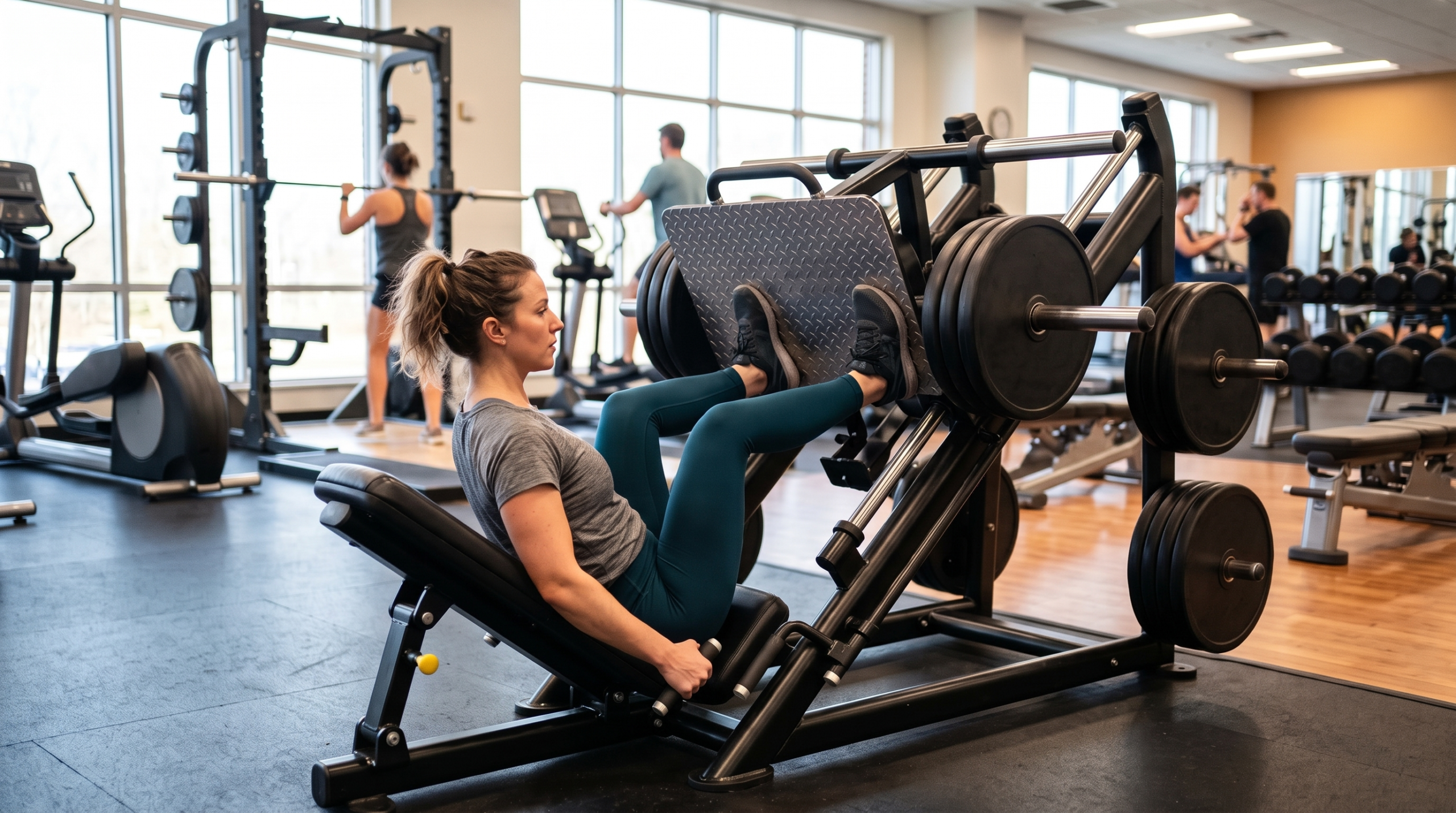
| Leg Press ▶ | 3 | 8–12 | 2–3 | 3 | 2 | 2–3 min | Hack Squat ▶ / Goblet Squat ▶ | Lower as deeply as you comfortably can without losing control |
| Dumbbell Romanian Deadlift ▶ | 3 | 8–10 | 2 | 3 | 2 | 2–3 min | Smith-Machine RDL ▶ / 45° Back Extension ▶ | Push your hips backward while keeping the weights close |
| Seated Leg Curl ▶ | 2 | 10–15 | 1 | 2 | 1–2 | 1–2 min | Lying Leg Curl ▶ | Control both directions and allow the hamstrings to lengthen |
| Leg Extension ▶ | 2 | 10–15 | 0–1 | 2 | 1–2 | 1–2 min | Another Leg-Extension Machine | Extend under control without bouncing |
| Standing Machine Calf Raise ▶ | 3 | 8–15 | 0–1 | 2 | 1–2 | 1–2 min | Leg Press Calf Raise ▶ / Seated Calf Raise ▶ | Use a controlled stretch at the bottom instead of bouncing |
| Cable Crunch ▶ | 2 | 10–15 | 0–1 | 2 | 1–2 | 1–2 min | Machine Crunch ▶ / Dead Bug ▶ | Move through your trunk rather than only pulling with your arms |
Why Lower A is structured this way
The leg press provides a stable knee-dominant movement for your quadriceps and glutes.
The Romanian deadlift trains the hip-hinge pattern and emphasizes the hamstrings and glutes. Because it can create substantial fatigue and requires good positioning, this program keeps it farther from failure than a simple leg curl.
A seated leg curl adds direct knee-flexion work for the hamstrings.
The leg extension adds direct quadriceps work without requiring additional balance or whole-body fatigue.
Calves and abdominal work finish the session.
If lower-body training is still unfamiliar, my Simple Leg Day Workout Plan For Beginners explains these basic patterns in more detail.
Upper Body B
| Exercise | Sets | Reps | Warm-Up Sets | Early Sets RIR | Last Set RIR | Rest | Substitution | Key Cue |
|---|---|---|---|---|---|---|---|---|
| Incline Machine Chest Press ▶ | 3 | 8–12 | 2 | 3 | 2 | 2–3 min | Incline Dumbbell Press ▶ / Smith Incline Press ▶ | Keep your upper back stable and press through a comfortable path |
| Neutral-Grip Lat Pulldown ▶ | 3 | 8–12 | 1–2 | 3 | 2 | 2–3 min | Standard Lat Pulldown ▶ / Assisted Pull-Up ▶ | Pull your upper arm toward your side |
| Seated Cable Row ▶ | 2 | 8–12 | 1 | 2–3 | 1–2 | 2 min | Chest-Supported Row ▶ / Machine Row ▶ | Keep your torso controlled while pulling |
| Pec Deck ▶ | 2 | 10–15 | 0–1 | 2 | 1–2 | 1–2 min | Cable Fly ▶ | Let the pecs stretch under control without forcing painful shoulder range |
| Reverse Pec Deck ▶ | 2 | 12–20 | 0–1 | 2 | 1–2 | 1–2 min | Cable Reverse Fly ▶ | Move from the shoulders without turning it into a row |
| Cable Lateral Raise ▶ or Machine Lateral Raise ▶ | 2 | 12–20 | 0–1 | 2 | 1–2 | 1–2 min | Dumbbell Lateral Raise ▶ | Control the weight and minimize body swing |
| Overhead Cable Triceps Extension ▶ | 2 | 10–15 | 0–1 | 2 | 1–2 | 1–2 min | Rope Pushdown ▶ | Keep your elbows controlled while allowing a comfortable stretch |
| Hammer Curl ▶ | 2 | 10–15 | 0–1 | 2 | 1–2 | 1–2 min | Rope Hammer Curl ▶ / Dumbbell Curl ▶ | Avoid using momentum from your shoulders or hips |
Why Upper B is different from Upper A
Upper B does not need to look completely different.
Beginners usually benefit from repetition and consistency because repeatedly practicing similar movements makes it easier to improve technique and objectively track progression.
The second upper workout simply changes some exercise angles and emphasis.
You still have:
- pressing;
- vertical pulling;
- horizontal pulling;
- shoulder work;
- biceps;
- and triceps.
The incline press gives the chest another pressing angle.
A pec deck adds chest work without another demanding press.
The reverse pec deck gives the rear delts and upper back some direct attention.
The remaining isolation exercises round out the session without adding much systemic fatigue.
Lower Body B
| Exercise | Sets | Reps | Warm-Up Sets | Early Sets RIR | Last Set RIR | Rest | Substitution | Key Cue |
|---|---|---|---|---|---|---|---|---|
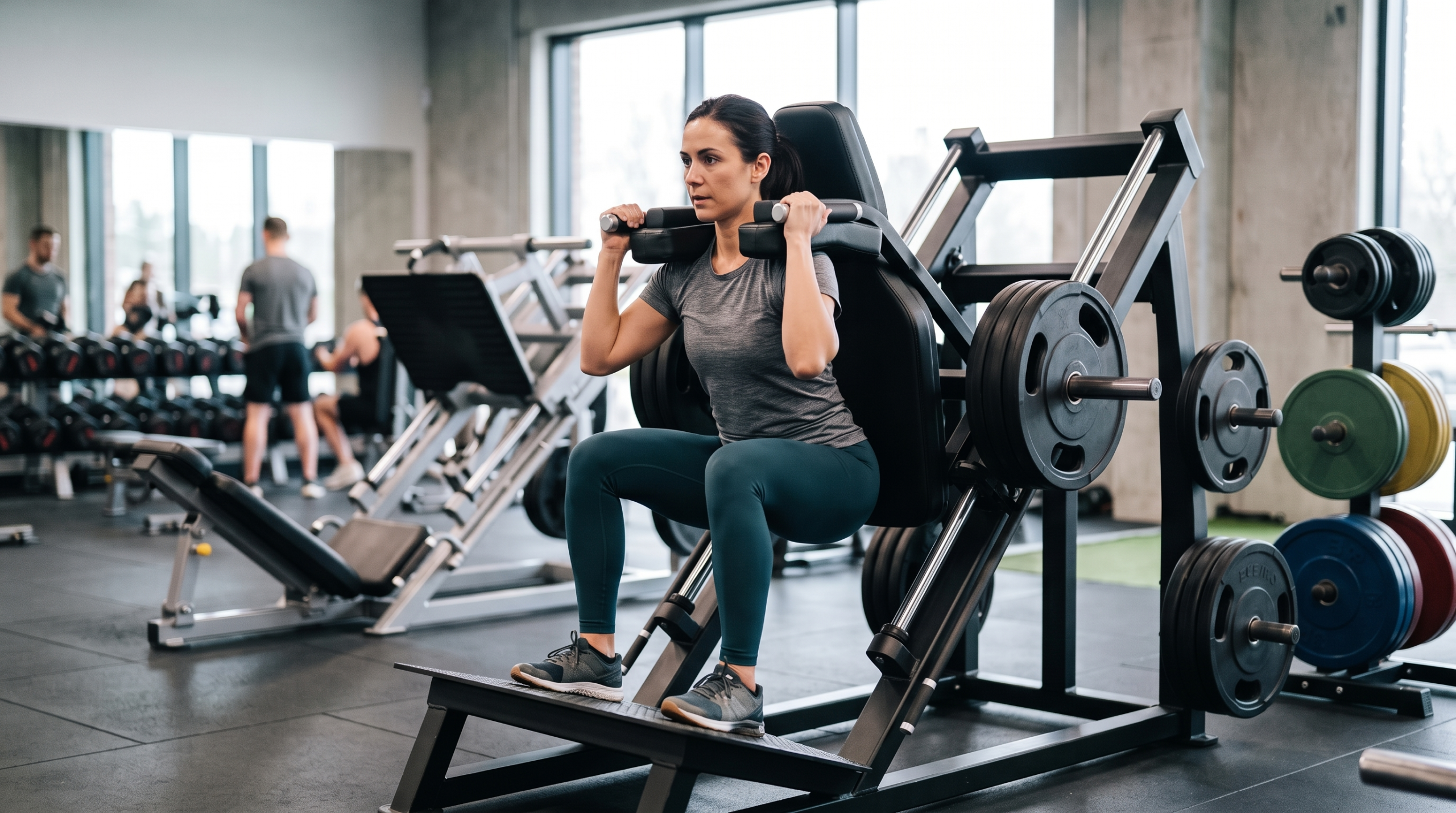
| Hack Squat ▶ | 3 | 8–12 | 2–3 | 3 | 2 | 2–3 min | Smith-Machine Squat ▶ / Leg Press ▶ | Descend under control and use the deepest comfortable range you can maintain |
| Machine Hip Thrust ▶ | 3 | 8–12 | 1–2 | 2–3 | 2 | 2–3 min | Smith Hip Thrust ▶ / Glute Bridge ▶ | Drive through the hips without overextending your lower back |
| Lying Leg Curl ▶ | 3 | 10–15 | 1 | 2 | 1–2 | 1–2 min | Seated Leg Curl ▶ | Keep your hips stable and control the lowering phase |
| Leg Extension ▶ | 2 | 10–15 | 0–1 | 2 | 1–2 | 1–2 min | Another Leg-Extension Machine | Use repeatable technique from workout to workout |
| Seated Calf Raise ▶ | 3 | 10–15 | 0–1 | 2 | 1–2 | 1–2 min | Standing Machine Calf Raise ▶ | Pause briefly in a controlled stretched position |
| Hanging Knee Raise ▶ | 2 | 8–15 | 0–1 | 2 | 1–2 | 1–2 min | Captain’s Chair Knee Raise ▶ / Reverse Crunch ▶ | Curl your pelvis instead of only lifting your thighs |
Why Lower B is different from Lower A
The hack squat replaces the leg press as the main knee-dominant exercise.
The hip thrust provides a glute-focused hip-extension exercise without repeating another Romanian deadlift.
The lying leg curl again trains knee flexion for the hamstrings.
The leg extension is intentionally repeated. There is no rule saying every training day requires a completely different exercise.
For beginners, repeating a simple exercise can actually make progression easier to judge.
Approximate Weekly Training Volume
Looking only at direct working sets, this program provides roughly:
| Muscle Group | Approximate Direct Weekly Sets |
|---|---|
| Chest | 8 |
| Back/Lats | 10 |
| Side Delts | 4 |
| Rear Delts | 2 |
| Biceps | 4 direct sets + pulling work |
| Triceps | 4 direct sets + pressing work |
| Quadriceps | 10 |
| Hamstrings | 8 |
| Glutes | Significant work across leg press, RDL, hack squat, and hip thrust |
| Calves | 6 |
| Abs/Core | 4 |
This is important because a set for one exercise can contribute to more than one muscle.
A chest press primarily trains your chest but also involves your triceps and front delts.
A row primarily trains your back but also involves your biceps.
A 2026 dose-response meta-analysis specifically examined the difficulty of counting these direct and indirect sets and found that considering indirect work as a partial contribution improved the relationship between training volume and adaptations. [2]
That is why you should not look at four direct biceps sets and automatically assume your biceps are only receiving four meaningful sets of training.
Your pulling exercises contribute too.
Do you need exactly 10 sets per muscle?
No.
The 2026 ACSM guidance highlights approximately 10 weekly sets per muscle group as a useful hypertrophy-oriented target, while the larger evidence shows a dose-response relationship with diminishing returns rather than a magical threshold. [1,2]
Think of weekly volume as a dose, not an on/off switch.
More is not automatically better.
Beginners should focus first on making their existing sets productive before adding more.
How Hard Should You Train?
One of the easiest mistakes to make is training either far too easily or far too hard.
If every set ends while you could still perform another eight repetitions, you are probably not giving the muscles much reason to adapt.
At the other extreme, taking every squat, RDL, press, curl, and leg exercise to absolute failure can create unnecessary fatigue and make the rest of the workout worse.
The middle ground is much more practical.
For most compound exercises
Aim for approximately:
2–3 RIR on earlier sets
and:
about 2 RIR on the last set.
For stable isolation exercises
You can generally work slightly closer:
about 2 RIR on earlier sets
and:
1–2 RIR on the last set.
That does not mean you have failed if one set accidentally reaches 0 RIR.
It means failure is not the goal.
Why not take everything to failure?
A 2024 meta-regression found that hypertrophy tended to improve as sets were terminated closer to failure, but the researchers also emphasized uncertainty about the exact relationship. [4]
A systematic review comparing failure and non-failure resistance training found no clear hypertrophy advantage from reaching momentary muscular failure itself. [5]
So the practical beginner message is:
Train hard enough that your final repetitions require real effort, but you do not need to prove how hard you trained by failing repetitions.
For a deeper explanation, see How Hard Should Beginners Train For Muscle Growth?.
How to Choose Your Starting Weight
You do not need to know your one-repetition maximum.
You also do not need a calculator to determine the “perfect” starting load.
Use the target rep range and RIR.
Suppose the program says:
Machine Chest Press — 3 × 6–10 at approximately 2–3 RIR
Choose a conservative weight and perform your first working set.
If this happens:
You perform 10 repetitions and feel like you could have done another 7.
The weight is probably too light.
Increase it slightly.
If this happens:
You barely perform 5 repetitions and your technique breaks down.
The weight is too heavy.
Reduce it.
If this happens:
You perform 8 repetitions with good technique and estimate that another 2–3 good repetitions were possible.
That is an appropriate working weight.
Keep it.
Do not worry if your first workout requires some experimentation.
Your first session is partly a calibration session.
Rep Ranges: You Are Not Limited to 8–12
The old bodybuilding idea that only 8–12 repetitions can build muscle is too restrictive.
Research comparing different resistance-training loads generally finds that muscle growth can occur across a broad spectrum of loading zones when sets are sufficiently challenging, although heavier loads tend to produce greater improvements in maximal strength. [6]
So why does this plan mostly use moderate rep ranges?
Because they are practical.
For example:
6–10 reps
works well for a stable press.
8–12 reps
works well for many compound and machine exercises.
10–15 reps
works nicely for curls, extensions, and leg curls.
12–20 reps
is often comfortable for lateral and rear-delt raises.
You could build muscle outside those ranges.
The ranges are there because they create a useful combination of:
- manageable loads;
- reasonable workout duration;
- straightforward progression;
- and good exercise control.
Machines vs Free Weights
Beginners sometimes assume they must barbell squat, barbell bench press, and deadlift from the floor or their program is somehow incomplete.
You do not.
Free weights are excellent tools.
Machines are excellent tools.
Neither category owns muscle growth.
The ACSM’s 2026 evidence synthesis reported that equipment type did not consistently influence outcomes for the average healthy adult. [1]
Machines can be especially practical for beginners because they often:
- provide more external stability;
- make setup easier;
- require less balance;
- make load changes fast;
- and allow you to focus on learning how hard productive resistance training feels.
Free weights may offer other advantages, including greater freedom of movement and strength that is specific to those lifts.
Use the tool that best fits the exercise, your goals, your body, and the equipment you have available.
How to Substitute Exercises Correctly
Do not choose replacements randomly.
A good substitution should train a similar movement pattern and target similar muscles.
Horizontal press
Examples:
- machine chest press;
- dumbbell bench press;
- Smith-machine bench press.
Horizontal pull
Examples:
- chest-supported row;
- seated cable row;
- machine row.
Vertical pull
Examples:
- lat pulldown;
- neutral-grip pulldown;
- assisted pull-up.
Knee-dominant lower-body exercise
Examples:
- leg press;
- hack squat;
- Smith-machine squat.
Hip hinge
Examples:
- dumbbell RDL;
- Smith-machine RDL;
- appropriate back-extension variation.
Hamstring knee flexion
Examples:
- seated leg curl;
- lying leg curl.
Side delts
Examples:
- cable lateral raise;
- machine lateral raise;
- dumbbell lateral raise.
Once you choose a substitution that feels good and fits the purpose, keep it for several weeks.
Constant exercise rotation makes it harder to tell whether you are actually getting stronger.
Technique: What Counts as a Good Rep?
You do not need every repetition to look robotic.
But your reps should remain similar enough that increases in weight or repetitions represent real progress rather than progressively looser technique.
A good general standard is:
- use a stable setup;
- control the lowering phase;
- avoid dropping or bouncing the weight;
- use a large comfortable range of motion;
- do not shorten the movement simply to claim more repetitions;
- minimize unnecessary momentum;
- and stop the set when technique deteriorates enough that the movement is becoming meaningfully different.
Do you need a specific lifting tempo?
No.
You do not need:
“3 seconds down, 1 second pause, 2 seconds up”
on every repetition.
The broader resistance-training literature does not support obsessing over one exact repetition speed.
A good beginner cue is simply:
Lower the weight under control and lift it with intent while keeping the movement stable.
If a repetition is so fast that you are bouncing, swinging, or losing control, slow it down.
If you are deliberately moving painfully slowly just because you think more “time under tension” automatically means more muscle growth, that is unnecessary.
How to Warm Up Before Each Workout
A warm-up should help you feel prepared for your working sets without tiring you out before the workout begins.
You can divide it into two parts.
General Warm-Up
Spend approximately 5–10 minutes doing something easy such as:
- treadmill walking;
- cycling;
- elliptical work;
- or another low-intensity activity.
You do not need to turn this into cardio training.
The goal is simply to become physically ready to lift.
You can also perform a few dynamic movements relevant to the workout.
For upper-body training, examples include:
- controlled arm circles ▶ — 10 reps per side
- arm swings ▶ — 10 reps per side
- light cable external shoulder rotations ▶ — 15 reps per side (optional)
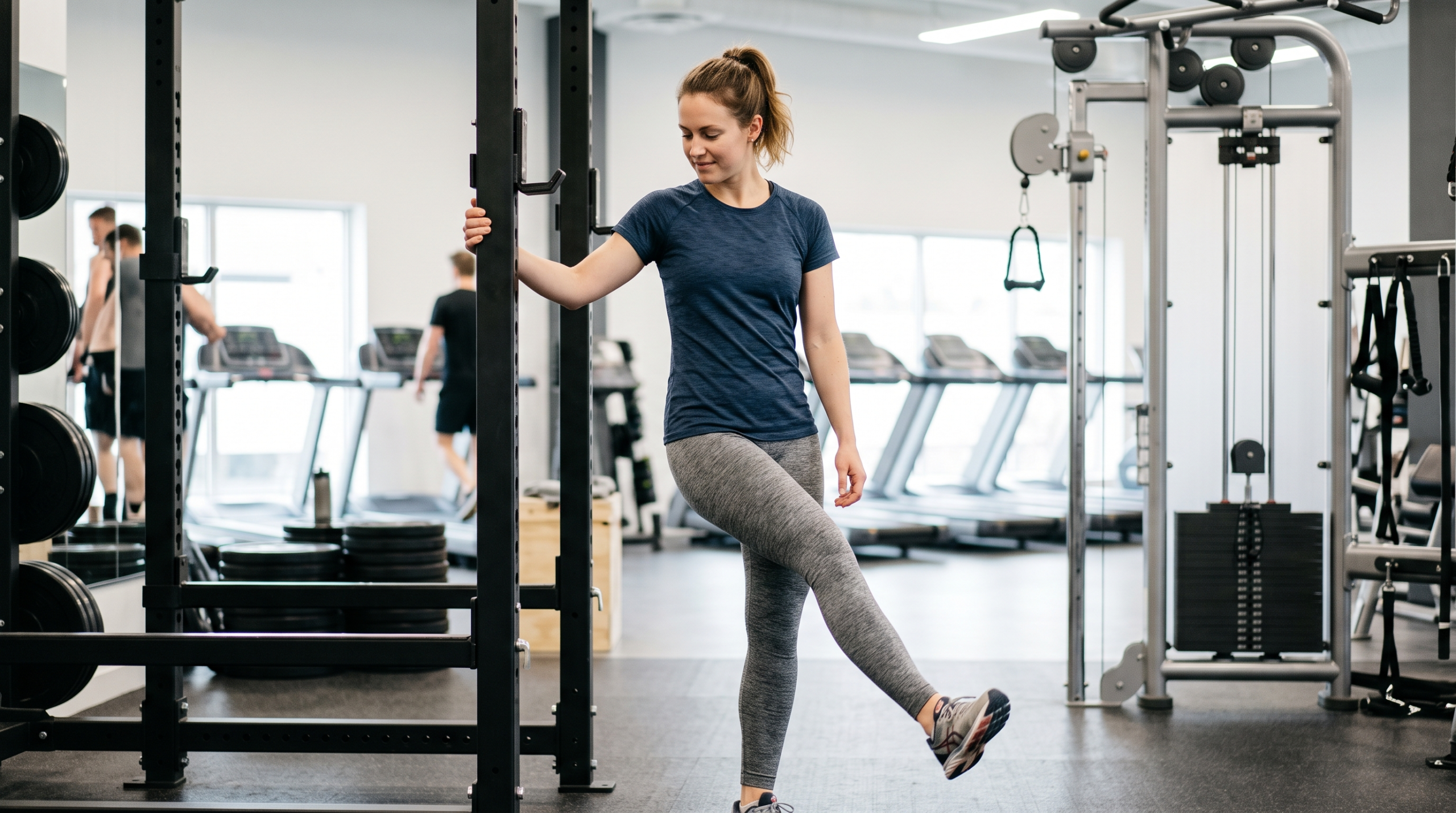
For lower-body training:
- bodyweight squats ▶ — 10 reps
- front-to-back leg swings ▶ — 10 reps per side
- side-to-side leg swings ▶ — 10 reps per side
Not everyone needs the exact same warm-up routine.
Exercise-Specific Warm-Up Sets
These matter most before your larger and heavier exercises.
Suppose your machine chest press working weight is 100 pounds.
Your warm-up could look approximately like:
- 50 pounds × 8–10
- 70 pounds × 4–6
- 85 pounds × 2–3
- then 100 pounds for your first working set.
These numbers do not need to be exact percentages.
The principle is:
As the warm-up weight gets heavier, perform fewer repetitions.
You want to prepare for the working weight without creating fatigue.
For smaller isolation movements later in the session, you may need:
- no dedicated warm-up;
- or one light practice set.
You can read the full warm-up explanation in How To Warm Up Before Lifting For Beginners.
How Long Should You Rest Between Sets?
Do not rush your sets just because shorter rest periods feel harder.
Feeling a stronger burn does not automatically mean a better muscle-building set.
A 2024 systematic review and Bayesian meta-analysis found a small hypertrophy advantage when rest intervals exceeded 60 seconds, potentially because adequate rest helps preserve training performance. The analysis did not find appreciable additional hypertrophy differences once rests exceeded roughly 90 seconds, although the exact need depends on the exercise and individual. [7]
A practical system is:
Large or demanding exercises
Rest approximately:
2–3 minutes
Examples:
- leg press;
- hack squat;
- RDL;
- chest press;
- larger rows;
- pulldowns.
Smaller isolation exercises
Rest approximately:
1–2 minutes
Examples:
- lateral raises;
- curls;
- triceps extensions;
- leg extensions;
- leg curls;
- calves.
If you need longer to reproduce good performance, take longer.
For a full explanation, see How To Structure Workout Rest Periods For Beginners.
How to Progress: Use Double Progression
The program will not continue working forever if the challenge never increases.
That is where progressive overload comes in.
One of the simplest progression methods for beginners is double progression.
You first progress repetitions.
Then you progress weight.
Example: Machine Chest Press
Your prescription is:
3 sets × 6–10 reps
You begin with 70 pounds.
Workout 1:
- 8
- 7
- 7
Workout 2:
- 8
- 8
- 7
Workout 3:
- 9
- 8
- 8
Workout 4:
- 10
- 9
- 9
Workout 5:
- 10
- 10
- 10
If your technique is still consistent and your last set is still approximately within the intended RIR target, increase the resistance by the smallest practical increment next time.
You may then get:
- 8
- 7
- 6
That is fine.
Now build upward again.

Do not increase weight just because you reached the top of the rep range once
The progression should still respect:
- technique;
- range of motion;
- and RIR.
If you got 10 repetitions only by drastically shortening the movement and grinding to absolute failure, you did not truly “earn” the increase under the intended prescription.
Progress is not only weight on the stack
Progress can include:
- more repetitions at the same load;
- more weight at similar repetitions;
- cleaner technique;
- more consistent range of motion;
- better control;
- or accomplishing the same work with the intended effort more comfortably.
For a deeper guide, read How To Implement Progressive Overload For Beginners.
Keep a Training Log
Do not rely on memory.
Record at least:
- exercise;
- weight;
- repetitions for each working set.
Ideally, also record approximate RIR.
For example:
Machine Chest Press
- 80 lb × 10 — 3 RIR
- 80 lb × 9 — 2 RIR
- 80 lb × 8 — 2 RIR
Next time, you know exactly what you are trying to beat.
Your goal might simply be:
- 10
- 9
- 9
That is progress.
A phone notes app is enough.
You do not need an advanced spreadsheet or special workout application unless you enjoy using one.
What If You Cannot Progress Every Workout?
Nothing is wrong.
Beginners often progress quickly, but that does not mean every single exercise improves every single session forever.
Your strength can fluctuate because of:
- sleep;
- nutrition;
- stress;
- hydration;
- equipment differences;
- exercise order;
- fatigue;
- motivation;
- and normal day-to-day variation.
One unremarkable workout is not a plateau.
If one workout is worse
Keep training normally.
If the same exercise stalls for several exposures
Check:
- Are you resting long enough?
- Is your technique still consistent?
- Are you actually training close enough to the prescribed RIR?
- Are you sleeping adequately?
- Are you eating enough to support your goal?
- Are you performing extra sets that are not in the program?
- Has soreness or fatigue been accumulating?
- Are you comparing the same machine and setup?
Only after troubleshooting the fundamentals should you assume the program needs a major change.
Should You Add More Sets?
Not automatically.
More volume can improve muscle growth, but the relationship has diminishing returns. [2]
That means the tenth productive set may add something, but it does not provide ten times the benefit of the first.
And eventually, adding more training can create more fatigue than useful stimulus.
Before adding sets, ask:
- Are my existing sets truly challenging?
- Is my technique good?
- Am I progressing?
- Am I recovering?
- Have I followed the program long enough to judge it?
If you are progressing well:
Do not add volume just because you can.
Keep progressing.
What If You Miss a Workout?
Do not panic and do not try to cram two full workouts together.
Keep the sequence moving.
Suppose your normal week is:
- Monday — Upper A
- Tuesday — Lower A
- Thursday — Upper B
- Friday — Lower B
But you miss Thursday.
You could do:
- Friday — Upper B
- Saturday or next available day — Lower B
Then gradually return to your normal schedule.
The important thing is that one missed day does not turn into:
“I ruined the week, so I might as well start over next Monday.”
Keep going.
Can You Train Four Days in a Row?
You technically can organize a routine in many ways, but four consecutive training days would not be my default recommendation for this beginner program.
For example:
- Monday Upper
- Tuesday Lower
- Wednesday Upper
- Thursday Lower
can work, but the Wednesday rest day in the recommended schedule gives you a convenient break from training.
The default schedule:
Upper → Lower → Rest → Upper → Lower
is simple and makes fatigue easier to manage.
If your life only allows a different arrangement, however, consistency still matters more than creating a theoretically perfect calendar.
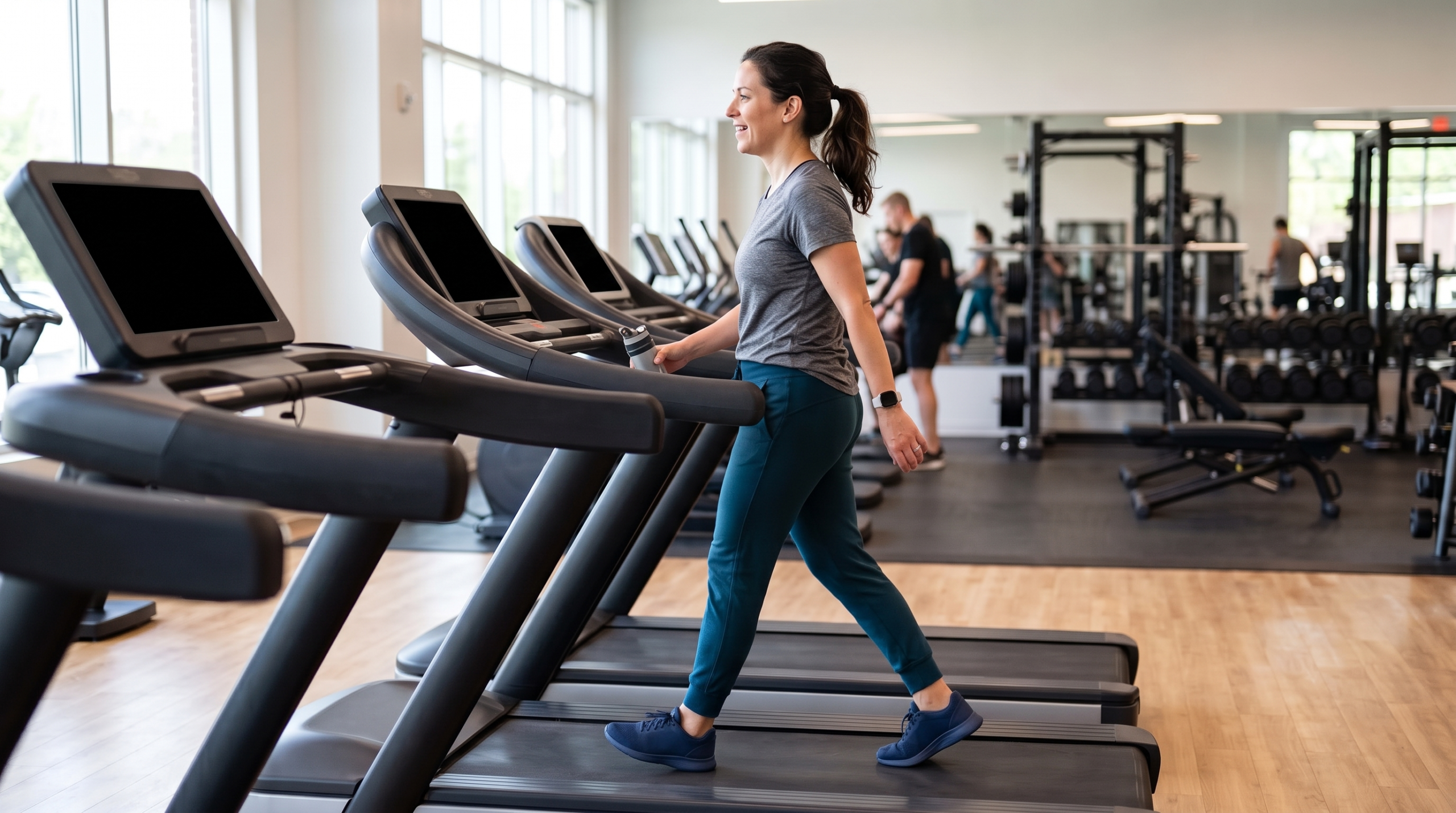
Cardio With a 4-Day Upper/Lower Routine
You do not need to avoid cardio because you want to build muscle.
A large updated meta-analysis found that concurrent aerobic and resistance training did not meaningfully reduce whole-muscle hypertrophy or maximal-strength gains overall compared with resistance training alone, although explosive strength and certain specific circumstances can be affected. [8]
So cardio and lifting can coexist.
Easy cardio
Examples:
- walking;
- easy cycling;
- easy incline treadmill work.
These are generally simple to fit around lifting.
Moderate or hard cardio
The harder and more fatiguing the cardio becomes, the more carefully you should place it around lower-body workouts.
If muscle growth is your priority, avoid repeatedly arriving at leg day with exhausted legs from hard running or high-intensity intervals.
A practical beginner schedule might be:
- Wednesday — optional cardio
- Saturday — optional cardio
or perform moderate cardio after an upper-body workout.
You do not need to use cardio specifically as a muscle-building tool. It is there for cardiovascular fitness, health, conditioning, enjoyment, or helping manage energy expenditure depending on your goals.
Nutrition for Muscle Growth
The training plan provides the stimulus.
Nutrition helps support the adaptation.
You do not need to transform this workout article into a complicated diet program, but a few fundamentals matter.
Protein
A major meta-analysis found that protein intake around 1.6 grams per kilogram of body weight per day captured much of the average additional benefit for fat-free-mass gains during resistance training, although individual needs and circumstances vary. [9]
A practical muscle-building range often used is approximately:
1.6–2.2 g/kg/day
or approximately:
0.7–1.0 g/lb/day.
You do not have to hit the exact same number every day.
Think of it as a useful range.
For a full explanation, see How Much Protein For Beginners To Build Muscle?.
Calories
Your calorie intake depends on your main goal.
If maximizing muscle gain is the priority, a modest calorie surplus can support training and weight gain without intentionally pushing calories excessively high.
If losing body fat is the priority, a calorie deficit will be required over time.
If you are a beginner or returning after a long break, building muscle while losing fat may also be possible under appropriate circumstances.
For more detail, see:
How Many Calories Should Beginners Eat To Build Muscle?
and:
Muscle Building Nutrition Guide For Beginners.
Carbohydrates and fats
After calories and protein are reasonably organized, carbohydrates and dietary fats can be adjusted around your preferences and nutritional needs.
Carbohydrates are particularly useful for supporting training performance.
Do not turn nutrition into a competition to make every meal mathematically perfect.
Consistency across weeks and months matters much more.
Sleep and Recovery
Training creates a stimulus.
Your ability to repeatedly perform productive training depends heavily on recovery.
Try to maintain a consistent sleep schedule and get enough sleep for your individual needs.
Most adults generally fall around the commonly recommended 7–9 hour range, although individual sleep needs differ.
You should also pay attention to your overall life stress.
A demanding job, poor sleep, illness, sports practice, and other physical activity all contribute to the workload your body has to recover from.
That is why two people performing the exact same routine may not tolerate the exact same amount of training equally well.

For more detail, see Muscle Recovery Tips For Beginners.
How to Know If You Are Recovering Well
Do not judge recovery based on soreness alone.
Use several signals together.
Green Light: Continue Normally
You are generally:
- maintaining or improving performance;
- recovering between sessions;
- experiencing manageable soreness;
- sleeping normally;
- motivated to train;
- and free from persistent joint discomfort.
Keep going.
Yellow Light: Pay Attention
You notice several of the following:
- performance declining across multiple workouts;
- soreness that repeatedly lasts unusually long;
- unusually low motivation;
- disrupted sleep;
- persistent fatigue;
- nagging joint discomfort.
Do not immediately quit the program.
First review:
- sleep;
- nutrition;
- exercise technique;
- extra training;
- cardio volume;
- and whether you have added unnecessary sets.
You may need a temporary reduction in training stress.
Red Light: Stop the Problematic Exercise
Pain that is:
- sharp;
- sudden;
- worsening;
- associated with swelling;
- changing your normal movement;
- or otherwise concerning
should not be treated as something you simply need to “push through.”
Stop the aggravating exercise and seek appropriate professional evaluation when warranted.
Do You Need a Deload Every 6–8 Weeks?
Not automatically.
A deload is a temporary reduction in training stress.
Beginners do not need to schedule a mandatory deload simply because the calendar reached a certain week.
If you are:
- progressing;
- recovering;
- motivated;
- and feeling good;
you can keep training.
A deload may become useful if several signs of accumulated fatigue persist at the same time.
A simple temporary deload could involve:
- fewer working sets;
- lighter loads;
- staying farther from failure;
- or some combination of those.
Then you gradually return to normal training.
Common Beginner Mistakes With a 4-Day Routine
1. Adding more exercises immediately
Finishing the workout with energy left does not mean the program failed.
A bodybuilding workout does not need to destroy you.
Start with the written routine.
2. Taking every set to failure
Hard training and failure training are not identical.
Most sets can be productive without ending at 0 RIR.
3. Training too lightly forever
The opposite problem also happens.
If every set feels like a warm-up, muscle growth may eventually stall.
Learn to approach the target RIR honestly.
4. Sacrificing technique for more weight
If adding 10 pounds turns your controlled row into a whole-body heave, that is not the type of progression we want.
5. Changing exercises constantly
Give an exercise enough time to learn it and progress it.
Novelty is not progressive overload.
6. Shortening rest periods to make workouts “harder”
You want the next working set to be productive.
Resting adequately is part of training well.
7. Copying advanced lifters
An advanced natural bodybuilder may require substantially more complexity and volume than someone beginning structured resistance training.
Your program should match your current level.
8. Judging the program by soreness
Soreness is not a scoreboard.
You can build muscle without being painfully sore after every workout.
9. Ignoring your logbook
If you do not know what you performed last time, progressive overload becomes guesswork.
10. Expecting perfect progress every week
Strength does not move in a perfectly straight line.
Judge trends.
For more examples, see Workout Mistakes For Beginners.
What Results Should You Expect?
There is no honest way to guarantee that everyone following this program will gain a certain number of pounds of muscle by a certain date.
People respond differently based on:
- genetics;
- training history;
- nutrition;
- sleep;
- body composition;
- consistency;
- age;
- and many other variables.
But a beginner following a sensible routine can look for several types of progress.
Better exercise technique
The movements should begin feeling less awkward.
You should spend less mental energy wondering where your hands or feet belong.
Strength improvements
You may perform:
- more repetitions;
- more resistance;
- or both.
Some early strength gains reflect better coordination and neurological skill rather than muscle growth alone, so do not assume every increase in strength equals new muscle.
Improved work capacity
Normal training sessions may begin feeling more manageable.
Visible muscular development
Visible changes generally take longer than improvements in gym performance.
Use weeks and months—not individual days—to judge physique changes.
Greater confidence
Understanding what you are doing can make the gym feel dramatically less confusing.
That is one of the most important early wins.
How to Track Muscle-Building Progress
Use more than one measurement.
Your training log
This is your most frequent feedback.
Are repetitions or loads gradually trending upward while technique remains consistent?
Body weight
If body composition is one of your goals, use averages rather than reacting emotionally to one morning’s weigh-in.
Daily weight can change because of:
- water;
- carbohydrate intake;
- sodium;
- food volume;
- and other normal factors.
Progress photos
Take photos under similar conditions.
For example:
- same room;
- same lighting;
- same approximate time;
- same poses.
Compare them after meaningful periods of time instead of every day.
Circumference measurements
Measurements such as:
- waist;
- arms;
- chest;
- thighs;
can add additional information.
No single measurement is perfect.
Look at the overall trend.
For more detail, see How To Know If You Are Building Muscle.
How Long Should You Follow This Program?
There is no rule that says:
“After exactly 8 weeks, this routine stops working.”
Keep using it while:
- you enjoy it;
- it fits your schedule;
- your technique continues improving;
- your strength is generally progressing;
- your muscles are responding;
- and you are recovering adequately.
For a beginner, keeping the major exercises relatively stable for several months can make a lot of sense.
Change exercises when there is a reason.
Good reasons include:
- persistent discomfort;
- equipment availability;
- a movement that clearly does not suit you;
- a change in goals;
- or progression that has genuinely stalled despite troubleshooting.
Bad reasons include:
- seeing a new TikTok exercise;
- getting bored after two weeks;
- or believing your muscles need constant “confusion.”
4 Days vs 3 Days: Which Is Better?
Neither is universally better.
Three-day full-body training may be better if:
- you want fewer weekly gym visits;
- you need maximum schedule flexibility;
- you enjoy full-body workouts;
- you want the simplest structure.
Four-day upper/lower may be better if:
- you prefer shorter muscle-specific sessions;
- you enjoy training four days;
- you want more room to distribute weekly sets;
- you like the upper/lower structure.
When total productive volume is similar, research does not show that simply choosing a split instead of a full-body routine automatically produces more muscle or strength. [3]
Choose the structure you can actually sustain.
Upper/Lower vs Push Pull Legs for Beginners
Push/pull/legs can also be effective.
The main difference is scheduling.
A traditional PPL split fits naturally into:
- three weekly workouts;
- six weekly workouts;
- or a rotating schedule.
A four-day week fits upper/lower very neatly.
That does not make upper/lower biologically superior. It simply makes it convenient.
You can compare the structures in my Push Pull Legs Workout For Beginners.
Frequently Asked Questions
Is training 4 days a week too much for a beginner?
Not necessarily.
Four appropriately designed sessions can be completely reasonable for a healthy beginner who can recover from the training and consistently fit four workouts into their schedule.
The number of days alone does not determine whether a program is excessive.
Total workload, effort, exercise selection, sleep, nutrition, and outside activity all matter.
Can a complete beginner use this program?
Yes.
If you have never followed structured training before, use the two-week beginner on-ramp first.
Your main priority should initially be learning the exercises rather than seeing how much weight you can lift.
Is four days better than three days for building muscle?
Not automatically.
A 2024 meta-analysis found similar muscle growth and strength with split and full-body routines when volume was matched. [3]
Choose based on preference, adherence, recovery, and scheduling.
Can women use this 4-day workout routine?
Yes.
The basic principles of resistance training, progressive overload, effort, volume, and recovery apply to women as well as men.
Exercise selection can still be adjusted according to individual goals and preferences.
Can I lose fat while following this routine?
Yes.
Resistance training should remain part of a fat-loss plan because it helps provide a stimulus for retaining or gaining muscle.
Fat loss itself requires an appropriate energy deficit over time.
Beginners and detrained individuals may sometimes gain muscle while simultaneously losing fat, especially when resistance training is a new or renewed stimulus.
How long should each workout take?
For most people, approximately 55–75 minutes is a reasonable expectation once you know the routine.
Your actual duration will depend on:
- warm-ups;
- rest periods;
- equipment availability;
- transitions;
- and how quickly you move through accessory exercises.
Do not shorten important rest periods just to beat a stopwatch.
Should I do every substitution listed?
No.
Perform the main exercise or one substitute.
The substitutions are alternatives, not bonus exercises.
Should I train to failure?
You do not need to.
Most working sets in this program stop with approximately 1–3 repetitions in reserve.
Accidentally reaching failure on a safe exercise occasionally is not necessarily a disaster, but failure is not required for the program to work.
What if I am not sore?
That does not mean the workout failed.
Soreness is influenced by unfamiliar exercises, lengthened muscle contractions, volume, recovery, and individual sensitivity.
Track progression rather than chasing soreness.
What if I am extremely sore?
If soreness significantly changes how you move or prevents you from performing the next workout normally, consider giving yourself more recovery and reviewing whether you started with too much training.
Use the beginner on-ramp if necessary.
What if my gym does not have a hack squat?
Use the listed Smith-machine squat or leg press substitution.
You do not need a specific branded machine to build your quadriceps.
Can I use only machines?
You can build substantial muscle using machine-based resistance training.
You do not need barbells simply because they are traditional.
Do I need supplements?
No supplement is required to make this workout routine effective.
Food, training, sleep, and consistency matter far more.
Protein powder can be a convenient food supplement if it helps you reach your protein target, and creatine monohydrate is one of the most extensively studied performance supplements, but neither replaces the training and nutrition fundamentals.
Should I add an arm day?
Not at first.
Your biceps and triceps already receive direct and indirect work across the two upper-body sessions.
Follow the program before deciding more volume is necessary.
Can I move the workouts to different days?
Yes.
Preserve the general order as much as practical and avoid repeatedly cramming hard sessions together unnecessarily.
What should I do if I miss an entire week?
Do not try to perform eight workouts the following week.
Resume the program.
If the layoff was only one week, you will probably return quickly.
After a much longer interruption, reduce loads and volume temporarily.
Do I have to stop this program after 8 or 12 weeks?
No.
If you are still progressing and recovering, there is no reason to change solely because a certain number of weeks passed.
Key Takeaways
A good 4 Day Workout Routine For Beginners should make training clearer, not more complicated.
The most important points are:
- use a simple four-day upper/lower split;
- train major muscle groups across two weekly sessions;
- use a manageable amount of weekly volume;
- choose stable exercises you can repeat and progress;
- perform most sets with approximately 1–3 reps in reserve;
- do not assume failure training is mandatory;
- use rep ranges appropriate for each exercise;
- rest long enough to maintain productive performance;
- learn technique before chasing heavy loads;
- use double progression;
- write down every workout;
- do not randomly add extra volume;
- and give the routine enough time to work.
The evidence consistently points back toward the fundamentals.
You do not need the most advanced workout.
You need a program you understand well enough to execute consistently and progressively.
Final Thoughts
There is something appealing about complicated workout programs.
More exercises, advanced techniques, constantly changing rep schemes, and endless optimization can make a routine look more “scientific.”
But complicated does not automatically mean effective.
For a beginner, the basic questions matter much more:
Can you perform the exercise well?
Are your working sets actually challenging?
Are you gradually improving?
Are you doing enough training without doing more than you can recover from?
Can you keep following the plan next month?
If those pieces are in place, you have already covered most of what matters.
This four-day upper/lower program is meant to give you that structure without pretending there is only one perfect way to train.
Run the program consistently.
Learn the exercises.
Keep a logbook.
Add repetitions.
Add weight when you earn it.
Eat and recover appropriately.
Then judge your progress across months—not individual workouts.
If you want the complete foundation behind beginner bodybuilding training, your next step is the Beginner Bodybuilding Workout Plan.
References
1. Currier BS, D’Souza AC, Fiatarone Singh MA, et al. American College of Sports Medicine Position Stand: Resistance Training Prescription for Muscle Function, Hypertrophy, and Physical Performance in Healthy Adults. Medicine & Science in Sports & Exercise. 2026;58(4):851–872.
2. Pelland JC, Remmert JF, Robinson ZP, Hinson SR, Zourdos MC. The Resistance Training Dose Response: Meta-Regressions Exploring the Effects of Weekly Volume and Frequency on Muscle Hypertrophy and Strength Gains. Sports Medicine. 2026;56(2):481–505.
3. Ramos-Campo DJ, Benito-Peinado PJ, Andreu-Caravaca L, Rojo-Tirado MA, Rubio-Arias JA. Efficacy of Split Versus Full-Body Resistance Training on Strength and Muscle Growth: A Systematic Review With Meta-Analysis. Journal of Strength and Conditioning Research. 2024;38(7):1330–1340.
4. Robinson ZP, Pelland JC, Remmert JF, et al. Exploring the Dose-Response Relationship Between Estimated Resistance Training Proximity to Failure, Strength Gain, and Muscle Hypertrophy: A Series of Meta-Regressions. Sports Medicine. 2024;54(9):2209–2231.
5. Refalo MC, Helms ER, Trexler ET, Hamilton DL, Fyfe JJ. Influence of Resistance Training Proximity-to-Failure on Skeletal Muscle Hypertrophy: A Systematic Review with Meta-analysis. Sports Medicine. 2023;53(3):649–665.
6. Schoenfeld and colleagues / resistance-training load evidence. Systematic reviews and meta-analyses comparing higher- and lower-load resistance training show similar hypertrophy across a broad range of loading conditions, with heavier loads generally producing greater improvements in maximal strength.
7. Singer A, Wolf M, Generoso L, et al. Give It a Rest: A Systematic Review With Bayesian Meta-Analysis on the Effect of Inter-Set Rest Interval Duration on Muscle Hypertrophy. 2024.
8. Schumann M, Feuerbacher JF, Sünkeler M, et al. Compatibility of Concurrent Aerobic and Strength Training for Skeletal Muscle Size and Function: An Updated Systematic Review and Meta-Analysis. Sports Medicine. 2022;52(3):601–612.
9. Morton RW, Murphy KT, McKellar SR, et al. A Systematic Review, Meta-Analysis and Meta-Regression of the Effect of Protein Supplementation on Resistance Training-Induced Gains in Muscle Mass and Strength in Healthy Adults. British Journal of Sports Medicine. 2018;52(6):376–384.
About the Author
I’m Angel Carcamo, founder of Lift & Nurture.
I create beginner-friendly bodybuilding content by researching evidence-based resistance-training principles and breaking them down into practical steps that are easier for new lifters to understand.
I am also still a beginner myself. I am not presenting this program as something I have personally coached people through for years, and I am not claiming decades of training experience that I do not have.
My goal with Lift & Nurture is different: to study reliable training research and respected evidence-based resources, organize what matters most, and explain it honestly from a beginner-focused perspective.
That means you will not see fake stories about clients I never trained or claims that I have personally used every method for years.
As I continue learning and applying these principles in my own training, I can also update Lift & Nurture with genuine experience rather than pretending that experience already exists.
If you are learning too, I hope this guide gives you a clearer starting point and helps you approach your training with structure, patience, and realistic expectations.
Start here: Beginner Bodybuilding Roadmap
Foundation guide: Beginner Bodybuilding Workout Plan
Thank you for sharing this helpful article on beginner workout routines. I really liked how the article explained the importance of balancing training and recovery with a structured 4-day split. The upper and lower body approach seems practical for beginners who want to build consistency without feeling overwhelmed.
I do have a question about the routine: how long should beginners typically follow this 4-day workout plan before moving to a more advanced program? Also, would you recommend adding cardio on rest days, or is complete rest better for muscle recovery in the beginning stages?
Overall, the article provides clear guidance and realistic advice for people starting their fitness journey, especially the emphasis on proper form, recovery, and gradual progression instead of rushing results.
Thank you for the thoughtful comment, IYERE.
I’m glad the upper/lower structure came across clearly. That balance between training and recovery is exactly why I like a 4-day split for beginners who are ready for a little more structure than a 3-day full-body plan.
For how long to follow it, I would usually recommend staying with the same 4-day routine for at least 8–12 weeks before making major changes. That gives you enough time to learn the exercises, improve form, track your lifts, and see whether you are actually progressing. If your strength is still going up, your recovery feels good, and you are enjoying the routine, you can keep using the same basic structure even longer.
A more advanced program is not really needed until progress slows for a while, recovery is consistent, and the basic lifts feel familiar. Most beginners are better off improving the same routine instead of switching too soon.
For cardio, I do think beginners can add it on rest days, but it should be kept moderate. Walking, light cycling, or easy treadmill work for 20–30 minutes can support heart health and recovery without taking away from muscle growth. Complete rest is also fine if you feel sore, tired, or run down.
A simple rule is: if cardio helps you feel better and does not hurt your leg training or strength progress, keep it in. If it makes you more tired, affects your lower-body workouts, or reduces motivation, pull it back.
So for most beginners, the best approach is:
stay with the 4-day plan for 8–12 weeks minimum, use light cardio if it helps recovery, and prioritize sleep, food, and consistency before trying to make the program more advanced.
Thanks again for reading and sharing your thoughts.
— Angel
This seems like a solid setup for beginners because a lot of new lifters either train too hard too fast or keep changing routines every week.
Do you think this routine still works well for beginners over 40 or would recovery need more adjustments? How would you handle progression if someone stalls on exercises like squats or chest press after the first couple months? And for skinny beginners trying to gain muscle, would you recommend adding more calories first or focusing on improving workout performance before eating more?
Thank you so much, Bob. I really appreciate the thoughtful questions.
For beginners over 40, I do think this routine can still work well, but recovery usually needs to be watched more carefully. The main adjustments I would make are longer warm-ups, slower controlled reps, fewer sets if soreness is lingering, and slightly more conservative progression. Instead of rushing weight increases, adding one rep at a time or small weight jumps is usually a smarter approach.
If someone stalls on squats, chest press, or another main lift after the first couple of months, I would not immediately change the whole routine. First, I would check form, sleep, nutrition, rest periods, and whether the weight jumps are too aggressive. A simple fix is to use double progression: build reps first, then increase the weight once all sets are completed with good form. If progress still stalls, then reducing fatigue, adding a deload week, or swapping to a similar exercise can help.
For skinny beginners trying to gain muscle, both training performance and calories matter. I would focus on improving workout performance while also eating enough to support that progress. If body weight is not slowly increasing over time, then adding calories is usually necessary. The goal is not to dirty bulk, but to use a small calorie surplus, enough protein, and steady progressive overload so the extra food supports muscle gain instead of unnecessary fat gain.
So overall: train consistently, progress slowly, recover well, and eat enough to fuel the plan. That combination is what makes a 4-day routine sustainable.