
Many beginners want to build muscle but find gym memberships, crowded spaces, or expensive equipment routines to be overwhelming. For many people, starting at home feels less intimidating than jumping straight into a crowded gym environment. The reality is, beginners can build real muscle at home using only bodyweight exercises and a bit of structure. With the right approach, bodyweight workouts deliver results and help beginners create a foundation for long-term fitness gains.
Building muscle as a beginner at home isn’t about extreme tricks or advanced routines. Most beginners see progress by focusing on controlled technique, steady increases in effort (called progressive overload), enough rest days, and realistic full body programs using basic moves. Over time, these habits help beginners grow stronger, look more toned, and build lasting confidence in their training.
This beginner’s guide breaks down how to get started with bodyweight muscle building at home—even if you have no equipment, little fitness experience, or feel unsure where to begin. You’ll find straightforward answers to common questions, learn key do’s and don’ts, and get a realistic workout plan you can follow right away.
Who This Is For
This beginner bodyweight workout guide is designed for:
- beginners training at home
- people without gym equipment
- those returning after time away from exercise
- beginners wanting a simple muscle-building structure
- people overwhelmed by complicated workout programs
Quick Answer: Can Beginners Build Muscle with Bodyweight Workouts?
Most beginners can build muscle at home with bodyweight workouts. You don’t need heavy weights to see results, especially in the first year of training. The keys are focusing on progressive overload (slowly increasing how much work your muscles do), using good technique, being consistent each week, and giving your body time to recover. Full body workouts two to four times per week with basic moves like pushups, squats, lunges, and rows will help beginners get stronger and build muscle you can see and feel.
Table of Contents
- Who This Is For
- Quick Answer: Can Beginners Build Muscle with Bodyweight Workouts?
- Understanding Beginner Muscle Building at Home
- Common Beginner Questions: Bodyweight Muscle Building FAQ
- Beginner Bodyweight Progression Methods
- Full Body Beginner Bodyweight Workout Plan To Build Muscle
- How To Make Exercises Easier or Harder
- Common Beginner Mistakes to Avoid
- Realistic Muscle Building Expectations At Home
- Recovery, Rest Days, and Why They Matter
- The Role of Nutrition for Muscle Growth
- Beginner Full Body Bodyweight Workout Sample Schedules
- Final Thoughts & Next Steps
- Beginner Bodybuilding Guides on Lift & Nurture
- References
- Disclaimer
- About the Author
Understanding Beginner Muscle Building at Home
Many beginner workout guides make muscle building sound confusing or complicated. In reality, beginners respond well to simple routines that hit all major muscle groups, use basic movement patterns, and are done several times per week. Science shows that beginners gain muscle quickly when these basics are in place, even with just bodyweight exercises. Research consistently shows that beginners respond well to basic resistance training principles when workouts are performed consistently over time.
The big idea is muscle gets stronger when it does more work than it’s used to. This is called progressive overload. Over time, using more reps, harder exercise variations, or slowing down the tempo builds the kind of challenge that muscles need to grow.
Bodyweight muscle building at home is all about practicing:
- Consistent structure (sticking to a real schedule, not random workouts)
- Controlled movement (moving with purpose, not rushing or cheating reps)
- Gradual progression (making things a little harder each week using small changes)
- Recovery (resting enough between workouts so muscles actually grow)
Most beginners see the best progress when they focus on slow, controlled movement, full range of motion, and good form instead of trying to do the hardest moves right away. This builds confidence and reduces the risk of injury or burnout.
Common Beginner Questions: Bodyweight Muscle Building FAQ
Can beginners build muscle with bodyweight workouts?
Yes. Beginners often see quick progress using only bodyweight moves like pushups, squats, and rows. Starting strength levels are low, so you don’t need heavy equipment to challenge your body and spark muscle growth. Most research and beginner programs agree that good form, full body routines, and progressive overload are most important, wherever you train.
Are bodyweight workouts enough to build muscle?
For beginners, bodyweight workouts are enough to create muscle gain in the arms, chest, legs, back, and core. After a few months, you may want to add resistance (like a backpack with books) or try new variations to keep progressing. For at least the first 3–12 months, bodyweight moves work well for most people starting out.
Can you build muscle at home without weights?
Most beginners can build muscle at home with just bodyweight, a sturdy chair, and sometimes a backpack filled with books for rows. Bodyweight training, such as pushups, squats, lunges, bridges, and core exercises, trains all major muscle groups for strength and muscle growth without any gym equipment.
What are the best beginner bodyweight exercises?
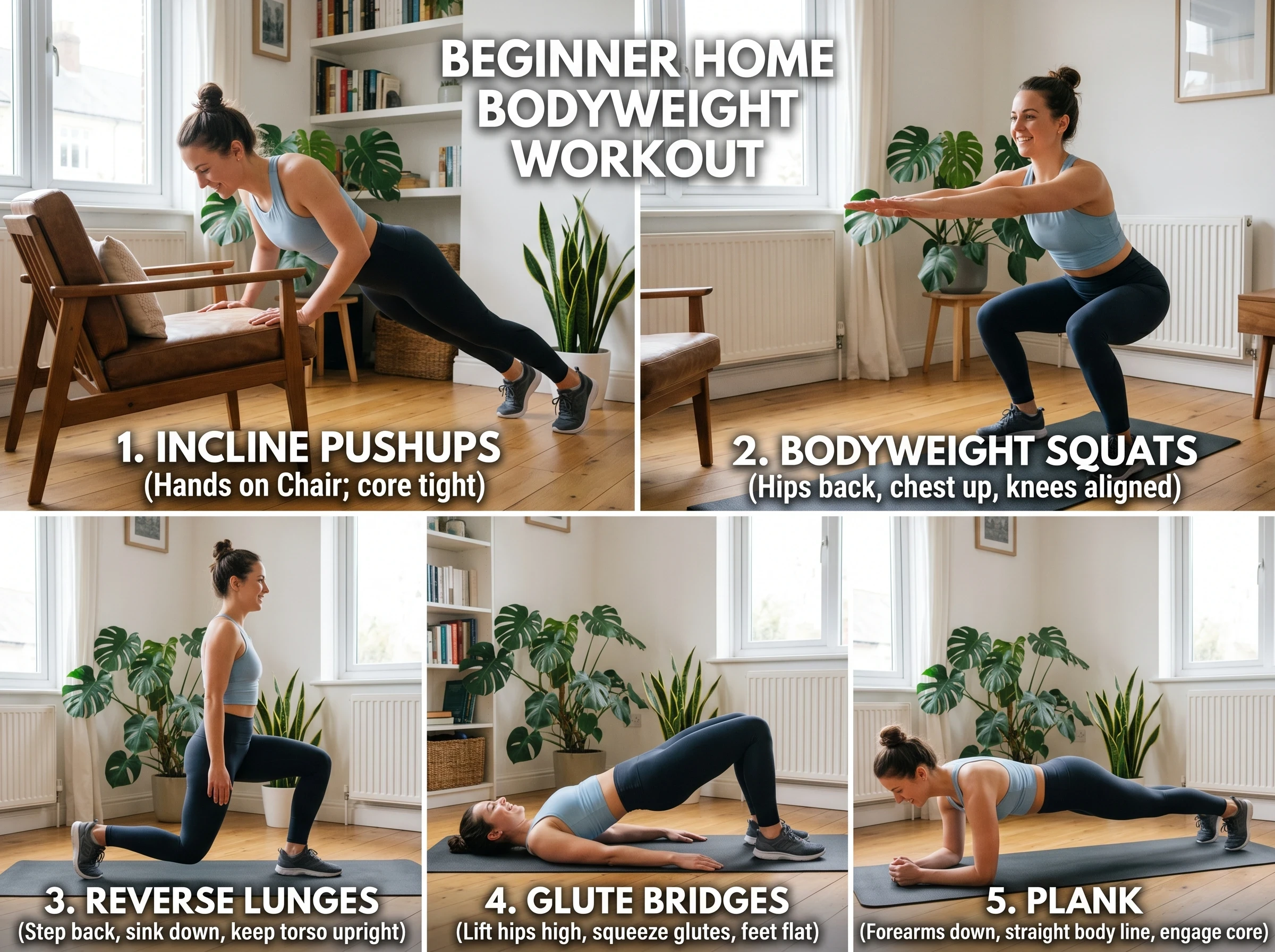
- Incline pushups (using a chair or table)
- Knee pushups
- Bodyweight squats
- Reverse lunges
- Glute bridges
- Backpack rows (with a backpack or tote)
- Planks
- Dead bugs (for core stability)
- Pike pushups (for shoulders, once stronger)
These moves are beginner-friendly, target major muscles, and can be made easier or harder as needed.
How often should beginners do bodyweight workouts?
Most beginners benefit from full body bodyweight workouts two to four times per week, with at least one day of rest between each session. This schedule gives enough training to build muscle without overwhelming recovery. Stick to a regular pattern (like Monday, Wednesday, Friday) and add extra rest if you feel very sore or tired.
How long does it take to build muscle with bodyweight training?
Beginner gains usually show up after four to eight weeks if you train regularly, use good form, and slowly increase your workload. Visible muscle changes often appear after two to three months. Results vary depending on training consistency, nutrition, sleep, stress levels, and starting fitness level. Keep in mind, muscle building is a gradual process. Progress may be faster if your nutrition, recovery, and consistency are in place.
What if a beginner cannot do pushups yet?
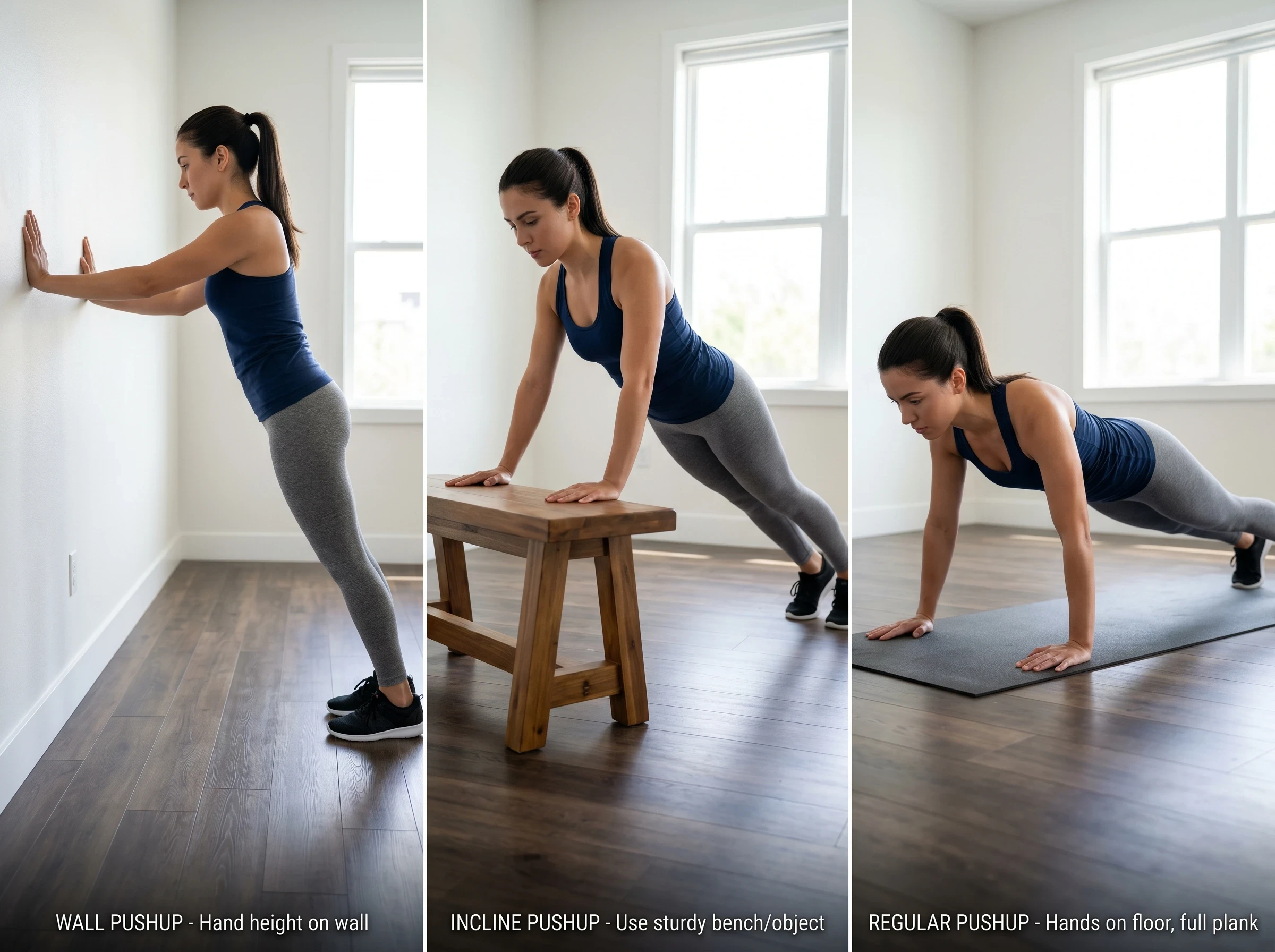
That’s normal! Most beginners start with easier versions, like incline pushups using a sturdy table or knee pushups on the floor. Practice perfect form, focus on slow lowering and pressing, and try to add one rep or make the exercise a bit harder each week. Over time, you’ll gain the strength to do regular pushups.
How do beginners progressively overload bodyweight exercises?
Progressive overload means making exercises a little harder over time to keep growing stronger. For bodyweight moves, try:
- Adding one or two reps each session
- Slowing down the lowering part of each exercise
- Pausing at the hardest part of the move (like bottom of pushup)
- Improving form and depth
- Using harder variations when ready (like going from knee pushups to incline, then to regular pushups)
- Reducing rest time between sets after you build up endurance
- Adding a weighted backpack for some exercises after a few months
Track your workouts in a notebook or app to see progress and know when it’s time to make things tougher. Small, steady changes work best for muscle building.
Should beginners train to failure?
No, beginners don’t need to push every set to the absolute limit. Training close to failure (stopping one or two reps before you can’t do another with good form) is enough to build muscle when starting out. Focus on using slow, controlled reps and keep a little in the tank to avoid injury or overtraining. As you gain experience, you’ll learn to judge your effort better.
Understanding proper training intensity matters for muscle growth. This guide on Beginner Weight Training Sets And Reps explains how beginners should structure reps, sets, and effort levels for better results.
How many sets and reps should beginners do?
Most beginners benefit from two to three sets of 8–15 reps per exercise, with 45–90 seconds rest between sets. If you can do more than 15 reps easily, make the exercise harder or slow down your tempo. If you can’t reach eight reps, use an easier variation. It’s about matching the challenge to your current strength.
Can skinny beginners build muscle with bodyweight workouts?
Yes, beginners who describe themselves as skinny or naturally lean can build visible muscle using bodyweight training, especially when paired with enough calorie and protein intake. Muscle growth depends on progressive overload, consistent training, and recovery, no matter your body type.
Do beginners need equipment to build muscle at home?
Almost all bodyweight exercises can be done with no equipment. A chair or sturdy table helps for rows, step-ups, or inclined moves. After a few months, a backpack and some books can add resistance if needed. For most people, a mat and open space are all you need to get started.
If you want the simplest possible beginner starting point using only basic bodyweight exercises and no equipment, this No Equipment Full Body Workout For Beginners At Home explains how to build strength, consistency, and confidence with a beginner-friendly full body routine at home.
Are full body bodyweight workouts best for beginners?
Full body workouts that train all major muscle groups in the same session are usually best for beginners. This plan builds balanced strength, supports recovery (since you don’t overload one area every day), and fits easily into busy schedules. Focusing on a few sessions per week works better than random daily workouts for most beginners.
Beginner Bodyweight Progression Methods
Progression means making your workouts a little more challenging over time. That’s how muscle growth keeps going. Bodyweight training is especially beginner-friendly when you know different ways to progress. Here’s what helps most:
- Increase reps: Add one or two more reps each set as you get stronger.
- Slow the tempo: Lower your body slowly on pushups or squats (try three seconds down).
- Pause and hold: Stop at the bottom of the movement for two to three seconds before rising.
- Improve range of motion: Go deeper in squats or pushups as flexibility improves, making each rep more effective.
- Use harder variations: Move from knee pushups to incline, then full pushups, or from assisted lunges to regular lunges.
- Add backpack resistance: Once high reps are easy, fill a backpack with books for squats, lunges, or rows.
- Focus on mind-muscle connection: Concentrate on the muscle you’re working (like chest during pushups), which gives a boost to effectiveness.
Mix these approaches to suit your fitness level and keep your bodyweight workouts productive.
Full Body Beginner Bodyweight Workout Plan To Build Muscle
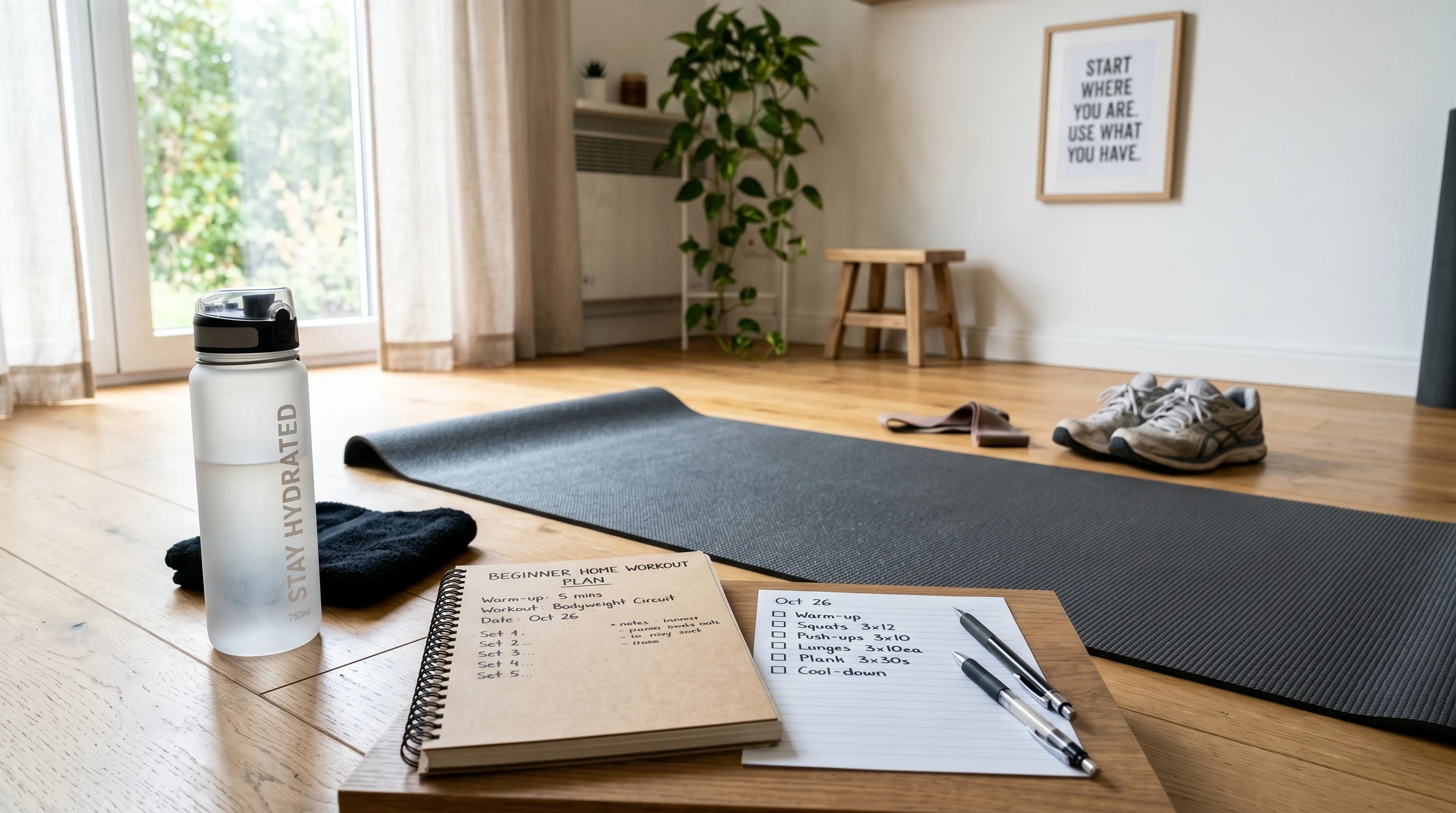
Many beginners feel lost without a structured plan. A lot of beginners struggle because they jump between random online workouts instead of following a repeatable structure. Here’s a simple system using Workout A and Workout B. Try to train three times a week with at least one rest day between sessions. For example: Monday (A), Wednesday (B), Friday (A), then swap rotations each week.
Workout A
- Incline Pushups – 3 sets of 8–12 reps (use a chair or table)
- Bodyweight Squats – 3 sets of 10–15 reps
- Backpack Rows – 3 sets of 8–12 reps (use a backpack, slow reps)
- Glute Bridges – 2 sets of 12–15 reps
- Plank Hold – 2 sets of 20–30 seconds
Workout B
- Knee Pushups – 3 sets of 8–12 reps (move to regular as you get stronger)
- Reverse Lunges – 3 sets of 8–12 reps (each leg)
- Pike Pushups – 2 sets of 8–10 reps (shoulders; keep hips high)
- Dead Bugs – 2 sets of 10–15 reps (each side, for core)
- Side Plank – 2 sets of 15–20 seconds (each side)
Rest 60–90 seconds between sets. If you can easily do the top end of the rep range with perfect form, make the move harder using progression tips. If you can’t reach the minimum, use an easier version.
Stick with this structure for at least four weeks. After that, keep using the same program but add small progressions. This consistent, repeatable foundation drives muscle gains and helps you avoid beginner confusion or bouncing between programs.
How To Make Exercises Easier or Harder
Most bodyweight exercises exist on a spectrum from very beginner-friendly to advanced. Adjusting exercise difficulty keeps your effort at the right level and prevents plateaus or injury. Here are ways to modify exercises:
- For pushups: Make them easier with hands on a countertop, table, or wall. Knees on the ground also help. Harder versions are regular pushups, then feet elevated, or slowing the descent.
- For squats: Use a chair for assisted squats if needed. Progress to deeper squats or add backpack resistance over time.
- For lunges: Hold onto a wall for balance or start with partial range of motion. Full lunges and then Bulgarian split squats (foot on a chair) add difficulty later.
- For rows: Row a backpack under a table or with a towel looped through a door if you don’t have any weights. Increase weight over time or pause at the top for extra challenge.
- For planks: Start from knees if needed. Increase to full planks, extend time, or add movement (shoulder taps) to progress.
When an exercise becomes very easy at high reps, use slower tempo, deeper range, or pause techniques before switching to an advanced variation. Small tweaks add up and keep you building muscle safely.
Common Beginner Mistakes to Avoid
Many beginners don’t see results because of simple, avoidable mistakes. Keeping these in mind helps you progress steadily and stay motivated:
- Do not switch workouts too often. Stick to the same plan for at least four to six weeks.
- Don’t rush your reps. Move with control to protect your joints and target your muscles.
- Overtraining by working out every day can slow muscle growth. Muscles need rest.
- Only doing one exercise per muscle group might cause muscle imbalances. Use a balanced plan covering all major movements: push, pull, legs, core.
- Selecting advanced moves too soon increases the chance of injury and frustration. Start simple and progress slowly.
- Neglecting nutrition or sleep limits muscle gains even if workouts are perfect.
- Comparing your progress to others can kill motivation. Focus on your personal improvements each week.
Bodyweight training works best with patience, structure, and realistic expectations.
Realistic Muscle Building Expectations At Home
Beginner muscle growth at home is absolutely possible, but results depend on several factors:
- Consistent full body workouts (2–4 per week)
- Good sleep and recovery between sessions
- Sufficient calorie and protein intake
- Regular progression methods
In the first two to three months, most beginners notice muscles feel firmer, daily movements are easier, and clothes fit better. Visible changes may take a little longer depending on your starting point and nutrition. Patience matters. Building muscle isn’t instant, but regular progress, no matter how small, adds up over time.
Recovery, Rest Days, and Why They Matter
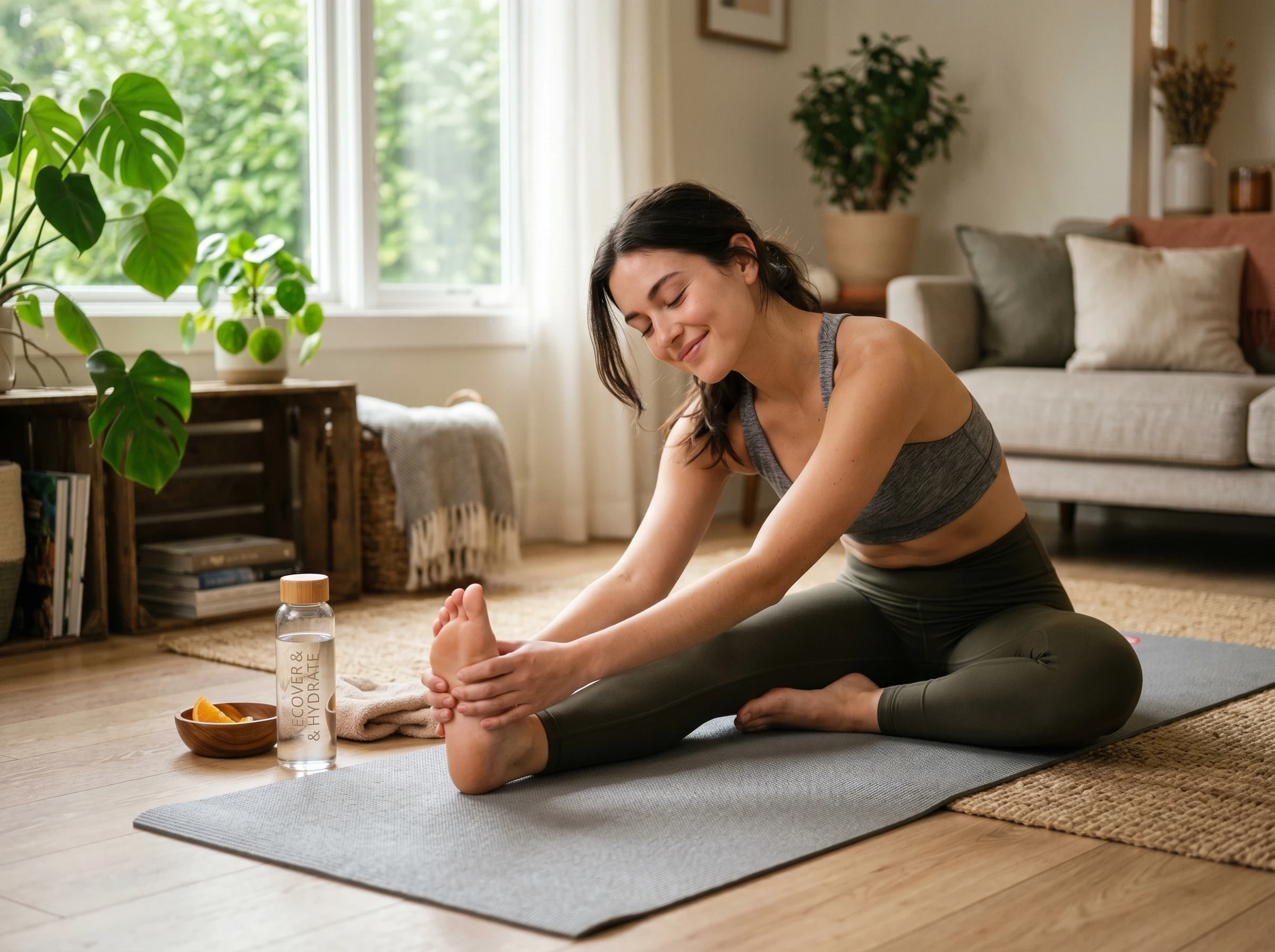
Muscle growth happens outside the workout when your body repairs and rebuilds. For beginners, rest days are really important. Plan at least one day of rest between workout days (for example, train Monday, rest Tuesday, train Wednesday).
Quality sleep (7–9 hours per night) allows your muscles and nervous system to recover so you can train hard and stay healthy.
Recovery is one of the most overlooked parts of beginner muscle growth. This guide on muscle recovery tips for beginners explains how sleep, rest days, and recovery habits support better progress.
Gentle walks, stretching, or light activity are fine on rest days but avoid intense training every day at first.
The World Health Organization also recommends regular physical activity and strength-focused exercise as part of long-term health and fitness habits.
If you feel very sore or unusually tired, take an extra rest day. Listening to your body makes a big difference for long-term results.
The Role of Nutrition for Muscle Growth
Eating enough protein, calories, and nutrients supports muscle building just as much as good training. Most beginners who don’t see progress are either inconsistent with workouts, overdo cardio, or eat too little protein or calories.
- Protein: Aim for at least 0.7–1 gram per pound of bodyweight (or 1.6–2.2 grams per kilogram). Sources include lean meats, eggs, dairy, beans, or protein powder.
- Overall calories: Building muscle depends on not undereating. Use a calorie calculator or track your meals for a week to spot problems early. Slow, steady weight gain is expected.
- Meal timing: Spread protein throughout the day (at least 3–4 meals) to support muscle repair and growth.
- Hydration: Drink enough water (at least 6–8 cups per day) to keep your body functioning at its best.
Well-planned nutrition is easier than it seems. Even small changes, like adding an extra serving of Greek yogurt or eggs, can help beginners get enough protein and calories for muscle building.
Beginner Full Body Bodyweight Workout Sample Schedules
Here are two easy ways to schedule your beginner full body bodyweight training:
- 3day plan: Monday (Workout A), Wednesday (Workout B), Friday (Workout A), then swap for next week
- 2day plan: Tuesday (Workout A), Friday (Workout B)—great for busy weeks or total beginners
If you want a more complete weekly structure built specifically around beginner full-body bodyweight training, this 3 Day At Home Workout Routine For Beginners explains how to organize three weekly workouts, recovery days, and progression using simple beginner-friendly exercises at home.
Rest at least one day between workouts. Adjust as needed based on your soreness, sleep, and work or life schedule. There’s no one-size-fits-all answer, but most plans agree consistency matters more than perfection or intensity.
Final Thoughts & Next Steps
Muscle building as a beginner at home with bodyweight is realistic, accessible, and rewarding when you focus on structure and consistency. You do not need fancy routines or heavy weights to see results. Full body workouts using basic moves, careful progression, enough rest, and a little patience lead to changes in strength, muscle size, and overall confidence.
Start where you are and work on just one goal each session. Trust the process, track your progress, and keep things simple. Over time, structured bodyweight workouts at home become a routine you count on to feel healthier and stronger, not needing extreme routines or burnout.
- Pick two full body workouts from this guide and set your training schedule this week
- Write down your reps and sets, watch your form, and progress slowly
- Focus on eating enough protein, sleeping well, and staying patient—results will come
Build a strong, confident foundation with beginner bodyweight training at home that you can grow on for years to come.
If you want a more complete beginner roadmap for building muscle, start with the Beginner Bodybuilding Workout Plan (12-Week Foundation Blueprint).
Beginner Bodybuilding Guides on Lift & Nurture
If you want to continue building muscle with a structured beginner approach, these guides may help:
- Beginner Bodybuilding Workout Plan (12-Week Foundation Blueprint)
- Full Body Workout Plan For Beginners: Simple Step-by-Step Guide
- 3 Day Workout Schedule For Beginners: A Complete Full Body Plan
- 4 Day Workout Routine For Beginners: Simple Upper/Lower Plan For Muscle Growth
- How To Implement Progressive Overload For Beginners (Without Stalling Your Progress)
- Beginner Weight Training Sets And Reps: How Many Should You Do for Muscle Growth?
- Muscle Recovery Tips for Beginners: Sleep, Rest Days, and Faster Muscle Growth
- Muscle Building Nutrition Guide For Beginners (Simple Meal Plan)
- Beginner Bodybuilder Exercises: The Best Starter List For Muscle Growth
- Beginner Fitness Plans After A Break: How To Start Working Out Again
References
1. American College of Sports Medicine. Resistance Training Guidelines Update.
2. Schoenfeld BJ. The Mechanisms of Muscle Hypertrophy and Their Application to Resistance Training. Journal of Strength and Conditioning Research.
3. World Health Organization. Physical Activity Guidelines.
4. National Institutes of Health. Physical Wellness Toolkit.
5. International Society of Sports Nutrition Position Stand: Protein and Exercise.
Disclaimer
This content is for educational purposes only and is not medical advice. Consult a qualified healthcare professional before starting any new workout or nutrition program.
About the Author
Angel Carcamo is the founder of Lift & Nurture, a beginner bodybuilding platform focused on structured training, muscle growth fundamentals, and long-term progress.
As someone building Lift & Nurture around beginner-friendly research and structured training principles, Angel creates guides that simplify widely accepted strength training concepts into clear, practical steps.
His guides focus on key fundamentals like progressive overload, recovery, and nutrition — helping beginners build muscle without confusion, shortcuts, or unrealistic expectations.
Start here: Beginner Bodybuilding Roadmap
Foundation guide: Beginner Bodybuilding Workout Plan (12-Week Foundation Blueprint)
It is definitely overwhelming for beginners to walk into a gym setting, especially on their own and try to navigate all the machines. I would definitely choose a class if I was a beginner going to gym for first time as at least they are lead by an instructor.
But yes, if you can motivate yourself to work out at home, it is a great idea to set up a workout space that you can get started at a fraction of the price of a monthly gym membership.
I just wondered if a person over fifty can still build muscle, or would they more be keeping strong what muscle they have left, as I know muscle mass begins to decline by this age?
Hi Michel,
Thank you for your thoughtful comment.
I completely agree that walking into a gym for the first time can feel overwhelming. With so many machines, exercises, and unfamiliar equipment, many beginners feel much more comfortable starting with a structured class or a simple home workout plan. One of the biggest advantages of training at home is that it removes many of those barriers and allows people to focus on building consistency before progressing to a gym environment.
As for your question, yes, people over 50 can absolutely build muscle. While muscle mass naturally declines with age if strength training is not performed regularly, research consistently shows that adults in their 50s, 60s, and even beyond can still gain muscle, increase strength, and improve physical function through resistance training.
The rate of muscle growth is generally slower than it is for younger adults, but meaningful progress is still very achievable. In fact, strength training becomes even more important as we age because it helps maintain independence, mobility, bone health, balance, and overall quality of life.
For most adults over 50, the key is focusing on proper technique, gradual progression, adequate recovery, and consistency rather than trying to train as aggressively as someone in their twenties. Even modest increases in strength and muscle can have a significant impact on everyday activities and long-term health.
Thank you again for reading and for contributing to the discussion. I appreciate you stopping by Lift & Nurture!