It can feel intimidating to get started with resistance training, especially if you do not want to join a gym. Many people wonder if working out at home with just dumbbells can truly build muscle, especially for beginners or those returning after a long time away from exercise. The short answer is yes; when you follow a consistent routine focused on solid technique, steady progress, and enough recovery, full body dumbbell workouts at home are a proven way for beginners to gain strength and muscle.
Many beginner programs recommend starting with simple, effective movements that target your whole body. Using dumbbells, you can train all the major muscle groups even in small spaces and with minimal equipment. Most beginners benefit from a training plan that focuses on form, moderate weights, and building the habit of regular workouts.
This guide lays out a clear approach for anyone looking to build muscle at home with dumbbells, without hype or extreme promises. By sticking to these basics, you can get stronger and see results safely and sustainably, no matter your starting point.
Quick Answer
Yes, beginners can effectively build muscle at home using dumbbells when they follow a structured workout routine focused on progressive overload, proper recovery, and consistent training.
Most beginner programs recommend full body dumbbell workouts 2–3 times per week using simple compound exercises like goblet squats, dumbbell presses, rows, and Romanian deadlifts.
For most beginners, 2–3 sets of 8–12 reps per exercise works well for building muscle while learning proper form safely.
The key is not using extremely heavy weights immediately. Instead, beginners benefit most from practicing technique, gradually increasing resistance over time, and staying consistent long term.
Table of Contents
- Quick Answer
- Why Dumbbell Training Works for Beginners
- How Full Body Workouts Help Beginners Build Muscle at Home
- Sample Beginner Full Body Dumbbell Workout at Home
- Simple Warm-Up Before Your Dumbbell Workout
- How to Perform Each Exercise
- How Many Sets and Reps Should Beginners Do?
- How Often Should Beginners Train With Dumbbells?
- What Dumbbell Weight Should Beginners Start With?
- What Equipment Do Beginners Need for Dumbbell Workouts at Home?
- How to Progress and Add Overload Over Time
- Why Recovery, Sleep, and Nutrition Matter
- Common Beginner Dumbbell Workout Questions
- Principles for Safe, Effective Dumbbell Training at Home
- Your Beginner Dumbbell Action Plan
- Beginner Bodybuilding Guides on Lift & Nurture
- Final Thoughts
- References
Why Dumbbell Training Works for Beginners
Dumbbells are especially effective for beginner workouts at home. They are portable, flexible, and allow you to start with lighter weights before moving up as you grow stronger. Many beginners find dumbbells less overwhelming than big machines or barbell setups. If you are just starting out, it is easy to practice good form without feeling rushed or judged.
Research on resistance training for muscle growth shows that beginners can effectively build strength and muscle using free weights like dumbbells when training consistently with progressive overload. For each exercise, both sides of your body must work, which helps you correct imbalances over time. This is great for building overall muscle and stability from the beginning.
Dumbbells come in different weights, so you can pick what is right for you. Many beginners find adjustable dumbbells useful because they make it easier to increase weight gradually over time without needing many separate dumbbell pairs. This makes it easy to add a little more weight as you get stronger and keep up constant progress.
How Full Body Workouts Help Beginners Build Muscle at Home
Most beginners benefit from full body dumbbell workouts. Full body training means each workout session trains all the major muscle groups, such as legs, back, chest, shoulders, and arms, instead of splitting days into specific body parts. This is considered especially effective for beginners because each muscle group gets worked multiple times weekly. Frequent practice supports learning good exercise technique, while balanced routines reduce the odds of soreness or injury.
Experts like those at Renaissance Periodization recommend full body training three times per week for most beginners. This approach keeps the workouts straightforward, helps build consistency, and ensures all areas get stronger together.
Sample Beginner Full Body Dumbbell Workout at Home
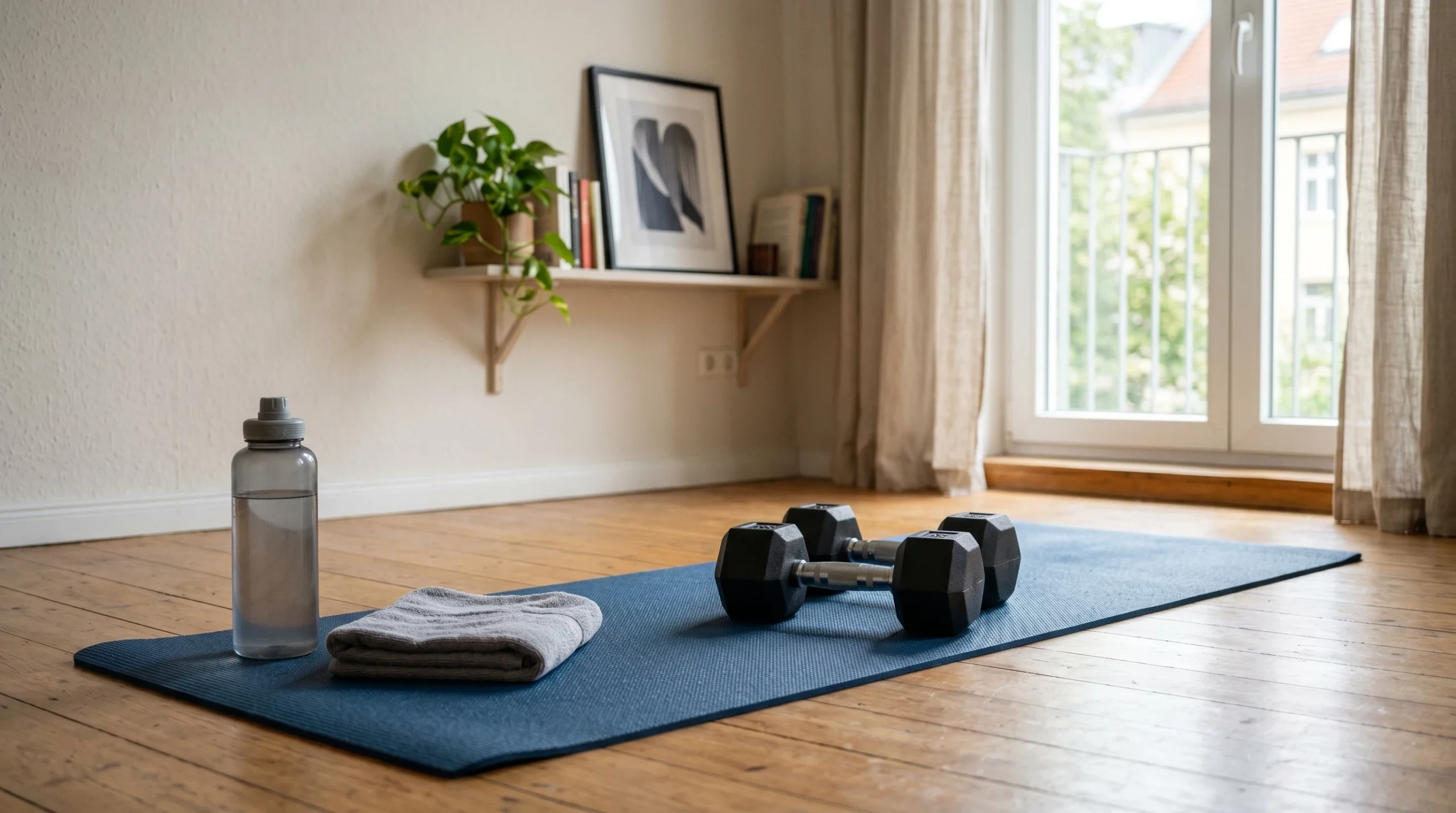
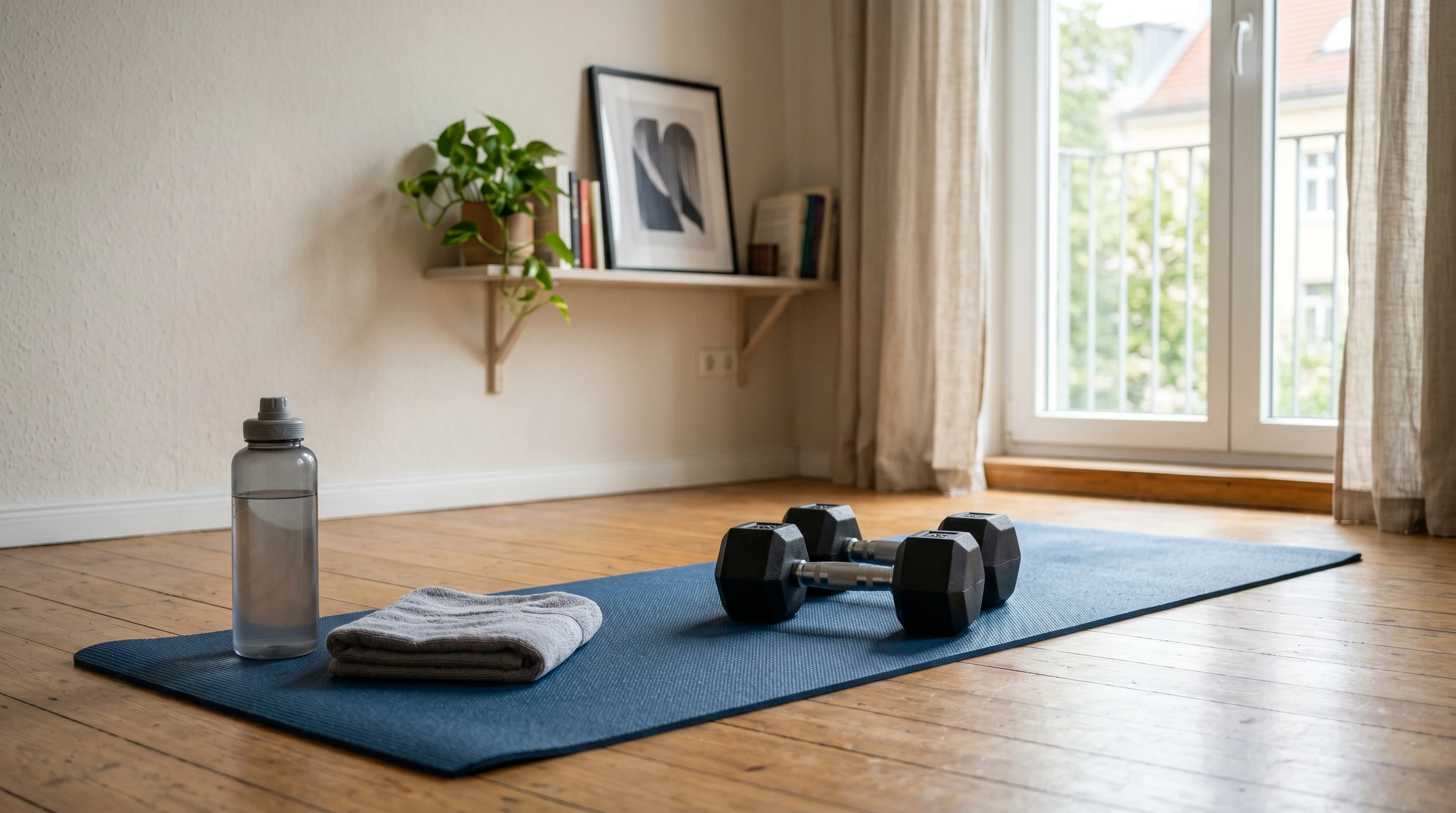
Here’s a beginner-friendly routine that covers your whole body, designed for two or three days per week. All you need is a pair of dumbbells, some floor space, and a mat. For each exercise, choose a weight that feels challenging but allows you to finish all the reps with good form.
- Goblet Squat (Legs and Glutes): 3 sets of 8-12 reps
- Dumbbell Romanian Deadlift (Hamstrings and Lower Back): 3 sets of 8-12 reps
- Dumbbell Floor Press or Dumbbell Bench Press (Chest, Shoulders, Triceps): 3 sets of 8-12 reps
- Dumbbell Shoulder Press (Shoulders and Triceps): 2-3 sets of 8-12 reps
- One Arm Dumbbell Row (Back and Biceps): 3 sets of 8-12 reps on each arm
- Planks or Dead Bugs (Core): 2-3 sets, hold for 20-30 seconds or 8-12 reps per side
Common beginner strategy is to rest about 60-90 seconds between sets, or longer if you need it. The main focus is on quality reps, not rushing.
Simple Warm-Up Before Your Dumbbell Workout
Before starting your dumbbell workout, spend about 5–10 minutes warming up your body. A good warm-up helps increase blood flow, improve exercise performance, and prepare your joints and muscles for training.
Most beginners do not need long or complicated warm-up routines. The goal is simply to feel warmer, looser, and mentally ready to train — not exhausted before the workout even begins.
A simple beginner warm-up may include:
- 3–5 minutes of light cardio like brisk walking, marching in place, or cycling
- 10 arm circles forward and backward
- 10 bodyweight squats
- 10 front-to-back leg swings per leg
- 10 side-to-side leg swings per leg
- 1 light practice set for your first dumbbell exercise
For example, before goblet squats, you could perform a few slow reps using a very light dumbbell before starting your working sets.
The purpose of warming up is to improve movement quality and prepare your body for training safely. Most beginners only need a short, simple routine to feel ready for their workout.
How to Perform Each Exercise
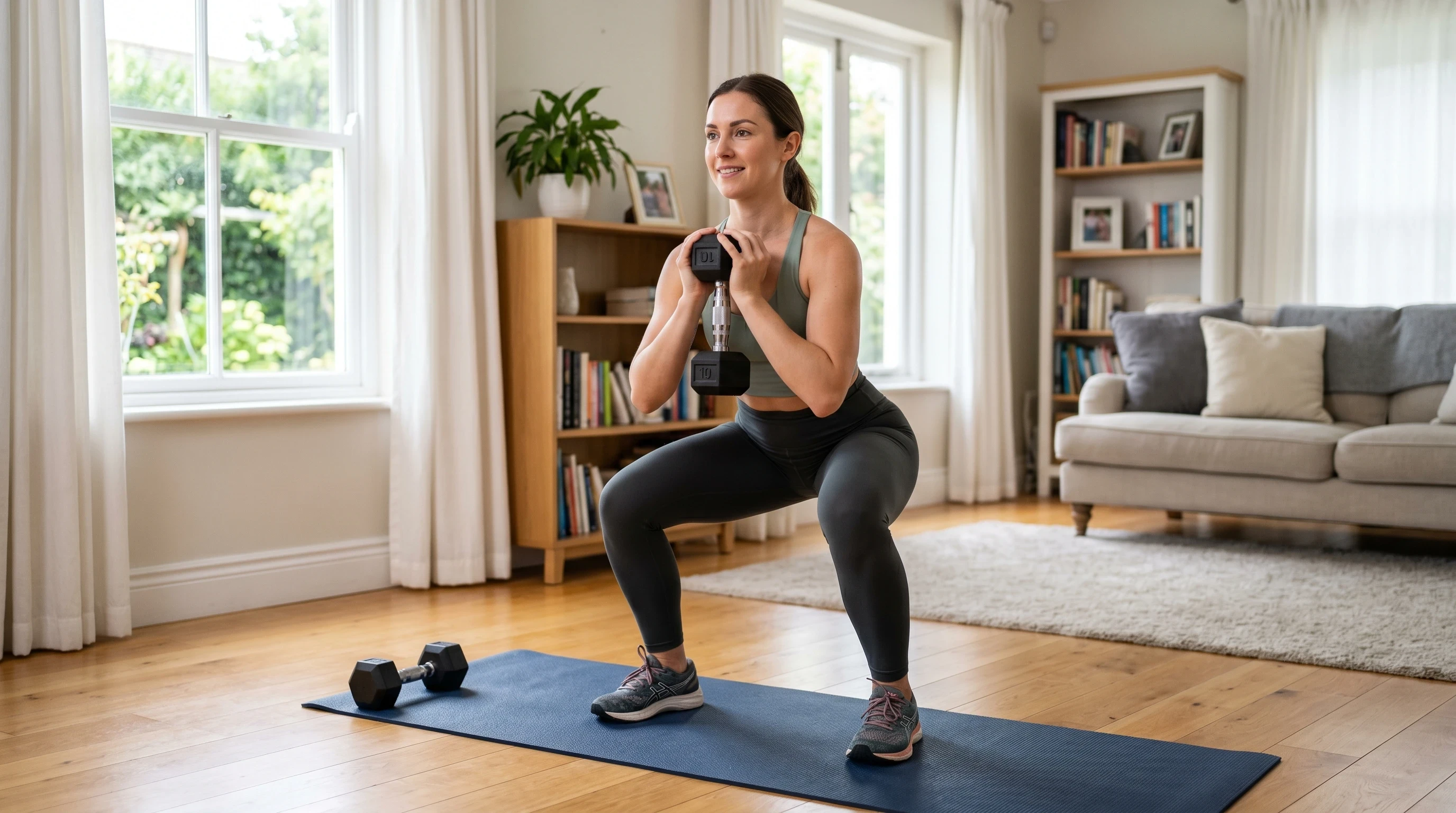
- Goblet Squat: Hold one dumbbell at chest height with both hands. Sit your hips back and squat down, keeping your chest up and your knees in line with your feet. Stand back up, driving through your heels.
- Dumbbell Romanian Deadlift: Hold a dumbbell in each hand in front of your thighs. Soften your knees and hinge forward from your hips, keeping your back flat. Lower the dumbbells to midshin, then return to standing by squeezing your glutes.
- Dumbbell Floor Press: Lie on your back with a dumbbell in each hand, elbows at about 45 degrees. Press the dumbbells up toward the ceiling until your arms are straight, then slowly lower.
- Dumbbell Shoulder Press: Stand or sit with dumbbells at shoulder height. Press both dumbbells overhead until arms are extended. Lower with control.
- One Arm Dumbbell Row: Place one hand and knee on a sturdy surface, with the dumbbell in your free hand. Pull the dumbbell up toward your hip, squeezing your back, then lower.
- Plank: Support your body on your forearms and toes, keeping your body straight and tight. Hold.
Many beginners find watching short instructional videos online or following photo guides helpful to keep technique safe and effective. Always start light and focus on clean, stable movements. If you ever feel unsure, ask a trainer or check a trusted source for extra guidance.
How Many Sets and Reps Should Beginners Do?
Most beginners benefit from 2-3 sets of 8-12 reps per exercise, as this range supports both muscle growth and learning proper form. Working in this moderate range is enough to challenge your muscles without causing unnecessary strain or risking poor technique from fatigue.
For core moves like planks or dead bugs, sets are often timed holds (20-30 seconds) or 8-12 reps per side. The main goal is to use a weight or difficulty level where the last few reps of each set feel tough, but you could perform at least one more with good form if you had to.
How Often Should Beginners Train With Dumbbells?
Many beginners see great results training 2-3 full body dumbbell workouts per week. Giving yourself at least one day of rest between strength sessions lets your muscles recover and grow. For most people, this looks like Monday-Wednesday-Friday, or other nonconsecutive days.
On non-training days, gentle activity like walking or stretching is a good way to keep active without overdoing it. More is not always better; building muscle requires recovery, not just extra workouts.
What Dumbbell Weight Should Beginners Start With?
Choosing the right dumbbell weight is really important for beginners. Start lighter to practice form and avoid injury. As a rule of thumb, pick a weight you can lift for about 10-12 solid reps with steady control. If you can do many more than 12 reps easily, the weight may be too light. If you cannot reach 8 reps with stable form, try a lighter pair.
Many beginner programs recommend starting with 5-15 pound dumbbells for upper body moves and 10-25 pounds for lower body exercises. Adjustable dumbbells are a good choice if you want to progress without buying many sets.
If you are not sure, it is safer to start too light and increase over time. Muscle growth happens by steadily adding challenge, not from lifting the heaviest weight in the room. Remember, patience leads to safer, long term gains.
Beginner Tip:
Your first few weeks are more about learning movement quality and consistency than lifting heavy weights. Starting lighter and improving your form gradually usually leads to safer, more sustainable progress long term.
What Equipment Do Beginners Need for Dumbbell Workouts at Home?
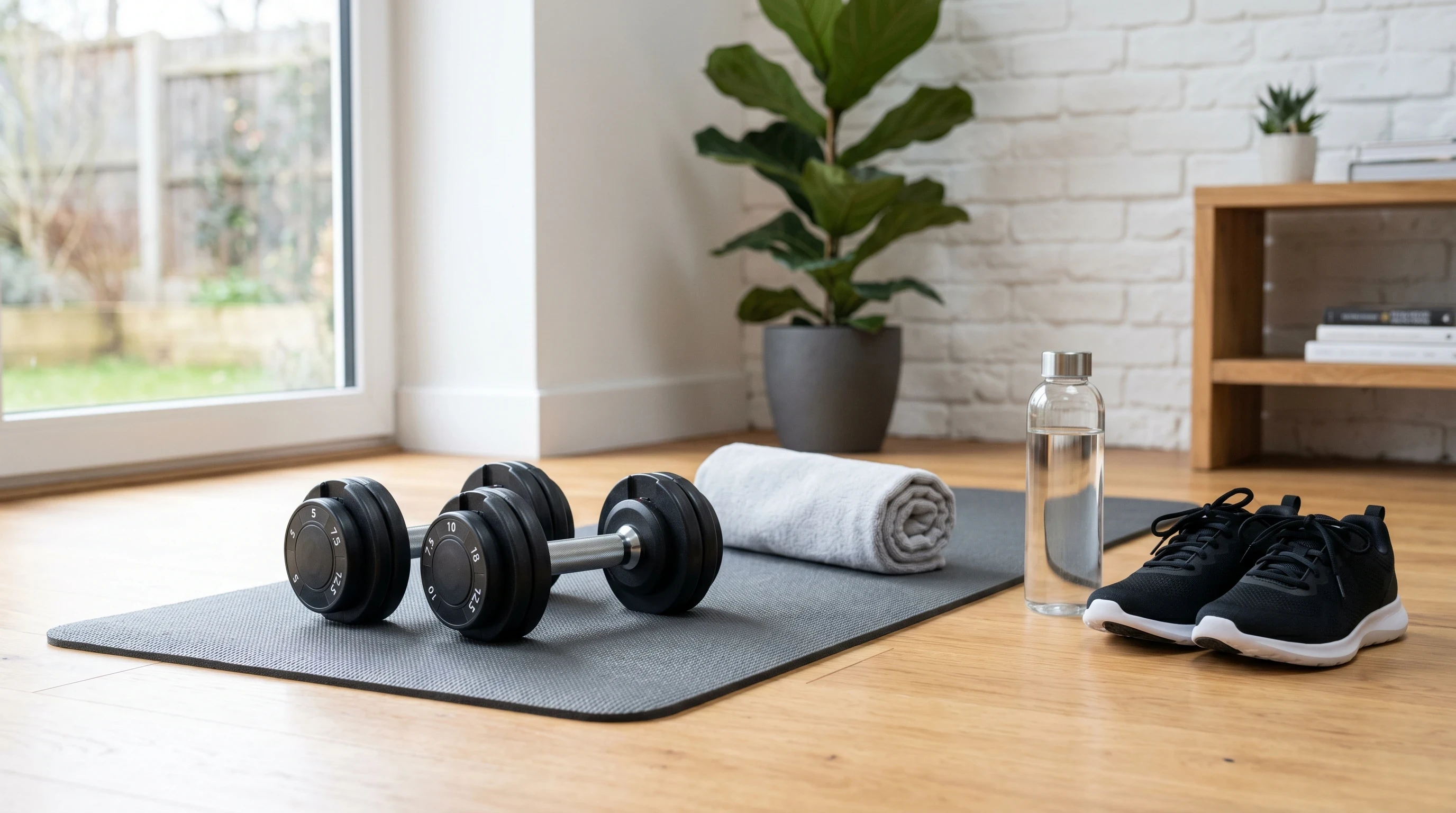
Most beginners only need a few basic items to start dumbbell workouts at home:
- A pair of dumbbells or adjustable dumbbells
- Comfortable workout clothes and supportive shoes
- A small open space to move safely
- An exercise mat for floor exercises if desired
A workout bench can be helpful later on, but many beginners can build muscle effectively using only dumbbells and floor-based exercises at first.
How to Progress and Add Overload Over Time
Progressive overload means gradually working harder to keep your muscles challenged so they keep adapting and growing. If you want a deeper beginner breakdown of how this works, see this guide on How To Implement Progressive Overload For Beginners. This is the main driver of beginner progress, even with light dumbbells and basic exercises.
Common beginner tools for progressive overload include:
- Adding extra reps with the same weight (for example, going from 8 reps per set to 10 or 12)
- Increasing weight when you can hit the top of your rep range with good form for all sets
- Adding another set when your body feels ready
- Improving your range of motion or tempo (slower reps can be harder)
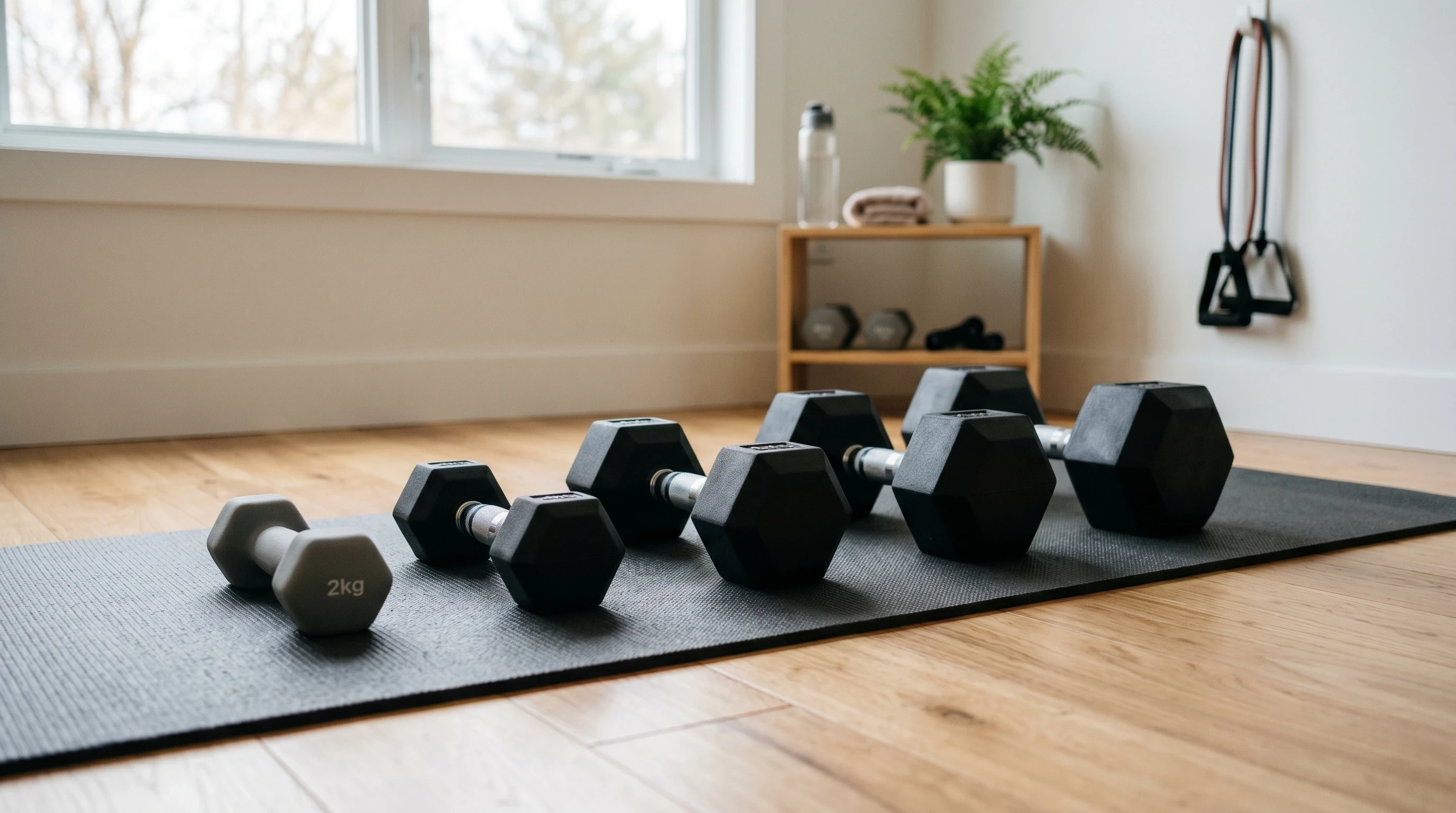
Most beginners benefit from changing only one factor at a time. Trying to increase weight, sets, and reps all at once often makes recovery and proper form harder to manage for beginners. Once a weight feels too easy for 12 reps on every set, move up to the next dumbbells and restart at 8-10 reps. This keeps your form safe and your progress steady.
Why Recovery, Sleep, and Nutrition Matter
Building muscle does not just come from exercise alone. Your muscles grow during rest, not during the workout itself. Many beginners overlook this, but recovery is just as important as training. Getting 7-9 hours of sleep per night, managing stress, and taking real rest days are super important for making real progress without burning out.
Eating enough protein, healthy fats, and carbs supports muscle repair and energy. Many beginner resources recommend aiming for protein with every meal and drinking plenty of water. A balanced approach to food, rest, and training sets the foundation for lasting gains.
Hydration and consistent meals really make a difference for your recovery and progress. Do not underestimate their impact on how you feel and perform!
Common Beginner Dumbbell Workout Questions
Can beginners build muscle with dumbbells at home?
Yes. Research and expert recommendations agree that most beginners make strong muscle and strength gains with bodyweight and dumbbell exercises at home when they use progressive overload and train consistently.
Are dumbbells enough to build muscle?
For beginners, dumbbells are enough to build solid muscle and strength. Over time, you may want to add heavier weights or more equipment for continued challenge, but for at least the first several months to a year, dumbbells provide plenty of stimulus for most people.
Can beginners do full body dumbbell workouts?
Yes. A full body approach is both practical and effective for beginners. This ensures you work all the major muscle groups multiple times per week for balanced development and learning good form.
How long does it take to build muscle with dumbbells?
Most beginners notice some muscle and strength changes within 4-8 weeks of regular dumbbell workouts, though visible changes may happen more gradually. Everyone is different, but consistency and patience are key for realistic, lasting gains.
What Should Beginners Expect During the First Few Weeks?
Most beginners notice improvements in coordination, exercise confidence, and strength before seeing major visual muscle changes.
It is normal to feel slightly sore, awkward, or less coordinated during the first few workouts while learning new movement patterns.
Many beginners also underestimate how important consistency is. Small improvements repeated over weeks and months usually lead to much better long-term results than trying to progress too aggressively early on.
What are common beginner dumbbell workout mistakes?
- Using a weight that is too heavy and sacrificing form
- Skipping warm up and cool down
- Training too often without recovery days
- Focusing on complicated exercises instead of the basics
- Comparing yourself to others instead of building your own progress
What is the best beginner dumbbell workout at home?
A good program focuses on a handful of full body moves completed 2-3 times per week, with 2-3 sets of 8-12 reps each, using a manageable weight and practicing safe, steady form.
How many times per week should beginners train with dumbbells?
Training two or three times weekly with rest in between sessions is usually enough for muscle building and recovery for most beginners.
What dumbbell weight should beginners start with?
Start with a weight you can control for 8-12 reps with safe technique. For most beginners, this means 5-15 pounds for upper body and 10-25 pounds for lower body. Always check your form in a mirror or record yourself from time to time to ensure you’re moving well.
Should beginners train to failure with dumbbells?
Most beginners do not need to train every set to complete failure for muscle growth.
A better approach is stopping when the last few reps feel challenging while still maintaining safe form and control. This helps beginners practice technique safely while still training hard enough to build muscle.
Principles for Safe, Effective Dumbbell Training at Home
- Warm up briefly before training to improve movement quality and prepare your muscles and joints for exercise
- Master technique before thinking about heavy weights
- Follow a steady, progressive plan, not random workouts
- Consistency beats perfection over the long term
- Use progressive overload for ongoing results
- Balance training effort with enough sleep and recovery for safe muscle growth
Every beginner’s journey comes with ups and downs. Most people find sticking to the basics, staying patient, and making training a regular part of the week helps form the foundation for steady muscle gains. By using dumbbells at home, learning each movement, and focusing on gradual improvement, you’ll develop real strength you can see and feel in your daily life.
Your Beginner Dumbbell Action Plan
- Pick two or three days this week to do your full body dumbbell workout at home.
- Choose a safe weight for each exercise and track your sets, reps, and weights in a notebook or app.
- Focus on perfecting your form, even if that means starting with lighter dumbbells.
- Rest, recover, and eat balanced meals to support muscle growth.
- Increase your reps or weights steadily as you get stronger; one small step at a time.
Beginner dumbbell training at home is accessible, affordable, and effective for building strength and muscle, one consistent session at a time. Put these strategies to work and you will be on your way to real gains that last.
DISCLAIMER:
This article is intended for educational purposes only and is not medical advice. If you have injuries, medical conditions, or concerns about starting resistance training, consult a qualified healthcare professional before beginning a new exercise program.
Beginner Bodybuilding Guides on Lift & Nurture
If you want to continue learning how to build muscle safely and effectively as a beginner, these guides may help:
→ Complete beginner muscle-building roadmap built around structured training and progressive overload
→ Learn how to gradually increase training difficulty for long-term muscle growth
→ Beginner-friendly bodyweight training plan for building muscle without equipment
→ Simple weekly beginner workout structure focused on consistency and recovery
→ Full body beginner workout requiring no equipment
→ Learn how sleep, recovery, and rest days support muscle growth
→ Understand how many sets and reps beginners should perform for muscle growth
→ Beginner calorie guide for supporting muscle growth and recovery
→ Simple beginner nutrition fundamentals for muscle-building support
References
- Schoenfeld BJ, Grgic J, Ogborn D, Krieger JW. Strength and hypertrophy adaptations between low- vs. high-load resistance training: A systematic review and meta-analysis. Journal of Strength and Conditioning Research. 2017.
- American College of Sports Medicine. Progression Models in Resistance Training for Healthy Adults. Medicine & Science in Sports & Exercise.
- Morton RW, et al. Resistance Training Recommendations to Maximize Muscle Hypertrophy in an Athletic Population. Frontiers in Physiology. 2019.
- Research on resistance training for muscle growth: https://pmc.ncbi.nlm.nih.gov/articles/PMC6950543/
- National Strength and Conditioning Association (NSCA): https://www.nsca.com/
- Jeff Nippard YouTube Channel: https://www.youtube.com/@JeffNippard
- Renaissance Periodization YouTube Channel: https://www.youtube.com/@RenaissancePeriodization
About the Author
Angel Carcamo is the founder of Lift & Nurture, a beginner bodybuilding platform focused on structured training, muscle growth fundamentals, and long-term progress.
As someone building Lift & Nurture around beginner-friendly research and structured training principles, Angel creates guides that simplify widely accepted strength training concepts into clear, practical steps.
His guides focus on key fundamentals like progressive overload, recovery, and nutrition — helping beginners build muscle without confusion, shortcuts, or unrealistic expectations.
Start here: Beginner Bodybuilding Roadmap
Foundation guide: Beginner Bodybuilding Workout Plan (12-Week Foundation Blueprint)