Starting a resistance training routine can feel a little overwhelming. Many beginners are unsure about the best way to warm up before lifting weights. Some skip the warm-up, while others spend too much time on cardio or stretching, and end up feeling tired before they even get to the main workout. A simple and effective warm-up helps prepare the body, increases confidence, and makes lifting sessions smoother and safer.
Lifting warm-ups do not need to be long or complicated. Research and recommendations from organizations like the NSCA and ACSM show that a basic, consistent approach works well for beginners. The warm-up is not meant to cause fatigue. Instead, it should boost body temperature, increase blood flow, and get muscles and joints ready for exercise.
This beginner-friendly guide from Lift & Nurture covers how to warm up before lifting in a straightforward way. You’ll learn what a warm-up is, why it matters, how to do it step-by-step, and how to avoid common mistakes. No advanced techniques, no endless routines, just a practical system anyone can use.
Quick Answer
How to warm up before lifting for beginners:
- Do 3–5 minutes of light cardio such as brisk walking, cycling, or treadmill walking.
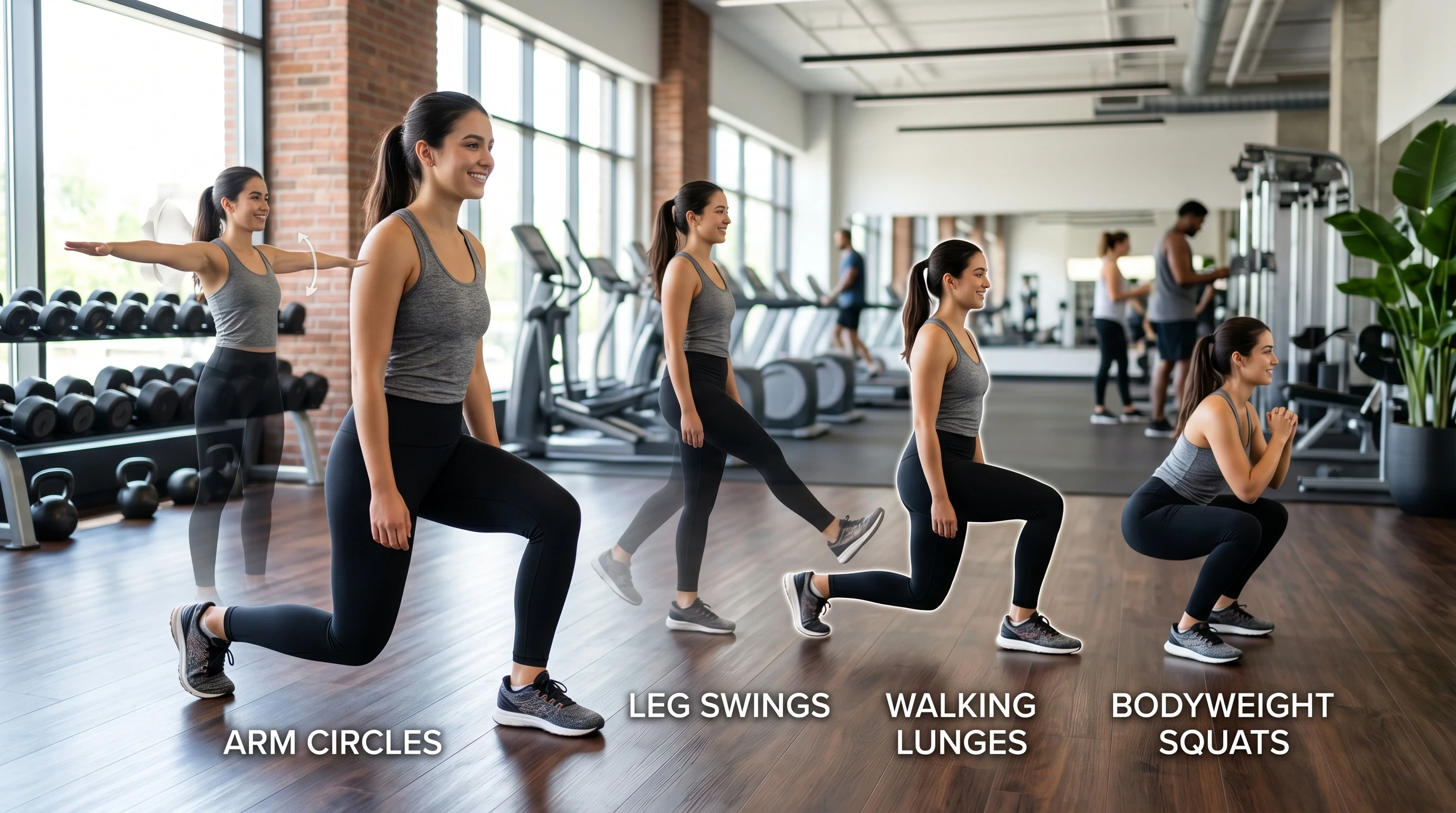
- Perform 2–3 minutes of dynamic mobility exercises such as arm circles, leg swings, walking lunges, and bodyweight squats.
- Complete 2–3 warm-up sets for your first heavy compound exercise using lighter weights before reaching your working sets.
Most beginner warm-ups take about 5–10 minutes total. The goal is to raise body temperature, increase blood flow, improve movement readiness, and prepare your body for lifting without creating fatigue.
Table of Contents
- Quick Answer
- The Basics: What Is a Lifting Warm-Up?
- Why Beginners Should Warm Up Before Lifting
- General Warm-Up: Raising Body Temperature
- Dynamic Warm-Up and Mobility: Moving, Not Holding
- Should You Stretch After Lifting?
- Exercise-Specific Warm-Up Sets
- Quick Beginner Warm-Up Examples
- How Long Should a Beginner Warm-Up Take?
- Common Warm-Up Mistakes Beginners Make
- Common Beginner Questions About Warming Up
- Beginner Action Plan for a Great Lifting Warm-Up
- Final Thoughts & Next Steps
- Beginner Bodybuilding Guides on Lift & Nurture
The Basics: What is a Lifting Warm-Up?
When people talk about warming up before lifting, they’re talking about gradually preparing the body and mind for resistance training. The process usually involves three steps:
- General warm-up (like light cardio)
- Dynamic mobility or dynamic stretches (moving, not holding, stretches)
- Exercise-specific warm-up sets (using lighter weights for your main exercises)
Key Purposes of a Warm-Up
- Raise body temperature
- Increase blood flow
- Prepare joints, muscles, and tendons to move better
- Activate the nervous system for better control and strength
- Practice movement technique to improve form
The main goal is to feel ready to lift. A warm-up for beginners should take 5 to 10 minutes, and by the end, you should feel energized, not tired.
Why Beginners Should Warm Up Before Lifting
A warm-up isn’t just for experienced lifters. Research suggests warming up helps everyone, beginners included. A proper warm-up makes lifting safer and more effective. Many training organizations, such as the American College of Sports Medicine (ACSM) and the National Strength and Conditioning Association (NSCA), recommend that everyone gets used to warming up right from the start of any resistance training program.
Benefits of Warming Up
- Improved Performance: Warming up increases muscle temperature and helps you use your strength better. It gets your body in a state where everything works its best for lifting.
- Better Blood Flow: A warm-up boosts blood moving to muscles, which supports energy and muscle movement.
- Movement Readiness: It wakes up the joints, muscles, and tendons, making it easier to move through full ranges of motion. This supports better exercise form.
- Mental Focus: Going through a warm-up helps switch your focus from daily life to your workout. It gives you time to concentrate and prepare.
General Warm-Up: Raising Body Temperature
The first part of every lifting warm-up is the general warm-up. This means getting the body moving and raising the heart rate a little. Many beginner programs recommend three to five minutes of light activity that makes you feel warmer and slightly out of breath, but not tired or sweaty.
Beginner-friendly Options
- Brisk walking (on the spot or on a treadmill)
- Stationary bike at low resistance
- Treadmill walking
- Elliptical machine at light intensity
A general warm-up is simple. The aim is just to get moving; nothing fancy or exhausting. This step gets blood flowing and lets your mind switch gears for the workout.
Dynamic Warm-Up and Mobility: Moving, Not Holding
The next step is dynamic mobility. This means moving your joints and muscles through their normal ranges of motion. Experts like Jeff Nippard and Team 3DMJ often suggest prioritizing movements that match the types of exercises you’ll perform during your lifting session. Dynamic stretching and mobility are not the same as static stretching.
What’s the Difference?
- Dynamic stretching/mobility: Involves moving joints and muscles in and out of a stretch without holding the position. This warms up the body, improves range of motion, and builds movement patterns for lifting.
- Static stretching: Involves holding a stretch without movement for 15 to 60 seconds. While this can help with flexibility when done after exercise, research (such as from Renaissance Periodization) shows that too much static stretching before lifting can temporarily reduce strength and performance, so it’s best to save long static stretches for after your workout.
Dynamic Warm-Up Examples for Beginners
- Arm circles (forward and backward, 10 to 15 reps each direction)
- Arm swings (side-to-side, 10 to 15 reps)
- Leg swings (front-to-back, 10 to 15 reps per leg)
- Walking lunges (10 steps per leg)
- Bodyweight squats (10 to 15 reps)
- Hip circles (10 small circles each direction per leg)
Many strength training experts recommend picking two to three movements for the upper body and two to three movements for the lower body, especially if you’re doing a full-body session. The whole dynamic warm-up takes about three to five minutes.
Should You Stretch After Lifting?
Many beginners wonder if stretching is better before or after a workout.
In general, dynamic mobility exercises are usually the better choice before lifting because they help prepare the body for movement without reducing performance.
Static stretching can be performed after lifting if improving flexibility is one of your goals. Since the workout is already complete, there is less concern about temporary decreases in strength or power output.
For most beginners, the priority should be completing a simple lifting warm-up before training. Stretching after the workout is optional and can be added if flexibility is something you want to improve.
Exercise-Specific Warm-Up Sets
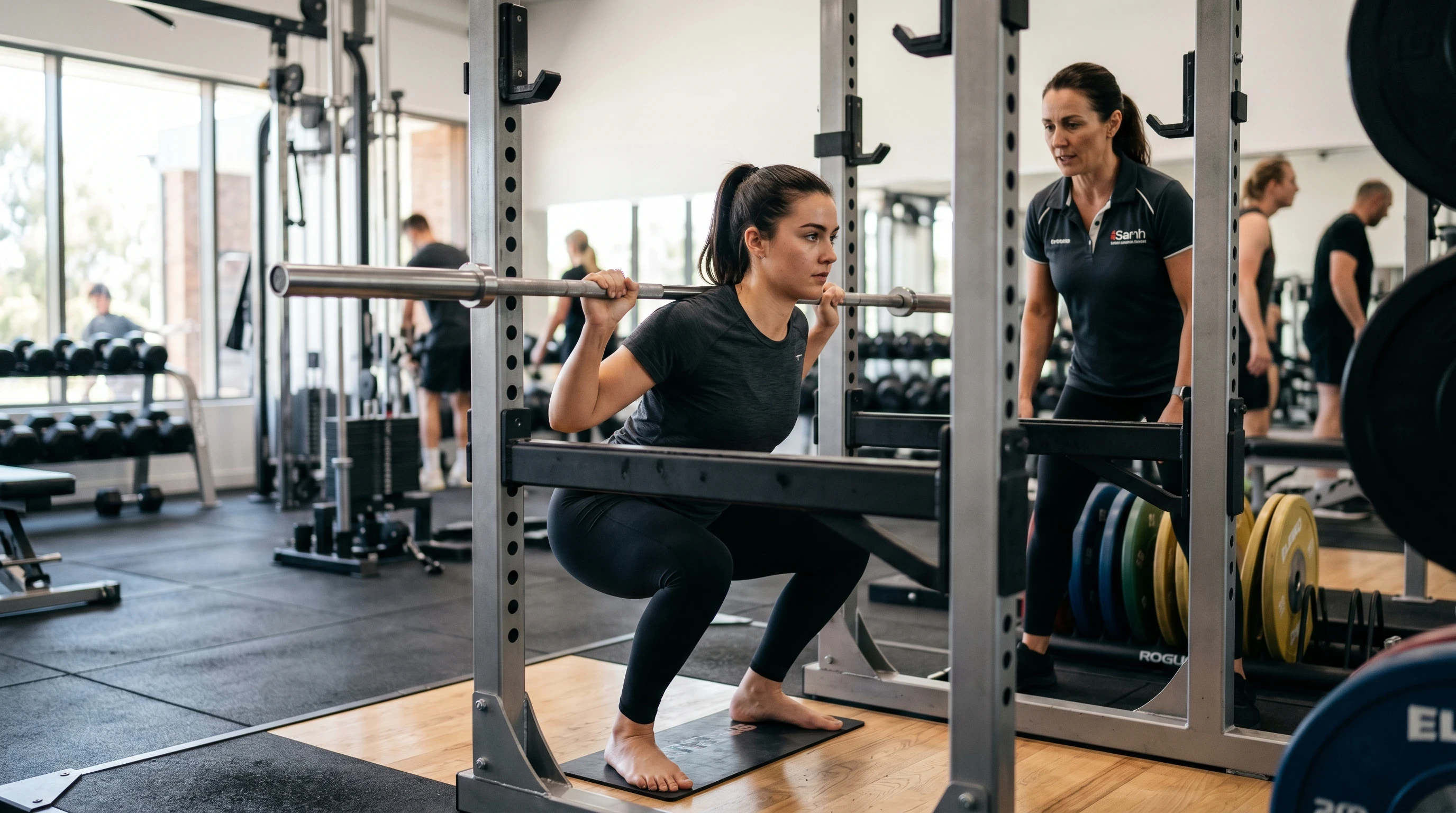
This step prepares you for your main lifts by practicing the movement with lighter weights. It also gives you a chance to focus on your lifting technique and ease your way up to the weight you plan to use.
Why Warm-Up Sets Matter
Warm-up sets should feel easy and controlled. Their purpose is preparation, not fatigue.
- Get a feel for the weights and your movement for the day
- Help identify if anything feels stiff or uncomfortable before using heavier loads
- Build confidence and groove your form for each lift
How Many Warm-Up Sets?
The number of warm-up sets depends on the exercise heaviness and type. Here are basic guidelines based on advice from athletes and organizations like Stronger By Science and NASM.
- Heavy compound lifts (like squats, bench press, deadlifts): Two to three warm-up sets, starting with just the bar or a light weight, and gradually working toward your main working weight.
- Lighter isolation exercises (like biceps curls, triceps extensions): Usually just one light warm-up set is enough, or you may not need a separate warm-up set if you are already warm from the compound lifts.
Sample Warm-Up for a Compound Lift
- Set 1: Use about 45 to 50% of your planned working weight for 8 to 10 reps
- Set 2: Use about 65 to 70% of working weight for 5 to 6 reps
- Set 3: Use about 85% of working weight for just 2 to 3 reps
After these ramp-up sets, you’re ready for your regular working sets. If you use dumbbells or machines, warm-up sets still work the same way. For machines, do a lighter set first to get ready for your heavier sets. You can reduce the number of warm-up sets for light single-joint movements compared with the heavy compound moves.
Quick Beginner Warm-Up Examples
Full-Body Warm-Up (5 to 10 Minutes)
- Three minutes of brisk treadmill walking or cycling
- Ten arm circles per direction
- Ten arm swings side-to-side
- Ten walking lunges per leg
- Ten bodyweight squats
- Ten hip circles each direction
Follow with two to three practice sets for your first big lift (like squats or bench press).
Upper-Body Lifting Warm-Up
- Three minutes light cardio (walking or cycling)
- Ten arm circles, each direction
- Ten arm swings
- Ten wall pushups or knee pushups
- One to two warm-up sets with an empty bar or light dumbbells for bench press or rows
Lower-Body Lifting Warm-Up
- Three minutes light cardio (treadmill or elliptical)
- Ten leg swings, each leg
- Ten walking lunges per leg
- Ten bodyweight squats or glute bridges
- Two to three warm-up sets for squats, using just the bar or lighter weight first
How Long Should a Beginner Warm-Up Take?
Most research and expert opinions agree a beginner warm-up should last about five to ten minutes in total. Longer warm-ups are not always better. Warming up too long or with too much intensity takes away energy you need for lifting.
General Guidelines:
- Three to five minutes general warm-up (light cardio)
- Two to three minutes dynamic mobility
- Two to five minutes of exercise-specific warm-up sets
If it takes longer than ten to twelve minutes, it might be more than you need. The goal is to prepare, not to tire yourself out before the real work starts.
Common Warm-Up Mistakes Beginners Make
- Skipping the warm-up completely: This can leave your muscles and joints stiff, making exercises feel awkward and harder to perform.
- Doing too much cardio before lifting: Too much pre-lift cardio can sap your energy. Just three to five minutes is enough.
- Turning the warm-up into a workout: The warm-up should leave you feeling fresh and ready, not tired or sweaty.
- Doing excessive static stretching: Static stretches before lifting can lower your power for the first few sets. Save these for after the lifting session.
- Not enough warm-up sets before heavy lifts: Jumping straight to your working weight can feel jarring and may make exercises feel harder than they need to be.
- Rushing through warm-ups: Skipping quality movement preparation to save a few minutes can actually make the main workout feel tougher.
Following a structured beginner program can help eliminate many of these mistakes.
Common Beginner Questions About Warming Up
Do I Really Need to Warm Up if I’m a Beginner?
Yes. Even basic lifting routines benefit from a quick, simple warm-up. This helps you feel less stiff and more confident approaching weight training.
How Long Should My Warm-Up Last?
Time matters less than quality. Most beginners need five to ten minutes in total. If you feel more mobile and your heart rate is slightly higher, you’ve done enough.
Should I Do Cardio Before Lifting?
Light cardio is great for raising body temperature and getting in the right mindset. Keep it to three to five minutes. Avoid long or intense cardio right before lifting, as it can leave you tired.
Should I Stretch Before Lifting?
Dynamic stretching and mobility work are recommended before lifting. Save static stretching (holding positions) for after lifting, as it may temporarily reduce strength if done before your main sets.
What’s the Difference Between Dynamic and Static Stretching?
- Dynamic stretching: Moving in and out of a stretch (for example, arm circles, leg swings)
- Static stretching: Holding a stretch in one position for a longer time (such as touching your toes and holding for 30 seconds)
How Many Warm-Up Sets Should I Do?
Do two to three warm-up sets for heavy or compound lifts, and one light set for most isolation exercises. You may find you don’t need extra warm-up sets for machines if you already feel ready after the main lifts.
What Should I Do Before My First Working Set?
Complete your general warm-up and dynamic mobility, then do a series of warm-up sets with lighter weights for your first big lift. Now you are ready to start your working sets confidently.
What Happens If I Skip My Warm-Up?
Skipping warm-ups can make movements feel more difficult, lead to stiffer joints, and make it harder to use good form. Warm-ups help beginners ease into training and improve the overall quality of each session.
Beginner Action Plan for a Great Lifting Warm-Up
- Do three to five minutes of light cardio (walk, bike, treadmill; just enough to move and get warm)
- Spend two to three minutes on dynamic mobility movements that match your training (arm circles, leg swings, bodyweight squats, hip circles)
- Do two to three warm-up sets for your first heavy lift, starting light and building up
- For other lifts, use just one light set if you feel you need it
This structure works whether you’re at a gym or working out at home with dumbbells, machines, or bodyweight exercises. Stick with these core steps, and you’ll develop a warm-up routine that’s simple, effective, and easy to follow every time you lift.
Final Thoughts & Next Steps
Warming up before lifting is simple but really important for anyone starting resistance training. A good warm-up gets your body moving, gives your confidence a boost, and sets the stage for better performance.
For most beginners, consistency matters far more than having a perfect warm-up routine. A simple routine performed before every workout is usually enough.
There’s no need for complicated routines; just focus on moving, getting your heart rate up, practicing mobility, and gradually working into your main exercises. Lift & Nurture will keep sharing beginner-friendly, evidence-based lifting guidance so you can build great habits from your very first workout.
Your Lifting Warm-Up Checklist:
- Move for three to five minutes to get warm.
- Add two to three minutes of dynamic mobility moves.
- Use two to three ramp-up sets for main lifts, plus one light set for isolation work if needed.
If you stick to this warm-up, you’ll feel prepared and get the most from every lifting session.
To further expand your skills, check out additional beginner lifting resources, ask gym staff for movement demonstrations, or watch instructional videos. It can be helpful to track your warm-up process and reflect on what feels best as you progress. Stay consistent, keep your routine simple, and soon warming up will become second nature—your body and future self will thank you for the time invested in preparation.
Beginner Bodybuilding Guides on Lift & Nurture
If you’re learning the fundamentals of building muscle, these beginner guides can help you continue your progress:
Start Here
Training Fundamentals
- Beginner Bodybuilding Workout Plan (12-Week Foundation Blueprint)
- 3 Day Workout Schedule For Beginners
- 4 Day Workout Routine For Beginners
- Full Body Workout Plan For Beginners
- Push Pull Legs Workout For Beginners
Muscle Building Fundamentals
- How To Implement Progressive Overload For Beginners
- Beginner Weight Training Sets And Reps
- Muscle Group Sets Per Week For Beginners
- How To Structure Workout Rest Periods
Nutrition Fundamentals
- How Much Protein For Beginners
- How Many Calories Should Beginners Eat To Build Muscle?
- Muscle Building Nutrition Guide For Beginners
Building muscle becomes much easier when you focus on mastering the fundamentals first. Consistent training, proper nutrition, recovery, and progressive overload will take most beginners much further than complicated workout methods.
References
American College of Sports Medicine (ACSM). Exercise Guidelines and Position Stands.
https://www.acsm.org
National Strength and Conditioning Association (NSCA). Strength Training and Warm-Up Recommendations.
https://www.nsca.com
National Academy of Sports Medicine (NASM). Warm-Up and Movement Preparation Resources.
https://www.nasm.org
American Council on Exercise (ACE). Dynamic Warm-Up and Exercise Preparation Resources.
https://www.acefitness.org
Jeff Nippard. Evidence-Based Training Resources and Educational Content.
https://jeffnippard.com
Renaissance Periodization (Dr. Mike Israetel). Strength Training and Recovery Education.
https://rpstrength.com
Stronger By Science. Research Reviews and Strength Training Education.
https://www.strongerbyscience.com
Team 3DMJ. Evidence-Based Natural Bodybuilding Education.
https://3dmusclejourney.com
About the Author
Angel Carcamo is the founder of Lift & Nurture, a beginner bodybuilding platform focused on structured training, muscle growth fundamentals, and long-term progress.
As someone building Lift & Nurture around beginner-friendly research and structured training principles, Angel creates guides that simplify widely accepted strength training concepts into clear, practical steps.
His guides focus on key fundamentals like progressive overload, recovery, and nutrition, helping beginners build muscle without confusion, shortcuts, or unrealistic expectations.
Start here: Beginner Bodybuilding Roadmap
Foundation guide: Beginner Bodybuilding Workout Plan (12-Week Foundation Blueprint)