
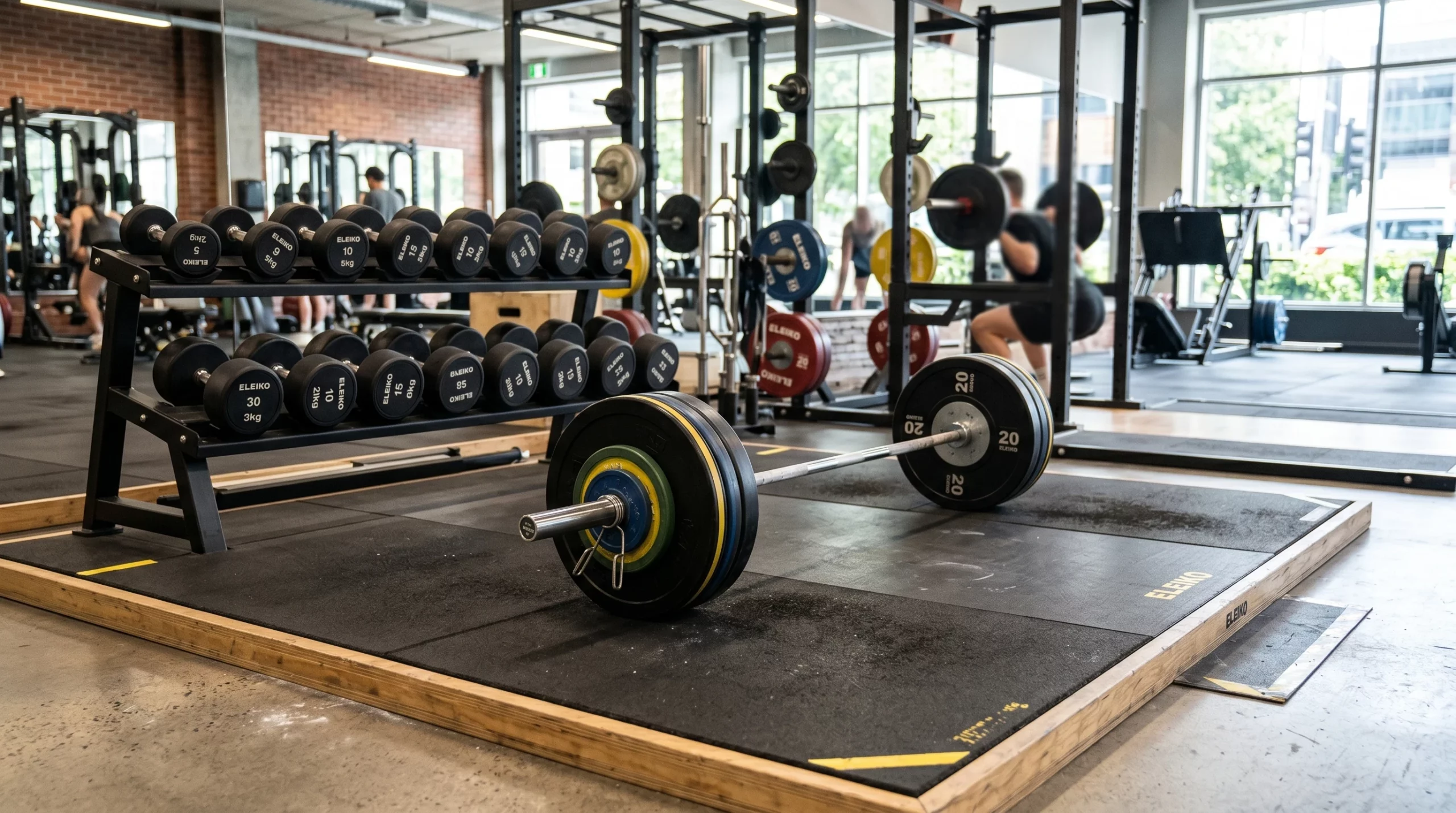
Training effort stands out as a key factor for muscle growth, especially for beginners hitting the gym for the first time. Many new lifters want to track down the “perfect” workout plan but often skip right past the honest conversation about how hard each set should feel to really kickstart muscle gains. Loads of expert-backed advice—from Dr. Mike Israetel, Layne Norton, Eric Helms, Stronger By Science, NSCA, and NASM—highlights that putting in the right amount of effort packs even more punch than simply picking the right exercises or programs. Current evidence-based recommendations from organizations such as the NSCA and ACSM suggest that beginners can build significant muscle by training close to failure without necessarily reaching failure on every set.
Quick Answer
How hard should beginners train for muscle growth?
Most beginners should train for muscle growth by finishing their working sets with approximately 1–3 reps left in reserve (RIR), allowing enough effort to stimulate muscle growth while maintaining good technique and recovery. This means each set should feel challenging while still allowing proper technique and recovery. Compound exercises are typically best performed with 1–3 RIR, while some isolation exercises can occasionally be taken closer to failure. Consistently training hard enough to challenge the muscles—without sacrificing form—is one of the most effective ways for beginners to build muscle and strength.
Table of Contents
- Why Training Effort Matters for Muscle Growth
- Understanding Reps In Reserve (RIR)
- What Does a Hard Set Actually Feel Like?
- Compound vs Isolation Exercises: How Hard Should Each Set Be?
- Common Beginner Mistakes Related to Training Effort
- How To Know If You Are Training Hard Enough
- Track Performance Over Time
- Practical Tips For Beginners
- What Should A Challenging Set Feel Like?
- Beginner Example: Using RIR In A Full-Body Workout
- Frequently Asked Questions
- Final Thoughts For Sustainable Progress
Why Training Effort Matters for Muscle Growth
Muscle growth (hypertrophy) starts the moment your muscle fibers deal with real stress during resistance training. This pressure triggers your body to repair and grow those fibers, making your muscles visibly bigger and stronger over time. While lifting heavier weights is helpful, the real “growth switch” flips when your muscles feel serious tension during hard sets. Experts call this “mechanical tension.” When your muscle fibers are asked to handle bigger loads, especially when they’re tired from prior reps, your body gets a loud message to grow.
Should every set be an all-out grind to failure? Not really. Research shows beginners can rack up solid muscle growth without forcing every set to failure. Most people grow just fine by ending most sets with a couple of reps left in the tank. Training that way isn’t just more comfortable—it also means you’ll recover better and steer clear of injury.
Understanding Reps In Reserve (RIR)
How do you know if you’re working hard enough? That’s where the Reps In Reserve (RIR) method comes in handy. RIR means estimating how many more clean, quality reps you could have knocked out before completely failing a set. Here’s how different RIR values show up during a workout:
- 3 RIR: Could’ve squeezed out 3 more reps without your form falling apart.
- 2 RIR: Two more reps would have been possible with effort and tight technique.
- 1 RIR: There’s one tough rep left before you’d totally fail.
- 0 RIR: You hit the wall—can’t do another rep well, even if you tried.
The evidence is clear: new lifters should end most muscle-building sets with about 1–3 RIR. So your sets feel hard, but not like a wrestling match with gravity. Big names like the National Strength and Conditioning Association, along with coaches such as Jeff Nippard and Eric Helms, support this style because it leads to good muscle growth while sidestepping excessive fatigue and injuries.

What Does a Hard Set Actually Feel Like?
It’s not always clear to newbies what a “hard” set actually feels like. Sometimes it’s tempting to quit way too soon. Or, you might blast past your limits until your form unravels. Look for these signs to confirm you’re challenging yourself enough for muscle growth:
- On the final few reps, the bar or dumbbells move slower than at the start.
- Your muscles feel tired, even burning a bit. You have to zone in to finish the set.
- Technique takes full focus—your mind and body have to stay dialed in.
If you finish a set and feel like you could do plenty more reps, or you don’t notice any burn or serious fatigue, it was too easy. If your form breaks down, you start swinging the weights around wildly, or you’re unable to control the full range—those are red flags that you’ve gone too hard. That can stall progress and mess with your recovery.
Compound vs. Isolation Exercises: How Hard Should Each Set Be?
Not every exercise needs to be pushed equally hard. Compound exercises, which hit more muscles at once, create more fatigue and require a more tactical approach to effort. Think about moves like squats, bench presses, deadlifts, rows, pullups, and overhead presses. For these, most pros advise stopping with 1–3 RIR left, rather than going to the breaking point every time.
Isolation exercises are different. Exercises like biceps curls, triceps pushdowns, lateral raises, leg extensions, hamstring curls, and calf raises work smaller muscle groups. These can go a little closer to failure (even 0–1 RIR) because they’re less taxing on the body overall. Isolation exercises can often be performed closer to failure because they generally create less overall fatigue than compound lifts.
Common Beginner Mistakes Related to Training Effort
It’s easy to misjudge training effort early on, and these mistakes can put the brakes on progress:
- Choosing weights that are too light or cutting sets short, way before working muscle gets challenged.
- Always going all in on every set before locking in safe, solid technique.
- Chasing soreness as proof of progress, rather than steady improvement in strength or form.
- Ego lifting: picking weights you can’t control and losing your technique.
- Thinking pain equals progress.
- Focusing only on heavier weights week after week, ignoring the quality of your reps and sets.
The truth (backed by research and expert trainers) is that muscle soreness is not a true sign you had a good session. You can grow with little or no soreness at all, and really heavy soreness can even push back your next good workout. Stick with tracking consistency, quality reps, small increases, and recovery to judge progress, not just soreness.
How to Know If You are Training Hard Enough
Plenty of newbies ask, “How can I tell if I’m actually working hard enough?” Key clues to look for are:
- The final few reps in your set take way more effort than the first half; they’re slower and grindy.
- You’ve got to really pay attention to keep your form spot-on.
- You end the set knowing maybe 1–3 more reps were possible, but no more.
If the last rep of the set had zero challenge, it’s time to move up in weight or add reps. But if you’re stuck at the bottom or losing control, it’s smart to pull it back and focus on recovery along with good setup for the next workout.
Track Performance Over Time
One of the easiest ways to know whether training effort is appropriate is to track performance from workout to workout. If weights, repetitions, or overall training quality gradually improve over time, training effort is likely sufficient to support muscle growth. Consistent progress is a more reliable indicator than soreness or exhaustion after a workout.
Practical Tips For Beginners Training For Muscle Growth
Getting started the right way doesn’t have to be confusing. Here’s what’s commonly recommended by groups like NSCA, ACSM, NASM, and countless experienced strength coaches:
- For compound lifts (your squats, presses, and rows), most working sets should finish 2–3 RIR. This gets you muscle growth and room to recover plus technical practice.
- On the last set of a big move, get closer to failure—try for 1–2 RIR if your form is solid.
- For isolation moves, bring some sets right up to failure (0–1 RIR) so smaller muscles get that extra growth nudge.
- Focus on steady, small increases in weight or reps, instead of swinging for the fences every gym session.
- Obsess over form first. Ten precise reps at a reasonable weight outshine 12 sloppy reps at a higher load every time.
Follow these straightforward steps and you’ll be in a good place for steady, lasting gains and healthier progress.
What Should a Challenging Set Feel Like?
Not every session should leave you gasping for air, but true muscle-building effort comes with a certain feeling. Here’s what a tough-but-right set feels like:
- The first few reps cruise by as you focus on form and tempo.
- The last reps move slowly; you need real concentration to keep moving with control.
- Your muscles burn, but you never feel sharp pain—just deep fatigue.
- Finishing the set, you know you could have pushed out one, maybe three, more decent reps—no more.
If you’re breezing through the set with lots of energy and no struggle, you probably need to ramp up the challenge. Feeling wiped out at the end, using wild technique, or finishing with shaky arms signals you’ve taken things too far. Always make proper technique the priority.
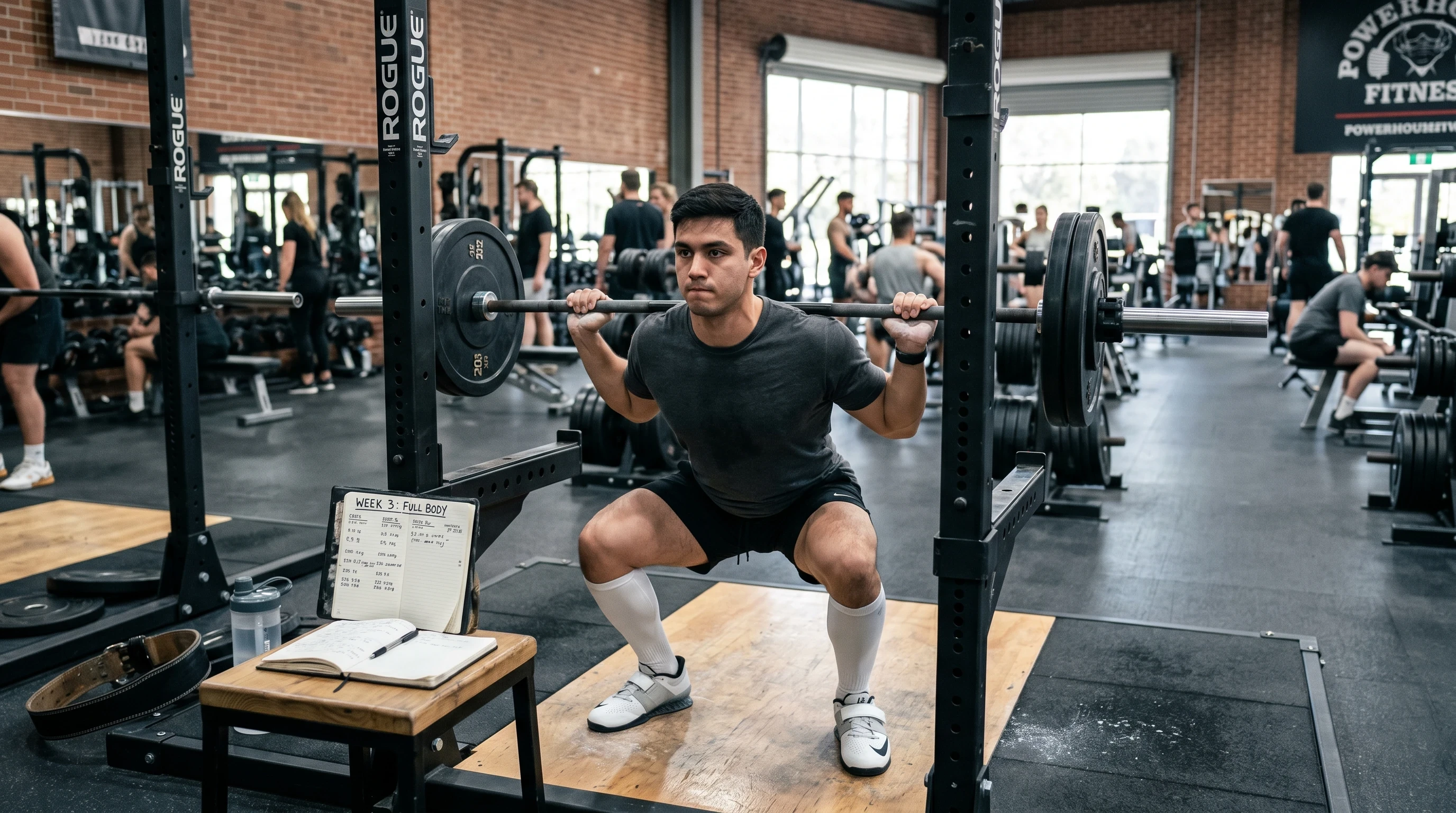
Beginner Example: Using RIR in a Full-Body Workout
RIR can feel a bit abstract until you put it into practice. Here’s how a new lifter might use RIR in a simple full-body routine:
- Bench Press (Compound): Three sets of 8–12 reps, ending each around 2–3 RIR. That final set? Take it a bit closer—1–2 RIR.
- Squat (Compound): Three sets of 8–12 reps at 2–3 RIR.
- Seated Row (Compound): Three sets of 8–12 reps, around 2 RIR.
- Biceps Curl (Isolation): Two sets of 10–15 reps, last set at 0–1 RIR.
This kind of plan lets you steadily build both strength and muscle while keeping technique sharp and recovery manageable. As weeks go by, you can start increasing weights or upping the rep count as you find your groove in the gym. Take time to notice, too, how your strength and confidence build week to week, not just session to session.
Frequently Asked Questions
How hard should beginners train for muscle growth?
Most beginners should end their working sets with 1–3 reps left in reserve (RIR). Push each set until the last reps feel tough, but not so far you lose form or dip into risky territory for recovery.
Should beginners train to failure?
Beginners don’t need to go to complete failure (0 RIR) each time. Research shows most muscle growth kicks in when you finish sets in the 1–3 RIR window with your technique on point and are consistent with your sessions.
How many reps should beginners leave in reserve?
Aim for 1–3 reps left in the tank on most sets. With isolation moves, it’s fine to go closer to failure—0–1 RIR from time to time. That lets you grow, recover, and sidestep injury risk.
Can beginners build muscle without training to failure?
Absolutely! You’ll get solid results stopping just short of failure. Consistently putting in that honest, challenging effort trumps all-out failure for beginner gains.
How do I know if I am training hard enough?
If your last few reps take a real push, your muscles get tired (not painful), and you know you could squeeze out just one or two more with solid form, you’re on the right track. Keep a close eye on effort and make regular, small bumps in weight or reps for lasting progress.
Is soreness a sign of a good workout?
You might get sore sometimes, especially after new exercises, but soreness isn’t a must for muscle growth. Great sessions often leave you feeling ready to train again soon, not walking around stiff for days.
Should every set feel difficult?
Most working sets should challenge you, particularly those final reps. Not all sets, especially warmups or light days, will feel tough—that’s normal and helps your body gear up for the main work.
What does training close to failure mean?
It means stopping when you could have only managed 1–3 more reps, if you pushed with strong form. That zone scores you the bulk of muscle-building results while still giving you room to recover safely.
How hard should compound exercises be?
Compound lifts are best done with 1–3 RIR, so you develop muscle and technique, and avoid risks from fatigue or poor form.
How hard should isolation exercises be?
These can go all the way to 0–1 RIR sometimes because single-muscle moves generally don’t wipe you out as much. Pushing them a little closer to failure lets you zero in on lagging muscles for better growth.
Beginner Bodybuilding Guides On Lift & Nurture
If you’re learning how to train effectively for muscle growth, these beginner-friendly guides can help you continue building a strong foundation:
- Beginner Bodybuilding Workout Plan (12-Week Foundation Blueprint)
- How To Implement Progressive Overload For Beginners
- Beginner Weight Training Sets And Reps
- Muscle Group Sets Per Week For Beginners
- How To Warm Up Before Lifting For Beginners
- Muscle Recovery Tips For Beginners
- How Much Protein For Beginners
- How Many Calories Should Beginners Eat To Build Muscle
Building muscle becomes much easier when training effort, progressive overload, recovery, and nutrition all work together.
Final Thoughts for Sustainable Progress
Muscle growth for beginners is really about consistency, honest effort, clean form, and slow but steady improvement. Skip the “all or nothing” approach—keep most sets tough with 1–3 reps to spare, and only rarely push isolation lifts to total failure. Over time that plan leads to results you can keep building on, with fewer injuries and a more rewarding gym experience.
As you learn to read your body and track your effort level, you’ll notice progress picking up speed. The most important tools in your kit are patience, trust in the process, and regular, sensible workouts. Keep at it, and you’ll see your foundation for muscle growth get stronger every month you stick with it.
References
1. American College of Sports Medicine (ACSM). Resistance Training for Health and Fitness.
2. National Strength and Conditioning Association (NSCA). Position Statements.
3. Centers for Disease Control and Prevention (CDC). Benefits of Muscle-Strengthening Activity.
4. National Institute on Aging (NIA). Strength Training Basics.
5. Stronger By Science. Evidence-Based Articles on Hypertrophy and Strength Training.
About the Author
Angel Carcamo is the founder of Lift & Nurture, a beginner bodybuilding platform focused on structured training, muscle growth fundamentals, and long-term progress.
As someone building Lift & Nurture around beginner-friendly research and structured training principles, Angel creates guides that simplify widely accepted strength training concepts into clear, practical steps.
His guides focus on key fundamentals like progressive overload, recovery, and nutrition, helping beginners build muscle without confusion, shortcuts, or unrealistic expectations.
Start here: Beginner Bodybuilding Roadmap
Foundation guide: Beginner Bodybuilding Workout Plan (12-Week Foundation Blueprint)