
Many beginners feel confused or overwhelmed trying to build their upper body gym routine. There are so many exercises, machines, and videos online, it’s easy to overthink what actually works. Many beginners believe they need to hit every single upper-body muscle with a different exercise, copy routines from fitness influencers, or change exercises every week. In reality, a simple, balanced plan built around repeatable basics is usually more useful for beginners.
A beginner gym workout plan for upper body should focus on a handful of time-tested exercises, use good form, and build from there. Most beginners see clear results by using a mix of machines and free weights, learning push and pull patterns, and following a routine that gets repeated each week with small tweaks. The goal is to develop upper body strength and muscle in a way that’s sustainable and realistic, even if you’ve never trained or felt lost in the gym before.
This guide explains everything you need to know to organize your upper body gym workout plan for muscle growth as a true beginner. You will find clear steps, an easy-to-follow workout, guidance on sets and reps, and answers to common questions. No hype. Just a straightforward way to start building a stronger upper body, one session at a time.
Important note: This guide is educational and not a substitute for individualized medical or coaching advice. If you have pain, injuries, or medical concerns, speak with a qualified professional before starting.
Quick Answer: Beginner Gym Workout Plan For Upper Body
If you want the basics now, here’s a summary you can use for your upcoming upper body gym day. This workout covers all your main muscle groups, gives you a push/pull balance, and uses equipment found in most gyms.
- Chest Press Machine or Dumbbell Bench Press: 2–3 sets, 6–10 reps
- Lat Pulldown Machine: 2–3 sets, 8–12 reps
- Seated Cable Row or Chest Supported Row Machine: 2–3 sets, 8–12 reps
- Shoulder Press Machine or Dumbbell Shoulder Press: 2 sets, 8–12 reps
- Dumbbell Lateral Raise or Machine Lateral Raise: 2 sets, 10–15 reps
- Triceps Pushdown (Cable): 2 sets, 10–15 reps
- Dumbbell Curl or Cable Curl: 2 sets, 10–15 reps
- Optional Core Exercise: 1–2 sets, 10–15 reps or 20–45 seconds
Rest 2–3 minutes after bigger compound exercises (presses, pulldowns, rows), and 1–2 minutes for smaller isolation moves (curls, triceps, laterals). Use weights that feel challenging by the last 1–2 reps, keeping 1–3 reps left “in the tank” most sets. Increase reps when you can, then add weight gradually using progressive overload. Aim to repeat this session 1–2 times per week, leaving at least a day between upper body workouts for recovery.
Table of Contents
- What Is an Upper Body Gym Workout?
- Why Upper Body Training Matters for Beginners
- Upper Body Muscle Groups (Chest, Back, Shoulders, Arms)
- Key Principles for Beginner Upper Body Workouts
- Compound vs Isolation Exercises Explained
- Free Weights vs Machines for Beginners
- How to Create a Balanced Upper Body Gym Workout
- Beginner Upper Body Workout Table (With Alternatives)
- How Many Sets, Reps, and Rest?
- How to Progress as a Beginner (Without Getting Hurt)
- Common Beginner Mistakes (And How to Fix Them)
- Frequently Asked Questions
- Beginner Bodybuilding Guides on Lift & Nurture
- Final Thoughts
- About the Author
What Is an Upper Body Gym Workout?
An upper body gym workout is a training session focused on muscles between your waist and the top of your head. For beginners, it usually means combining exercises for your chest, back, shoulders, biceps, and triceps into one routine, with a balance of pushing and pulling movements. Most beginners follow a “full upper body” session once or twice a week, along with a leg day, for a balanced routine. This way, all the major groups get worked several times each week, helping muscle growth and strength without overlap or burnout.
Upper body workouts in the gym can use free weights (dumbbells, barbells), machines, or cables. For beginners, a mix often feels easiest and safest. The main goals are to learn the basic movement patterns, target every key muscle at least once, and repeat the same session for a few weeks to build skill and confidence.
If you are not ready for an upper-body-only session yet, a full body workout plan for beginners may be a simpler starting point because it trains your whole body in one routine.
Why Upper Body Training Matters for Beginners
Many beginners rush into training arms or chest and skip important moves for the back or shoulders. A balanced upper body routine builds a foundation for everything; better posture, strength for daily life, boosted confidence, and visible muscle improvements. Building upper body strength also supports other lifts (especially lower body work), helps protect your shoulders from injury, and balances looks between front and back. To balance this upper-body session with lower-body training, you can pair it with a Simple Leg Day Workout Plan For Beginners.
- Improved muscle tone and definition in the chest, arms, and shoulders
- Stronger back and posture for less neck, back, or shoulder pain
- Better support for daily tasks (lifting bags, opening doors, carrying groceries)
- Confidence moving and setting up in the gym
- Prepares you for split routines or advanced training styles later on
Most beginners see clear visual and strength improvements by consistently training both the “pushing” (chest, shoulders, triceps) and “pulling” (back, biceps) muscles. Keeping things simple and focusing on form means faster learning and safer progress.
Upper Body Muscle Groups (Chest, Back, Shoulders, Arms)
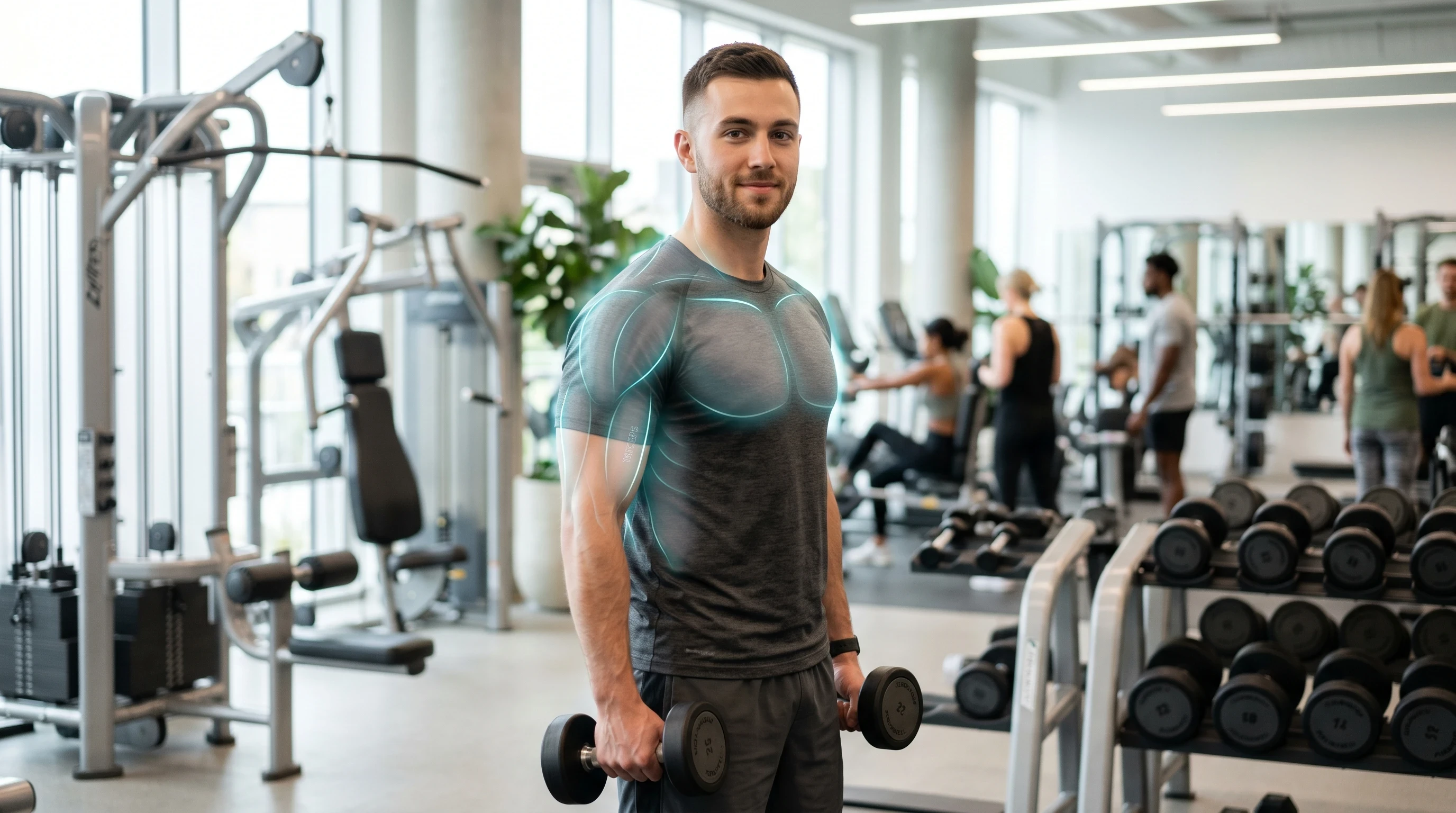
Learning which muscles each exercise works helps avoid unbalanced routines and overuse injuries. Here’s a breakdown of what you’re training in your beginner gym workout plan for upper body:
- Chest (Pectorals): Most pressing moves (chest press, pushups, dumbbell bench) target chest. The pectorals help you push anything away from you; doors, weights, bodyweight.
- Back (Lats, Upper Back): All pulling exercises (pulldowns, rows) use your latissimus dorsi, plus your rhomboids, traps, and rear deltoids. These work together to pull things to your body, stabilize your arms, and support posture.
- Shoulders (Deltoids): The shoulder muscles surround your upper arm and give width to your upper body. Presses and raises help strengthen both the front and side delts for balanced development.
- Biceps: These pull your elbow toward you (think curls), working most during rows and pulldowns.
- Triceps: Located on the back of your arms, they extend your elbow and are trained heavily on presses and triceps specific moves like pushdowns.
- Core (Abs): While abs are not the main focus of this beginner upper body gym workout plan, your core still helps stabilize many upper body exercises. Beginners can add a few simple core movements like planks, dead bugs, cable crunches, or reverse crunches at the end of the workout if desired, but keeping the main focus on chest, back, shoulders, and arms is usually enough early on.
A well-structured session gives each of these muscle groups some direct work, so your body builds strength and muscle evenly over time.
Key Principles for Beginner Upper Body Workouts
Most research supported beginner programs share a few core ideas. Sticking to these keeps your training safe, effective, and enjoyable.
- Good Form Comes First: Start light and learn the movement before chasing heavier weights. Controlled reps help your muscles grow, prevent injury, and make progress easier to see and feel.
- Push/Pull Balance: Most basic sessions include both pressing (push) and rowing or pulldown (pull) movements. This supports even development across the upper body.
- Consistent Routine: Use the same exercises weekly for at least 4–6 weeks before swapping or upgrading moves. Repetition helps you measure improvement and builds solid habits.
- Progressive Overload: To keep growing and getting stronger, you need to ask a little more of your muscles each week. You can do this by adding a rep or two, then increasing weight once you hit the top of your target range without losing form.
- Recovery and Rest: Give your muscles 1–2 days between upper body sessions, sleep plenty, and eat enough protein. Skipping recovery can stall progress or raise the risk of aches and injuries.
Sticking to these principles keeps your upper body gym workout plan clear and leads to visible results over time.
Compound vs Isolation Exercises Explained
Most exercise routines include a mix of “compound” and “isolation” movements. Understanding the basics helps you pick exercises that fit your current ability and goals as a beginner.
Compound Exercises use more than one joint and work several muscle groups at once. Examples are chest press, rows, pulldowns, and shoulder presses. These lifts are efficient, let you use heavier weight, and build overall strength quickly.
Isolation Exercises target just one main muscle group and one joint, such as biceps curls or lateral raises. These allow you to focus on mind muscle connection and round out weak points or imbalances.
- For a beginner gym workout plan for upper body, most of your exercises should be compounds.
- Isolation moves add focused work to smaller muscles or aesthetic goals; like adding shape to shoulders or arms.
The sample routine below mixes both for best results, giving each muscle enough stimulus to grow and even out weak areas over time.
Free Weights vs Machines for Beginners
Most gyms offer both free weights (dumbbells, barbells) and selectorized machines. For beginners, either can work well. Here’s what most beginners need to know:
- Machines are easy to use, guide your path of movement, and let you focus on working the muscle group instead of balancing weights. These are great for learning basic exercise patterns safely; especially presses and rows.
- Free Weights (like dumbbells or bars) require more balance and control from your smaller stabilizer muscles. They’re slightly harder to learn, but they let you follow your own joint angles and can feel more natural.
For most beginners, a combination feels best. Machine presses or rows for safety, with some dumbbells or cables mixed in as ability improves. Over time, you might switch to mostly free weights, but machines are great starting points for solid results.
If machines still feel confusing, this Guide To Gym Machines For Beginners explains how common machines work, how to set them up, and how beginners can use them with more confidence.
How to Create a Balanced Upper Body Gym Workout
The key to a solid upper body beginner gym workout plan is balance. You want to train both major movement patterns (“push” and “pull”), include both big multi muscle (compound) moves and a couple of isolation exercises, and stick to a routine you can repeat for several weeks.
The session should:
- Start with a chest press (compound push)
- Add a pulldown or row (compound pull for lats and upper back)
- Include both horizontal (chest press, row) and vertical (pulldown, shoulder press) movement patterns
- Round out the session with isolation for shoulders, biceps, and triceps
This keeps the workout efficient, manageable, and easy to follow; especially if you’re still building comfort in the gym environment.
Beginner Upper Body Workout Table (With Alternatives)
How To Read The Workout Table
Before starting the workout, here is what the table means:
- Category shows whether the exercise is a primary, secondary, or accessory movement.
- Warm-up sets are lighter practice sets before your working sets.
- Early Sets RIR means how many reps you should leave in reserve on your first sets.
- Last Set RIR means how close to failure your final set should be.
- Rest shows how long to wait before your next set.
This helps beginners train with structure instead of guessing.
| Exercise | Category | Sets | Reps | Warm-Up Sets | Early Sets RIR | Last Set RIR | Rest |
|---|---|---|---|---|---|---|---|
| Machine Chest Press or Dumbbell Bench Press | Primary (Horizontal Push) | 3 | 6–10 | 1–2 | 3 | 1–2 | 2–3 min |
| Lat Pulldown or Assisted Pull-Up | Primary (Vertical Pull) | 3 | 8–12 | 1–2 | 2 | 1 | 2 min |
| Seated Cable Row or Chest-Supported Row | Primary (Horizontal Pull) | 3 | 8–12 | 1 | 2 | 1 | 2 min |
| Machine Shoulder Press or Dumbbell Shoulder Press | Secondary (Vertical Push) | 2 | 8–12 | 1 | 2 | 1 | 2 min |
| Dumbbell Lateral Raise or Machine Lateral Raise | Accessory (Side Delts) | 2 | 10–15 | 0–1 | 2 | 0–1 | 1–2 min |
| Triceps Pushdown or Overhead Cable Extension | Accessory (Triceps) | 2 | 10–15 | 0–1 | 2 | 0–1 | 1–2 min |
| Dumbbell Curl or Cable Curl | Accessory (Biceps) | 2 | 10–15 | 0–1 | 2 | 0–1 | 1–2 min |
| Cable Crunch, Reverse Crunch, or Plank | Optional Accessory (Core/Abs) | 1–2 | 10–15 reps or 20–45 sec | 0–1 | 2 | 1–2 | 1–2 min |
Early sets should feel controlled and technically clean, while the final set can be pushed slightly harder with safe form. For example, 3 RIR means you could do about 3 more reps, 1–2 RIR means you are close to failure but still controlled, and 0–1 RIR means you are very close to failure.
Start with the lower end of set and rep ranges. You can increase as you build confidence and ability. Each workout should take about 45–60 minutes. If you are short on time or feeling tired, trimming a set or skipping the last arm move is perfectly fine.
Core work is optional in this upper-body workout, but beginners can add 1–2 sets of a simple ab exercise at the end if they want extra core practice without making the workout too long.
Warm-Up Note
Before this workout, start with 5–10 minutes of light cardio and a few simple dynamic movements like arm circles, arm swings, and light shoulder movement.
For the first few bigger exercises, use the warm-up sets listed in the table. These should feel easy and controlled. The goal is to feel prepared for your working sets, not tired before the workout begins.
Smaller isolation exercises like lateral raises, triceps pushdowns, and curls usually need little to no warm-up beyond a lighter first set if needed.
How Many Sets, Reps, and Rest?
Many beginner programs recommend 5–10 total sets per muscle group each week (for a deeper breakdown of training volume, read Muscle Group Sets Per Week For Beginners). With this plan, 2–3 sets per exercise covers that amount if you repeat the session twice per week. Here’s what science and most beginner guides suggest for muscle growth and learning. The American College of Sports Medicine’s position stand on resistance training progression also explains that training variables such as sets, repetitions, load, rest periods, and exercise selection can be adjusted based on goals and experience level:
- Compounds (presses, pulldowns, rows): 6–12 reps is a good range. Start with lighter weights and 8–12 reps to master form, then drop to 6–8 as you increase weight.
For more detail, this guide on Beginner Weight Training Sets And Reps explains how beginners can choose rep ranges for muscle growth and strength.
- Isolations (curls, triceps, laterals): 10–15 reps. Lighter weight and more reps make it easier to feel the muscle and avoid joint soreness as you’re learning.
- Rest: 2–3 minutes for heavy compounds. 1–2 minutes for smaller lifts. Don’t rush between sets; let your breathing settle.
For a full breakdown, read How To Structure Workout Rest Periods For Beginners.
- Effort (RPE/RIR): Stop each set when you feel like you have 1–3 reps left “in the tank.” This approach, called RIR (reps in reserve), protects joints and keeps each set effective without training to full failure.
Progression: Focus first on increasing reps with the weight you have, then bump the weight up slightly and start over at the lower rep end. If you hit 10 reps on every set of dumbbell presses for two or three workouts, go up to the next heaviest dumbbells and start at 6–8 reps.
How to Progress as a Beginner (Without Getting Hurt)
Progress is about doing a bit more over time, but also being patient. Here’s what tends to work for most beginners training for muscle and strength:
- Stick to the same routine for 4–6 weeks to develop skill and confidence. Don’t chase new exercises every week. For most beginners, it is better to keep the same main exercises for at least several weeks instead of constantly rotating movements. This gives you time to learn the exercise, improve form, track progress, and apply progressive overload more accurately. Exercise variety can be useful later, but early progress usually comes from repeating the basics well.
- Focus on “double progression”: add reps first, then increase weight once you hit the top of the rep range on all sets. This is one of the simplest ways to apply How To Implement Progressive Overload For Beginners without rushing weight increases.
- Keep sets 1–3 reps away from failure most of the time, especially on compound moves. This reduces injury risk and speeds recovery.
- Track what you did each session (weight, reps), and aim to beat it—even by one rep—the next workout.
- If anything hurts or feels off (especially joints), reduce weight, check form, or switch to the alternative listed in the workout table.
Most true beginners do not need scheduled deload weeks right away. But if your performance drops for multiple workouts, your joints feel beat up, your sleep is poor, or motivation suddenly falls, you can take an easier week by reducing sets, weight, or effort before building back up.
Real, sustainable muscle gain is a slow process. Many beginners get the best results by repeating the basics, focusing on effort and skill, and making small improvements from week to week.
Common Beginner Mistakes (And How to Fix Them)
Many people struggle with the same problems when starting their upper body gym training. Here are the big ones and how to avoid them:
- Using Excessive Weight: Lifting too heavy, too soon often ruins form or ends in injury. Pick a weight you can move for all reps with good control. When in doubt, start lighter—even if it feels easy.
- Poor Movement Quality: Fast, bouncy reps or “cheating” through exercises just to finish sets wastes energy. Move steadily, squeeze your muscles on each rep, and stop if you lose good technique.
- Neglecting Rows or Pulls: Many beginners focus on pressing (chest, shoulders) and skip pulling moves, leading to imbalances or rounded posture. Always include equal sets for the back (row, pulldown) and chest/shoulder pressing.
- Skipping Recovery: Not sleeping or training upper body every day leads to poor results and frustration. Muscle grows out of the gym, not just during workouts.
- Changing Exercises Too Often: Switching moves every week makes it hard to improve. Stick to the same plan for at least a month, and focus on beating your best rep or weight numbers.
- Neglecting Warm Up: Jumping straight into heavy sets without a 5–10 minute warm up (light cardio plus 1 light set of each movement) increases joint soreness and chance of tweaks or pulls.
Learning to recognize and fix these mistakes early means faster progress and more enjoyable gym sessions. For a larger breakdown of common training errors, read Workout Mistakes For Beginners.
Frequently Asked Questions
How many times per week should beginners train upper body?
Most beginner programs suggest training upper body 1–2 times per week. This frequency balances growth, skill development, recovery, and time commitment. Many beginners pick two full body days or a classic upper/lower split, and this 4 Day Workout Routine For Beginners shows how that structure can look when someone is ready to train four days per week.
Do I need to hit every muscle in one session?
For beginners, training each main group—chest, back, shoulders, arms—in the same workout provides simple, effective coverage. Later, you might split muscles across multiple days, but a single upper body day is effective for most who are new to resistance training.
What if I can only do 1–2 sets per exercise?
Even 1–2 quality sets per move is helpful for beginners, especially as you build up endurance and adjust to gym workouts. Focus on doing the movements well; extra sets come much later.
Should beginners use drop sets, forced reps, or “going to failure”?
Most beginners benefit from stopping each set a little before full failure, when you could maybe do 1–3 more reps. High intensity techniques aren’t needed early on, and often cause soreness or setbacks.
Can I do these moves with resistance bands at home?
Resistance bands can work for some upper body exercises (curls, rows, presses, lateral raises) if you don’t have access to a gym. Bands are less precise for progressive overload, but still great for learning movement skills as a beginner.
If you want a complete beginner-friendly home routine instead of a gym-based upper-body workout, this Beginner Bodyweight Workout Plan To Build Muscle At Home shows how to build muscle using structured bodyweight exercises, full-body training, progressive overload, and recovery principles.
If you want a more structured weekly home training schedule using bodyweight exercises, this 3 Day At Home Workout Routine For Beginners explains how to organize three weekly workouts, recovery days, and progression using simple beginner-friendly full-body training at home.
If you want the simplest possible starting point before following a larger training routine or joining a gym, this No Equipment Full Body Workout For Beginners At Home explains how beginners can build strength and consistency using basic no-equipment bodyweight exercises at home.
Beginner Bodybuilding Guides on Lift & Nurture
If you want to keep building your beginner training foundation, these guides can help:
A simple 3-day full-body routine that explains exercises, sets, reps, and progression for beginner muscle growth.
A beginner-friendly lower-body workout that pairs well with this upper-body plan.
A practical guide to gym machines, setup tips, common mistakes, and beginner-friendly machine exercises.
A starter list of beginner exercises for building muscle safely and effectively.
Explains how to add reps, weight, and structure over time without stalling.
Helps beginners understand how many sets and reps to use for muscle growth.
Explains how long to rest between exercises based on the type of movement and goal.
Covers how much weekly training volume beginners need to build muscle without overdoing it.
A simple upper/lower routine for beginners ready to train four days per week.
References
American College of Sports Medicine. Progression Models in Resistance Training for Healthy Adults. Medicine & Science in Sports & Exercise, 2009. Available on PubMed.
Final Thoughts
Starting an upper body gym routine can feel confusing, but it doesn’t need to be. Most beginners do best with a repeatable plan that includes push and pull movements, a mix of machines and free weights, and slow, steady improvement. For beginners, focusing on form, tracking workouts, and avoiding random fitness trends can make gym training feel simpler and more productive. Stick with the basics, be patient, eat well, and celebrate every new rep or weight increase. Progress will follow.
About the Author
Angel Carcamo is the founder of Lift & Nurture, a beginner bodybuilding platform focused on structured training, muscle growth fundamentals, and long-term progress.
As someone building Lift & Nurture around beginner-friendly research and structured training principles, Angel creates guides that simplify widely accepted strength training concepts into clear, practical steps.
His guides focus on key fundamentals like progressive overload, recovery, and nutrition — helping beginners build muscle without confusion, shortcuts, or unrealistic expectations.
Start here: Beginner Bodybuilding Roadmap
Foundation guide: Beginner Bodybuilding Workout Plan (12-Week Foundation Blueprint)
-So, first off; I would suggest to edit the Heading illustration so that it only appears ONCE. You do NOT need it to appear both times as it creates a confusion with your Blog roll/article heading.
-Second; as far as the reps themselves, it SHOULD be 4 max SETS (X) 5 max REPS. $$
-It’s also not necessarily about performing “until failure” as much as it is WORKING EFFECTIVELY.
-As far as WEIGHT; should be “SOLID-INTERMEDIATE.”
-If you perform “until failure,” that does not always seem like an effective strategy.
-Take care,
-ALEJANDRO G.
Thank you for taking the time to read the article and share your feedback.
I appreciate the suggestion regarding the heading illustration and will take another look at how it appears within the page layout.
You also bring up an interesting point about sets, reps, and training effort. Many successful programs use lower-rep approaches such as 4 sets of 5 reps, particularly when strength development is a primary goal. For this guide, I chose slightly broader rep ranges because the article is aimed at complete beginners whose main goal is usually learning technique, building consistency, and developing muscle while gaining confidence in the gym.
Regarding training to failure, I agree that beginners do not need to take every set to absolute failure. In fact, the article recommends keeping most sets about 1–3 reps shy of failure so trainees can maintain good form, recover well, and continue progressing over time.
Thanks again for sharing your perspective and contributing to the discussion. Different approaches can work well depending on a person’s experience level, goals, and recovery ability, and it’s always valuable to hear how others view training.
Take care and thank you for stopping by Lift & Nurture!
I love all the tips and advice you give for a good upper body workout plan for beginners. I prefer free weights to working on machines and you have suggested options for both. I also think it is very important, especially for women, to work on upper body strength, as this is where we fall short, and having strong arms allows you to do so much more and not have to rely on men to do the heavy lifting.
I am not saying build huge muscles, just be strong by working those arms, chests and abs. Do you think that once a week is enough to build strength and not too much bulk or is it better to do more often?
Hi Michel,
Thank you for your comment and for sharing your perspective.
I agree that upper-body strength is important for everyone. Developing stronger muscles in the chest, back, shoulders, and arms can improve daily function, increase confidence in the gym, and make many everyday activities feel easier. I also appreciate your point about free weights and machines. Both can be effective tools, and beginners often benefit from using whichever option allows them to learn proper technique safely and consistently.
Regarding your question, once-per-week training can certainly produce some strength gains, especially for complete beginners. However, most research and evidence-based coaching recommendations suggest that training a muscle group around twice per week is often more effective for building strength and muscle than only once per week. This allows beginners to practice exercises more frequently while distributing their training volume across multiple sessions.
The good news is that building strength does not automatically mean developing extremely large muscles. Significant muscle growth typically requires years of consistent training, progressive overload, proper nutrition, and sufficient recovery. Most people who train regularly simply become stronger, healthier, and more physically capable rather than suddenly becoming overly muscular.
For someone whose goal is improving upper-body strength without focusing on maximum muscle size, a balanced beginner program performed two or three times per week is usually a great starting point. Consistency, proper technique, and gradual progression tend to be far more important than chasing heavy weights right away.
Thank you again for reading the article and sharing your thoughts. I appreciate your support and your contribution to the conversation!
I really appreciated how you emphasized sticking to the same routine for 4 to 6 weeks instead of chasing new exercises every week, because that constant switching is exactly what made me feel lost when I first started. Your breakdown of the RIR method and keeping 1 to 3 reps in the tank was a huge relief, since I always thought I had to push to absolute failure to see any real progress.
When you are guiding someone through that initial awkward phase of learning the movements, do you find that beginners tend to progress faster by focusing purely on the machine variations first, or do you encourage them to mix in free weights right away to build those stabilizer muscles?
I am trying to figure out the best way to balance safety with actually feeling like I am building a solid foundation without overcomplicating things.
Hi Ropata,
Thank you for the thoughtful comment! I’m glad the part about sticking with the same exercises and keeping a few reps in reserve helped clear things up. I think that approach can make the beginner stage much less overwhelming.
For your question, I wouldn’t say a beginner has to choose between doing only machines first or jumping straight into mostly free weights. In most cases, I think a combination of the two is a great way to build a foundation.
Machines can be especially useful early on because they generally require less balance and coordination, so it can be easier to learn the basic movement, control the weight, and focus on the target muscles. Free weights such as dumbbells require more stabilization and coordination, which can also be valuable, but that does not mean beginners need to avoid machines in order to build a complete foundation.
Research comparing machines and free weights has found that both can build muscle effectively. The bigger difference is usually in the skill being practiced: if you want to become better at a particular free-weight exercise, you eventually need to practice that exercise, just like you would practice any other skill. But for general muscle and strength development, there is no need to rush away from machines simply because they involve less stabilization.
So for someone in that initial learning phase, I like the idea of choosing whichever version allows good, repeatable technique while still gradually introducing some free-weight movements. For example, someone might use a machine chest press while learning a dumbbell press, use a lat pulldown for vertical pulling, and choose either a chest-supported machine row or a dumbbell row depending on which one feels more controlled.
I would keep the weights fairly conservative at first, focus on a controlled range of motion, and stop most sets with about 1–3 good reps still available rather than taking every set to failure. Then keep those main exercises consistent for several weeks so you can actually improve your technique and track whether your reps or weights are progressing.
In other words, the “solid foundation” is less about whether the resistance comes from a machine or a dumbbell and more about learning good technique, choosing exercises that fit you, training them with enough effort, and gradually progressing them over time. If a free-weight exercise still feels unstable or awkward, there is nothing wrong with using the machine version while you develop more confidence.
Thanks again for reading and for asking such a good question. I think finding that balance between keeping things simple and still building useful skills is one of the most important parts of starting out!
I really liked the part about balancing push and pull exercises, because I think that is something many beginners probably do not notice at first. It is easy to walk into the gym and feel more excited about chest press, shoulder press, or arm exercises, while rows and pulldowns feel less “visible” or less rewarding in the beginning. But I can see how skipping back work could cause problems later, especially with posture and shoulder comfort. My question is, for a beginner who already feels a little rounded in the shoulders from sitting a lot, would you suggest adding a little extra pulling work, or is it still better to keep the push and pull volume equal at first?
Hi Hanna,
Thank you for the thoughtful question! I agree that back work can be easy for beginners to overlook because chest, shoulders, and arms often feel more obvious or exciting to train.
For someone who feels a little rounded through the shoulders from spending a lot of time sitting, I would still start with a balanced upper-body routine rather than immediately making the program heavily pull-dominant. There isn’t a scientifically established rule saying everyone needs an exact 1:1 or 2:1 ratio of pulling to pushing exercises.
That said, I also don’t think the number of pushing and pulling sets has to be perfectly equal. If someone wants to place a little more emphasis on their upper back and rear shoulders, adding a small amount of extra pulling work can be reasonable as long as they are recovering well. For example, they could keep the main chest press, pulldown, and row movements and add a couple of controlled sets of a rear-delt exercise such as a reverse fly or face pull.
Rows and pulldowns already train a large portion of the back, and pulling movements also involve muscles around the shoulder blades and rear delts. The main goal would be to gradually make those muscles stronger rather than trying to force the shoulders into one “perfect” posture.
I would also be careful about assuming that rounded shoulders automatically mean something is wrong. Posture varies quite a bit between people, and research has not shown a simple relationship where a more rounded posture automatically causes shoulder pain. Someone can sit with rounded shoulders and have no symptoms at all.
So for a beginner without pain, I would focus on good technique, a balanced routine, progressive overload, and simply moving regularly rather than worrying too much about achieving perfect posture. If they enjoy a little extra back or rear-delt work, that can be added gradually, but more is not automatically better.
If the rounded posture comes with persistent shoulder or neck pain, numbness, unusual weakness, or noticeably limited movement, that becomes a different situation. In that case, I would recommend having a qualified physical therapist or other appropriate healthcare professional assess the person rather than trying to correct it just by adding more pulling exercises.
Thanks again for asking this because I think the key distinction is important: balanced strength training can certainly help build a stronger upper body, but posture is more complicated than simply doing more rows than presses.