
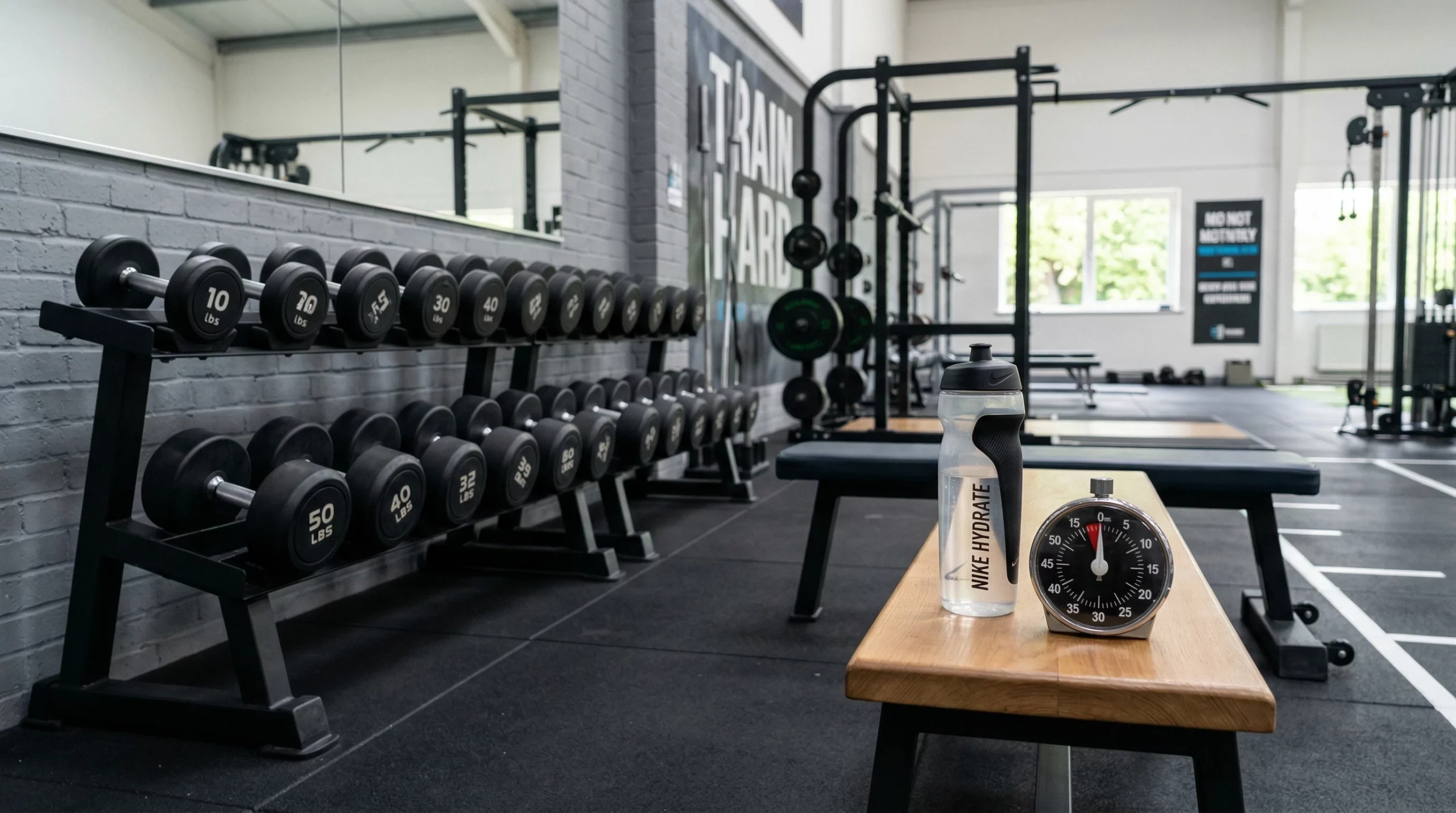
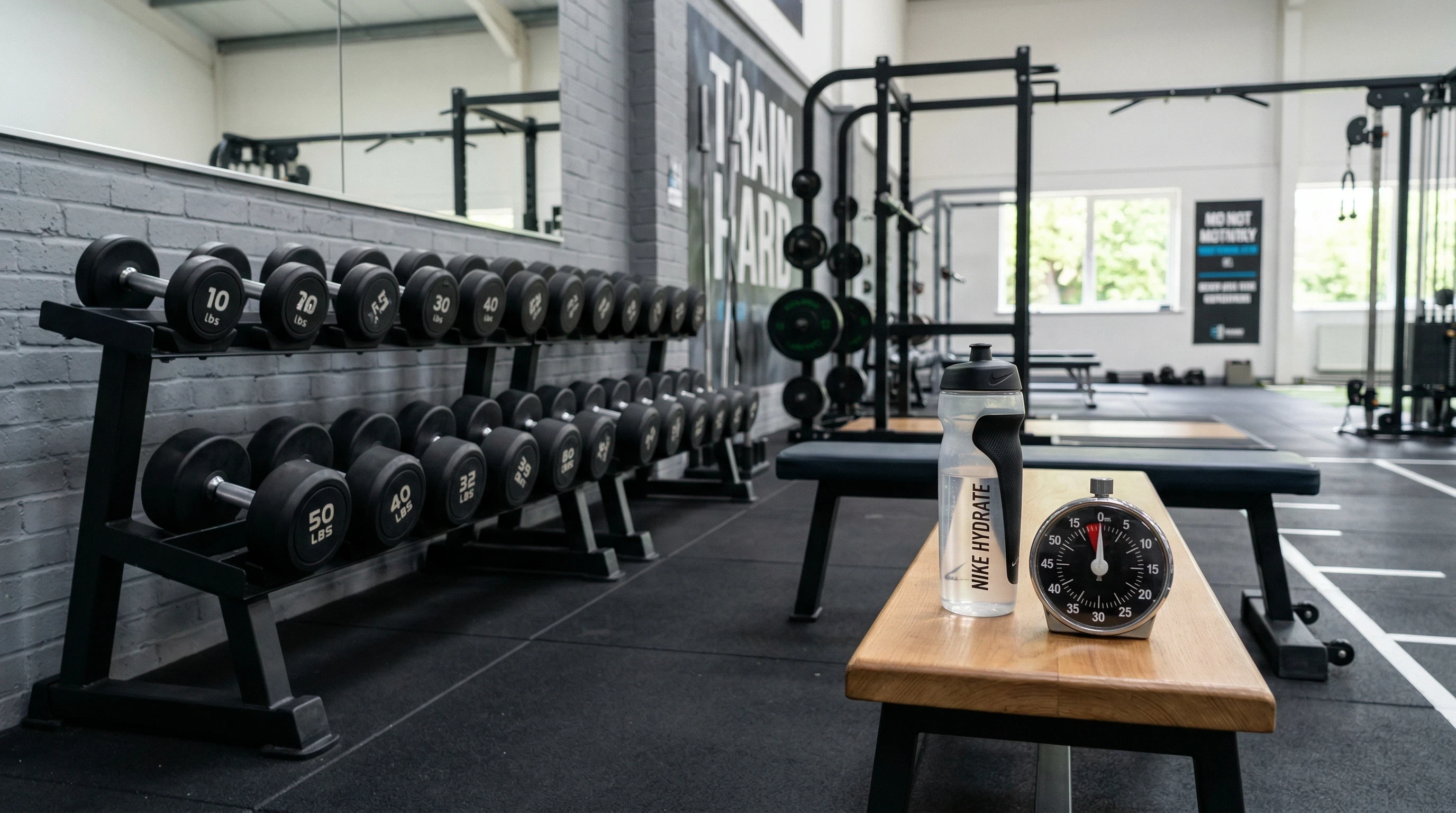
Rest periods between sets during a workout are often overlooked, especially by beginners. It’s common to either rush into the next set too quickly or take much longer breaks than necessary. However, rest duration is not just a minor detail — it strongly influences strength, muscle growth, performance, and how effective the entire workout becomes.
Beginners often come across confusing advice online, with some sources saying to minimize rest for “fat burning” and others pushing very long breaks between sets. For beginners, finding the right balance matters because rest affects both performance and exercise quality. A smart rest period can help you lift more, grow muscle, and leave the gym with better results, not just more sweat.
This guide walks you through everything you need to know about structuring rest periods for muscle growth and overall training success. You’ll find clear, beginner-friendly recommendations and learn how to put them into action, even if you’re just starting out. If you’re returning after time off, this guide on Beginner Fitness Plans After A Break explains how to restart with lighter volume, controlled effort, and safer progression. You’ll also find practical examples to help you apply these rest guidelines in real workouts, including a 4 day workout routine for beginners built around a simple upper/lower split. Learning how to structure workout rest periods correctly can make beginner training more productive, safer, and easier to sustain over time.
Muscle growth for beginners depends on three key factors: structured training, proper nutrition, and consistent recovery
Quick Answer
Most beginners should rest about 1–2 minutes for isolation exercises, 2–3 minutes for lighter machine or compound lifts, and 3–5 minutes for heavy free-weight compounds like squats, deadlifts, and bench press. The harder and heavier the set, the more rest you usually need to keep performance and form strong.
How Long Should You Rest Between Sets?
- Isolation exercises → 1–2 minutes
- Machine exercises → 2–3 minutes
- Heavy compound lifts → 3–5 minutes
Rest longer when weights are heavier
Rest shorter for lighter exercises
Table of Contents
- Quick Answer
- What Are Rest Periods and Why Do They Matter?
- How Rest Time Impacts Muscle Growth, Strength, and Endurance
- Beginner Rest Period Guidelines by Exercise Type
- Why Heavier Lifts Need More Rest
- What Determines Optimal Rest Periods?
- How to Structure Rest Periods Throughout a Workout
- Rest Periods for Supersets and Circuit Training
- Should Beginners Use Timers or Autoregulate Rest?
- Common Mistakes Beginners Make With Rest Periods
- How Rest Periods Affect Workout Length and Efficiency
- Key Takeaways
- Final Thoughts
- Beginner Bodybuilding Guides on Lift & Nurture
- References
- About the Author
What Are Rest Periods and Why Do They Matter?
The rest period is the time you spend recovering between sets or exercises during a workout. During this break, your body is recharging for the next effort. You might use the time to catch your breath, rehydrate, or just get your focus back.
This rest isn’t just about feeling less tired. It gives your muscles a chance to recover some of their strength and energy, especially the short-term fuel (ATP and creatine phosphate) used in resistance training. Rest periods also play a role in letting your nervous system recharge, which is really important for lifts that use a lot of weight or full-body movements.
Too little rest and you might feel gassed out, struggle to finish your sets, or lose good exercise form. With too much rest, it’s sometimes hard to stay in the zone and your workout could drag on longer than it needs to. For muscle growth, finding a reasonable rest period is a big step toward results.
How Rest Time Impacts Muscle Growth, Strength, and Endurance
Rest length can change how your body responds to resistance training. Here’s what really happens with different rest times depending on your workout goals:
- Short Rest (around 30–60 seconds): Helps build muscular endurance, meaning you can do more reps before fatiguing. You’ll feel the burn, but your strength and total performance in later sets might drop. These short rests are more common in circuit or high-rep workouts rather than traditional strength or muscle-building programs.
- Moderate Rest (1–2 minutes): This is the sweet spot for most isolation lifts and lighter machine or dumbbell work. You stay fairly fresh and can keep up decent power for each set. Muscle-building (hypertrophy) programs for beginners usually use this range for these types of exercises.
- Long Rest (2–5 minutes): Needed for heavy, full-body, or technically demanding lifts. Taking a longer break lets your muscles and your nervous system recover so you can lift heavy weights for multiple sets safely and with good form. This is really helpful for big muscle and strength gains, especially on compound exercises.
For building muscle, moderate to long rest times usually work best. They help you perform strong sets and use enough resistance to challenge the target muscles without burning out after just one round.
Research comparing 1-minute and 3-minute rest intervals found that longer rest periods may support greater strength and muscle gains in harder resistance training.
Consistent rest periods support long-term muscle growth, especially when combined with realistic expectations about how long beginners need to see progress.
Beginner Rest Period Guidelines by Exercise Type
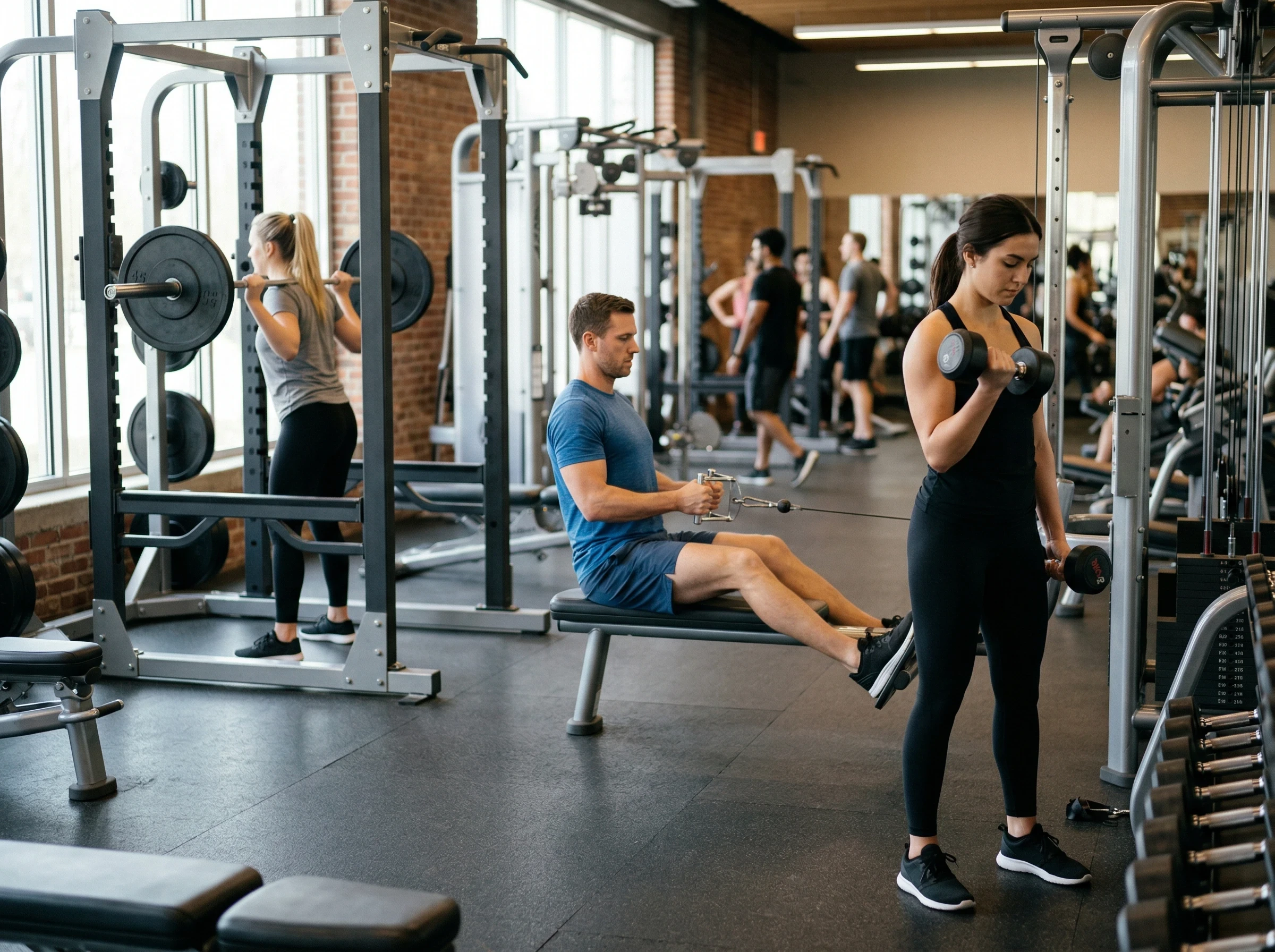
A simple system can help beginners know when they have rested “enough” between sets. Here are practical, evidence-informed rest guidelines based on how much muscle mass the exercise uses and how demanding the set feels. Rest time also works together with the sets and reps beginners should perform to determine how challenging and productive each workout feels.
Isolation Exercises (like dumbbell curls, triceps extensions, lateral raises)
- Rest for about 1–2 minutes between sets
Isolation exercises work one muscle at a time, use lighter weights, and don’t tax the whole body much. One to two minutes gives you enough time to keep decent performance through all your sets. For example, after a set of biceps curls, resting for around 90 seconds before your next round allows your arms to recover but not cool off completely.
Light or Machine Compound Exercises (like machine chest press, seated rows, leg press)
- Rest for about 2–3 minutes between sets
These lifts use multiple muscles and are harder than isolation moves. You need more rest so the big muscles involved are ready for each set. If you’re using a leg press machine, completing a tough set and then resting for at least two minutes gives your legs enough time to recover the strength needed for another quality set.
If you’re still learning how gym machines work or which beginner-friendly machines to start with, this Guide To Gym Machines For Beginners explains proper machine setup, beginner machine exercises, and how to structure machine-based workouts safely and effectively.
Heavy Compound Lifts (like squats, deadlifts, bench press with free weights)
- Rest for about 3–5 minutes between sets
These are the most demanding moves. They use multiple big muscles together and need lots of effort and coordination. Longer rests help you recover nearly all your strength for each set. After a heavy set of squats, giving yourself at least three minutes allows your body to reset fully so you can keep your form strong and move heavy weights safely.
| Exercise Type | Recommended Rest |
|---|---|
| Isolation (Curls, Raises, Extensions) | 1–2 minutes |
| Light Compound (Machines, Moderate Loads) | 2–3 minutes |
| Heavy Compound (Squats, Deadlifts, Bench) | 3–5 minutes |
Use this as your basic rule of thumb. Adjust up or down based on how challenging the set was or if you still feel very fatigued.
One tip: Over time, if you spot that you can keep perfect form and do all your repetitions on isolation movements with a little less rest, go ahead and trim your rest by 10–20 seconds. On the other hand, if you’re still very tired or your weights are going up, adding rest can pay off in results without dragging out your sessions too long.
Why Heavier Lifts Need More Rest
When lifting heavy, especially with full-body barbell moves, your strength and technique depend on more than just your arms or legs. These lifts tire out the biggest muscle groups and drain the nervous system much faster than arm curls or side raises do. A heavy squat or deadlift, for example, boosts your heart rate and breathing a lot more. Proper recovery between sets is especially important when practicing barbell squat technique so that form stays safe and consistent under heavier loads. The muscles need more time to refill their energy stores before another hard set.
If you try to rush the rest, your next set can feel way heavier, your form breaks down, and you might not even finish the planned reps. Taking a longer rest helps each set stay strong and keeps the workout safe. For beginners, this approach helps reinforce proper form with less fatigue, so progress can come more safely and consistently.
What Determines Optimal Rest Periods?
There is no single “right” rest time for everyone and every exercise. How long you should rest in a workout depends on a few main factors. Your total weekly training volume also plays a role, since higher overall workloads require more recovery to maintain performance (see this guide on Muscle Group Sets Per Week For Beginners):
- Muscle mass involved: Exercises working big muscles (legs, chest, back, glutes) need longer rest than single-joint moves (like biceps curls).
- Weight and intensity used: Lifting heavy means more rest to recover maximum strength for the next set.
- Exercise difficulty: Moves that challenge your balance, technique, or entire body (barbell squats, deadlifts, chin-ups) will take more out of you than a basic cable exercise or machine movement.
- Fatigue and breathing: If you’re breathing hard or shaking after a set, a bit more rest can help performance stay high in the next round.
- Training goals: Want to get stronger and build muscle? Opt for moderate-to-long rest. If you’re after endurance or circuit training, short rests are fine for lighter weights.
If you are ever unsure, pause, check in with your breathing, and see if your muscles still feel tired. Rest isn’t a contest to get back to lifting as fast as possible. It’s about enabling consistently good sets across the workout.
An extra consideration is your daily stress and sleep. Sleep, nutrition, and overall muscle recovery also influence how quickly your body is ready for the next set. If you arrive at the gym feeling run down or didn’t get enough sleep, your rest requirements may change. Don’t be afraid to add 20–30 seconds to your usual pause. Prioritizing quality work will always trump sticking to a strict timer if your body needs more recovery.
How to Structure Rest Periods Throughout a Workout
It helps to plan rest periods in advance so the workout has a clear rhythm. Rest periods also work together with your total weekly training volume, since both determine how much work your body can recover from across the week (see this guide on Muscle Group Sets Per Week For Beginners). For beginners, a useful strategy is to write the rest time beside each exercise on the training plan, especially if you’re following a 4 day workout routine for beginners where rest timing helps keep each session organized and productive. As you gain experience, other training splits like push, pull, legs may also be used, but most beginners make better progress starting with simpler full-body or upper/lower routines before moving to more advanced structures. Most fitness apps or paper logbooks include a spot for this. The easiest way to structure workout rest periods is to match the rest length to the exercise type: shorter rests for isolation work, moderate rests for lighter compound lifts, and longer rests for heavy compound movements.
- After a set: Check your watch or phone timer, note the time, and start your rest.
- Between different exercises: You can take a slightly longer break, often around 2–3 minutes, to grab water, reset your equipment, or get your breath back.
- Treat rest as part of the workout: Sitting or gently walking near your equipment keeps you focused and safe, and you’ll be ready to start again when time is up.
When you stick to these rest periods, workouts move along efficiently. This helps you finish in a reasonable timeframe and get the most from every set.
Organizing your rest allows you to stay focused. Setting a timer or at least checking the clock can help so you don’t wander off. Staying active, like gently walking or stretching between sets, can keep your body warm and decrease chances of cooling down too much between lifts.
Rest Periods for Supersets and Circuit Training
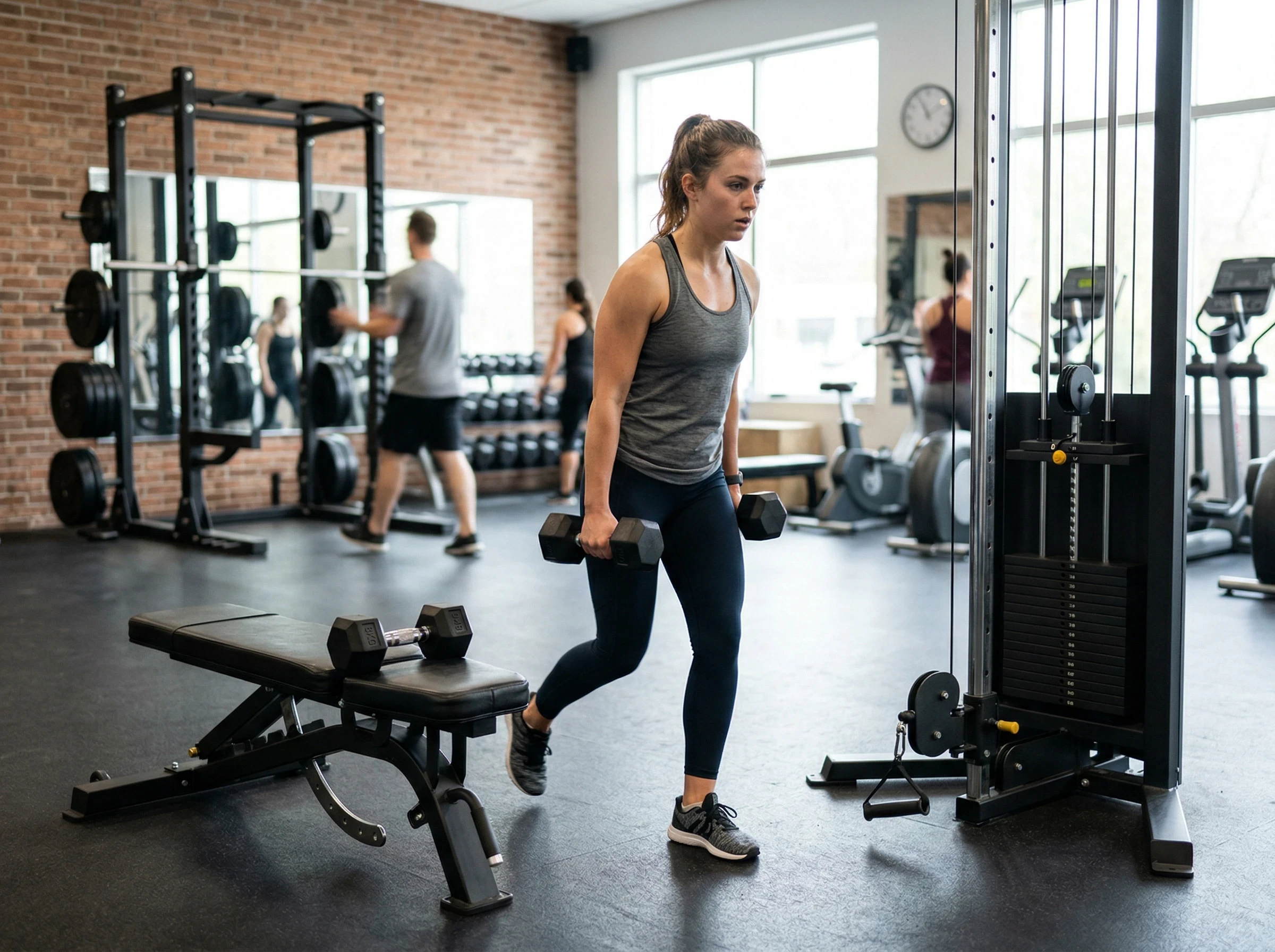
Sometimes, workouts use supersets or circuit-style training. In a superset, you do two exercises back-to-back before resting. With circuit training, you go through several different moves with little or no rest between each, then take a longer break after the round.
How Rest Works in Circuits and Supersets
- Rest is much shorter (or none) between individual moves in the set. Save your main rest for after the block is complete.
- After finishing a superset or circuit, rest for about 2–3 minutes so your breathing and muscles can recover before starting the next round.
This style is good for building endurance and saving time. Be mindful that form can break down faster, especially as you get tired. If you feel very winded or weak, don’t hesitate to add a bit more rest, especially when safety is a concern.
As a beginner, trying out circuit training can give new variety to your sessions. For instance, performing a cycle of pushups, bodyweight squats, and seated rows one after the other, then resting two minutes, creates a challenging flow. Just make sure your form stays solid throughout. Safety always comes first. Choosing the right beginner exercises also makes circuits and supersets easier to perform with good technique.
Should Beginners Use Timers or Autoregulate Rest?
Some people like using a phone timer or gym clock to track rest exactly. Others prefer to rest until they feel ready. Both methods have upsides and downsides.
Using a Timer:
- Keeps you on schedule and holds you accountable
- Prevents workouts from dragging on. It’s easy to lose track when chatting or using your phone.
- Makes it easy to track progress and compare how you feel week to week
Autoregulating Rest:
- Listens to your body and allows full recovery before starting again
- Can stretch workouts too long if you lose focus or over-rest
- For beginners, it can be tricky to tell the difference between real recovery and just procrastinating
A simple approach works best for most beginners: use a timer when starting out and aim for the recommended rest period for each exercise type. If you feel too exhausted or your form is slipping, give yourself 30 more seconds. Over time, you’ll learn how your body feels at different recovery levels and get more comfortable making small adjustments.
For instance, if you notice that after two minutes of rest your breathing has returned to normal and your muscles don’t feel overly tired, you’re probably ready for another set. If not, listen to your body and add a bit more time. The key is to become more in tune with your own needs as you gain experience.
Common Mistakes Beginners Make With Rest Periods
- Resting too little: Jumping back into sets too quickly can drain your strength. You’ll notice your reps drop off fast and technique goes bad. This sometimes leaves muscles under-stimulated and progress slows down.
- Taking too much rest: Getting lost on social media, chatting with friends, or daydreaming can drag rest periods out much longer than needed. This makes workouts take forever, and you lose focus and intensity.
- Copying advanced athlete routines: Many programs from bodybuilders or athletes use short rests with lighter weights or “intensity techniques” that aren’t needed for beginners. These can risk injury or burnout. Long-term progress comes from steady, manageable training, not extremes.
- Thinking fatigue = effectiveness: Beginners often believe the more tired or sore they get, the better the results. In reality, good rest lets you train safely, perform quality reps, and stick with it for the long haul.
Many of these issues become worse when overall training volume is too high or poorly structured across the week (see this guide on Muscle Group Sets Per Week For Beginners).
How Rest Periods Affect Workout Length and Efficiency
When you plan rest periods, your session runs on time and you spend your energy on the most important work.
If you prefer training at home instead of in a gym, this Beginner Bodyweight Workout Plan To Build Muscle At Home shows how to organize full body workouts, progression, recovery, and rest periods using simple bodyweight exercises and minimal equipment.
If you want a more structured weekly home training schedule built around beginner-friendly bodyweight workouts, this 3 Day At Home Workout Routine For Beginners explains how to organize three weekly workouts, recovery days, exercise progression, and rest periods without needing gym equipment.
If you want the simplest possible beginner-friendly starting point, this No Equipment Full Body Workout For Beginners At Home shows how to structure basic full-body bodyweight workouts, simple recovery, and beginner rest periods using only your bodyweight.
In a structured Beginner Bodybuilding Workout (12-Week Foundation Blueprint), planning rest intervals helps keep sessions efficient while maintaining performance across big lifts and accessory exercises.
For a typical full-body beginner workout, rest periods might look like this. If you want to see these rest periods applied inside a simple routine, this full body workout plan for beginners shows how to combine exercises, sets, reps, and rest into one beginner-friendly structure.
If you also want a beginner-friendly upper-body-only session, this beginner upper body workout at the gym guide shows how to organize chest, back, shoulders, and arm exercises with structured sets, reps, and rest periods.
For a typical full-body beginner workout, rest periods might look like this:
- Squats (3 sets, 3–5 min rest) = about 12–15 min
- Bench press (3 sets, 3–5 min rest) = about 12–15 min
- Machine rows (3 sets, 2–3 min rest) = about 7–9 min
- Biceps curls (3 sets, 1–2 min rest) = about 4–6 min
Add up your warmup, transitions, and a few longer breaks as needed, and most people finish a full workout safely in about 45–75 minutes. Planning ahead helps workouts stay productive, so you can get results without spending all day in the gym, which is especially helpful in a 4 day workout routine for beginners where session efficiency matters across the full training week.
If you’re tight on time, focus on the exercises that matter most for your goals. For example, if squats, deadlifts, or bench press are your main lifts, you can trim the number of auxiliary movements or keep transitions between equipment quick to save time while still maximizing results. Keeping rest periods intentional helps you use your gym time efficiently.
| Type of Lift | Rest Period | How It Feels |
|---|---|---|
| Isolation (Curls, Raises) | 1–2 min | Enough to catch your breath and reduce light muscle fatigue |
| Machine/Light Compound | 2–3 min | Breathing returns to normal and the muscles feel ready again |
| Heavy Compound (Squat, Deadlift, Bench) | 3–5 min | Heart rate settles down and the whole body feels more recovered |
Keep this table handy or save it on your phone before your next gym session. It’s a quick way to check your plan and stay on track.

Key Takeaways
- Rest periods directly impact strength, performance, and muscle growth
- Most beginners should rest:
- 1–2 minutes for isolation exercises
- 2–3 minutes for machine or lighter compound lifts
- 3–5 minutes for heavy compound lifts
- Longer rest allows better performance on demanding exercises like squats and deadlifts
- Short rest can reduce strength output and limit overall training quality
- Using a timer helps beginners stay consistent and avoid under- or over-resting
- Rest should be treated as part of the workout, not wasted time
Simple Rule For Beginners
The harder the set feels, the longer you should rest.
- Easy sets → shorter rest
- Hard sets → longer rest
- Heavy lifts → longest rest
Most Common Rest Mistake
❌ Resting too little → weaker sets
❌ Resting too long → wasted time
Goal = enough rest to perform your next set properly
Example Rest Between Sets (Beginner Workout)
- Squats → 3–4 minutes
- Bench press → 3 minutes
- Rows → 2–3 minutes
- Biceps curls → 1–2 minutes
If you want to see these beginner rest periods applied inside a complete lower-body workout, this Simple Leg Day Workout Plan shows how to organize squats, leg press variations, Romanian deadlifts, split squats, calf raises, sets, reps, and rest periods into one structured beginner leg session.
Your Simple Action Plan:
- Set your rest timer in advance for each lift—1–2 min for isolation, 2–3 min for machine compounds, 3–5 min for heavy free-weight lifts.
- Pace your rest periods as part of your routine so your workout doesn’t stall or rush.
- Track how you feel during and after each set to spot when you might need a little more or less rest next time.
- Never force yourself to cut rest just to get “more burn”; getting stronger and building muscle comes from consistent training, not exhaustion.
Every beginner learns what works best by trying it out, paying attention, and making steady improvements. Feel free to adjust your rest by 15–30 seconds over time if you find something that feels better for your energy and results. The most important thing is showing up regularly and making your workouts suit you.
Starting strength training is a big step, and structuring your rest periods gives you the best shot at building muscle safely and confidently. You’ve got this. Enjoy the process of getting stronger, one rest period at a time! For most beginners, better rest periods lead to better sets, better form, and better long-term progress.
Final Thoughts
Rest periods are one of the most overlooked but powerful parts of beginner training.
When structured correctly, they allow you to:
– Maintain strength across sets
– Use better technique
– Lift heavier over time
– Build muscle more efficiently
Combined with:
– Structured training
– Progressive overload
– Proper nutrition
– Consistent recovery
rest periods become a key driver of long-term progress.
A 4 day workout routine for beginners is one practical way to apply these rest principles within a simple upper/lower weekly structure. If you’re unsure whether full body or upper/lower training fits your schedule best, this guide on how to choose a workout split for beginners can help you choose the right structure before organizing your rest periods.
Managing your total weekly training volume is also essential, since it determines how much work your body can handle alongside proper rest periods (see this guide on Muscle Group Sets Per Week For Beginners).
Instead of rushing your workouts or chasing fatigue, focus on performing high-quality sets with the right amount of recovery.
Over time, this approach leads to better strength, better muscle growth, and a more sustainable training routine.
Beginner Bodybuilding Guides on Lift & Nurture
If you want to apply proper rest periods within a complete muscle-building system, these beginner guides will help you connect training structure, recovery, and progression:
• Beginner Bodybuilding Workout Plan (12-Week Foundation Blueprint) – A complete program showing how rest periods fit into full workouts for consistent muscle growth.
• 3 Day Workout Schedule for Beginners – Learn how to organize your weekly training so each session includes proper rest, volume, and recovery.
• 4 Day Workout Routine For Beginners – A simple upper/lower split that shows how to organize four weekly workouts while managing rest, recovery, and performance.
• Push Pull Legs Workout For Beginners – Learn how rest periods apply to a push, pull, legs split and when this training structure becomes appropriate for beginners.
• Beginner Weight Training Sets and Reps – Understand how sets, reps, and rest periods work together to drive muscle growth.
• Muscle Group Sets Per Week For Beginners – Learn how many sets each muscle group needs per week and how to structure your total training volume for consistent muscle growth.
• How to Implement Progressive Overload for Beginners – Learn how proper rest supports strength progression and helps you lift heavier over time.
• Beginner Bodybuilder Exercises – Discover which exercises require longer rest periods and how to structure them in your workouts.
• Step-by-Step Barbell Squat Tutorial – Learn how proper rest improves performance and safety during heavy compound lifts like squats.
• Muscle Recovery Tips for Beginners – Understand how rest between sets connects to overall recovery, sleep, and muscle repair.
• How Much Protein Beginners Need to Build Muscle – Learn how nutrition supports recovery between workouts and improves performance.
• How Many Calories Should Beginners Eat to Build Muscle? – Understand how proper fueling supports energy, recovery, and training output.
• Muscle Building Nutrition Guide for Beginners – A complete breakdown of how diet supports strength, recovery, and performance.
• Workout Mistakes Beginners Should Avoid – Avoid common errors like under-resting or over-resting that can reduce workout effectiveness.
• How Long It Takes Beginners to Build Muscle – Learn how proper rest contributes to long-term muscle growth timelines.
• Gym Etiquette Tips for Beginners – Understand how to manage rest periods respectfully when sharing equipment in a gym environment.
• Beginner Upper Body Workout At The Gym – A beginner-friendly upper-body workout plan showing how to organize chest, back, shoulders, and arm exercises with proper sets, reps, and rest periods.
References
Schoenfeld BJ, Ogborn D, Krieger JW. Longer interset rest periods enhance muscle strength and hypertrophy in resistance-trained men. Available at: https://pubmed.ncbi.nlm.nih.gov/26605807/
About the Author
Angel Carcamo is the founder of Lift & Nurture, a beginner bodybuilding platform focused on structured training, muscle growth fundamentals, and long-term progress.
As a beginner himself, Angel creates content based on evidence-backed principles commonly recommended in strength training, breaking them down into clear, simple steps for new lifters.
His guides focus on key fundamentals like progressive overload, recovery, and nutrition — helping beginners build muscle without confusion, shortcuts, or unrealistic expectations.
Start here: Beginner Bodybuilding Roadmap
Foundation guide: Beginner Bodybuilding Workout Plan (12-Week Foundation Blueprint)
This is a really clear and helpful breakdown, especially for beginners who usually either rush their sets or rest way too long without realizing how much it affects results.
I’m curious, when someone is just starting out, how can they tell the difference between needing more rest versus just feeling uncomfortable from the workout? I imagine a lot of beginners might cut rest too short thinking they’re supposed to “push through.”
Also, do you think using a timer is better long-term, or should beginners eventually transition more toward listening to their body as they gain experience?
Great guide, this makes something that’s usually overlooked a lot easier to understand
Hi Jason, thank you. I really appreciate that, and those are excellent questions.
For beginners, the difference usually comes down to whether they can perform the next set with good form, controlled reps, and similar effort to the last one. If they are still breathing very hard, their technique is slipping, or they know they could not repeat the set properly, they probably need more rest. On the other hand, if they feel a bit uncomfortable but their breathing is mostly under control and they can attack the next set with good form, that is usually normal training discomfort rather than a sign they are under-recovered.
That is one reason many beginners cut rest too short. They think feeling “the burn” means they should go again immediately, when in reality better muscle-building workouts often come from resting long enough to keep performance high on the next set.
As for timers, I think they are very useful for beginners because they create consistency and prevent both rushing and over-resting. As someone gains experience, they can start listening to their body more and autoregulate a bit better. So in my view, the best approach is usually to start with a timer, then gradually combine that with body awareness over time rather than relying only on one or the other.
Thanks again for the thoughtful comment. I’m really glad the guide helped make this topic easier to understand.
Angel
Hi Angel Carcamo,
This is one of those topics that doesn’t get talked about enough, especially for beginners. Most people walk into the gym thinking it’s all about reps and sweat, but the way you explained rest periods makes it clear that recovery between sets is just as important as the lifting itself. I like how you broke it down by exercise type it makes it way easier to actually apply in a real workout instead of guessing. The point about heavier lifts needing longer rest really stands out too. The timer vs. autoregulation section is also practical. Starting with a timer and then learning to listen to your body over time just makes sense. It keeps things structured without becoming too rigid. Overall, this feels like advice you can actually use right away, not just theory. Definitely a solid guide for anyone trying to train smarter instead of just harder.
Hi Shafna,
Thank you so much. I really appreciate your thoughtful comment.
You explained exactly why I wanted to cover this topic. A lot of beginners focus only on the workout itself, but the rest between sets really does affect how strong, controlled, and productive those sets actually are. If the rest is too short, performance drops fast. If it is too long, the workout can lose structure. That balance is what I wanted to make clearer.
I’m also glad the exercise-by-exercise breakdown and the timer versus autoregulation section stood out to you. For most beginners, I think starting with a timer is the simplest way to build consistency, and then over time they can get better at recognizing when they truly feel ready for the next set.
Thank you again for taking the time to read the article and leave such encouraging feedback. I’m really glad you found it practical and easy to apply.
Angel