
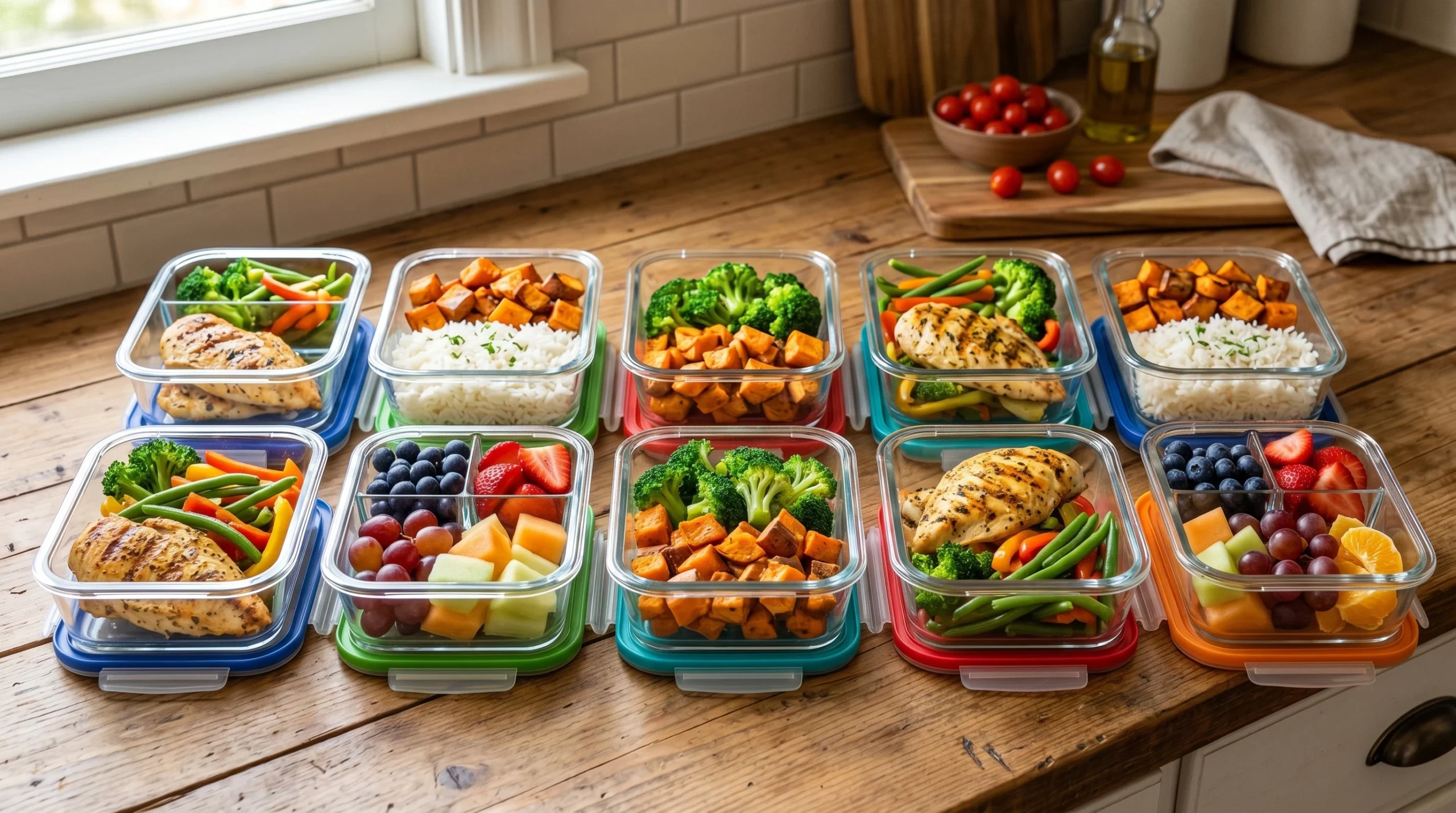
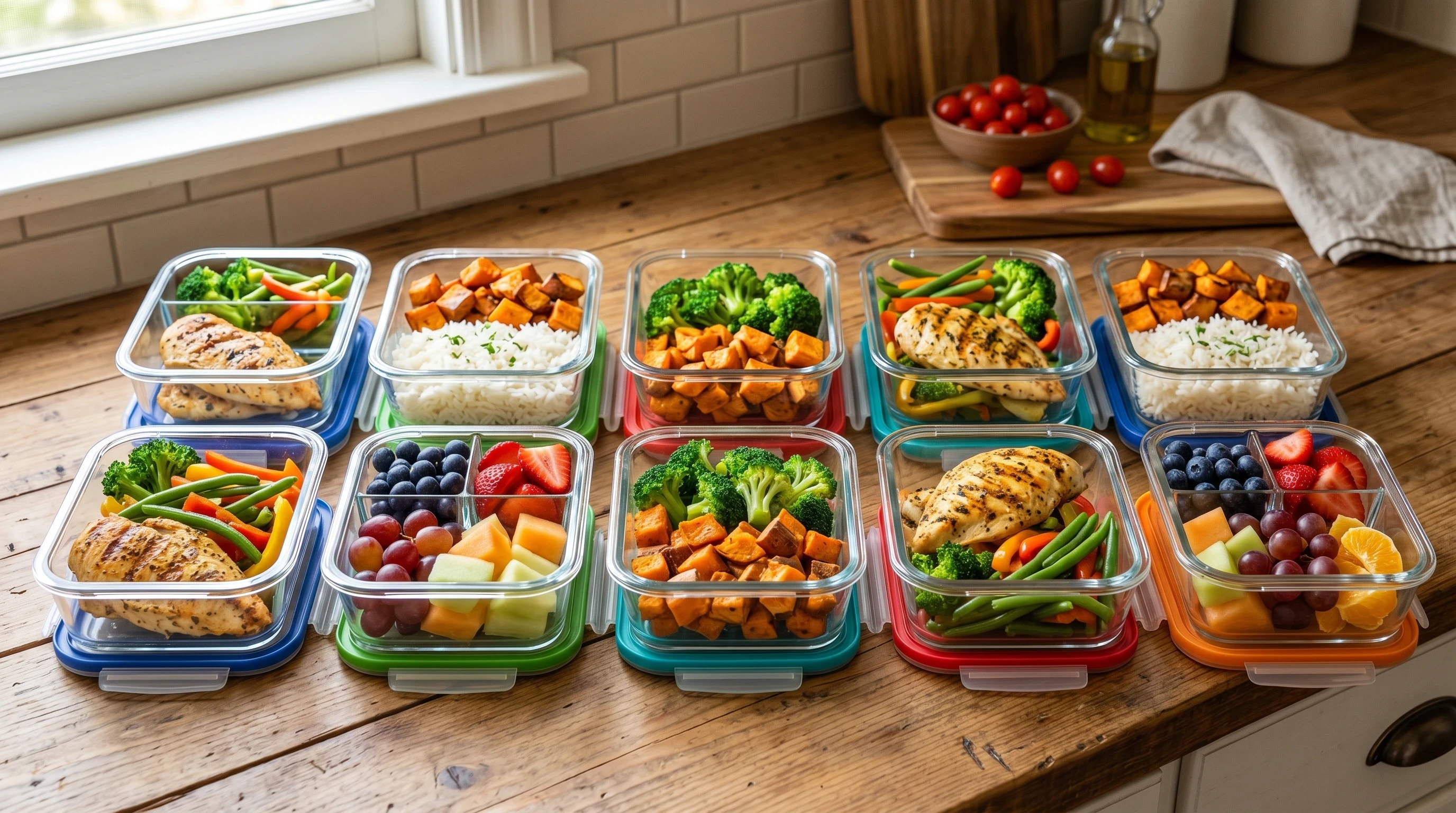
Building muscle starts with what you do in the kitchen as much as what you do in the gym. For beginners, meal prep for muscle gain can seem overwhelming, especially with so much nutrition information out there. The truth is, most beginner muscle gain programs highlight that consistency with eating, not perfection, really helps you build lean muscle over time. Having a simple meal prep routine makes eating enough calories and protein much easier, helps you recover from workouts, and saves money along the way.
If your current eating habits are random or you find yourself skipping meals, meal prepping can take away a lot of uncertainty. By planning, cooking, and portioning your meals ahead of time, you’ll have healthy options ready when you need them. This basic meal prep approach is supported by evidence-based nutrition guidelines from the International Society of Sports Nutrition (ISSN), Jeff Nippard, Layne Norton, Renaissance Periodization, and Eric Helms, all emphasizing that building muscle is about steady habits and hitting daily calorie and protein goals.
This guide will show you exactly how to plan, prepare, cook, portion, and stick to simple muscle-building meals. You’ll find step-by-step help on what to buy, how to build meals, and how to avoid mistakes that slow down progress. If you want an easy, beginner-friendly way to support your workouts and muscle gains, meal prep can make a huge difference.
Quick Answer
How To Meal Prep For Muscle Gain Beginners starts with planning meals that help you consistently hit your daily calorie and protein goals. Most beginners should focus on preparing meals that include a quality protein source, carbohydrates for training energy, fruits or vegetables for nutrients, and healthy fats for overall health. A simple meal prep routine usually involves batch cooking protein and carb sources, portioning meals into containers, and preparing 3–4 days of food at a time. Consistency with your calorie and protein intake matters far more than eating perfectly, and meal prep makes it easier to stay on track with your muscle-building goals.
Table of Contents
- What Is Meal Prep for Muscle Gain?
- The Three Keys to Muscle-Building Nutrition for Beginners
- Step-by-Step Guide: How to Meal Prep for Muscle Gain Beginners
-
- Step 1: Determine Your Calorie and Protein Goals
- Step 2: Choose Your Protein Sources
- Step 3: Choose Your Carbohydrate Sources
- Step 4: Add Fruits and Vegetables
- Step 5: Include Healthy Fats
- Step 6: Build Simple, Balanced Muscle-Building Meals
- Step 7: Batch Cook Food Efficiently
- Step 8: Portion Meals
- Step 9: Store Meals Properly
- Step 10: Create a Repeatable Weekly Meal Prep Routine
- Sample Beginner Muscle Gain Meal Prep Plan
- Best Foods for Muscle Gain Meal Prep
- Beginner Meal Prep Tips That Make Muscle Gain Easier
- Common Beginner Meal Prep Mistakes (And How to Avoid Them)
- Frequently Asked Questions
- Making Meal Prep a Consistent Habit for Muscle Gain
What Is Meal Prep for Muscle Gain?
Meal prep for muscle gain means planning, cooking, and portioning meals ahead of time to help you eat the right amount of calories and protein for building muscle. This approach removes daily decision making around food, makes shopping and cooking easier, and helps you stay consistent even on busy days.
For beginners, this doesn’t mean eating chicken and broccoli for every meal or following a complicated bodybuilding diet. Evidence-based nutrition guidelines and many experienced coaches agree that the most important factors for muscle gain are:
- Eating enough total calories to support muscle growth (usually through a slight calorie surplus).
- Getting enough protein every day, spread across at least three meals.
- Having a variety of whole foods (protein, carbohydrates, vegetables, healthy fats).
- Choosing foods you enjoy and can keep eating long term.
When you have meals prepped and ready, you’re less likely to overeat, skip meals, or grab fast food. Batch cooking also saves time and makes it easier to stick to your routine even if you have a busy schedule.
The Three Keys to Muscle-Building Nutrition for Beginners
1. Calorie Surplus Supports Muscle Growth
Building muscle requires a small calorie surplus, which means eating slightly more calories than your body burns each day. For beginners, eating about 200–300 calories above your maintenance needs is enough. This gives your body extra energy to grow new muscle after workouts without adding a lot of unwanted fat.
2. Daily Protein Matters Most
Research shows that total protein intake is a major factor for muscle gain. A common beginner guideline is about 0.7–1.0 grams of protein per pound of body weight each day (1.6–2.2 grams per kg). For a 160-pound person, that’s about 115–160 grams of protein a day, split across your meals.
3. Consistency Over Perfection
Many lifters find that being consistent with meal prep is much more important for muscle gain than perfect timing or food choices. Sticking to your meal plan at least 80% of the time is usually enough, as suggested by most evidence-based programs. Don’t stress if things aren’t perfect, just keep aiming for regular meals with enough protein, carbs, and healthy fats.
Meal prep helps create that consistency by reducing missed meals, limiting impulse food choices, and making it easier to reach your calorie and protein goals every day.
Step-by-Step Guide: How to Meal Prep for Muscle Gain Beginners
A simple, step-by-step system can make meal prep less intimidating. Here’s how most muscle gain beginners can set up an easy and sustainable meal prep routine.
Step 1: Determine Your Calorie and Protein Goals
- Calculate your estimated calorie needs: Multiply your body weight (in pounds) by 15-17 to estimate maintenance, then add 200–300 to start with a mild surplus (for example, 160 lbs x 16 = 2,560 maintenance, plus 250 = 2,810 calories).
- Set your daily protein target: Most beginner programs recommend 0.7–1.0 grams per pound of body weight as a good starting point.
- Don’t stress about exact numbers. Focus on being consistent with hitting your calorie and protein goals week after week.
Step 2: Choose Your Protein Sources
Protein helps build and repair muscle after training. For meal prep, use a mix of animal, dairy, and plant sources. Here are some popular choices:
- Chicken breast or thighs
- Lean ground beef, ground turkey, or steak
- Eggs and egg whites
- Greek yogurt or cottage cheese
- Fish (salmon, tuna, tilapia)
- Whey or plant-based protein powder (for convenience)
Try to include a protein source in every meal. Most muscle-building meals have 25–40 grams of protein each.
Step 3: Choose Your Carbohydrate Sources
Carbohydrates fuel workouts and recovery. Easy options for meal prep include:
- Rice, brown or white
- Pasta or noodles
- Potatoes (white or sweet)
- Oats
- Bread or wraps
- Fruits (bananas, apples, berries, oranges)
Aim for a mix of complex carbs (like rice and potatoes) and fruit for energy and nutrients.
Step 4: Add Fruits and Vegetables
Fruits and vegetables provide vitamins, minerals, and fiber. Include at least 1-2 servings in every meal. Good choices for meal prep are:
- Leafy greens (spinach, kale)
- Broccoli, carrots, bell peppers
- Frozen mixed vegetables
- Berries, citrus, grapes
Prechopped or frozen options save time and reduce food waste.
Step 5: Include Healthy Fats
Healthy fats are needed for hormones and joint health. Try adding one serving to most meals:
- Nuts and nut butters
- Avocado
- Olive oil or canola oil
- Chia or flax seeds
- Fatty fish (like salmon)
Keep portions moderate since fats are calorie dense.
Step 6: Build Simple, Balanced Muscle-Building Meals
A basic muscle-building meal for beginners has:
- 1 palm-sized portion of protein (around 4–6 oz cooked)
- 1–2 cupped handfuls of carbs (rice, potatoes, or pasta)
- 1–2 fists of veggies or 1–2 pieces of fruit
- 1 thumb sized portion of fat (a drizzle of oil, a few nuts, or avocado)
A meal template helps with grocery shopping and makes it easier to hit your nutrition targets.
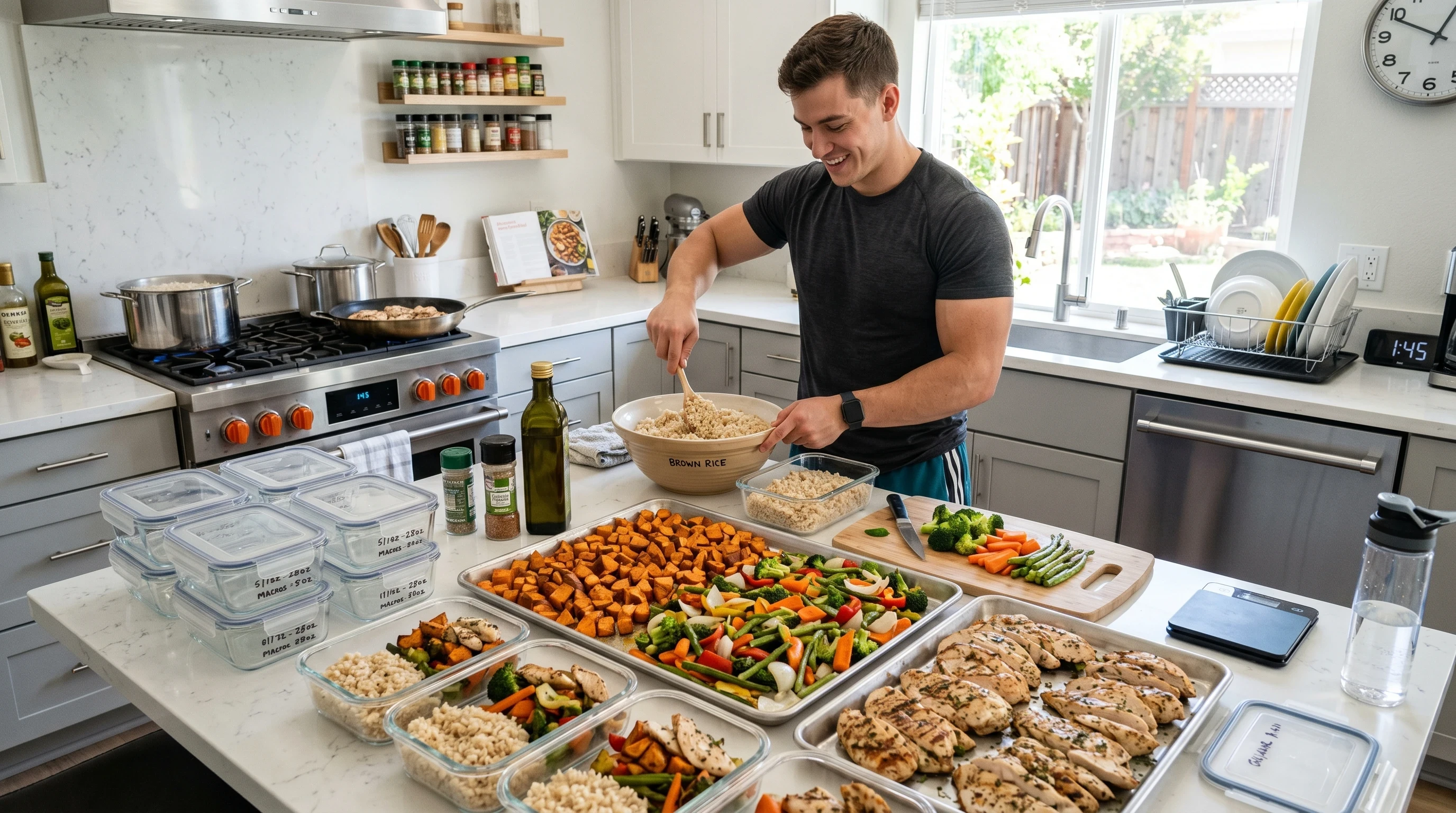
Step 7: Batch Cook Food Efficiently
Cooking in batches saves time and makes weekday meals easier. Example batch cooking techniques include:
- Roast several chicken breasts, thighs, or a tray of vegetables at once.
- Cook a big pot of rice, pasta, or potatoes for the week.
- Grill, bake, or sauté lean meats in bulk.
- Mix together fast breakfast options like overnight oats or Greek yogurt parfaits.
For most beginners, it’s practical to cook 3–4 days’ worth of meals at a time to keep food fresh.
Step 8: Portion Meals
Divide cooked food into single-serving containers. Use a kitchen scale, measuring cups, or hand-sized estimates for consistency. Each meal should have a similar amount of protein, carbs, veggies/fruit, and fat. This makes tracking your nutrition easy and ensures you are eating enough to support muscle growth.
Step 9: Store Meals Properly
- Refrigerator: Most cooked food stays fresh for 3–4 days. Use airtight containers for best results.
- Freezer: For meals lasting beyond four days, freezing is a good option. Most dishes reheat well if frozen right after cooking.
- Label containers: Date your containers to keep track of freshness and avoid waste.
Step 10: Create a Repeatable Weekly Meal Prep Routine
- Plan 2–3 meal prep sessions each week (for example, Sunday and Wednesday).
- Pick a simple meal template (protein, carb, veggie, fat), shop for ingredients, and build your meals around what’s affordable and what you like to eat.
- Rotate recipes and swap out protein or carb sources to avoid boredom.
- Keep some fast options (protein bars, frozen meals) on hand for emergencies.
Repeating a basic routine week after week is the secret to long term consistency.
Sample Beginner Muscle Gain Meal Prep Plan
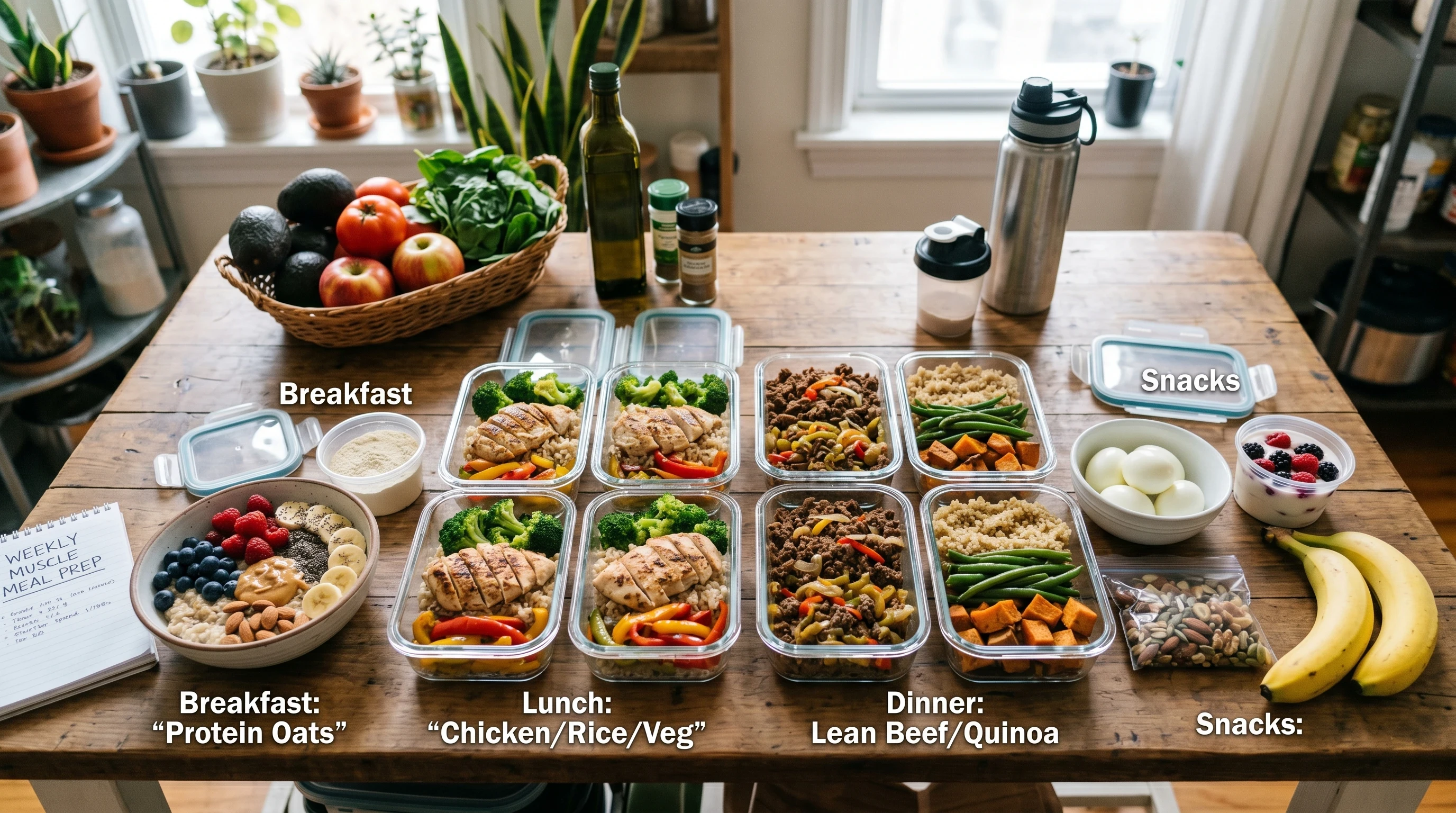
Here’s a sample meal prep schedule for a muscle gain beginner eating about 2,800 calories and targeting 150–170g protein per day. You can swap foods and amounts to fit your needs.
- Breakfast: Overnight oats (1 cup oats, 1 scoop whey protein, 1 cup milk, ½ banana, 1 tbsp peanut butter). Greek yogurt with berries and honey on the side.
- Lunch: Grilled chicken breast, 1 cup cooked rice, 1 cup roasted broccoli, 1 tablespoon olive oil drizzled on top. Apple for dessert.
- Dinner: Lean ground beef (or turkey) cooked with taco seasoning, whole wheat tortilla wrap, mixed sautéed bell peppers and onions, ½ avocado.
- Snack 1: Cottage cheese (1–1½ cups) with pineapple chunks and a handful of mixed nuts.
- Snack 2 (post-workout): 1 scoop whey protein blend with banana.
This template can be repeated for several days, adjusted to taste, and swapped with different proteins, carbs, or veggies to keep things interesting and affordable.
Best Foods for Muscle Gain Meal Prep (Beginner-Friendly)
Research and most programs highlight that eating a mix of affordable, easy to cook foods really helps with consistency. Here are some go-to foods for each category:
Protein Sources
- Chicken breast or thighs
- Lean beef, ground turkey
- Eggs and egg whites
- Greek yogurt, cottage cheese
- Fish (canned or fresh)
- Tofu, tempeh, seitan (for plant-based options)
- Protein powder (whey, casein, or plant-based for convenience)
Carbohydrate Sources
- Rice (white or brown)
- Pasta, noodles
- Potatoes (white, sweet, or red)
- Whole wheat bread, wraps
- Oats
- Quinoa
- Fruits
Vegetables and Fruits
- Broccoli, spinach, kale
- Bell peppers, carrots, green beans
- Zucchini, tomatoes, cucumber
- Frozen vegetable blends
- Apples, bananas, oranges, strawberries, blueberries, grapes
Healthy Fats
- Nuts, nut butters
- Olive oil, avocado oil
- Avocado
- Seeds (chia, flax, pumpkin)
- Fatty fish (salmon, sardines)
Including these foods makes it simple to assemble balanced muscle-building meals for prepping ahead of time.
Beginner Meal Prep Tips That Make Muscle Gain Easier
- Start small. Don’t try to overhaul your diet in one week. Prep enough for just 3–4 days, then scale up.
- Stick with foods you enjoy. This makes you more likely to stick to your routine and avoid throwing away leftovers.
- Plan your meals around your schedule. If you work long hours, prep extra dinners. If you skip breakfast, keep portable snack options on hand.
- Use kitchen shortcuts. Prechopped veggies, rotisserie chicken, and frozen rice or quinoa save cooking time.
- Batch cook proteins and carbs, add variety with sauces or spices.
Common Beginner Meal Prep Mistakes (And How to Avoid Them)
- Overcomplicating meal prep. Many people try to make every meal unique or use complicated recipes. Keeping it simple with 2–4 recipes per week cuts down on planning and cooking time.
- Making food you don’t like. Don’t force yourself to eat foods you dislike. If you hate broccoli or chicken breast, pick other vegetables or proteins you enjoy.
- Not eating enough protein. Muscle growth is slowed if you consistently miss your daily protein goal. Make protein the centerpiece of each meal.
- Relying mostly on supplements. Protein bars and shakes are convenient, but research shows whole foods are best for overall nutrition.
- Prepping unrealistic amounts of food. Cooking for seven days at once is tough for beginners and increases food waste. Stick to prepping for 3 or 4 days at a time.
- Chasing perfection instead of consistency. Skipping a meal or having takeout once in a while won’t ruin your progress. Most lifters find consistency with a basic meal plan really pays off for muscle gains.
Frequently Asked Questions (FAQs) for Beginner Muscle Gain Meal Prep
What is meal prep for muscle gain?
Meal prep for muscle gain is the practice of planning, cooking, and portioning several meals ahead of time to make sure you get enough calories and protein every day. This supports muscle growth, aids recovery, and cuts down on daily food decisions.
How do beginners meal prep for muscle gain?
A common beginner method is to pick a day to cook for 3–4 days in advance. Focus on having a protein source, a source of carbohydrates, vegetables, and a little healthy fat in every meal. Portion everything into individual containers and store in the fridge or freezer.
How much protein should each meal contain?
Most muscle-building meal plans for beginners include 25–40 grams of protein per meal. This makes it easier to hit your daily target, whether you eat three big meals or several smaller ones.
How many meals should I eat per day to build muscle?
Most lifters find that three main meals with 1–2 snacks works well. The main thing is hitting your total daily protein and calorie target; the exact number of meals is not the most important factor.
Is meal prep necessary for building muscle?
Meal prep is not required, but it can make muscle gain much easier for beginners. Prepping ahead reduces skipped meals and makes it much simpler to eat the amounts you need to grow. Research suggests that people who meal prep often have better nutrition habits long term.
Can I meal prep on a budget?
Yes. Stick with affordable staples like chicken thighs, ground turkey, canned tuna, eggs, beans, rice, potatoes, oats, and frozen veggies. Buying in bulk and shopping sales can help keep costs down.
How many days should meal prep last?
Most cooked foods stay fresh in the fridge for up to four days. Many beginners find prepping for three days at a time is practical to keep food tasting good.
What foods are best for muscle gain meal prep?
Simple proteins (chicken, beef, eggs, fish), carbohydrates (rice, oats, potatoes, pasta), lots of vegetables or fruit, and healthy fats like nuts, oils, or avocado. These are affordable, easy to cook in batches, and last for several days.
Can I build muscle without eating chicken and rice?
Absolutely. Any high-protein food—like lean beef, eggs, dairy, beans, tofu, turkey, or fish—can be used. Rice, potatoes, pasta, breads, and other carbs all support muscle gain. It’s consistency and total intake that matter most, not specific foods.
How often should I meal prep each week?
Many meal-prepping beginners do one or two prep sessions weekly—usually on Sunday and midweek. Find a schedule that fits your routine and lifestyle.
Can I freeze meal-prepped meals?
Yes. Most cooked meals with protein and carbs freeze well. Freeze right after cooking in airtight containers and reheat in the microwave or on the stovetop as needed.
What containers are best for meal prep?
Use BPA-free plastic, glass, or stainless steel containers with tightfitting lids. Divided containers make portioning even easier.
What is the easiest meal prep strategy for beginners?
Batch cook 2–3 proteins (like chicken and beef), 2 carb sources (rice and potatoes), and roast a tray of mixed vegetables. Mix and match these for several days of meals, adding flavor with sauces or spices.
How do I meal prep when I have little time?
Use time saving options like pre-chopped or frozen veggies, microwave rice, canned beans, and rotisserie chicken. You can assemble healthy, muscle-building meals in just 30–45 minutes.
What are the biggest meal prep mistakes beginners make?
Making complicated recipes, picking foods they don’t like, not tracking protein, prepping too much at once, and focusing more on perfection than on regular, balanced meals. Keeping things simple and being flexible usually works best for long term results.
Beginner Bodybuilding Guides On Lift & Nurture
If you’re building muscle as a beginner, these guides can help you create a complete training and nutrition plan:
- Beginner Bodybuilding Workout Plan (12-Week Foundation Blueprint)
- How Much Protein For Beginners To Build Muscle?
- How Many Calories Should Beginners Eat To Build Muscle?
- Muscle Building Nutrition Guide For Beginners
- Best Foods For Building Muscle For Beginners
- Muscle Building Grocery List For Beginners
- Pre-Workout Nutrition For Muscle Growth
- What To Eat After Gym For Muscle Recovery
Making Meal Prep a Consistent Habit for Muscle Gain
Sticking to a meal prep routine gives you more control over your food choices, keeps you on track with your muscle gain plan, and saves you time and stress throughout the week. Research suggests that long term adherence is one of the strongest factors in building muscle successfully. By starting small, planning realistic meals, and prepping foods you actually enjoy, you can make your nutrition support your goals. You don’t have to be perfect or spend a lot of money—focus on progress at your own pace.
Your Action Plan:
- Figure out your calorie and protein goals using the tips above.
- Pick easy protein, carb, and veggie options for your first meal prep week.
- Batch cook and portion out 3–4 days of meals into single-serving containers.
- Stick to the basics, focus on consistency, and don’t stress over details.
The more you repeat your meal prep routine, the easier it gets and the better your results will be. A little preparation goes a long way when it comes to building muscle, feeling stronger, and making healthy eating automatic.
With a simple plan in place, meal prep can help beginners eat more consistently, save time, support recovery, and make muscle-building nutrition feel much easier.
References
- International Society of Sports Nutrition (ISSN). Position Stand: Diets and Body Composition. Available at: https://jissn.biomedcentral.com/articles/10.1186/s12970-017-0174-y
- International Society of Sports Nutrition (ISSN). Position Stand: Protein and Exercise. Available at: https://jissn.biomedcentral.com/articles/10.1186/1550-2783-4-8
- Helms ER, Aragon AA, Fitschen PJ. Evidence-Based Recommendations for Natural Bodybuilding Contest Preparation: Nutrition and Supplementation. Journal of the International Society of Sports Nutrition.
- Norton L. Educational content and evidence-based nutrition resources available through BioLayne.
- Nippard J. Evidence-Based Muscle Building and Nutrition Education Resources.
- Renaissance Periodization. Evidence-Based Nutrition and Muscle Gain Resources.
About the Author
Angel Carcamo is the founder of Lift & Nurture, a beginner bodybuilding platform focused on structured training, muscle growth fundamentals, and long-term progress.
As someone building Lift & Nurture around beginner-friendly research and structured training principles, Angel creates guides that simplify widely accepted strength training concepts into clear, practical steps.
His guides focus on key fundamentals like progressive overload, recovery, and nutrition, helping beginners build muscle without confusion, shortcuts, or unrealistic expectations.
Start here: Beginner Bodybuilding Roadmap
Foundation guide: Beginner Bodybuilding Workout Plan (12-Week Foundation Blueprint)