
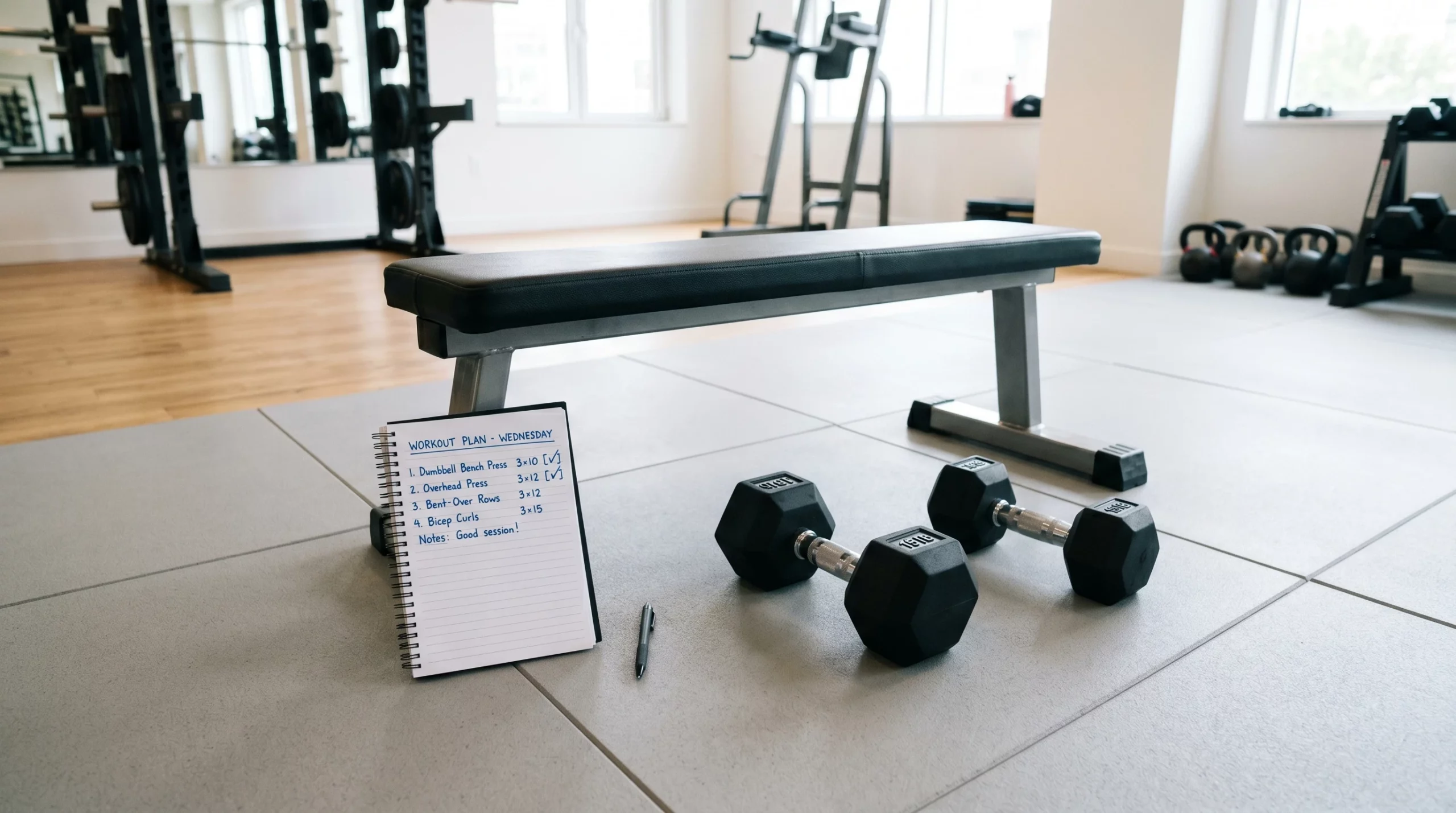
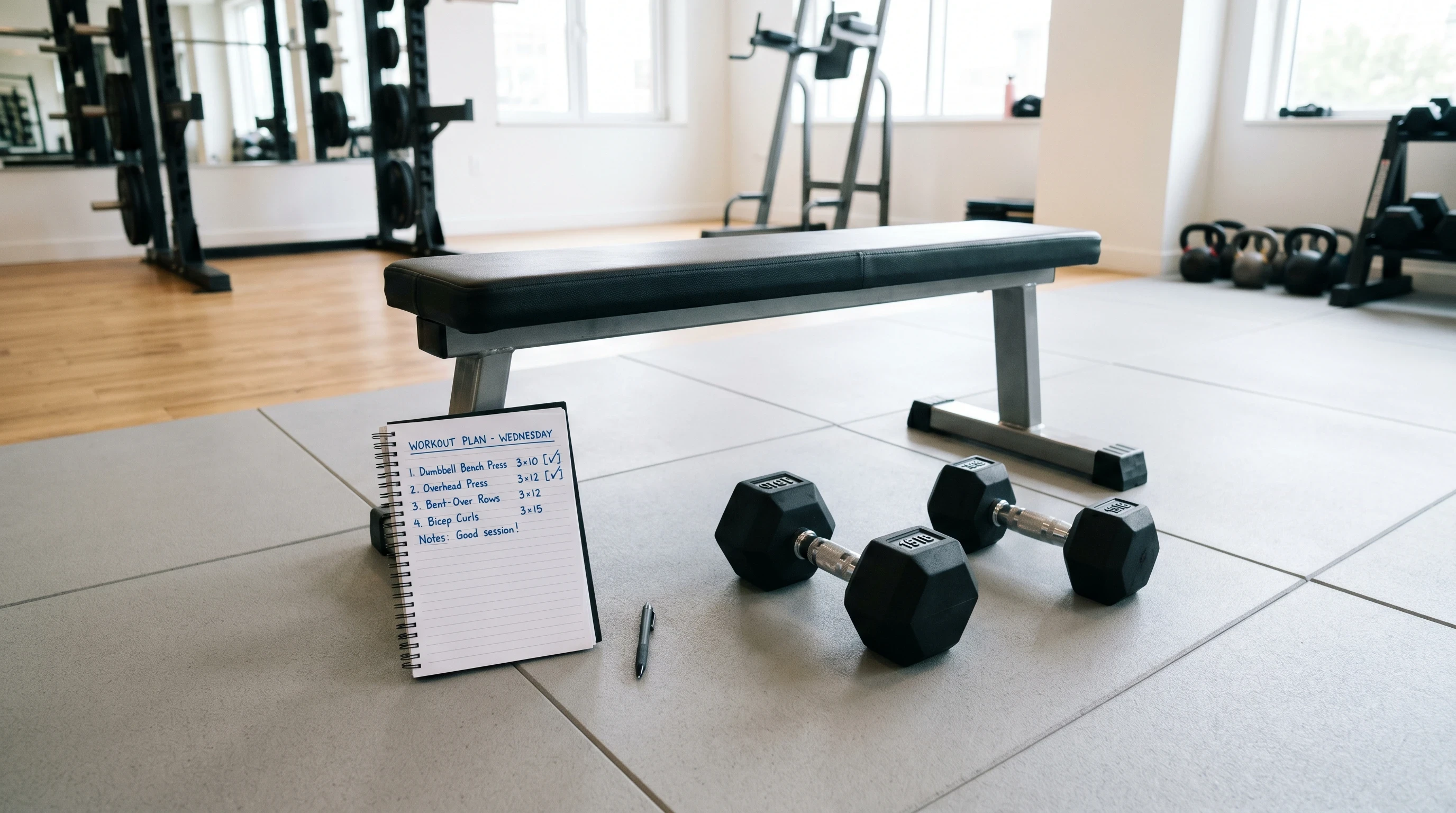
Building a full body workout plan for beginners can feel tricky at first, especially with all the different routines and advice online. Most beginner programs recommend starting with three workouts per week, using a structure that works your entire body in each session.
This guide focuses on how a full body workout plan is structured, while the 3 Day Workout Schedule for Beginners shows how to organize a complete weekly A/B routine.
Focus on two to three sets of each exercise, with 8 to 12 repetitions per set, and aim to get a little stronger or do a few more reps over time. Consistency, simple exercises, and steady progress are what help beginners build muscle and see results without confusion or burnout.
This guide is designed specifically for complete beginners who want a simple, structured plan without confusion.
These recommendations are based on widely accepted beginner strength training principles used in structured programs.
Table of Contents
- Quick Answer: Simple Beginner Full Body Workout Plan
- Who This Plan Is For
- Simple Beginner Decision Rule
- What Is a Full Body Workout Plan?
- Why Full Body Training Works Best for Beginners
- How To Structure a Full Body Workout Plan (Step by Step)
- Full Body Workout Plan for Beginners (3-Day Routine Example)
- How To Progress as a Beginner
- Common Beginner Mistakes
- How Long to Follow This Plan
- Full Body vs Other Splits
- Key Takeaways
- Beginner Bodybuilding Guides on Lift & Nurture
- Final Thoughts
- References
- About the Author
Quick Answer: Simple Beginner Full Body Workout Plan
If you want a no-nonsense full body workout plan for beginners, here is the most common starting point:
- Train three nonconsecutive days per week (for example, Monday, Wednesday, Friday).
- Use a full body structure in every session (work all major muscle groups).
- Choose one to two exercises per muscle group, using mostly compound exercises with a few isolation moves.
- Complete two to three sets per exercise.
- Pick a weight that allows 8 to 12 reps per set, with good form.
- Rest one to two minutes between sets for most exercises.
- Increase weight or reps gradually (progressive overload).
This basic approach works really well for complete beginners because you get plenty of practice on each movement and enough recovery for muscle growth.
Who This Plan Is For
This plan is best for:
- Complete beginners
- People returning after time off
- Anyone who wants a simple, structured routine
Simple Beginner Decision Rule
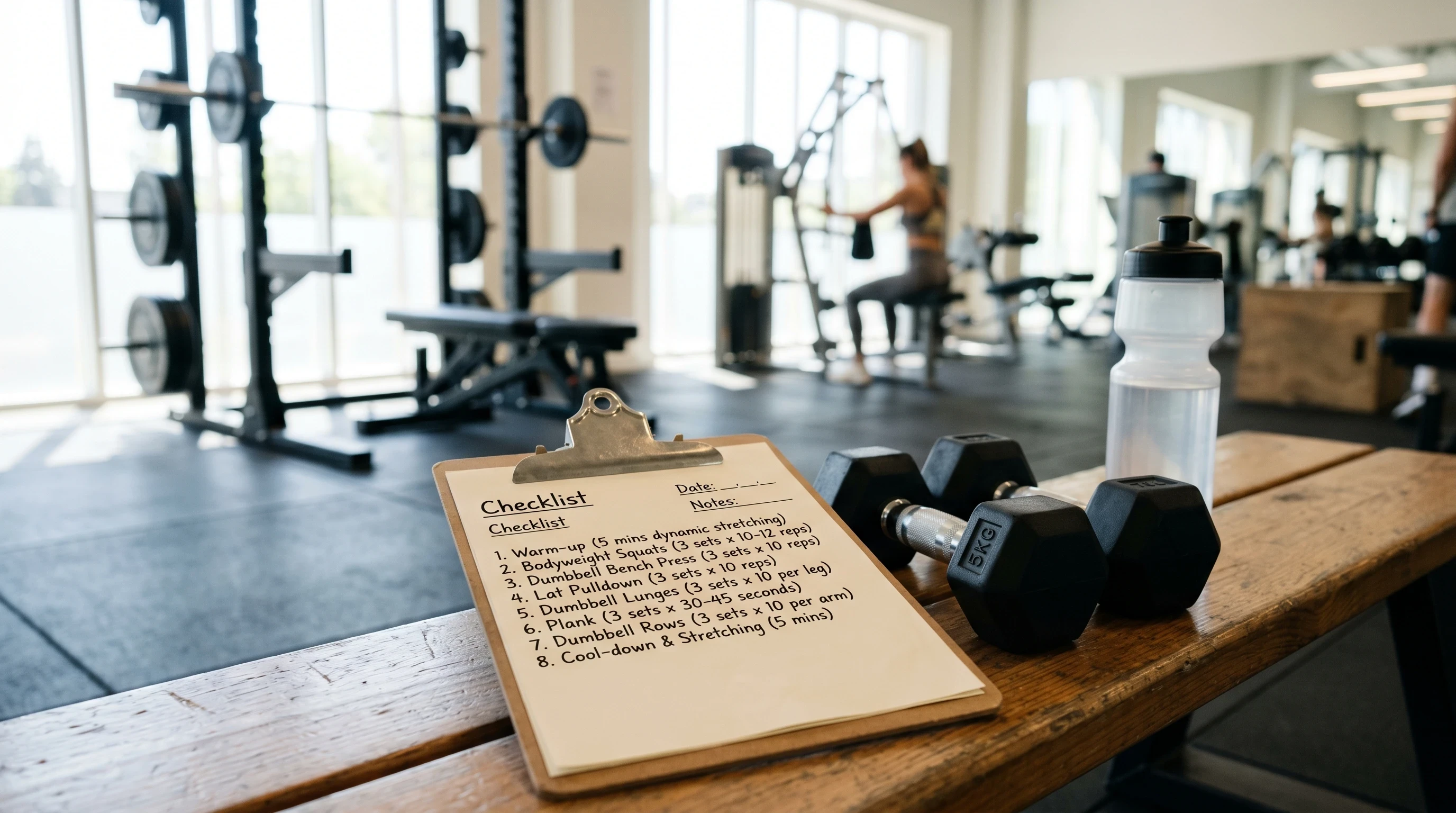
If you’re unsure what to do, follow this:
- Train 3 days per week
- Use full body workouts each session
- Do 2–3 sets per exercise
- Stay in the 8–12 rep range
- Stop with 1–3 reps in reserve
- If you hit the top of the rep range → increase weight next workout
What Is a Full Body Workout Plan?
A full body workout plan for beginners is a training routine where you work all major muscle groups in every session. This is different from split routines that work just one or two areas per workout, such as just chest and triceps one day, and back and biceps the next. In a full body routine, you usually include exercises for the legs, chest, back, shoulders, arms, and core all in one workout. This plan is especially good for beginners because it is simple to follow, does not take much time, and helps build strength and muscle everywhere equally, without needing to visit the gym every day.
In addition, full body workout plans give you more bang for your buck with every trip to the gym. By focusing on compound moves that work several muscle groups, each gym session becomes time efficient and effective. Many beginners appreciate not having to memorize overly complex routines or worry about which body part needs to be trained next. If you are pressed for time but still want results, this all-in-one approach is hard to beat.
Why Full Body Training Works Best for Beginners
Many beginner strength training guides recommend full body training as the best starting point. There are a few reasons why full body workouts for beginners have real advantages:
- Higher frequency: Training each muscle group three times per week gives beginners more chances to practice the main exercises, which helps you learn the movements better and get stronger faster.
- Skill practice: Doing basic lifts every session means you improve your form and coordination more quickly than if you only do them once a week.
- Recovery benefits: With three workouts per week, beginners get enough recovery time between sessions but not so much that the body loses progress.
- Simplicity: You do not need to plan complicated split routines. Almost every major muscle gets worked each time, so there is less to track and less chance of missing something important.
This approach is widely recommended in beginner strength training programs and research-backed guidelines. Many beginners benefit from the structure and ongoing practice a full body plan brings, without needing to worry about what to train each day.
Additionally, full body routines help minimize the risk of muscle imbalances that can come from overemphasizing one area at the expense of others. By training your entire body, you ensure balanced growth and coordination, which supports better overall movement and injury prevention. Nutrition and sleep play large roles in this progress, too, so having fewer training days makes it easier to focus on recovery as well.
How To Structure a Full Body Workout Plan (Step by Step)
Creating your first full body workout plan can seem like a lot, but breaking it down makes it manageable. Here is a step by step rundown:
Choose Exercises
- Pick mostly compound exercises. These work more than one muscle group at once, such as squats, bench presses, and rows.
- Add a few isolation exercises to target smaller muscles, such as bicep curls and tricep extensions.
- Include a core movement (like planks or crunches).
Most beginners do well with simple variations of the basics: bodyweight or goblet squats, pushups or bench press, rows or pulldowns, and overhead presses. Adding a couple targeted moves (like curls or calf raises) rounds things out.
Set and Rep Ranges
- A common beginner approach uses two to three sets of 8 to 12 reps per exercise. This range supports muscle growth and helps learn good form. If you want a deeper breakdown, see this beginner weight training sets and reps guide.
Try to use a weight that makes the last two reps challenging, but lets you keep good form. If in doubt, start lighter and build up week by week.
Rest Periods
- Rest 60 to 90 seconds between sets for most exercises. For big lifts like squats or bench press, rest up to 2 minutes if you need it. This is explained more in this workout rest periods for beginners guide.
Getting enough rest between sets helps you put in your full effort, making each set more productive and safer.
Weekly Schedule Example
- Monday: Full Body Workout
- Wednesday: Full Body Workout
- Friday: Full Body Workout
If you’re unsure how to structure your week, see this 3 day workout schedule for beginners.
Taking a day or two off between sessions helps muscles recover and grow, which is super important when you are just starting out. Consistency matters, so try to make each session a routine part of your week, just like your other priorities.
Full Body Workout Plan for Beginners (3-Day Routine Example)
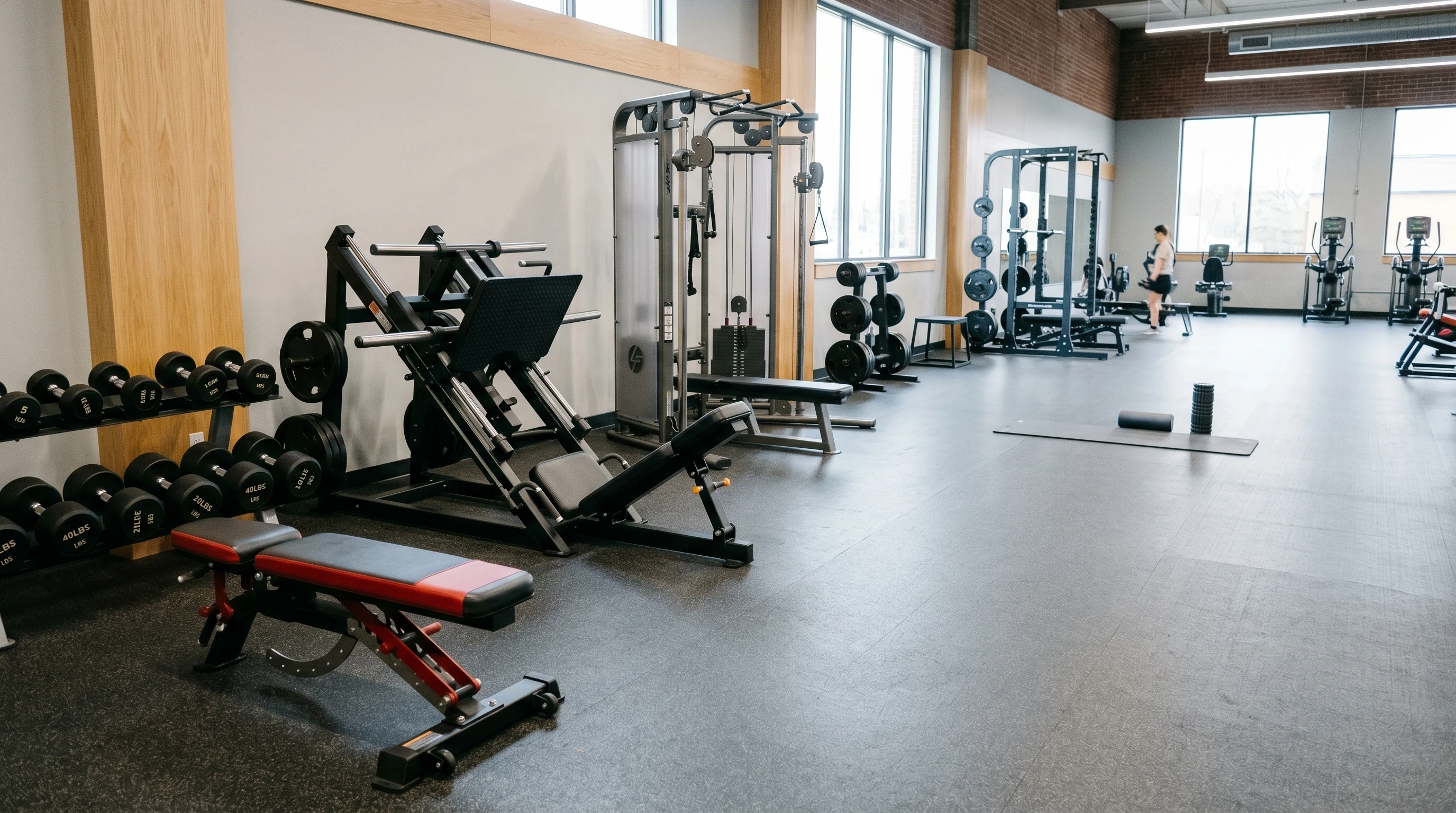
Here is a clear, simple example of a full body workout routine for beginners. You can do this at a gym or at home with basic equipment:
If you’re training in a commercial gym and feel unsure about using exercise equipment, this Guide To Gym Machines For Beginners explains how to safely use beginner-friendly machines and build confidence with common gym setups.
- Bodyweight or Goblet Squats – 3 sets of 10 reps
- Pushups or Bench Press – 3 sets of 8 to 10 reps
- Bent Over Rows (dumbbell or barbell) – 3 sets of 8 to 12 reps
- Overhead Dumbbell Press – 2 sets of 10 reps
- Dumbbell Bicep Curls – 2 sets of 12 reps
- Triceps Overhead Extension or Dips – 2 sets of 12 reps
- Planks or Crunches – 2 sets to 30 seconds or 15 reps
Focus on learning good technique and improving a little bit each session. If you do not have access to weights, most of these can be replaced with bodyweight alternatives. For example, swap in bodyweight lunges, resistance band rows, or incline pushups.
If you want a complete beginner-friendly home routine built entirely around bodyweight exercises, this Beginner Bodyweight Workout Plan To Build Muscle At Home shows how to structure full-body workouts, apply progressive overload, and build muscle without needing a gym.
If you want a more structured weekly home training schedule using bodyweight exercises, this 3 Day At Home Workout Routine For Beginners explains how to organize three weekly full-body workouts, recovery days, and progression using simple beginner-friendly exercises at home.
If you want the simplest possible starting point without needing gym equipment or a complicated routine, this No Equipment Full Body Workout For Beginners At Home explains how beginners can build strength and consistency using simple full-body bodyweight exercises at home.
Over time, experiment with different variations to keep things fresh and fun, while still building up the basics. If you need help choosing movements, see this beginner bodybuilder exercises guide.
If you want a more detailed lower-body routine to support the leg exercises in this plan, this Simple Leg Day Workout Plan shows how beginners can structure squats, leg press variations, Romanian deadlifts, split squats, leg curls, calf raises, warm-ups, rest periods, and progression. For a dedicated upper-body example, this beginner upper body workout at the gym guide shows how to organize chest, back, shoulders, arms, sets, reps, rest periods, and progression in one beginner-friendly session.
It is also useful to keep a simple workout log: jot down your sets, reps, and the weight you use. This makes it easy to look back, spot trends, and set personal goals (like doing one more rep or adding weight next week). Progress will not always feel dramatic day to day, but small wins add up fast over weeks.
Example Weekly Progression (Simple)
Here’s how you can progress one exercise over time:
Week 1: 3×8
Week 2: 3×10
Week 3: 3×12
Week 4: Increase weight → return to 3×8
Repeat this cycle to keep building strength and muscle.
How To Progress as a Beginner
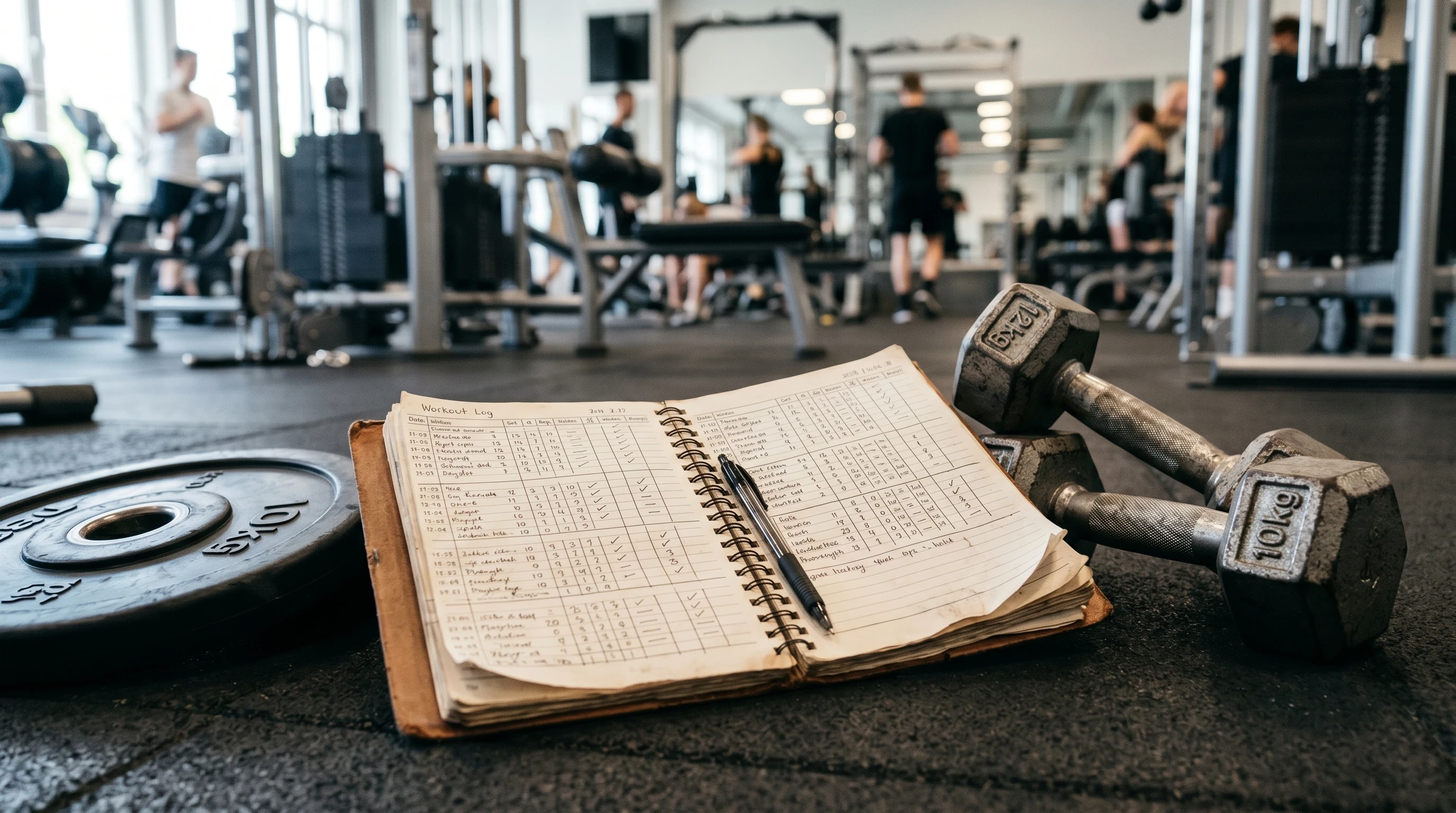
Steady progress is key for building muscle and strength. This idea is called progressive overload, which is widely supported in research on muscle growth (see research on muscle hypertrophy). For most beginners, the goal is to make a small improvement each workout, such as adding a little weight, doing an extra rep, or better form. One way to do this is called double progression: aim to hit the upper end of your rep range (say, 12 reps), then go up in weight for the next week and repeat the process. If you want to learn more, this step-by-step progressive overload guide for beginners explains how to apply it safely and consistently.
Remember to be patient with yourself. Not every workout will be your strongest, and that is totally normal. Track your progress, celebrate small wins, and do not be afraid to repeat a weight or rep range for an extra week before bumping it up. Strength and muscle growth often come in phases, so keeping at it makes a huge difference.
Common Beginner Mistakes
- Doing too much too soon: It is tempting to add extra exercises or days, but this often leads to exhaustion or injury. Stick to three sessions per week for now.
- Changing exercises every workout: Progress comes from repeating the same movements and improving each week, not from constant variety.
- Ignoring recovery: Beginners need rest between workouts, including good sleep and nutrition, to build muscle. Skipping recovery slows progress.
- Poor form: Using sloppy form or weights that are too heavy increases the risk of injury. Focus on learning the correct technique right from the start.
Another mistake is not warming up properly. Spend 5 to 10 minutes moving your body before lifting weights, with light cardio or simple bodyweight moves. This prepares your muscles and helps cut down the risk of strains or tweaks.
Most beginners don’t fail because workouts don’t work — they fail because they don’t follow a consistent structure.
How Long to Follow This Plan
Most full body workout plans for beginners can be followed for 8 to 12 weeks. Use this period to build routine and confidence with the main exercises. Once you have consistent progress, you might switch up your plan or add more variety, but building consistency is your first priority.
Even when you feel ready to try new routines, sticking with full body training for a few months helps lay a strong foundation. After that, you can experiment with new exercises, add sets, or game plan a different schedule to keep things interesting and continue making progress.
Full Body vs Other Splits
A full body workout routine for beginners has clear advantages over other plans. Plans like push pull legs or upper lower splits are better suited for intermediate and advanced lifters who need more volume or are focused on specific goals. If you’re deciding between options, read full body vs upper lower for beginners. As a beginner, training your whole body each session gives more room for practice, learning, and rest. Most beginner guides agree that full body workouts keep things simple and manageable, which supports regular training and long-term results.
Full body routines also fit better into busy schedules. If life gets in the way and you miss a workout, you are not likely to miss training a specific muscle group. Instead, every session brings benefits across your body, which helps keep progress steady and frustration low.
Key Takeaways
- Train your full body three days per week for best beginner results.
- Do two to three sets of 8 to 12 reps for each exercise.
- Focus on good form and steady progress (progressive overload).
- Stick to basic compound exercises, with a few isolation moves added in.
- Recovery and consistency are really important for muscle growth.
Along with good training, do not forget the basics of healthy eating and getting enough sleep, as they play a major role in supporting your gains. Fueling your body is just as key as putting in the work at the gym.
Beginner Bodybuilding Guides on Lift & Nurture
If you are building your beginner training plan step by step, these guides will help you structure your workouts, recovery, and nutrition more effectively. These guides are designed to be followed step by step alongside your training:
Beginner Bodybuilding Workout Plan (12-Week Foundation Blueprint) – Learn how to structure your training, apply progressive overload, and build muscle with a complete beginner system.
3 Day Workout Schedule For Beginners – See exactly how to organize your weekly training using a simple and realistic full body schedule.
Progressive Overload Guide For Beginners – Learn how to increase weight, reps, and performance safely over time without stalling progress.
Beginner Weight Training Sets and Reps Guide – Understand how many sets and reps to use for muscle growth and how to apply them correctly.
Workout Rest Periods For Beginners – Learn how long to rest between sets to improve performance, recovery, and results.
Beginner Bodybuilder Exercises Guide – Discover the best beginner exercises for each muscle group and how to choose the right ones.
4 Day Workout Routine For Beginners – Learn when and how to transition to a 4-day training split once you build consistency.
Beginner Upper Body Workout At The Gym – Learn how to structure a simple upper-body gym workout for chest, back, shoulders, arms, sets, reps, rest periods, and progression.
Final Thoughts
Sticking to a simple full body workout plan for beginners, focused on consistency and steady progress, is the best way to start building muscle and confidence in the gym. This full body workout plan for beginners works because it focuses on simplicity, consistency, and progressive overload. You do not need extreme routines or fancy equipment; just a structured plan, regular workouts, and a willingness to improve a little bit each week. Over time, your body will get stronger, you will build good habits, and fitness will become just one more part of your daily life.
Whether you want to boost your health, get stronger for sports, or change how you look, a steady approach gets you far. Trust the basics, show up for each session, and enjoy the ride as you track down your personal bests.
This guide is for educational purposes and does not replace professional medical or training advice.
References
- Krzysztofik, M., Wilk, M., Wojdała, G., & Gołaś, A. (2019). Maximizing Muscle Hypertrophy: A Systematic Review of Advanced Resistance Training Techniques and Methods.
https://pmc.ncbi.nlm.nih.gov/articles/PMC6950543/ - American College of Sports Medicine (ACSM). Progression Models in Resistance Training for Healthy Adults.
https://journals.lww.com/acsm-msse/fulltext/2009/03000/progression_models_in_resistance_training_for.26.aspx
About the Author
Angel Carcamo is the founder of Lift & Nurture, a beginner bodybuilding platform focused on structured training, muscle growth fundamentals, and long-term progress.
As a beginner himself, Angel creates research-based beginner bodybuilding guides that simplify widely accepted strength training principles into clear, practical steps.
His guides focus on key fundamentals like progressive overload, recovery, and nutrition — helping beginners build muscle without confusion, shortcuts, or unrealistic expectations.
Start here: Beginner Bodybuilding Roadmap
Foundation guide: Beginner Bodybuilding Workout Plan (12-Week Foundation Blueprint)
Thank you for sharing this beginner-friendly full body workout article. I liked how the workout plan focuses on building consistency, improving overall strength, and helping beginners develop proper exercise habits without making the routine feel too overwhelming. The explanation of combining multiple muscle groups into one workout also seems very practical for people who are just starting their fitness journey.
I do have a few questions after reading the article. How many weeks would you recommend following this full body workout plan before switching to a split routine? Also, for beginners who may struggle with soreness or recovery, would reducing the number of workout days still provide good results in the beginning?
Another question I had is about progression. Should beginners focus more on increasing weight gradually, improving form, or increasing repetitions first during the early stages of training?
the article offers useful guidance and realistic advice for beginners who want to build strength, confidence, and a sustainable fitness routine. Thank you again for sharing these helpful workout tips.
Hi IYERE,
Thank you for reading and for the thoughtful questions. I’m glad the full body structure felt practical and beginner-friendly.
For most beginners, I’d usually recommend following a full body plan for at least 8–12 weeks before switching to a split routine. That gives enough time to build consistency, practice the main exercises, improve form, and see whether strength is actually progressing. Some beginners may even do well staying with full body training for several months before moving to an upper/lower split.
And yes, reducing workout days can still provide good results, especially if soreness or recovery is an issue. A beginner does not have to force three days per week right away. Starting with two full body workouts per week can still build strength and muscle when the workouts are consistent, the sets are high quality, and recovery is improving. It is better to train twice per week consistently than to push three days, feel overly sore, and quit.
For progression, I would put the priorities in this order: form first, then reps, then weight. Beginners should first learn controlled technique and use a weight they can handle safely. After that, adding reps within the target range is usually the easiest next step. Once they can hit the top of the rep range with good form, then increasing the weight slightly makes sense.
So a simple example would be: use the same weight until you can move from 3 sets of 8 reps toward 3 sets of 12 reps with good form. Then increase the weight and return closer to 8 reps again. That keeps progression structured without rushing.
Overall, the goal is not to switch routines quickly or add weight as fast as possible. The goal is to build a foundation: consistent workouts, good technique, steady reps, enough recovery, and gradual overload over time.
Thanks again for the great questions!
– Angel
This is a great beginner-friendly guide that keeps fitness from feeling overwhelming. I like how you focus on consistency and gradual progress instead of trying to do too much too soon. The simple progression example was especially helpful because it gives beginners a clear path to follow. As someone who appreciates step-by-step instructions, I found this very easy to understand. Do you think beginners should focus more on increasing reps first or increasing weight first during their first few months of training?
Thank you, Lisa. I’m glad the step-by-step structure was helpful.
For most beginners, I would focus on increasing reps first, then increasing weight after you can complete the top end of your rep range with good form.
For example, if your goal is 8–12 reps, you might start with a weight you can control for 8 reps. Over the next few workouts, try to build that same weight up toward 10, 11, or 12 reps. Once you can hit 12 reps with solid technique and still feel in control, then increase the weight slightly and return back to around 8 reps.
This is called double progression, and it is one of the simplest ways for beginners to apply progressive overload without rushing into weights that are too heavy too soon. It also gives beginners more practice with proper form, which should come before chasing heavier weight.
So the simple rule is:
Add reps first. Once the reps become comfortable at the top of the range, add a small amount of weight.
This keeps progress steady, safe, and beginner-friendly while still giving the muscles a reason to grow stronger over time.