Starting a no equipment full body workout can seem daunting, especially if you’re new to exercise or unsure of where to begin. Many beginner workout programs look complicated or seem to require specialized gear, but you can get solid progress using just your own bodyweight, a bit of floor space, and a well-structured approach. The building blocks of strength and muscle growth don’t necessarily require a fancy gym or expensive pieces of equipment—most popular bodybuilding principles support starting with simplicity. Truly, no one is shut out of fitness simply because gym access or extra gear aren’t at hand.
No Equipment Full Body Workout Quick Answer
If you’re wondering whether it’s really possible to build muscle and strength at home with no equipment, you’re in good company. Evidence from trusted bodybuilding educators confirms that yes, beginners can absolutely build muscle and get stronger with full body, equipment-free workouts. All that’s needed is a focus on a select group of effective bodyweight exercises, controlled reps, and a steady approach to progressing the challenge over time. With effort and good habits, you can see stronger arms, legs, and core, all using just your body. When it comes to progress, sticking to the process means way more than having access to machines or expensive training tools.
Who This Workout Is Best For
This beginner-friendly no equipment workout is especially useful for:
- Beginners starting exercise for the first time
- People training at home without gym access
- Anyone rebuilding consistency after time away from fitness
- Beginners wanting simple full body workouts without complicated routines
- People looking to build strength and confidence before joining a gym
Table of Contents
- Quick Answer
- Who This Workout Is Best For
- Why No Equipment Full Body Workouts Work for Beginners
- Simple No Equipment Beginner Full Body Workout
- How Beginners Can Use Progressive Overload Without Equipment
- How Often to Do Full Body Workouts as a Beginner
- Realistic Beginner Expectations
- Answers to Common Beginner Questions About No Equipment Workouts
- Keep No Equipment Workouts Simple and Build Confidence at Home
- Final Thoughts
- Beginner Bodybuilding Guides on Lift & Nurture
- References
- About the Author
Why No Equipment Workouts Really Work for Beginners
Bodyweight workouts offer real benefits for those just starting their fitness journey. The biggest reason is that your own body acts as built-in resistance. Training moves you haven’t done before forces your muscles to adapt, and whether it’s a pushup, a lunge, or a squat, you’ll be feeling the impact. Most bodybuilding programs for new lifters stress that you don’t need free weights or complex machines to see progress at first—consistently challenging your muscles is what gives real payoff.
No equipment also means it’s less intimidating, and you can start anywhere, anytime. This breaks down common barriers like commuting, gym fees, social discomfort, or not knowing what to do. Many approachable bodyweight moves, such as squats and pushup variations, actually activate multiple muscle groups at once, making your workout more efficient. And by not needing gear, you only need to track your effort, form, and reps instead of worrying about setting up a bunch of equipment.
Why Full Body Workouts Make Sense for Beginners
Full body routines generally give beginners the best shot at building balanced strength. When you train all major muscle groups regularly, you lay an even foundation and build good movement patterns from the start. Well-respected fitness experts often guide new lifters toward full body sessions because they help you get the habit right, cover more muscle areas, and keep weekly training totals simple to track.
With bodyweight moves and no equipment, trying to isolate muscles with “split” schedules is neither realistic nor needed. A full body plan lets you focus on mastering half a dozen key exercises and revisiting them often enough to see clear progress. That also means less confusion and fewer decisions about which muscle to work each time—you just run through your list, track your reps and sets, and let the gains stack up.
Why Consistency Matters More Than Perfection
It’s natural to feel nervous about technique, but showing up regularly is what delivers results. While many people search for flawless form or complicated routines, research and decades of gym wisdom double down on habit as the true game changer. Progress is less about a perfect lift and more about turning up even when you feel off or miss a session. Most science-based programs say that steady, repeated effort builds strength and muscle over months, not weeks. Getting discouraged by little setbacks is common, but what counts is getting back to it and building momentum.
Many beginners make better long-term progress by staying consistent with manageable workouts instead of trying to train intensely every single day.
Regular routines that suit your real life—maybe two or three a week—give you space to recover and keep going. It’s much more about quality than cramming in tons of exercises. Listening to your body and prioritizing smart, repeatable sessions work far better for new trainees than trying to win the “most advanced” plan award.
Making Bodyweight Exercises Beginner-Friendly
Common beginner moves like pushups, squats, and planks can seem tough, especially if you’re re-learning them. The good news: beginner plans make moves approachable with easier versions called regressions. These allow anyone to build up strength at a sustainable pace.
- Incline pushups: Pushing from a kitchen counter or sturdy table makes pushups manageable and lowers the difficulty compared to the floor version.
- Knee pushups: This modified version (knees on the floor) is a classic first step for building up core and upper body power. Many newbies stick here until form and reps feel solid.
- Bodyweight squats: Controlled, no-weight squats let you establish knee and back safety before jumping to harder variations or adding resistance. Form beats rep speed every time.
- Reverse lunges: Stepping backward, instead of forward, eases balance struggles and helps you own the range of motion. This builds confidence before attempting normal lunges.
- Glute bridges, backpack rows, planks, and dead bugs: These round out your routine, hit muscles across upper and lower body, and can be fine-tuned for each fitness level.
Starting with these regressions ensures your body gets strong enough for classic versions later. If a move still feels out of reach, further simplify your stance or shorten the reps, always focusing on controlled movement rather than adding difficult variations too soon. Practice, patience, and proper form beat speed or quantity every time.
Simple No Equipment Beginner Full Body Workout
Mixing core, push, pull, and lower body moves into a straightforward session gets you started and works all the key muscle areas. Here’s a practical routine for beginners you can fit into a busy week—move at your own pace, focus on good form, and don’t stress about how many reps you hit at first.
If you experience pain, dizziness, or discomfort beyond normal exercise fatigue, stop the workout and consider speaking with a qualified healthcare professional.
Before starting, spend 5–10 minutes warming up with light movement like marching in place, arm circles, bodyweight squats, or gentle stretching.
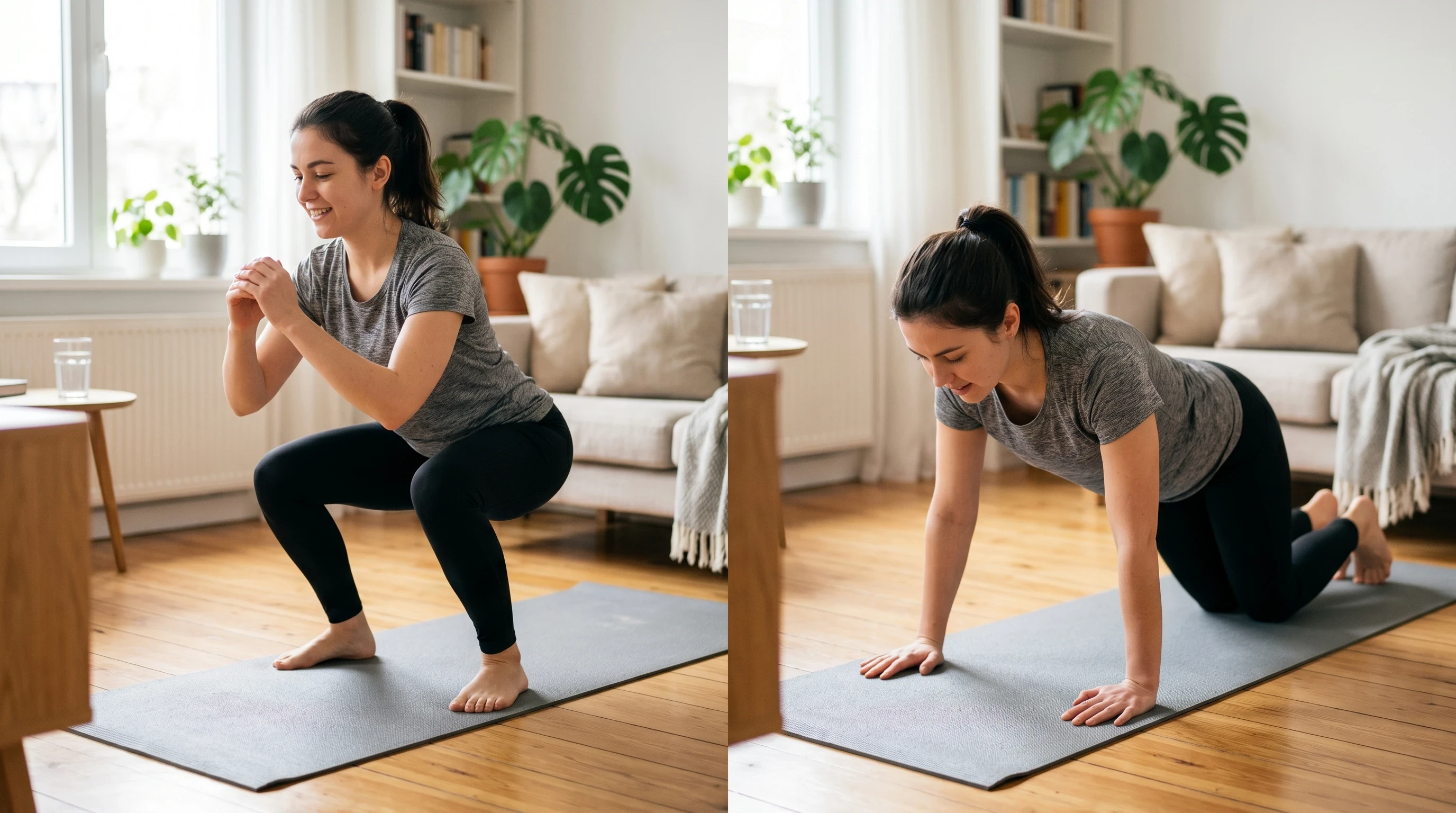
Sample No Equipment Full Body Beginner Workout:
- Incline or Knee Pushups: 2 to 3 sets of 8 to 12 reps
- Bodyweight Squats: 2 to 3 sets of 10 to 15 reps
- Reverse Lunges: 2 sets of 8 reps per leg
- Glute Bridges: 2 to 3 sets of 10 to 15 reps
- Backpack Rows (sturdy backpack plus books): 2 sets of 10 to 12 reps
- Plank: 2 rounds, holding for 20 to 30 seconds
- Dead Bugs: 2 sets of 10 reps per side
Rest 60 to 90 seconds between sets or longer if you need it. If anything feels tough, adjust your body angle or aim for a shorter set. As you get stronger, increase reps or progress to harder versions. For more structured plans, check out the Beginner Bodyweight Workout Plan To Build Muscle At Home and the 3 Day At Home Workout Routine For Beginners.
Beginner Tip:
Don’t worry about making workouts feel perfect right away.
Most beginners make good progress simply by practicing basic movement patterns consistently, improving exercise quality over time, and sticking to a simple routine they can realistically maintain each week.
How Beginners Can Use Progressive Overload Without Equipment
One of the most important bodybuilding fundamentals is progressive overload—steadily increasing the challenge you put your muscles through. While lifters with weights add more weight each week, beginners focused on bodyweight moves can use several alternatives:
- Add 1 or 2 reps a week to a few sets.
- Slow down your movement, like lowering into a squat over three or four seconds.
- Pause at the toughest point of an exercise, such as the bottom of a pushup.
- Use the “mind-muscle connection” by consciously squeezing the target muscle group with each rep.
- Try to use a bigger range each session, aiming to go lower in squats or bridges over time.
- Carefully trim your rest periods, but always keep enough to maintain form.
- Add resistance gradually by loading up a backpack with books or sturdy objects, especially for rows and squats.
- Move to tougher versions, from incline to knee pushups, or eventually from knees to toes pushups.
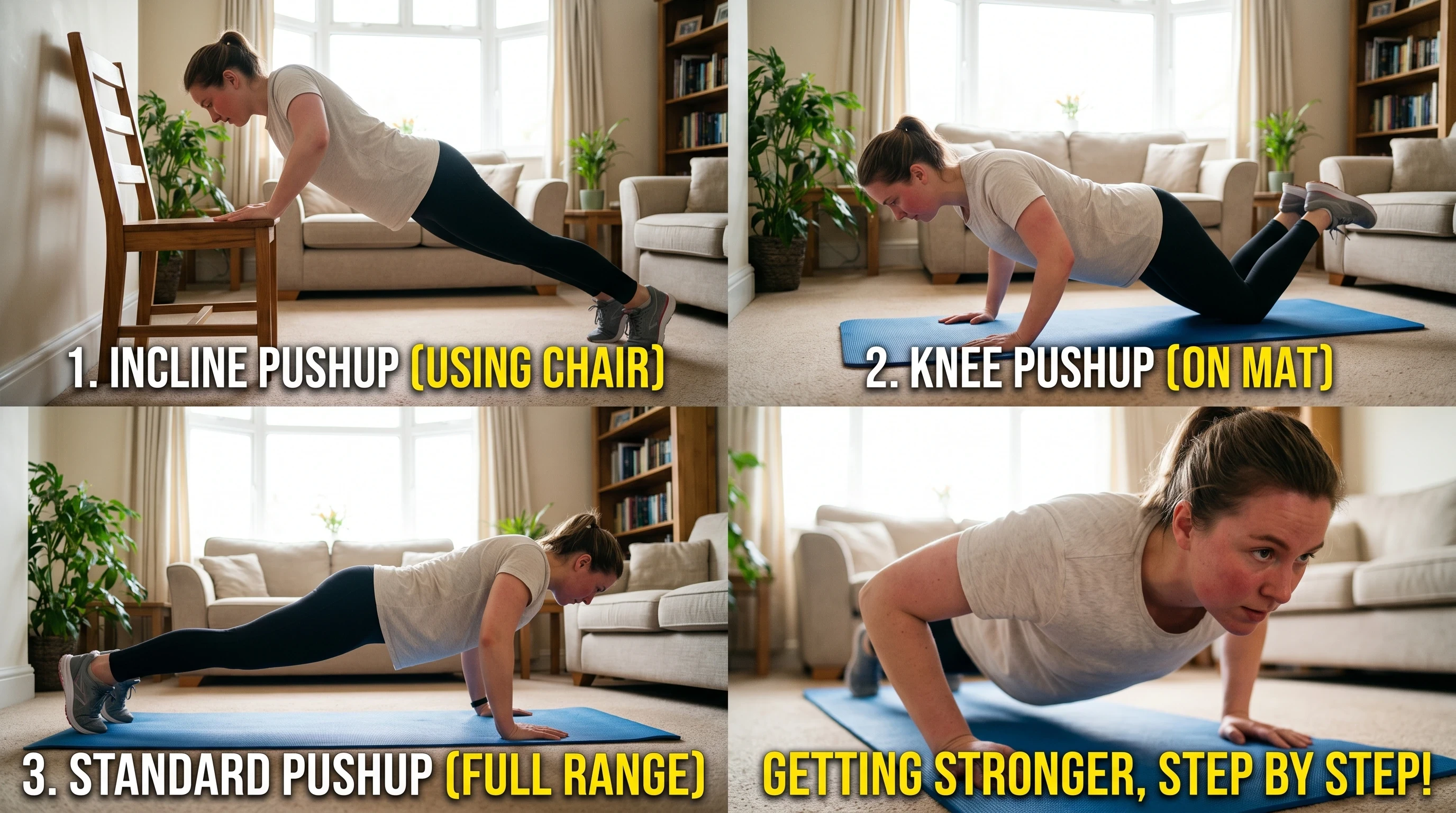
Don’t feel forced to ramp up the difficulty every session; steady, incremental progress every week or two is all you need to keep muscle growth moving. For detailed tactics and examples, you can check out How To Implement Progressive Overload For Beginners.
For beginners wanting a more structured gym-based approach using similar full-body training principles, this Full Body Workout Plan For Beginners explains how to organize beginner workouts, recovery, and progression step by step.
How Often to Do Full Body Workouts as a Beginner
Most new lifters do best with two or three full body sessions per week. This leaves enough time between days for muscles to rebuild and get stronger. It’s tempting to think working out every day brings faster results, but most science-based advice says recovery is when growth truly happens.
The World Health Organization also recommends regular physical activity and strength-focused exercise as part of long-term health and fitness habits.
Soreness or fatigue after a session is normal. On those days, give yourself an extra day off—you’re still progressing as long as you return to your plan.
Splitting your week between workouts and rest, or training every other day, lets the stimulus and repair balance out. For more tips on recovery, visit Muscle Recovery Tips for Beginners and for set and rep guidance, see Beginner Weight Training Sets And Reps.
Realistic Beginner Expectations
Jumping into strength training with only bodyweight exercises means setting realistic goals. Most experts agree you’ll gain strength in just a few weeks. Over the next few months, steady practice leads to muscles that feel firmer, and eventually look a bit more toned or defined. But don’t expect overnight changes—the process is about building up small wins that add up.
Progress varies by age, training effort, nutrition, and sleep.
If you’re restarting exercise after time away from training, this Beginner Fitness Plans After A Break guide explains how to ease back into workouts safely and realistically.
It’s rare to see dramatic transformations quickly, and early wins often show up in how exercises feel, not just how you look. Keeping a log of your reps and reflecting each week on how moves get easier helps boost your confidence and motivation. Stick with it: a simple two to three sessions per week plan lets anyone track improvements, whether that’s more pushups, deeper squats, or holding a plank a bit longer every week.
For more structure as you advance, take a look at the Beginner Bodybuilding Workout Plan (12-Week Foundation Blueprint), which maps out a realistic and steady progression for brand new trainees.
Answers to Common Beginner Questions About No Equipment Workouts
Plenty of beginners feel uncertain about getting started without equipment. Here are clear answers for the questions that come up most often:
Can I build muscle without any equipment? Absolutely. Both research and real-world experience show your muscles respond to any new challenge—if exercises feel difficult near the end of each set, you’re encouraging growth. It’s all about making the move feel tough, not about using weights.
How long does it take to see results? Most beginners start getting stronger within two to four weeks. Visible muscle improvements can take one to three months of steady practice, especially when combined with balanced nutrition and sleep. It’s best to be patient and focus on making slight progress every week.
For a deeper breakdown of realistic beginner timelines, see How Long Does It Take To Build Muscle For Beginners?
What if I can’t do pushups yet? You are not alone! Incline and knee pushups were designed for this exact scenario. Working up with these modifications builds the same muscle groups. As you gain stamina and strength, the classic toe pushup will become doable.
How should I structure sets and reps as a beginner? The sweet spot for beginners is 2 to 3 sets per move, with reps you can do safely—usually between 8 and 15. As you progress, increase either the reps or move to tougher variations as discussed above. Specific rep guidance is available at Beginner Weight Training Sets And Reps.
Are full body workouts best for beginners? Yes, for most people just starting out, full body sessions cover more muscle areas and build good exercise habits. “Split” routines make more sense only once you’re quite advanced or looking for very specialized results.
Keep No Equipment Workouts Simple and Build Confidence at Home
It’s easy to get caught up thinking you need advanced plans, intricate moves, or shiny equipment. In reality, sticking with basic bodyweight routines and progressing with steady overload is more than enough to see solid results—often with less stress than you might think. Everyone begins somewhere and most progress comes from showing up and giving honest effort, rather than chasing an unachievable standard.
You do not need a perfect setup, advanced equipment, or complicated routines to start building strength and confidence at home. Simple full body workouts done consistently over time are enough for most beginners to make meaningful progress. Focus on small improvements, stay patient, and build the habit first.
Beginner Bodybuilding Guides on Lift & Nurture
If you want to continue building strength and muscle with structured beginner-friendly training, these guides may help:
- Beginner Bodybuilding Workout Plan (12-Week Foundation Blueprint)
- Beginner Bodyweight Workout Plan To Build Muscle At Home
- 3 Day At Home Workout Routine For Beginners
- Full Body Workout Plan For Beginners: Simple Step-by-Step Guide
- How To Implement Progressive Overload For Beginners (Without Stalling Your Progress)
- Beginner Weight Training Sets And Reps: How Many Should You Do for Muscle Growth?
- Muscle Recovery Tips for Beginners: Sleep, Rest Days, and Faster Muscle Growth
- Beginner Fitness Plans After A Break: How To Start Working Out Again
- How Long Does It Take To Build Muscle For Beginners?
- Workout Mistakes For Beginners: 10 That Slow Muscle Growth
References
World Health Organization. “Physical Activity.” World Health Organization, https://www.who.int/news-room/fact-sheets/detail/physical-activity
About the Author
Angel Carcamo is the founder of Lift & Nurture, a beginner bodybuilding platform focused on structured training, muscle growth fundamentals, and long-term progress.
As someone building Lift & Nurture around beginner-friendly research and structured training principles, Angel creates guides that simplify widely accepted strength training concepts into clear, practical steps.
His guides focus on key fundamentals like progressive overload, recovery, and nutrition — helping beginners build muscle without confusion, shortcuts, or unrealistic expectations.
Start here: Beginner Bodybuilding Roadmap
Foundation guide: Beginner Bodybuilding Workout Plan (12-Week Foundation Blueprint)