
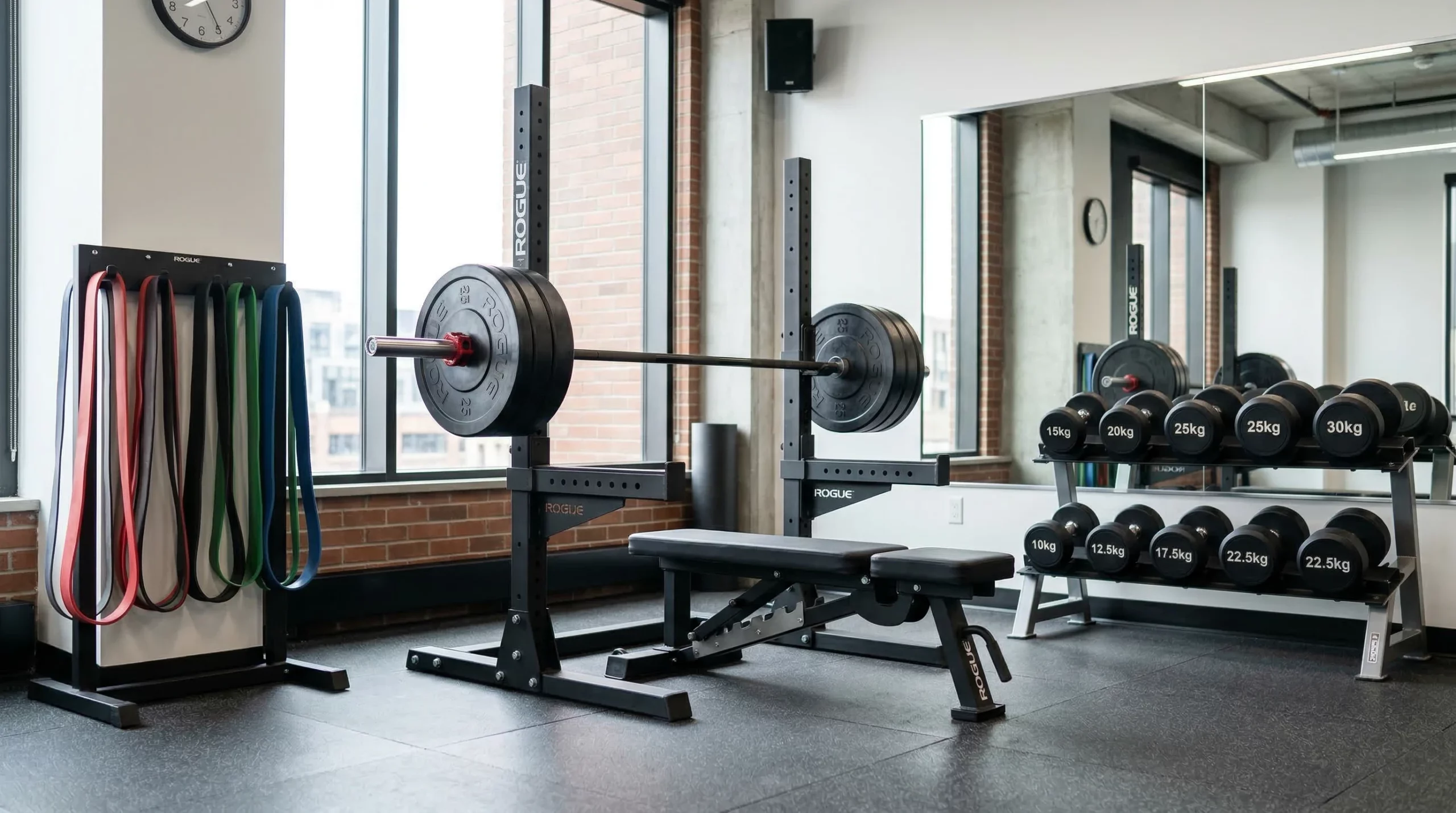
Starting out as a beginner bodybuilder comes with its own set of challenges, but finding the right exercises sets the tone for consistent, long-term muscle growth. Many beginners feel overwhelmed by the huge amount of workout advice available online. What matters most is understanding that sticking with core, proven movements builds the strongest foundation. If you’re a new lifter, you don’t need complicated routines or fancy equipment. If you’re new to training in a shared gym environment, understanding basic gym etiquette can also help you feel more comfortable using equipment and training around others. Learning a set of effective, beginner-friendly exercises and mastering the basics will take you much further than constantly chasing advanced techniques.
Muscle growth for beginners depends on three key factors: structured training, proper nutrition, and consistent recovery.
Quick Answer
The best beginner bodybuilder exercises are simple, stable movements that train the major movement patterns: squat, hinge, push, pull, and core. Most beginners make the best progress by focusing on compound lifts, practicing good form, and repeating the same key exercises long enough to improve strength and confidence.
Table of Contents
- Quick Answer
- Why Exercise Selection Matters When You’re New to Bodybuilding
- The 6 Fundamental Movement Patterns for Beginners
- The Best Compound Exercises for Beginners
- Machines, Dumbbells, Barbells, or Bodyweight: Which Should Beginners Use?
- Where Isolation Exercises Fit in for Beginners
- Free Weights vs. Machines: Pros and Cons for Beginners
- Muscle Group Breakdown: Best Beginner Exercises
- Common Mistakes Beginners Make with Exercise Selection
- How to Structure Exercise Order and Prioritization
- How Genetics and Comfort Shape Exercise Choice
- Sample Beginner Exercise List and Routine Template
- How to Apply These Exercises in a Beginner Workout
- How Abs and Calves Fit Into Beginner Training
- Consistency Beats Constant Variety for Beginners
- Frequently Asked Questions (FAQ)
- Key Takeaways
- Final Thoughts
- Beginner Bodybuilding Guides on Lift & Nurture
- References
- About the Author
Why Exercise Selection Matters When You’re New to Bodybuilding
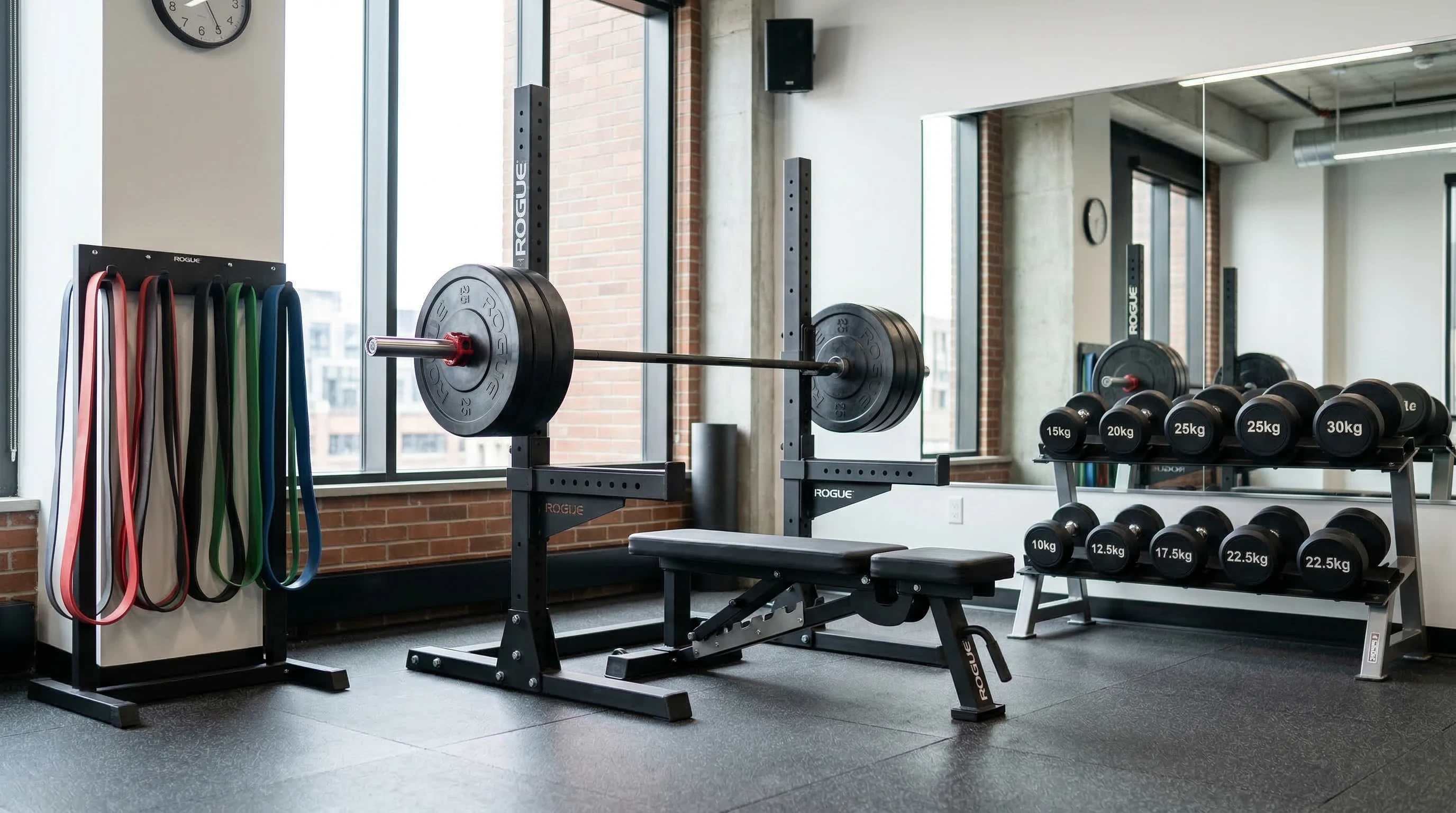
Figuring out which exercises to pick is really important for muscle growth, but it goes deeper than just trying to look a certain way. Good exercise selection allows you to practice safe, steady progress while learning key skills like proper technique, bracing, and movement patterns. Many beginners become frustrated when they try to copy routines from advanced bodybuilders. Sticking to a handful of basic movements usually leads to better progress, better recovery, and a lower risk of injury.
Beginners often make strong early progress with compound (multi-joint) exercises because they train several muscle groups at the same time. This beginner-friendly approach also aligns with guidance from the American College of Sports Medicine recommending muscle-strengthening activity at least two days per week. Consistency, progressive overload, and managing your total weekly training volume make the biggest difference, not jumping from one exercise to another every week. A common beginner mistake is trying to master too many exercise variations at once instead of repeating a few basic movements long enough to improve technique and confidence. Keeping things simple helps you focus on learning the movement, tracking progress, and building a strong foundation for muscle growth.
The 6 Fundamental Movement Patterns for Beginners
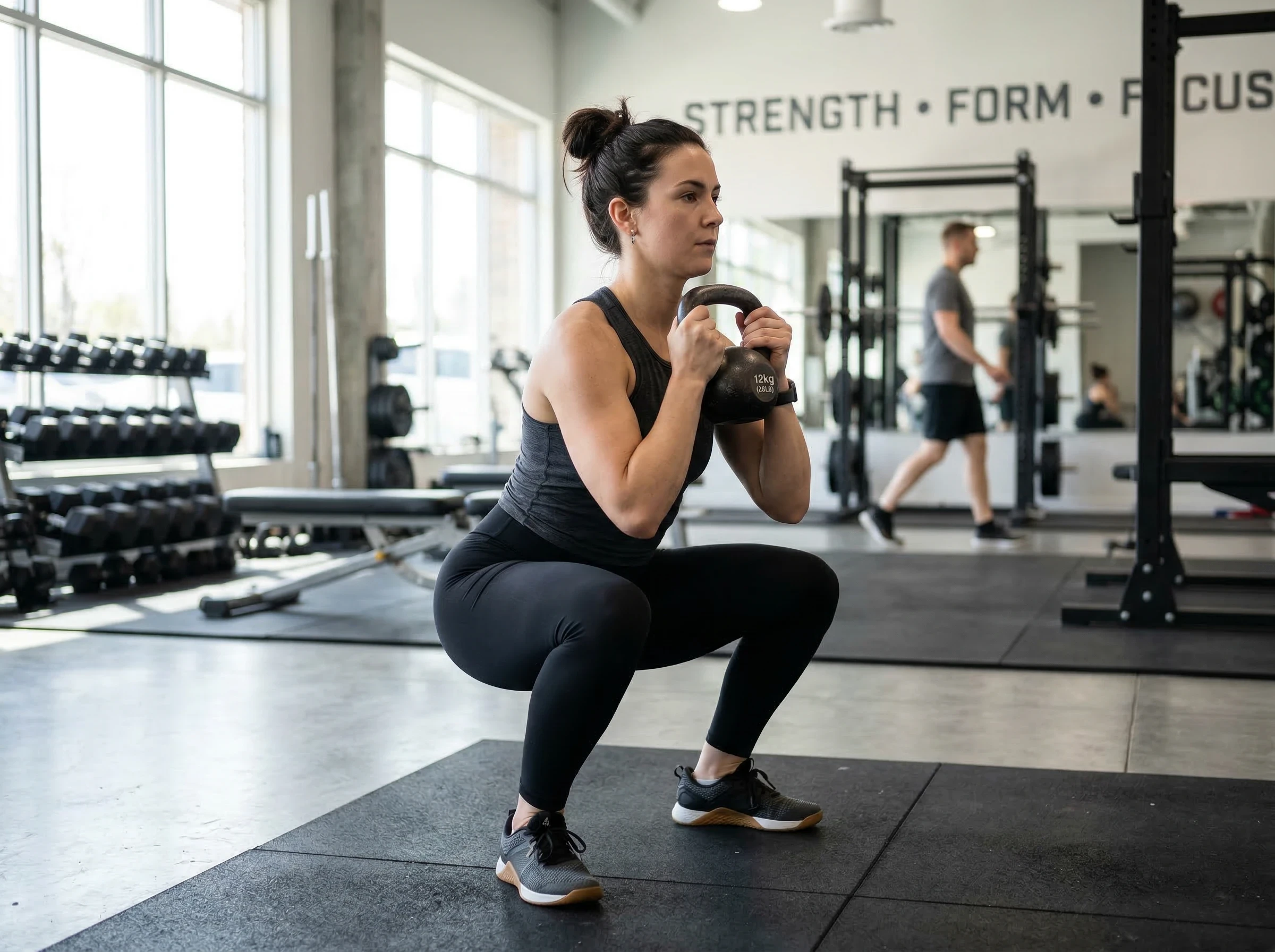
Most of the best beginner bodybuilding routines share something in common: they focus on six major movement patterns. Understanding these patterns makes it much easier to structure workouts in a way that builds a stronger and more balanced physique.
- Squat: Bending at your hips and knees to lower and raise your body (or weight), such as bodyweight squats or goblet squats.
- Hip Hinge: Moving mostly from your hips while keeping your back straight, like deadlifts or hip thrusts.
- Horizontal Push: Pushing a weight away from your body while lying or sitting, such as pushups or bench presses.
- Vertical Push: Pressing a weight overhead or upward, like dumbbell shoulder presses.
- Horizontal Pull: Pulling a weight toward you from in front, such as rows or seated cable rows.
- Vertical Pull: Pulling yourself (or a weight) down toward your body, like with lat pulldowns or assisted pullups.
When you train each pattern, you work nearly all your major muscle groups. This approach helps you avoid imbalances, keeps your joints healthy, and builds a strong foundation for adding more advanced exercises down the road. For beginners, mastering these patterns also sets the stage for future progress and allows you to track down weaknesses or mobility issues early on that can be fixed before they turn into real problems.
The Best Compound Exercises for Beginners
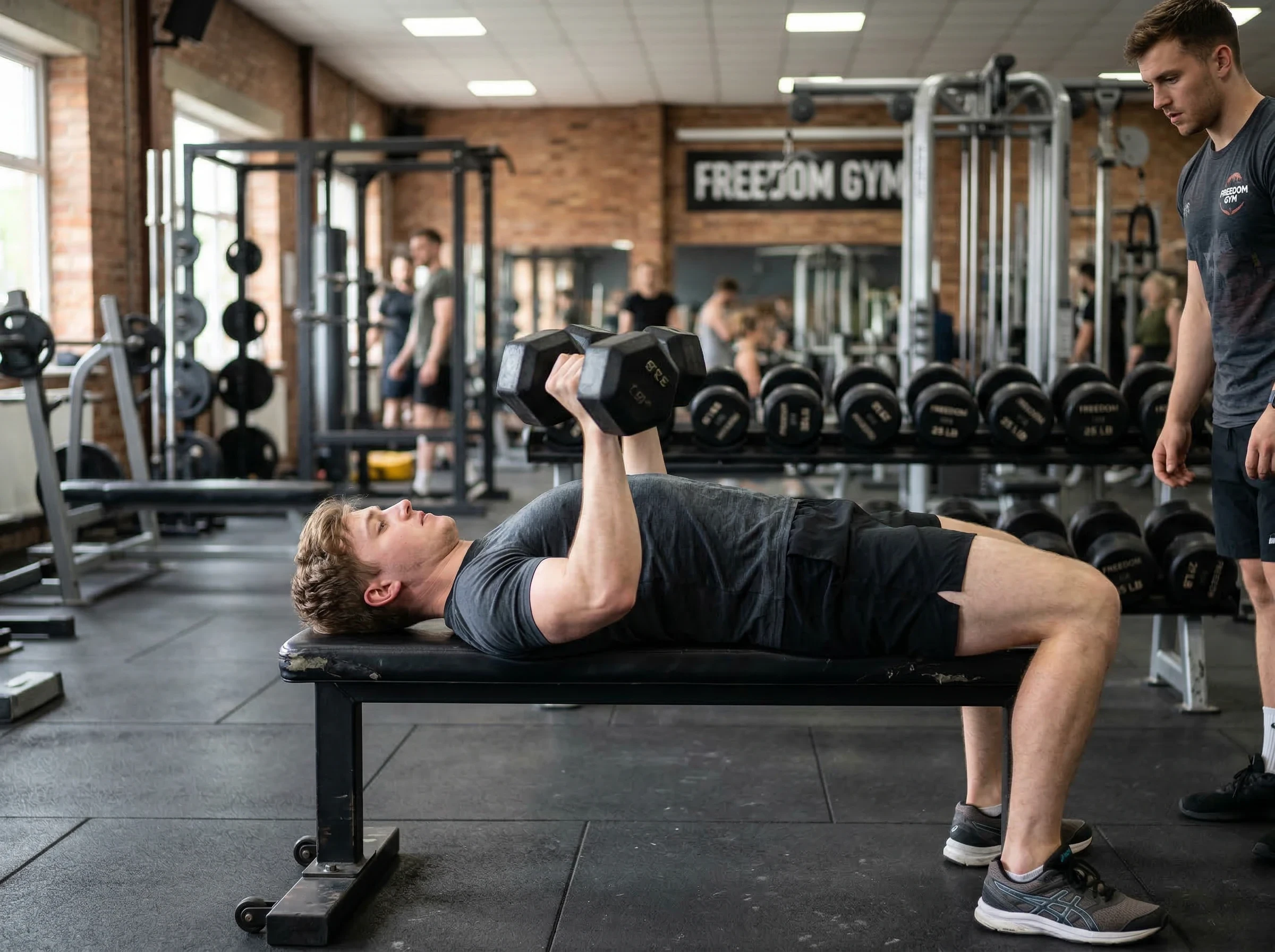
Compound exercises are the backbone of all beginner programs because they use more than one joint and muscle group at a time. Learning compound movements early makes every other exercise easier to pick up later and builds a strong foundation for long-term progress. Here are some of the top compound movements for new lifters, including both bodyweight options and weighted exercises.
- Squat Variations: Bodyweight squat, goblet squat (holding a dumbbell or kettlebell at your chest), or the classic barbell back squat. Start with bodyweight to perfect your form before adding weight. Getting comfortable and confident here makes every lower body exercise that follows much safer and more effective.
Because the barbell back squat requires more coordination and stability than other variations, learning proper setup and technique early is essential. Beginners can follow this step-by-step barbell squat tutorial to understand correct positioning, depth, and safe execution before progressing to heavier loads.
- Hip Hinge Variations: Dumbbell Romanian deadlifts, kettlebell deadlifts, or hip thrusts. Focus on keeping your back flat and feeling the movement in your hamstrings and glutes.
- Pushups: These work your chest, shoulders, and triceps. You can make them easier by starting on your knees or with hands on an elevated surface, like a bench.
- Bench Press: Dumbbell or barbell bench presses are great for chest and triceps. If you’re at home, floor presses are also effective.
- Overhead Press: Dumbbell or barbell overhead presses work your shoulders and triceps. Dumbbells are easier to control for most beginners.
- Rows: Dumbbell rows, inverted rows (bodyweight), or seated cable rows target your back and biceps. Dumbbell rows are often one of the easiest rowing variations for beginners to learn, and they can help improve upper-back strength and posture.
- Lat Pulldown or Assisted Pullup: Most gyms have a machine for lat pulldowns or an assisted pullup machine. If you don’t have access, resistance bands can work for practicing the movement.
These moves are simple, highly effective for building muscle, and easy to progress as you get stronger. A common beginner strategy is to start with a weight that allows 8–12 controlled reps with good form, then gradually increase weight or reps over time. Focusing on these movements also helps beginners get comfortable using different equipment and build confidence in the gym.
Machines, Dumbbells, Barbells, or Bodyweight: Which Should Beginners Use?
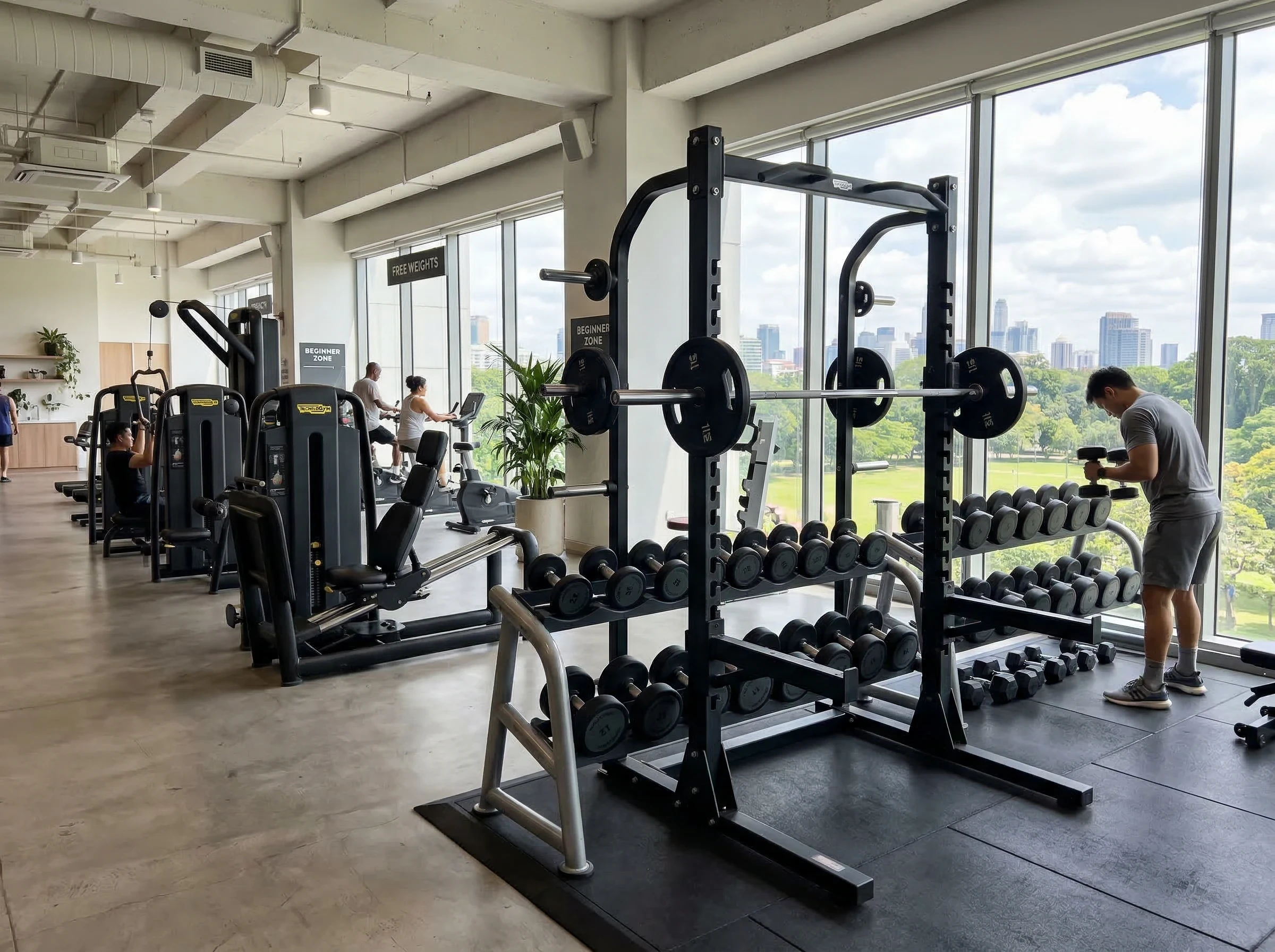
Each type of equipment comes with its own pros and cons. Many beginners worry about doing things “wrong” or choosing between machines and free weights, but what matters most is learning safe, controlled movement. Here’s what really matters for new bodybuilders:
- Machines: Guide your movement and help you focus on feeling the muscle work. Machines can be especially helpful when learning how exercises are supposed to feel, especially for rows, pulldowns, and leg presses. If you’re unsure which machines to start with or how to set them up correctly, this Guide To Gym Machines For Beginners explains the best beginner-friendly gym machines, proper machine setup, and simple machine workouts for building muscle safely. They’re also great if you’re worried about balance or control.
- Dumbbells: Let each arm or leg work on its own, helping you fix imbalances and develop stability. They’re easier to handle for beginners than heavy barbells and give lots of freedom in movement angles.
- Barbells: Good for adding weight and progressing quickly, but require more technique and body awareness. Barbell squats and deadlifts can seem intimidating, so many beginners do well practicing with dumbbells before moving to barbells.
- Bodyweight: Super useful for pushups, squats, lunges, and row variations. When starting out, focusing on controlling your bodyweight builds coordination before adding external resistance. If you want a complete beginner-friendly routine using these types of exercises, this Beginner Bodyweight Workout Plan To Build Muscle At Home shows how to structure full body bodyweight workouts, progressive overload, and recovery for muscle growth without needing a gym.
If you want a more structured weekly home training schedule using these beginner-friendly bodyweight exercises, this 3 Day At Home Workout Routine For Beginners explains how to organize three weekly workouts, progression, and recovery using simple full-body bodyweight training at home.
If you want the simplest possible starting point using only beginner-friendly bodyweight movements and no equipment, this No Equipment Full Body Workout For Beginners At Home shows how to build strength and confidence at home with a simple full body routine.
Using exercises from all of these categories can help beginners discover which movements feel most natural and sustainable for their joints and training style. There’s no single “best” tool, so whatever helps you learn good form and stay consistent is the right choice for you as a beginner. Remember, being comfortable with your chosen equipment helps you push yourself and build a positive habit around training.
Where Isolation Exercises Fit in for Beginners
Isolation exercises work a single joint or muscle group, like dumbbell bicep curls or triceps pushdowns. Many beginners assume they need large numbers of arm or ab exercises, but compound lifts already provide most of the muscle stimulus needed early on. Still, there are a couple good reasons to use isolation work:
- If you have a smaller body part that’s tough to “feel” working in compounds (like calves or side delts), adding a few sets of isolation moves can help.
- Direct ab or calf training is often necessary, since these muscles sometimes don’t get enough stimulation from bigger lifts.
- Isolation work is usually done near the end of a workout, after your main lifts. Keep the weight manageable and focus on controlled reps with good form.
In most beginner routines, a few sets of biceps curls and triceps extensions can be useful, but the main focus should still stay on big movements like pushups, presses, and rows. That’s where beginners usually make the most progress. If you want to give a boost to lagging areas, isolation moves are a great way to do that, but don’t let them take away from your main compounds.
Free Weights vs. Machines: Pros and Cons for Beginners
This is a topic that comes up a lot. Some gyms seem to push only machines, and the online fitness crowd often insists free weights are always better. Both free weights and machines can be effective for beginners when they allow safe, repeatable training and progressive overload. Here’s a simple breakdown:
- Free Weights: Build stability, coordination, and strength. They’re more “functional” and train more muscles at once. The downside for absolute beginners is that form can be tricky, and balancing the weights takes some practice.
- Machines: Help you zero in on the target muscle, keep your joints moving in a fixed path, and reduce intimidation for new gymgoers. Machines can be very useful for learning how to feel the target muscle working and can be very safe if you’re lifting alone.
A practical beginner approach is to start workouts with free weights for most compound exercises (like squats, presses, or rows), then use machines later in the session to add volume or focus more directly on a specific muscle. Don’t stress about which is superior. Use what feels best for you and what you have access to. The key is that both will help you build muscle and confidence as you start out.
Muscle Group Breakdown: Best Beginner Exercises
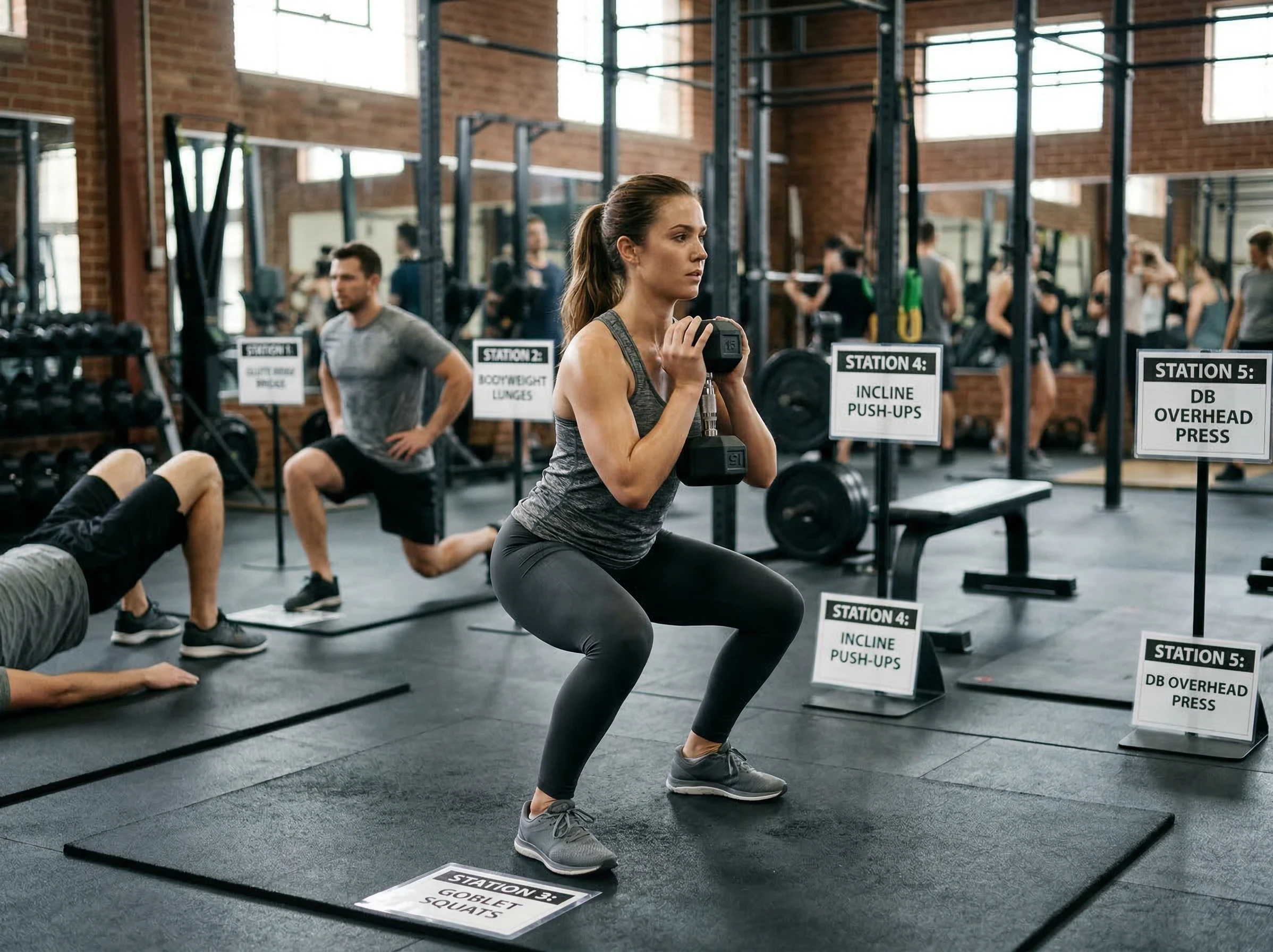
Figuring out which exercises to pick for each muscle group is one of the most common challenges beginners face. Here’s a simple breakdown of beginner-friendly exercises for each major muscle group. These are some of the most useful beginner-friendly options to focus on from day one:
- Legs (Quads and Hamstrings): Bodyweight or goblet squat, dumbbell split squat, leg press (machine), Romanian deadlift, hamstring curl (machine), stepups.
If you want to see how these lower-body exercises fit together inside a full beginner routine, this Simple Leg Day Workout Plan shows how to structure sets, reps, rest periods, warm-ups, and progression for a complete beginner-friendly leg workout.
- Chest: Pushups, dumbbell bench press, machine chest press, barbell bench press (if comfortable).
- Back: Dumbbell or machine row, lat pulldown, assisted pullup, inverted row (using a sturdy bar or TRX).
- Shoulders: Dumbbell shoulder press, machine shoulder press, lateral raise with light dumbbells or cables.
- Arms (Biceps and Triceps): Dumbbell biceps curls, triceps pushdowns (cable or band), overhead dumbbell triceps extension, hammer curls.
If you want to see how these chest, back, shoulder, and arm exercises fit together inside a complete beginner-friendly routine, this Beginner Upper Body Workout At The Gym guide shows how to structure an upper-body workout using simple exercises, sets, reps, and progression.
- Glutes: Hip thrust (with barbell, dumbbell, or bodyweight), glute bridge, Romanian deadlifts. Squats also target glutes well.
- Calves: Standing or seated calf raises (bodyweight or with weights/machine).
- Core (Abs): Plank, dead bug, cable crunch, hanging knee raise, or simple crunches. Focus on control, not quantity.
A simple approach is to pick one exercise from each group for each workout and keep those movements in place for around 8–12 weeks before making major changes. Form and confidence usually improve much faster by focusing on these standard movements instead of jumping too quickly into advanced variations. This approach also makes it easy to get a feel for your body’s capabilities and work around any injuries or limitations.
Common Mistakes Beginners Make with Exercise Selection
Many of these issues overlap with broader training errors that slow progress (see our breakdown of common beginner workout mistakes). Beginners commonly make several mistakes that slow progress. Here are a few of the most common ones:
- Copying advanced split routines from bodybuilders, which often include far too many exercises and aren’t designed for beginners.
- Switching workouts or moves every week, hoping for “muscle confusion.” Progress comes from consistency, not constant change.
- Using unstable or risky movements (like standing on Bosu balls or doing heavy one-legged lifts) before mastering basic strength and balance.
- Going too heavy, too soon. Chasing weight numbers while sacrificing form is a fast track to injury and burnout.
- Ignoring pain or discomfort, instead of listening to your body and adjusting exercises as needed. If an exercise doesn’t feel right after adjusting form, it’s worth swapping it out.
A simple routine, followed consistently, helps beginners avoid these pitfalls and make steady progress. It’s tempting to seek out something “new and exciting,” but sticking with the fundamentals usually works best for beginners who want steady progress. Taking a moment to think on it before adding more moves keeps your programs manageable and effective.
How to Structure Exercise Order and Prioritization
Exercise order plays a major role in performance and safety during workouts. Compound exercises, especially ones that use the whole body, should come first in your routine. You’ll have the most energy and focus early on, which keeps you safe and helps you lift more weight with better form.
- Start with your largest, compound lift (like squats or presses).
- Move to secondary compound moves (such as rows, pulldowns, or split squats).
- Finish with isolation work (like curls, triceps pushdowns, or calf raises).
If you have a weak area you want to prioritize, such as lagging shoulders or arms, placing that exercise earlier in your workout can be helpful. Putting a lagging muscle group earlier in the workout can improve performance and help that area receive more quality effort. The structure keeps you focused and also ensures you’re not too tired to nail down the form on complex lifts.
How Genetics and Comfort Shape Exercise Choice
The movements you enjoy or that feel best can depend a lot on your limb length, body size, and even your joint health. For example, some people find bench pressing with a barbell feels rough on their shoulders but have no issues with dumbbells. Others love squats but get knee pain with certain stances. Adjusting grip width, stance, and equipment can help identify the variations that feel safest and most effective.
Sticking to pain-free, stable movement with good control sets you up for the best long-term progress. Don’t force yourself to do a certain lift if it keeps causing pain, and don’t be afraid to swap in an alternative that still works the target muscle. Progress usually becomes faster and more sustainable when exercise choices match a lifter’s structure, comfort, and movement mechanics. Listening to your body and making small tweaks makes each workout safer and a lot more enjoyable.
Sample Beginner Exercise List and Routine Template
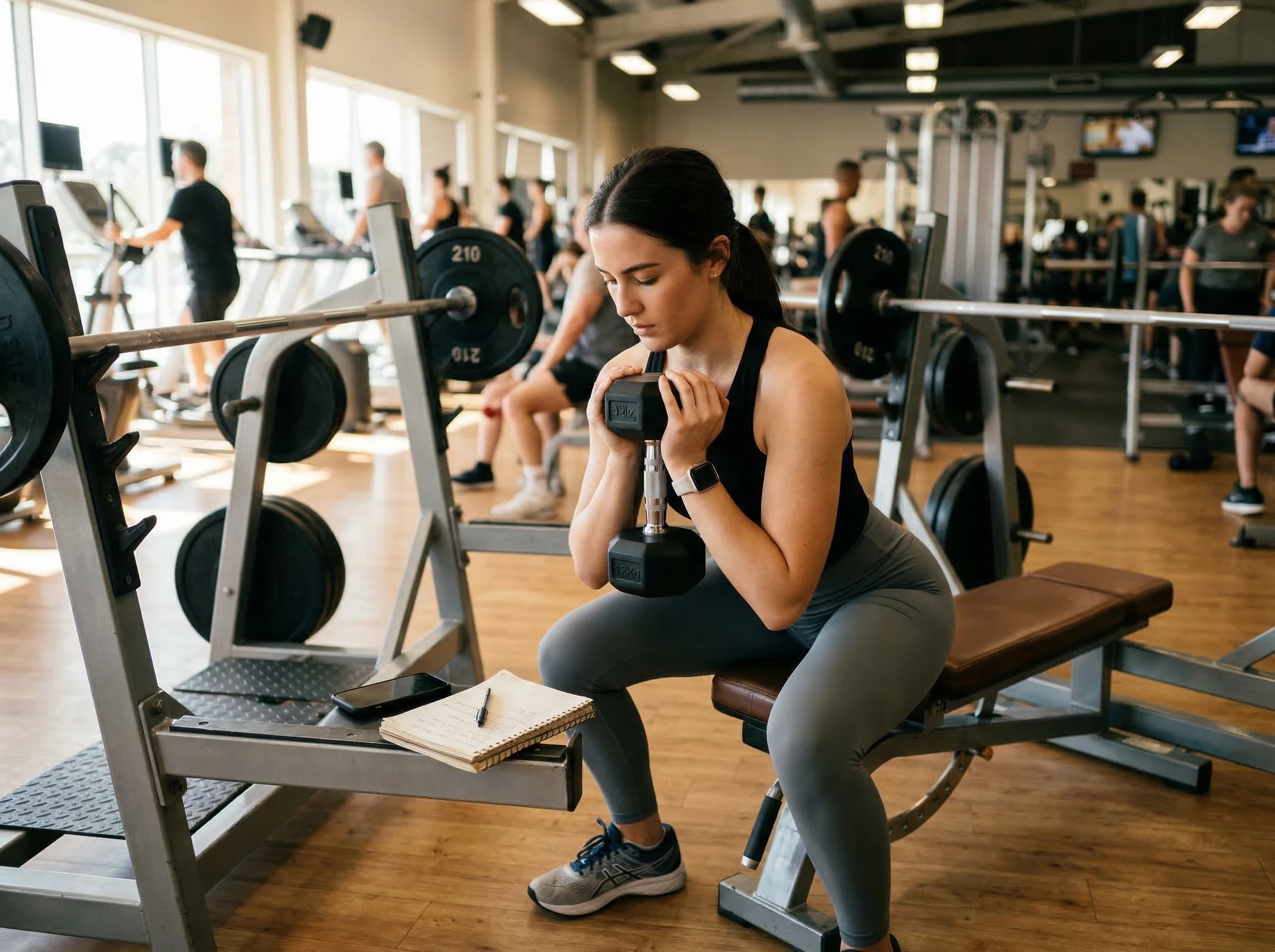
For someone just starting out, here’s a balanced, straightforward example of what a beginner’s routine could look like. This example reflects the kind of simple beginner structure many lifters use successfully, focusing on 2–3 sets of 8–12 reps per exercise (see our guide on beginner weight training sets and reps for detailed recommendations) with rest as needed. To understand how these sets add up across the entire week, see this guide on Muscle Group Sets Per Week For Beginners. If you’re unsure how long to rest, this guide explains how to structure workout rest periods for strength and muscle growth.
- Goblet squat (or bodyweight squat)
- Dumbbell bench press (or pushups)
- Lat pulldown (or assisted pullup)
- Dumbbell Romanian deadlift
- Seated cable row (or dumbbell row)
- Standing overhead dumbbell press
- Optional: Dumbbell curls and triceps pushdowns
- Optional: Plank or cable crunch
- Optional: Standing calf raises
Full-body workouts two or three times per week work very well for most beginners, especially if you are new or returning after time off. If you want to turn these movements into a simple weekly structure, this full body workout plan for beginners shows how to organize exercises, sets, reps, and progression step by step. If you are getting back into training after a layoff, this guide on Beginner Fitness Plans After A Break explains how to restart with lighter weights, fewer sets, and safer progression before pushing intensity higher. A 4 day workout routine for beginners can be a good next step for those ready to organize training with a simple upper/lower split. If you’re curious about organizing these same beginner exercises into push, pull, and legs sessions, this Push Pull Legs Workout For Beginners guide explains whether PPL is a good starting plan and how to use it without doing too much too soon. If you’re unsure which structure fits you best, this guide on how to choose a workout split for beginners explains how to decide between full body and upper/lower training. On off days, focusing on walking, stretching, or any enjoyable activity can keep you feeling fresh and motivated without burning out. A consistent, sustainable schedule is far more productive for new lifters than attempting to do too much and ending up tired or sore all week.
Beginner Exercise Stack (Start Here)
If you want the simplest starting point, use this:
- Squat → Goblet squat or leg press
- Push → Dumbbell bench press or push-ups
- Pull → Lat pulldown or row
- Hinge → Romanian deadlift
- Shoulders → Dumbbell shoulder press
- Optional → curls, triceps, calves, abs
Perform:
- 2–3 sets each
- 8–12 reps
- 3x per week
How to Apply These Exercises in a Beginner Workout
To get the most out of these exercises, beginners should follow a simple structure that balances effort, recovery, and consistency, whether that’s a full-body plan or a 4 day workout routine for beginners. This beginner workout split guide can help you choose the right structure before deciding how to organize your exercises across the week.
Most exercises should be performed for 2–3 working sets, using a weight that allows you to complete your reps with good form while still feeling challenged. Over the course of a week, these sets contribute to your total training volume, which should be balanced for recovery and progress (see this guide on Muscle Group Sets Per Week For Beginners).
A helpful guideline is to train with 1–3 reps in reserve (RIR) on most sets. This means finishing each set knowing you could have performed a few more reps if needed, without reaching complete failure.
For your final set of an exercise, you can push slightly closer to fatigue (around 0–1 RIR) while maintaining proper form.
Before your working sets, perform 1–3 lighter warm-up sets for compound movements to prepare your joints and muscles.
A simple structure for each exercise looks like this:
- Warm-up sets: 1–3 sets (lighter weight, not fatiguing)
- Working sets: 2–3 sets
- Reps: Typically 8–12 for most exercises
- Effort:
- Early sets: 2–3 RIR
- Last set: 0–1 RIR
This approach allows you to train hard enough to stimulate muscle growth while keeping your total weekly training volume recoverable.
For a complete step-by-step program using these exercises, see the Beginner Bodybuilding Workout Plan (12-Week Foundation Blueprint). If you want a simple upper/lower structure, a 4 day workout routine for beginners is another practical way to apply these exercises across the week.
How Abs and Calves Fit Into Beginner Training
Abs and calves often receive extra attention because they are highly visible muscle groups. Your abs already get a meaningful amount of work stabilizing during squats, deadlifts, and overhead presses. Still, adding a couple of direct ab moves for control and strength can make a big difference over time.
Calves, on the other hand, need more direct work for most people. Calves often grow very slowly without direct calf raises, even when someone is already squatting and deadlifting regularly. Just a few sets of calf raises every week helps keep things balanced and develops that lower leg you notice in well-developed physiques. Giving a little extra effort to these smaller groups will eventually pay off, making your overall shape more eye-catching.
Consistency Beats Constant Variety for Beginners
It’s easy to chase variety, thinking it will speed up progress. Sticking with a small group of effective exercises and gradually progressing them typically produces the best results for beginners. This also makes it easier to manage your total weekly training volume and recovery (see this guide on Muscle Group Sets Per Week For Beginners). Try not to change your whole routine every few weeks—save exercise switches or new moves for when you’re getting bored or you feel like you’ve stopped making progress for a while.
Tracking your lifts, focusing on smooth technique, and celebrating small improvements can make workouts feel more rewarding and easier to stick with long term. As you get stronger and more experienced, it’s easy to add more exercise choices or switch things up, but at the start, consistency matters way more than novelty. Seeing slow, steady progress is what continues moving your results forward and helps you build muscle you can actually keep.
Frequently Asked Questions
Here are a few questions I regularly see from beginner bodybuilders.
How many exercises do I need as a beginner?
Usually, 4–7 exercises per workout is plenty. Cover all the major muscle groups, use mainly compound lifts, and finish with 1–2 isolation moves if you’d like.
Should I work out every day?
Most beginners see great progress with full-body workouts 2–4 times per week. Some may start with three weekly full-body sessions, while others may use a 4 day workout routine for beginners built around a simple upper/lower split. Recovery between sessions is key for muscle growth — proper sleep, rest days, and recovery habits play a major role in progress (learn more in our guide on muscle recovery tips for beginners). If your energy is low or soreness is high, an extra rest day won’t slow your progress.
How do I know if I’m using the right weight?
You should be able to do all reps with good form, with the last 1–2 reps feeling challenging but not impossible. If you’re struggling or using momentum, the weight is too heavy. Improving your form and mastering each lift should always come first.
When should I add new exercises?
Stick with your current exercises for at least a month or two, then try changing 1–2 moves or swapping variations if you’re getting bored or hitting a plateau. Variety can help keep you interested and challenge your muscles in different ways, but don’t add too many too soon.
Key Takeaways
- Focus on fundamental movement patterns: squat, hinge, push, pull, and core
- Prioritize compound exercises for the best muscle-building results
- Use a mix of machines, dumbbells, barbells, and bodyweight based on comfort and skill level
- Keep workouts simple and repeat key exercises for 8–12 weeks to build strength and confidence
- Add isolation exercises only after main compound movements
- Train 2–4 times per week with full-body workouts or a 4 day workout routine for beginners for balanced progress.
- Consistency and proper form matter more than constantly changing exercises
Exercise selection should support progressive overload, proper recovery, and structured training.
Final Thoughts
Building muscle as a beginner starts with choosing the right exercises, but real progress comes from how those exercises are applied over time.
The most effective approach combines:
– Structured training programs
– Progressive overload
– Proper nutrition
– Consistent recovery
Managing your total weekly training volume is also a key part of this process, helping you apply these exercises effectively without overtraining (see this guide on Muscle Group Sets Per Week For Beginners).
The exercises you choose provide the foundation, but results come from repeating those movements consistently and improving them gradually.
Focus on mastering a small number of effective exercises, track your progress, and support your training with enough food and recovery. Over time, these habits will lead to steady strength gains and visible muscle growth.
Beginner Bodybuilding Guides on Lift & Nurture
If you want to go deeper into building muscle as a beginner, these guides will help you understand training structure, progression, nutrition, and recovery in a clear, step-by-step way:
• Beginner Bodybuilding Workout Plan (12-Week Foundation Blueprint) – A complete step-by-step training plan covering workouts, progression, recovery, and nutrition for beginners.
• 3 Day Workout Schedule for Beginners – A simple and effective full-body routine designed to balance training, recovery, and consistency.
• 4 Day Workout Routine For Beginners – A simple upper/lower split that shows how to organize your exercises across four weekly workouts for steady muscle growth.
• Push Pull Legs Workout For Beginners – Learn how beginner exercises can be organized into push, pull, and legs workouts, and whether PPL is a good starting split for new lifters.
• How to Implement Progressive Overload for Beginners – Learn how to safely increase weight, reps, and sets over time to keep building muscle.
• Beginner Weight Training Sets and Reps – Understand how many sets and reps beginners should perform for muscle growth and strength.
• Muscle Group Sets Per Week For Beginners – Learn how many sets each muscle group needs per week and how to structure your total training volume for consistent muscle growth.
• How to Structure Workout Rest Periods – Learn how long to rest between sets to improve strength, performance, and muscle growth.
• How Much Protein Beginners Need to Build Muscle – Understand daily protein intake and how it supports muscle growth and recovery.
• How Many Calories Should Beginners Eat to Build Muscle? – Learn how to estimate calories and create a small surplus for steady muscle gain.
• Muscle Building Nutrition Guide for Beginners – A complete breakdown of calories, protein, carbs, fats, and simple meal planning.
• Muscle Recovery Tips for Beginners – Learn how sleep, rest days, and recovery habits influence muscle growth.
• Workout Mistakes Beginners Should Avoid – Discover the most common training mistakes that slow progress.
• How Long It Takes Beginners to Build Muscle – Realistic timelines for muscle growth and what to expect.
• Gym Etiquette Tips for Beginners – Learn how to train confidently and respectfully in a gym environment.
• Step-by-Step Barbell Squat Tutorial – Learn proper squat setup, technique, and execution for safe and effective lower-body training.
References
:contentReference[oaicite:0]{index=0}. Physical Activity Guidelines and Recommendations for Strength Training. Available at: https://acsm.org/education-resources/trending-topics-resources/physical-activity-guidelines/
About the Author
Angel Carcamo is the founder of Lift & Nurture, a beginner bodybuilding platform focused on structured training, muscle growth fundamentals, and long-term progress.
As a beginner himself, Angel creates content based on evidence-backed principles commonly recommended in strength training, breaking them down into clear, simple steps for new lifters.
His guides focus on key fundamentals like progressive overload, recovery, and nutrition — helping beginners build muscle without confusion, shortcuts, or unrealistic expectations.
Start here: Beginner Bodybuilding Roadmap
Foundation guide: Beginner Bodybuilding Workout Plan (12-Week Foundation Blueprint)
Thank you for simplifying and providing great exercises for beginners to do with out feeling too overwhelmed. I was wondering how you would know if the weight is too heavy for you. How many reps do you need to perform before you need to move up.
Also you say it is best to stick to the same exercises and no more than seven at a time. Is this only for beginners, or more advanced body builders too?
Hi Michel, thank you for the thoughtful questions — I’m really glad the guide helped make things feel less overwhelming.
How to know if the weight is too heavy:
A good rule for beginners is that you should be able to complete all planned reps with solid form while the last 1–2 reps feel challenging but still controlled. If your technique starts breaking down, you’re holding your breath excessively, using momentum, or you feel joint pain instead of muscle fatigue, the weight is likely too heavy. On the other hand, if you could easily do many more reps after finishing your set, it’s probably too light.
Most beginners do well using a rep range (for example, 8–12 reps). Once you can perform the top end of that range with good form, that’s usually a sign you’re ready to increase the weight slightly.
How many reps before moving up:
You don’t need to wait for a specific number of sessions — just aim to gradually improve. If you can consistently hit your target reps across all sets with control, try adding a small amount of weight next workout. This is part of progressive overload, which drives muscle growth over time.
About sticking to the same exercises (no more than about 4–7 per workout):
This guideline is especially helpful for beginners because it allows you to practice the movements, build coordination, and track progress clearly without feeling overwhelmed. However, even more advanced lifters often keep a core group of exercises in their routine for long periods and only rotate variations occasionally.
The goal isn’t to limit you forever — it’s to build a strong foundation first. Once technique, strength, and recovery capacity improve, adding more exercises or variety becomes easier and more productive.
Overall, consistency with a small number of effective movements usually produces better long-term results than constantly switching routines.
Thanks again for your comment, and I’m glad the article was helpful!
Beginner bodybuilding exercises is the way to go when starting out, I do regular bodybuilding exercise just to stay healthy and for my balance. I can’t say I am truly into bodybuilding, but I do workout regularly to try to stay in shape.
I noticed your 6 fundamental bodybuilding exercises are mainly what I am doing myself. I also do some of the weight workouts you have shared in this article. I just am doing the basic beginner workouts which is keeping me in better health than I used to be.
I must admit you have shared a complete beginner workout article that is full of good information, I have learned a great deal from this one article, you have done an exceptional job providing us with the best information.
Thank you for sharing
Jeff
Hi Jeff,
Thank you very much for the thoughtful comment.
I’m really glad this article connected with what you’re already doing. That is actually one of the biggest points I wanted to make in this guide: beginners usually do best when they stick with simple, foundational exercises instead of overcomplicating things. If the basics are helping you stay active, improve your balance, and feel healthier than before, that is a strong sign you’re on the right track.
I also appreciate you sharing that you recognized many of the same core exercises in your own routine. That is exactly why these movements matter so much. They are effective, practical, and sustainable for building strength, confidence, and better overall fitness over time.
Thank you again for the encouragement and for taking the time to read the article so carefully. I’m really glad you found it helpful.
Angel