Building muscle as a beginner means taking the guesswork out of your daily nutrition. A structured grocery list helps you shop with more confidence, makes it easier to reach your protein goals, supports muscle growth, speeds up recovery, and lets you control food expenses a lot better. Many beginner programs recommend focusing on whole foods and simple, balanced meals. This guide outlines practical steps beginners can use to make affordable grocery shopping support strength training and muscle growth.
Quick Answer
A muscle building grocery list for beginners should focus on affordable protein sources, carbohydrate-rich foods, healthy fats, fruits, vegetables, and hydration options. Budget-friendly staples such as eggs, chicken, rice, oats, potatoes, beans, Greek yogurt, frozen vegetables, and fruit can help support muscle growth, recovery, and workout performance without overspending. Consistent resistance training, sufficient protein intake, adequate calories, and smart grocery shopping habits are the foundations of building muscle successfully.
Table of Contents
- What Is a Muscle Building Grocery List?
- Why a Grocery List Helps Beginners Build Muscle
- The Basic Components of a Muscle-Building Grocery List
- Best Budget-Friendly Protein Foods for Muscle Growth
- Affordable Carbohydrate Foods to Support Muscle Gain
- Healthy Fats for Muscle Building
- Fruits and Vegetables That Support Recovery
- Hydration and Beverage Choices for Beginners
- Sample Grocery List for Muscle Building on a Budget
- Simple Beginner Meal Examples Using the Grocery List
- How Much Should a Beginner Expect to Spend?
- Money-Saving Tips for Muscle-Building Grocery Shopping
- Common Grocery Shopping Mistakes Beginners Make
- Frequently Asked Questions About Muscle-Building Grocery Shopping
- Final Thoughts
- Beginner Bodybuilding Guides on Lift & Nurture
Why a Grocery List Matters for Beginners Who Want to Build Muscle
A grocery list can take a lot of stress out of starting a muscle-building routine. With clear planning, it’s much less likely that you’ll skip protein, miss out on carb sources, or forget to buy enough fruits and vegetables. Many beginners find that knowing what to buy keeps meals simple and makes it easier to stay consistent. Evidence suggests that consistent meal planning helps people stick to their nutrition goals and makes muscle-building diets easier to maintain over time. It’s also reassuring to know that many successful lifters and fitness educators use grocery lists themselves for simplicity and budget control.
The Basic Components of a Muscle-Building Grocery List
Muscle-building grocery shopping does not require fancy ingredients. Most lists are built around these main food groups:
- Protein foods: These help repair muscle and support growth.
- Carbohydrates: These fuel workouts and supply energy all day.
- Healthy fats: Fats help with hormone health and support recovering muscles.
- Fruits and vegetables: These provide vitamins, fiber, and antioxidants.
- Beverages and hydration: Water and other simple drinks keep your body working well.
Most beginners find that whole, minimally processed foods are more filling and affordable than supplements or packaged diet foods. Variety in each group helps cover your nutritional needs and keeps things interesting, which makes it easier to stay consistent with muscle-building habits week after week.
Best Budget Friendly Protein Foods for Muscle Growth
Getting enough protein from food is one of the most common beginner challenges. Most evidence-based guidelines suggest aiming for around 0.7 to 1 gram of protein per pound of bodyweight, a range commonly discussed by organizations such as the International Society of Sports Nutrition (ISSN) and many evidence-based fitness educators. But, even just making protein a focus at most meals can help beginners make progress. Here are protein foods that offer good nutrition and value for money:
- Eggs: Easily cooked different ways, packed with protein and nutrients per dollar.
- Chicken breast or thighs: Thighs cost less and offer more flavor, while breast is very lean.
- Canned tuna or salmon: Affordable, shelf stable, and high in protein; check for lower sodium options if possible.
- Greek yogurt (plain): Look for tubs rather than single cups to save more money.
- Low fat cottage cheese: Offers high protein, keeps well in the fridge, and is often on sale.
- Dry or canned beans and lentils: Super affordable and easy to keep on hand.
- Lean ground beef or turkey: Buy in bulk and freeze to save money.
- Tofu: Very budget-friendly at most grocery stores, and great for plant-based eaters.
A common beginner strategy is to pick two to three protein foods and rotate them through the week. For example, a beginner might choose eggs and tuna for quick meals and use chicken thighs for larger meals throughout the week. Shopping for protein in bulk, buying store brands, and using sales can make a big difference in the weekly totals.
Beginner Tip:
Some of the most affordable protein foods available include lentils, milk, eggs, chicken breast, Greek yogurt, beans, and canned tuna. Buying these foods in bulk, choosing store brands, and shopping sales can help lower your weekly grocery bill while still supporting muscle growth.
Affordable Carbohydrate Foods to Power Your Muscle Gain
Carbohydrates fuel your training sessions and daily activity. Many beginner programs recommend eating carbs at most meals for energy, satiety, and recovery. Here are some affordable and beginner-friendly carbohydrate foods that are commonly recommended:
- Rice (white or brown): Cheap in bulk, versatile, and stores well.
- Oats: A classic breakfast staple that can be used for overnight oats, oatmeal, or baking.
- Whole wheat bread or wraps: Store brands can be very affordable because of weekly specials.
- Pasta (whole wheat or regular): Easy to prepare in big batches for multiple meals.
- Potatoes (white or sweet): Offer fiber, potassium, and can be cooked in lots of ways.
- Beans and lentils: Double as protein and carb sources, perfect for stretching your grocery budget.
- Corn tortillas: Less expensive than flour, and easy to fill with other list items for quick meals.
Batch cooking these foods makes meal prep easy and cuts down on food waste. Most evidence-backed beginner nutrition guides, including recommendations discussed by registered dietitians through the Academy of Nutrition and Dietetics, recommend eating a mix of slow-digesting and fast-digesting carbohydrate foods based on activity levels and personal preference.
Healthy Fats for Muscle Building
Healthy fats support hormone balance and help absorb some key vitamins from food. Many beginner educators advise focusing on wholefood fat sources rather than expensive oils or processed snack foods. Good options on a budget include:
- Natural peanut butter or nut butters: Look for unsweetened store brands for best value.
- Olive oil or canola oil: Great for cooking your proteins and vegetables.
- Avocados: Sometimes available at a good price, especially in season.
- Whole eggs: Give you both high quality protein and fat for only a few cents each.
- Sunflower or pumpkin seeds: Affordable in bulk, and easy to sprinkle into snacks or oatmeal.
Including small servings of these foods in meals helps keep you full and supports long-term health. A mix of different healthy fat sources is often recommended to cover your nutritional needs and keep your diet interesting.
Fruits and Vegetables That Support Muscle Growth and Training Recovery
Fruits and veggies are essential for overall health and help reduce the risk of illness, soreness, and training burnout. Beginners can meet their needs by mixing fresh, frozen, and canned options. Some of the most budget-friendly choices are:
- Bananas and apples: Usually affordable year-round and simple to pack in your gym bag or lunch box.
- Frozen mixed veggies: Often one of the best budget-friendly options because they are affordable, easy to store, simple to prepare, and are typically frozen shortly after harvest.
- Carrots and celery: Great for snacks and stay fresh longer than many other veggies.
- Seasonal produce: Whatever is in season tends to be cheaper and tastier, so look for sales or local specials.
- Canned tomatoes: Useful for making stews, sauces, and more, with a long shelf life.
- Spinach or kale (fresh or frozen): Add to eggs, salads, or pasta for a nutrition boost.
Many evidence based beginner meal plans recommend aiming for at least one fruit or veggie at every meal. This is an easy way to improve your micronutrient intake, fiber, and recovery, all supporting your muscle-building goals. The USDA MyPlate guidelines also encourage regular fruit and vegetable intake as part of a balanced eating pattern that supports overall health and long-term nutrition habits.
Hydration and Beverage Choices for Beginners
Water is the cheapest and most effective way to stay hydrated. For most beginners, water at meals and during training is enough. If you want more flavor, unsweetened iced tea, black coffee, or zero-calorie flavored waters are options that cost very little. Milk is a great value for extra protein and calories, especially plain 1% or 2% milk. Sports drinks, sodas, or protein shakes usually aren’t needed or recommended for beginners, unless you have very specific needs or intense training.
Many beginner programs recommend filling a reusable water bottle each day to help remind yourself to drink enough fluids. Hunger, low energy, or muscle cramps are often signs you could use more water.
Sample Grocery List For Muscle Building On A Budget
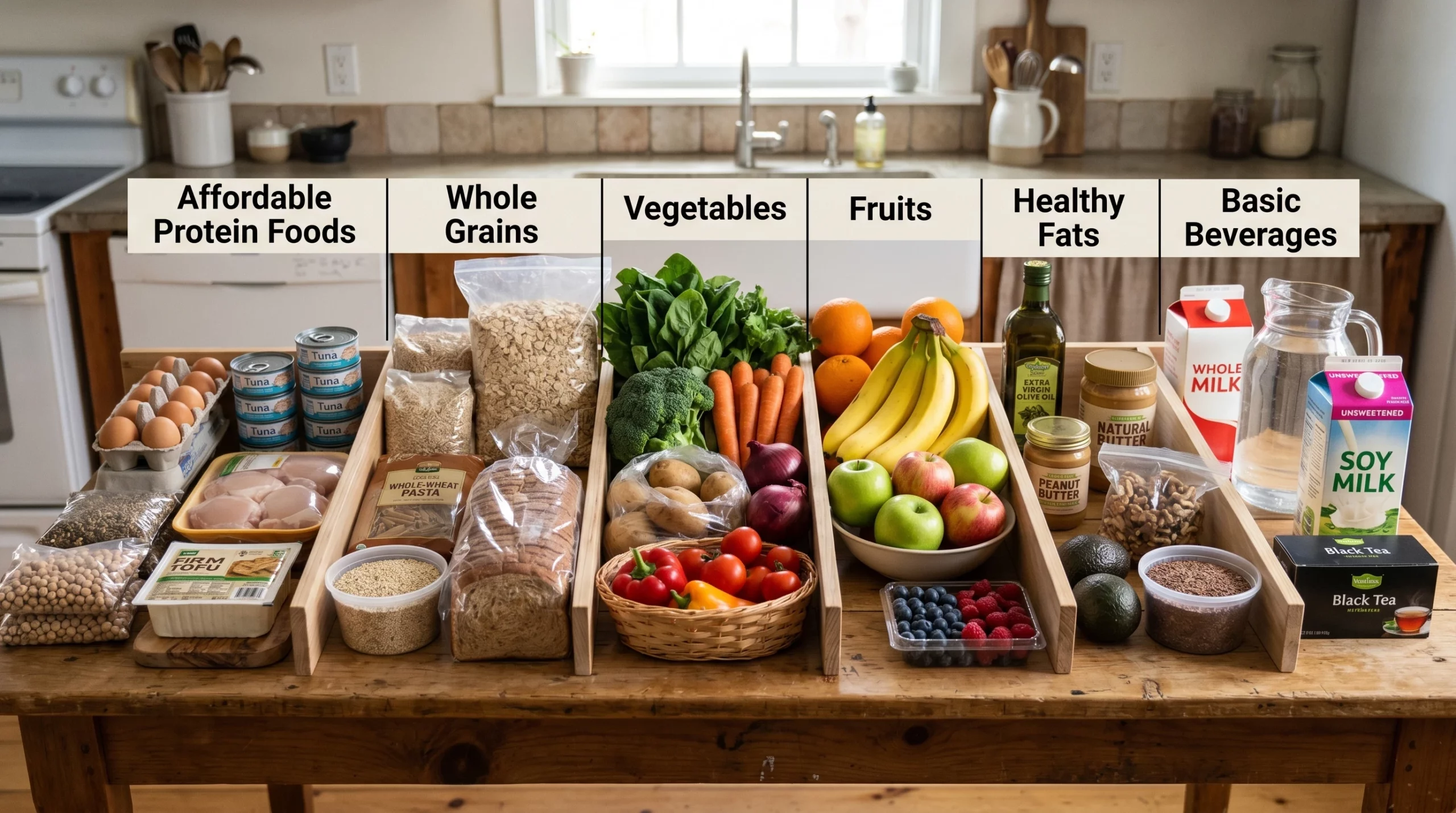
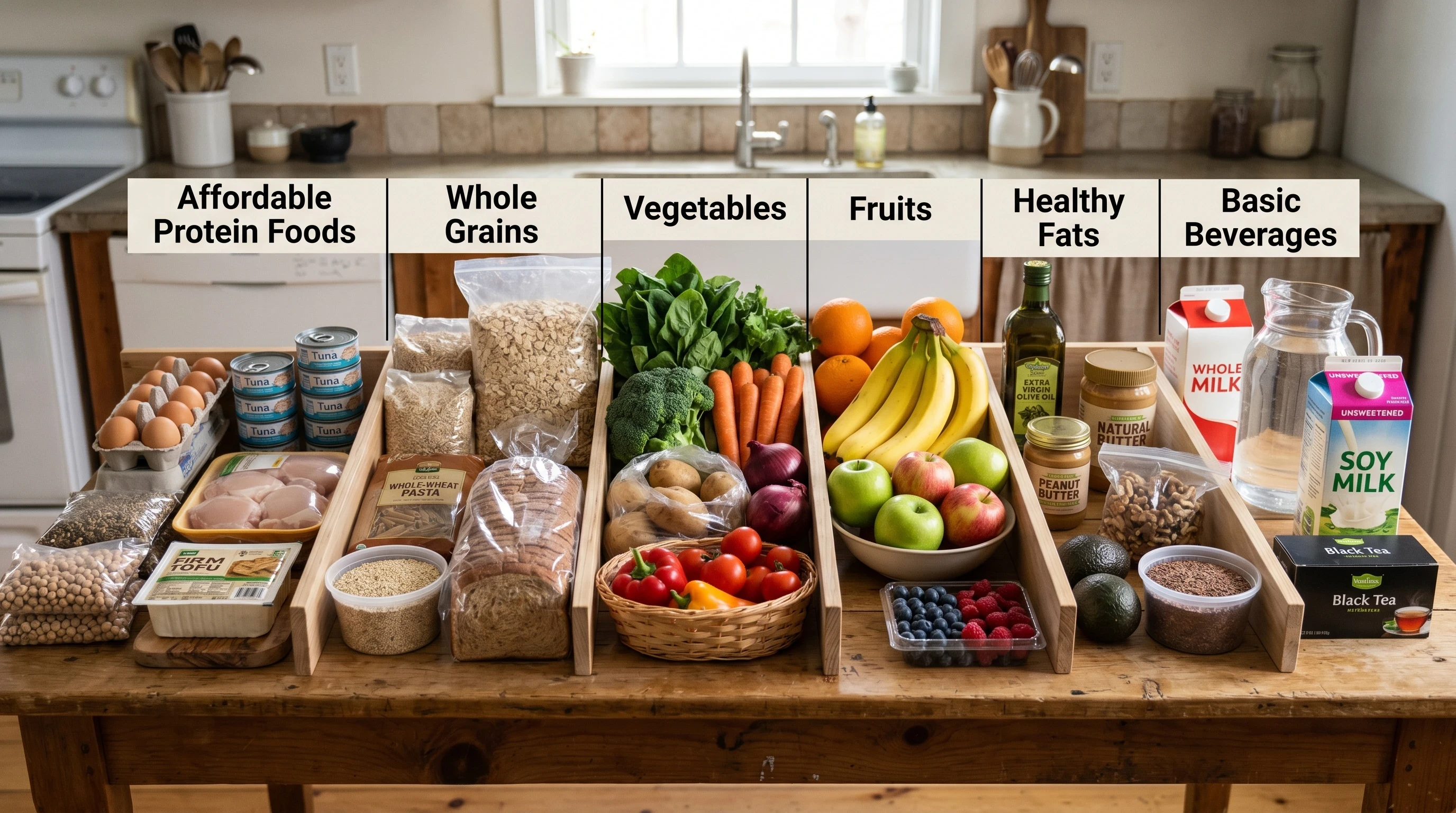
Here’s a sample muscle-building grocery list for beginners, arranged by food group. Swap in similar foods based on your preferences and what’s on sale at your store. Evidence and experience from educators suggests rotating foods within each group helps meet all your nutrient needs and keeps meals enjoyable.
A beginner does not need to buy every food listed in this article. Many successful muscle-building grocery lists are built around just a few staple foods from each category. For example, a beginner might choose eggs, chicken, rice, oats, frozen vegetables, bananas, peanut butter, and milk for most of the week, then gradually add more variety over time.
- Proteins: Eggs, chicken breast or thighs, canned tuna or salmon, Greek yogurt, low fat cottage cheese, beans, lentils, tofu
- Carbohydrates: Rice, oats, whole wheat bread or wraps, potatoes, pasta, corn tortillas, beans, lentils
- Healthy Fats: Peanut butter, olive oil, whole eggs, avocados, seeds
- Fruits: Bananas, apples, any seasonal fruit or frozen fruit blend
- Vegetables: Frozen mixed veggies, carrots, spinach, kale, any on-sale produce
- Beverages: Water, milk (plain), black coffee or unsweetened tea, zero-calorie flavored waters
Most beginners find that this list can be adjusted for different dietary preferences or needs. Start with the basics, then add new foods as your skills and budget allow.
Simple Beginner Meal Examples Using the Grocery List
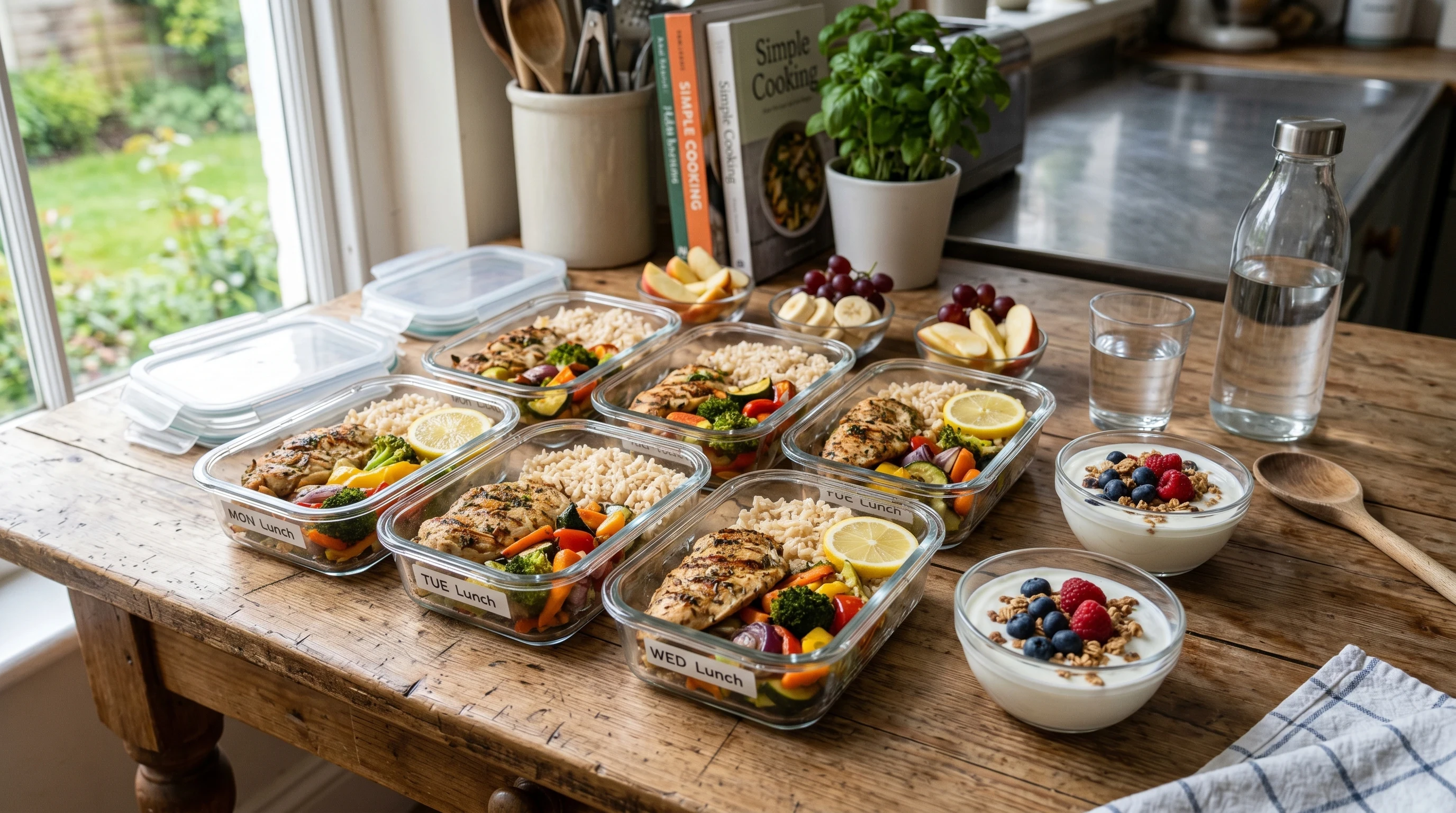
Turning groceries into actual meals doesn’t need to be complicated. Here are a few basic muscle-building meals commonly recommended for beginners, made from the foods listed above:
- Breakfast: Scrambled eggs with spinach, oats cooked with frozen berries, and a banana on the side.
- Lunch: Chicken thigh and rice bowl with mixed veggies and olive oil drizzle.
- Dinner: Pasta with ground turkey, canned tomato sauce, and sauteed carrots and spinach.
- Snack: Greek yogurt with a spoonful of peanut butter and a handful of seeds, or cottage cheese with apple slices.
- Quick option: Tuna or beans packed into a whole wheat wrap with shredded lettuce or spinach, a piece of fruit, and a glass of milk.
Batch cooking rice, beans, roasted vegetables, or protein ahead of time makes it easier to assemble meals. Many beginner programs recommend prepping meals in advance to improve follow through, reduce impulse buys, and keep costs under control.
How Much Should a Beginner Expect to Spend?
The cost of a muscle-building grocery list varies based on location, food choices, and calorie needs. However, many beginners can build a solid weekly grocery list around affordable staples such as eggs, chicken thighs, rice, oats, potatoes, beans, frozen vegetables, milk, and fruit. Focusing on these foods often provides better value than relying heavily on supplements, meal replacement products, or specialty fitness foods.
Money-Saving Tips for Muscle-Building Grocery Shopping
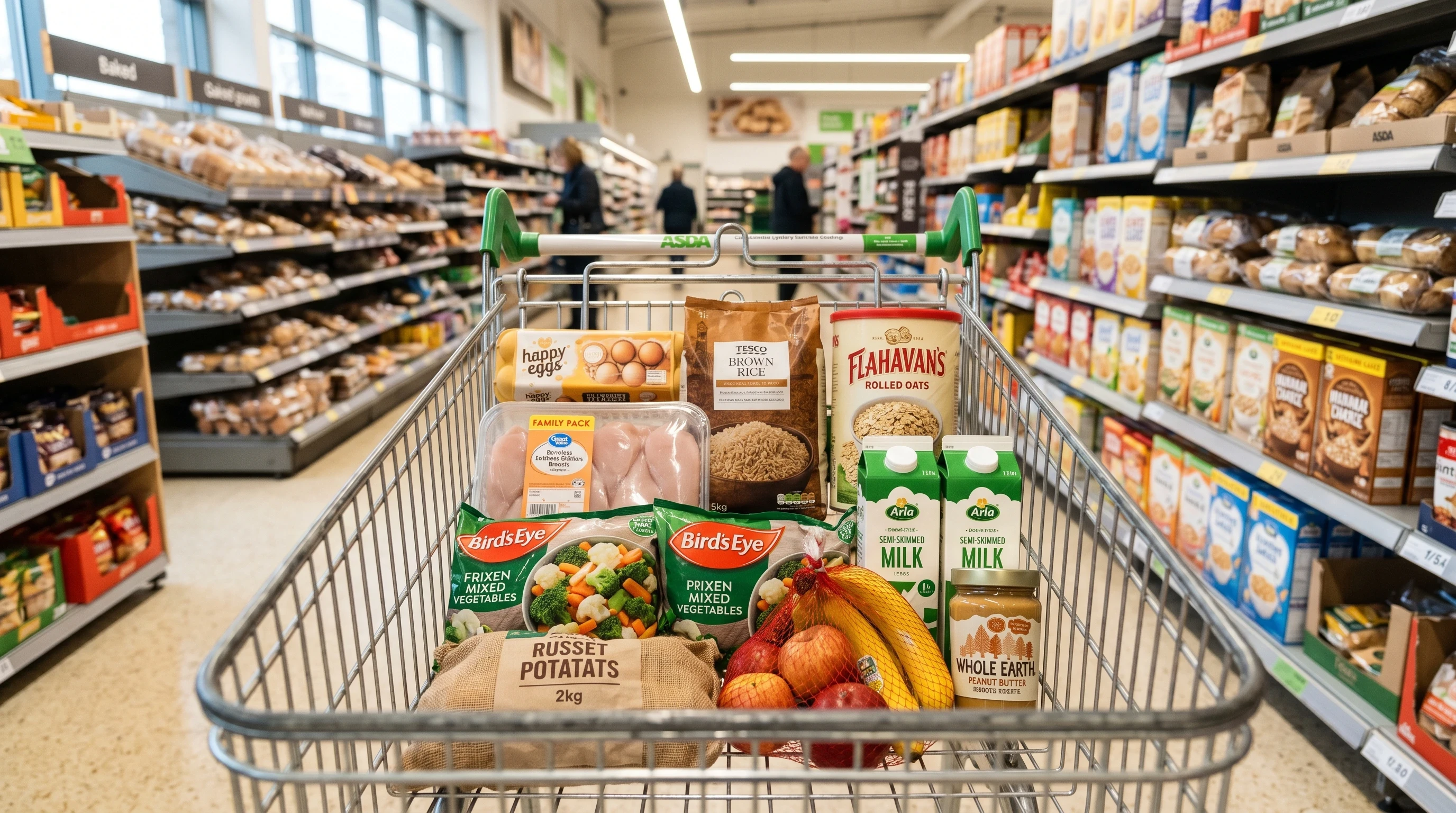
Building muscle doesn’t have to mean overspending at the store. Here are some practical ways beginners can reduce grocery costs while supporting muscle growth:
- Shop using a written list and stick to it. This reduces impulse purchases and lets you check for deals before you go.
- Buy staple foods in bulk (like rice, beans, oats) when on sale or at discount stores.
- Choose store brands over name brands for items like milk, eggs, and yogurt.
- Look for sales on meat or protein items, and freeze extras for later weeks.
- Plan meals around ingredients that stretch across several meals, like a bag of frozen vegetables or a pot of beans.
- Limit convenience foods or premade items. Cooking from scratch usually costs less per meal.
- Use price-matching or coupon apps. Many major supermarket chains offer these options.
Many beginner programs suggest meal prepping after grocery shopping to further avoid waste and keep meals on track.
Common Grocery Shopping Mistakes Beginners Make
Starting out with muscle-building grocery shopping takes some trial and error. Here are a few common mistakes beginners often make, along with ways to avoid them:
- Focusing only on protein and ignoring fruits and vegetables—your progress and recovery are supported by a balanced diet.
- Buying expensive “superfoods,” supplements, or specialty products instead of basic whole foods. Many evidence-based educators such as Jeff Nippard, Layne Norton, and Renaissance Periodization regularly emphasize that consistency with basic nutrition habits matters far more than purchasing expensive specialty foods.
- Skipping meal planning, which leads to buying random foods and then not knowing how to make satisfying meals.
- Going to the store while hungry, making it much easier to pick up snacks or things you don’t really need.
- Sticking to the same few foods every week. Variety within food groups is helpful both for nutrients and motivation.
- Expecting perfection from yourself. Progress with muscle-building comes from showing up regularly, not from eating a perfect meal plan.
Most beginner educators recommend taking small steps each week, trying new foods, and adjusting your shopping list as you learn more about what helps you feel and perform better. Over time, these habits make getting stronger more affordable and sustainable.
Frequently Asked Questions About Muscle-Building Grocery Shopping
What foods should beginners buy to build muscle?
Protein foods (like chicken, eggs, beans, yogurt), carbohydrate staples (like rice, potatoes, oats), healthy fats (like peanut butter, olive oil), and a variety of fruits and vegetables. Water and milk are common drink choices.
What are the cheapest foods for muscle growth?
Eggs, beans, lentils, canned fish, rice, oats, potatoes, and frozen vegetables are some of the most affordable options recommended by fitness educators and budget guides.
How much protein should beginners try to get from food?
Most evidence backed recommendations suggest 0.7 to 1 gram per pound of bodyweight per day is an effective range. Focus on getting protein from a mix of animal and plant sources across several meals instead of one big serving.
Can you build muscle on a budget?
Yes, many beginners build muscle with affordable groceries by focusing on basic staples, planning meals, and shopping sales. Consistent resistance training combined with enough calories and protein drives muscle growth even without expensive foods or supplements.
Do you need protein supplements to build muscle?
No, most beginners can reach their protein needs with regular grocery foods. Supplements are convenient for some, but not required for progress. Whole foods like eggs, yogurt, chicken, beans, and milk work well for most people.
How do you use a grocery list to make simple muscle-building meals?
Batch cook proteins, carbs, and vegetables, then combine them into bowls, stir fries, wraps, or plates based on your preferences. Keep a mix of different items ready to change flavors and avoid mealtime boredom.
References
International Society of Sports Nutrition (ISSN)
https://www.sportsnutritionsociety.org
Academy of Nutrition and Dietetics
https://www.eatright.org
National Institutes of Health (NIH)
https://www.nih.gov
U.S. Department of Agriculture (USDA)
https://www.myplate.gov
Layne Norton, PhD
https://biolayne.com
Jeff Nippard
https://jeffnippard.com
Renaissance Periodization
https://rpstrength.com
Beginner Grocery Shopping Checklist
✔ Choose 2–3 primary protein sources
✔ Buy at least 1 carbohydrate source for each meal
✔ Include 1–2 healthy fat sources
✔ Pick several fruits and vegetables
✔ Plan meals before shopping
✔ Buy staple foods in bulk when possible
✔ Compare store brands to save money
✔ Bring a written grocery list
✔ Prioritize whole foods over supplements
✔ Stay consistent from week to week
Final Thoughts
Building muscle starts with resistance training, regular meals, and hitting your protein and calorie goals. A well-made grocery list is one of the simplest and most effective beginner tools for turning those habits into a consistent routine. Sticking with affordable, wholefood groceries helps you save money, supports better results, and sets you up for long-term success. You do not need perfect meal plans or costly supplements. As you gain experience, you’ll figure out which foods help you feel strong and energized, so you can easily tweak your list for ongoing progress.
Beginner Bodybuilding Guides on Lift & Nurture
If you’re building muscle as a beginner, these guides can help you create a complete training and nutrition foundation:
- Beginner Bodybuilding Workout Plan (12-Week Foundation Blueprint)
- How Much Protein For Beginners To Build Muscle?
- How Many Calories Should Beginners Eat To Build Muscle?
- Muscle Building Nutrition Guide For Beginners
- Best Foods For Building Muscle For Beginners
- How To Implement Progressive Overload For Beginners
- Muscle Recovery Tips For Beginners
- How Long Does It Take To Build Muscle For Beginners?
- Beginner Bodybuilding Roadmap
About the Author
Angel Carcamo is the founder of Lift & Nurture, a beginner bodybuilding platform focused on structured training, muscle growth fundamentals, and long-term progress.
As someone building Lift & Nurture around beginner-friendly research and structured training principles, Angel creates guides that simplify widely accepted strength training concepts into clear, practical steps.
His guides focus on key fundamentals like progressive overload, recovery, and nutrition, helping beginners build muscle without confusion, shortcuts, or unrealistic expectations.
Start here: Beginner Bodybuilding Roadmap
Foundation guide: Beginner Bodybuilding Workout Plan (12-Week Foundation Blueprint)