

Starting a workout routine is exciting, but the path to building muscle can be confusing for beginners. Starting with a structured beginner program helps avoid most of these mistakes early on. Many beginners also overlook basic gym etiquette, which can unintentionally create awkward situations or interfere with other people’s workouts. With so much conflicting advice out there, it’s easy to make mistakes that slow progress without even realizing it. Many people try to follow what they see on social media or copy experienced lifters, but forget the simple basics that actually drive results in the gym.
If you’re new to strength training or coming back after a break, it helps to know which common mistakes hold most people back from making steady gains. Small changes in your training, nutrition, and recovery habits can make a big difference in how quickly you see results.
This guide walks through the 10 most common beginner workout mistakes that slow muscle growth. You’ll learn exactly what these mistakes look like, why they happen, and simple tips to fix them quickly. Following a clear and supportive approach, you’ll also find answers to the most popular beginner questions about building muscle and setting realistic expectations. Understanding these beginner workout mistakes early can help you build muscle faster, avoid plateaus, and create a more sustainable training routine.
Muscle growth for beginners depends on three key factors: structured training, proper nutrition, and consistent recovery — all of which must be balanced correctly for long-term progress.
Quick Answer: 10 Beginner Workout Mistakes That Slow Muscle Growth
If you’re new to strength training, avoid these common mistakes:
– Training to failure every set
– Not using progressive overload
– Changing exercises too often
– Ignoring recovery and sleep
– Not eating enough protein
– Training too many days per week
– Poor exercise technique
– Not following a structured beginner workout program
– Doing too much cardio
– Expecting results too quickly
Fixing even a few of these can significantly improve muscle growth, strength, and consistency.
These mistakes often happen when beginners skip structured training, progression, recovery, and nutrition — which are all explained step-by-step in the Beginner Bodybuilding Workout Plan.
Table of Contents
- Quick Answer: Beginner Workout Mistakes to Avoid
- 1. Training to Failure Every Set Instead of Using Controlled Effort and Reps in Reserve
- 2. Not Using Progressive Overload
- 3. Changing Exercises Too Often
- 4. Ignoring Recovery and Sleep
- 5. Not Eating Enough Protein
- 6. Training Too Many Days Per Week
- 7. Poor Exercise Technique
- 8. Not Following a Structured Program
- 9. Doing Too Much Cardio
- 10. Expecting Results Too Quickly
- Simple Beginner Workout Mistakes Checklist
- How Muscle Growth Works
- Beginner Muscle Building Fundamentals
- Frequently Asked Questions
- Key Takeaways
- Final Thoughts
- Beginner Bodybuilding Guides on Lift & Nurture
- References
- About the Author
1. Training to Failure Every Set Instead of Using Controlled Effort and Reps in Reserve
One of the biggest mistakes beginners make is pushing every set to total exhaustion, known as “training to failure.” This means doing an exercise until you physically can’t do another rep with good form.
Many beginners try to copy advanced lifters or think that more effort means more gains. It’s easy to believe that if you’re not completely spent after every set, you’re not working hard enough.
Training to failure every time can overload your muscles and nervous system, leading to fatigue, poor recovery, and excessive training volume over the week. If you’re unsure how much weekly volume beginners should use, see my guide on Muscle Group Sets Per Week For Beginners. Research suggests that consistently training to failure is not necessary for muscle growth and may increase fatigue, which can interfere with recovery and performance over time. Some training to failure research shows that pushing every set to failure may not improve muscle growth compared to stopping a few reps short.
A better approach is to stop each set one to three reps before failure. This still works your muscles hard but leaves enough energy for good recovery and progress. Many beginner programs recommend using a weight that is challenging but allows you to keep a couple of reps “in reserve” each set. If you need a simple breakdown of how many reps and sets beginners should use, read my guide on beginner weight training sets and reps.
2. Not Using Progressive Overload
Progressive overload means gradually increasing the demands you put on your muscles over time. If you’re unfamiliar with how this works, read my guide on How to Implement Progressive Overload for Beginners. This could be more weight, extra reps, or more sets as you get stronger. To understand how those sets and reps should be structured in the first place, check out Beginner Weight Training Sets and Reps. Without progressive overload, your muscles don’t get a strong enough signal to grow.
Many beginners stick with the same weights or routine for weeks because it feels comfortable or they’re worried about switching things up. This stalls your progress because your body gets used to the same stress and has no reason to change further.
Sticking with the same routine makes workouts easier, but muscle growth slows down if the challenge stays the same. Research on resistance training and muscle hypertrophy shows that progressive overload is one of the most important principles for building strength and muscle at any stage.
Start by tracking your exercises, weights, and reps in a notebook or app. Each week, aim to add a little more—whether that’s an extra rep, a slightly heavier weight, or another set. Small increases really add up over time and keep your progress steady.
Progressive overload works best when combined with proper recovery and nutrition.
3. Changing Exercises Too Often
Some beginners switch up their exercises every workout, hoping to “shock” their muscles into growing. It can feel more exciting, but it keeps you from getting better at any one movement.
It’s easy to get bored or distracted by all the options you see online. Program hopping also happens when people get impatient with their results and think a new move will work better.
Constantly swapping exercises makes it hard to practice good form and track your progress. It stops your body from adapting and getting stronger at key movements, which is important early on.
Pick a handful of basic exercises for each muscle group, like squats, pushups, or rows, and repeat them each week for at least four to eight weeks. If you’re unsure which movements belong in a beginner routine, this list of beginner bodybuilder exercises outlines the most effective foundational lifts. This allows your muscles time to adapt and lets you actually see your strength improving.
4. Ignoring Recovery and Sleep

Muscle growth doesn’t actually happen in the gym; it happens while your body recovers. I explain this in more detail in my guide on muscle recovery tips for beginners. Recovery directly impacts how fast you build muscle and how often you can train effectively. Skipping recovery days or getting poor sleep is a very common mistake, especially for motivated beginners.
Sometimes it feels like more workouts mean more muscle, or you might worry about losing progress on rest days. Stress, busy schedules, or late-night screen time can also make sleep and recovery tough for many people.
Poor recovery means your muscles stay tired and can’t repair themselves properly. This can lead to plateaus, burnout, or even injuries. Research shows that sleep is essential for muscle growth because most repair and growth hormone release happen then.
Make sleep a priority by aiming for seven to nine hours each night. Schedule at least one complete rest day between hard gym sessions, and listen to your body’s cues if you feel worn out. Stretching, hydration, and light walking can help speed up recovery too.
5. Not Eating Enough Protein

Protein is a vital building block for muscle repair and growth and works alongside total calorie intake to support muscle growth. If you’re unsure how much protein beginners actually need, read my guide on How Much Protein Beginners Need to Build Muscle. Many beginners don’t get enough protein after workouts or throughout the day, which slows down results.
This can happen for several reasons, such as uncertainty about protein needs, inconsistent meal planning, or difficulty including protein-rich foods regularly.
Low protein intake makes it hard for the body to repair and grow new muscle tissue after exercise. Total calorie intake also affects muscle growth. If you’re unsure how much beginners should eat for muscle gain, read my guide on how many calories beginners should eat to build muscle. Even with consistent workouts, if your diet falls short, muscle gains won’t come as quickly or easily.
Aim to include protein in every meal; options include chicken, fish, eggs, tofu, or beans. If you’re unsure how to structure a complete muscle-building diet, see my Muscle Building Nutrition Guide for Beginners. Many sources recommend beginners target about 0.7 to 1.0 grams of protein per pound of bodyweight each day. Prepping protein rich snacks in advance can make this much easier.
6. Training Too Many Days Per Week
New lifters sometimes hit the gym nearly every day, thinking that doing more is better. It’s common to feel eager or to worry about missing out on gains by taking rest days.
Motivation and excitement can lead to overcommitting to six or seven days a week. Social media also praises “no days off,” which can give beginners the wrong idea about what’s sustainable.
Working out without rest often leads to fatigue, sore joints, and stalled results. A big reason is poor volume control, which is why understanding Beginner Weight Training Sets and Reps, alongside with Muscle Group Sets Per Week For Beginners matters so much. Muscles need rest days to recover and grow after being exposed to the right amount of training volume. Most beginners see the best results with three to four strength training sessions weekly, according to many expert programs.
Set up your schedule with at least two to three rest days a week, or alternate training days for different muscle groups. Balance hard workouts with gentle activities like walking or stretching on your days off.
7. Poor Exercise Technique
Using the wrong form, rushing through reps, or skipping proper warmups are mistakes that almost all beginners make when starting out.
This may happen when you’re not sure if you’re doing an exercise right, or if you try to lift too much weight too quickly. Sometimes peer pressure or wanting to “keep up” with others leads people to cut corners on form.
Poor technique slows muscle growth because the right muscles aren’t working as they should. It also ups your risk of injury, which can keep you out of the gym altogether.
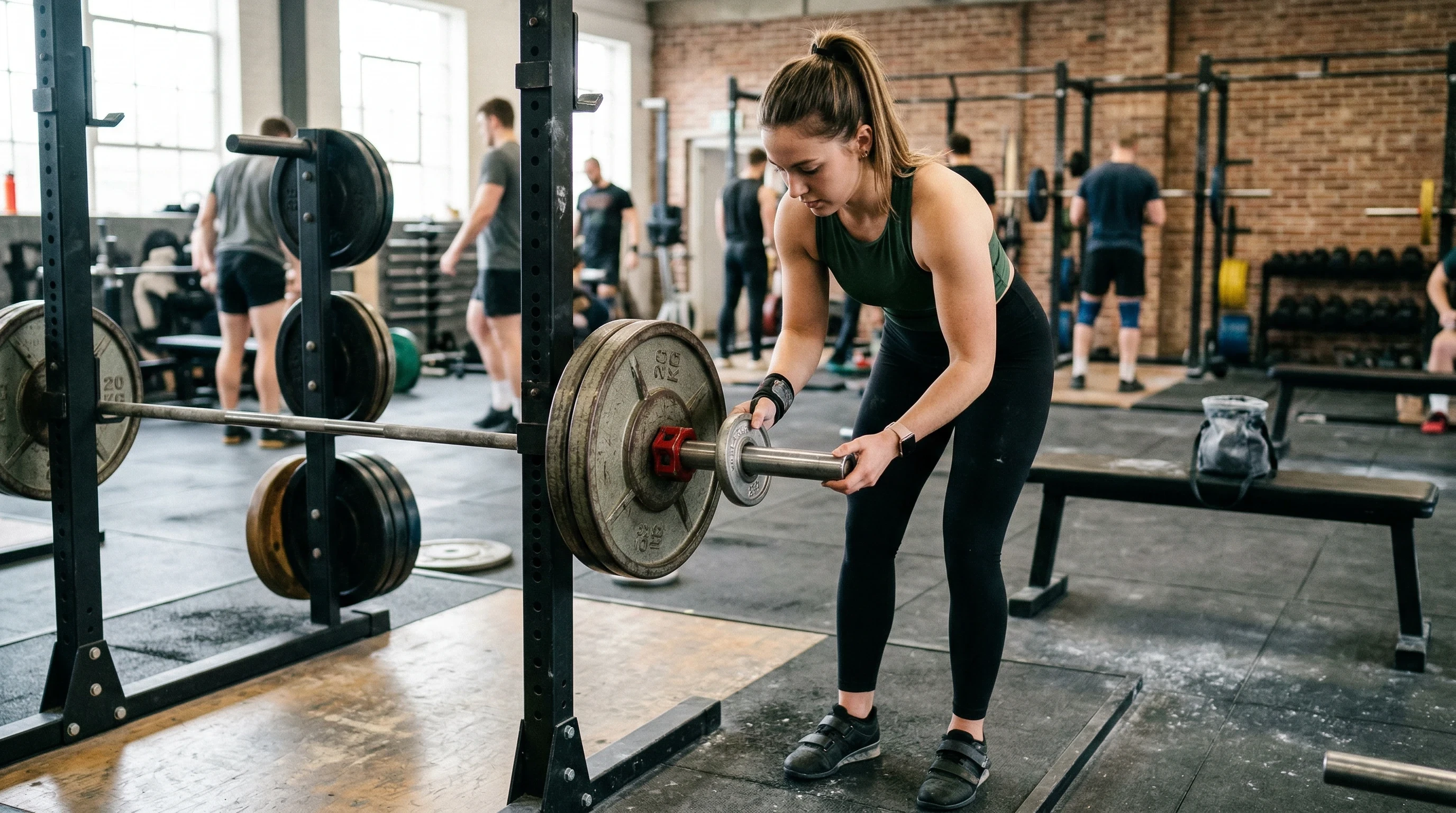
For foundational compound lifts like squats, learning proper mechanics early makes a major difference in both safety and progress. Beginners can follow this step-by-step barbell squat tutorial to see exactly how to set up and perform the movement correctly. Proper technique also allows you to safely apply progressive overload over time.
Take your time to learn how to do each exercise safely. Watch trusted video demonstrations, check your form in a mirror, or ask gym staff for advice. Use lighter weights until you’re confident with the movement, and always start your session with a warmup.
8. Not Following a Structured Program
Showing up and randomly picking exercises each session is a mistake that leaves progress up to chance and makes results unpredictable.
This usually happens when you’re unsure what to do or want to try everything. While mixing things up can be fun, unplanned workouts usually skip important muscle groups or push too hard in one area and too little in another.
Lack of structure makes it hard to track your progress and be sure every muscle is getting the attention it needs. Research supports that having a balanced plan, either from a trusted source or one you’ve put together yourself, helps you get better and safer results.
Find a simple beginner program online or in a fitness app. If you’re unsure where to begin, my Beginner Bodybuilding Workout Plan (12-Week Foundation Blueprint) explains how to structure a beginner program step-by-step. If you’re looking for a simple routine to start with, this 3 Day Workout Schedule for Beginners shows how to organize full-body training across the week. Structured plans usually focus on three to four days a week, hit all major muscle groups, and build up difficulty gradually. This structure helps balance training volume, recovery, and progression. If you’re unsure how much volume each muscle group should receive weekly, see my guide on Muscle Group Sets Per Week For Beginners.
9. Doing Too Much Cardio
Many beginners think that extra cardio will help them get “toned” or lose fat faster, so they pile on the running or cycling along with strength training days.
This often happens when people want to lose weight and gain muscle at the same time, or feel uneasy about lifting weights without a cardio “warmup.” There’s also some misinformation suggesting muscle can turn into fat if you ditch cardio altogether.
Ongoing cardio can make it harder to recover and leaves your body with fewer resources to build muscle. It may lead to fatigue, and occasionally even muscle loss if your diet isn’t on point.
Keep cardio moderate: two to four moderate sessions per week of 20 to 30 minutes each is plenty for most beginners who want to support general health and muscle gain at the same time. Excessive cardio can interfere with strength progression and recovery.
10. Expecting Results Too Quickly
Setting your expectations too high in the first few weeks is an easy way to get frustrated and discouraged. Many people believe they’ll see massive changes in just a few gym sessions thanks to transformations they see online or in magazines.
This is normal; starting something new is exciting and you want to see that your hard work is paying off. Outside pressure from “before and after” photos or big claims on social media makes it easy to forget how gradual muscle building really is, especially in the first year.
Muscle growth happens slowly and follows a predictable beginner timeline, even with consistent training and nutrition. Many beginners can gain muscle steadily when following a structured program, proper nutrition, and recovery, although the exact rate varies based on consistency, genetics, and training quality. Getting stronger, feeling more energetic, or noticing changes in how your clothes fit are all signs you’re on the right track—even if the scale doesn’t move quickly.
Track your workouts, take occasional progress pics, and celebrate small steps, like improved strength or better stamina. Stay patient and keep in mind results build up over months, not days.
Simple Beginner Workout Mistakes Checklist
If you want a quick way to stay on track, use this checklist:
– Train close to failure, not to failure every set
– Track your workouts and apply progressive overload
– Stick with the same exercises for several weeks
– Prioritize sleep and recovery
– Eat enough protein and total calories
– Limit unnecessary cardio
– Focus on proper form before increasing weight
– Follow a structured beginner program
– Allow rest days for recovery
– Stay patient and track long-term progress
Consistently following these basics will lead to better strength gains and muscle growth over time.
How Muscle Growth Works: Training, Nutrition, and Recovery
Muscle growth depends on the balance between challenging workouts, quality nutrition, and effective recovery. Muscle growth for beginners depends on three key factors: structured training, proper nutrition, and consistent recovery. Skipping any one part can drastically slow your results, especially when you’re just starting out.
Consistent strength training provides the “go” signal for muscles to get stronger. Eating enough calories and protein supplies the materials for muscles to repair and grow. Rest and sleep give your body the time it needs to rebuild, making you stronger for your next training session.
Many beginners overlook the importance of a well-rounded approach. Try tracking your nutrition and sleep alongside your workouts to spot patterns and see where you can give yourself a boost. Sometimes, improving just one area—like upping your daily protein or committing to regular bedtime—can unlock the progress you’ve been missing.
Beginner Muscle Building Fundamentals
Progressive Overload
Progressive overload is the gradual increase in workout challenge. Ways to add this challenge include lifting slightly more weight, completing another rep or two, or shaving a few seconds off your rest periods. If you are unsure how to reduce rest without hurting performance, this guide on how to structure workout rest periods explains beginner-friendly rest times for different lifts and training goals. Changing just one of these elements week by week keeps your muscles growing steadily. Most starter programs suggest small jumps in weight or reps every week or two for best results.
Protein Intake for Muscle Growth
Getting enough protein each day is the foundation for recovering and building muscle after your workouts. For best results, try to have a serving at every meal, and don’t skip your postworkout snack. Many experts agree that a target of 0.7 to 1.0 grams per pound of bodyweight daily works well for most people starting out.
Sleep and Recovery
Recovery is when your muscles do most of their repair work. Shoot for seven to nine hours of sleep a night, and give yourself two or three days free of strength training each week. If you’re not well rested, make it your top priority—your results depend on it. Light activities like stretching or walking are fine for active rest days and can even soothe sore muscles.
Setting Realistic Timelines
Building visible muscle takes time, especially if you’re new to lifting. If you’re unsure what timeline to expect when starting strength training, this guide explains how long it takes beginners to build noticeable muscle. Expect the biggest jumps in strength in your first months, with visual changes becoming more noticeable after several months. Snap new progress photos every four to eight weeks and pay attention to how your body feels and performs, not just the number on the scale.
Why Avoiding Beginner Workout Mistakes Matters
Avoiding beginner workout mistakes can dramatically improve how quickly you see progress in the gym. Many new lifters focus only on training harder, but long-term muscle growth comes from combining smart programming, progressive overload, proper nutrition, and recovery.
By avoiding these common mistakes early, beginners can build strength more efficiently, reduce injury risk, and create sustainable habits that support long term muscle development.
FAQ: Common Beginner Questions About Muscle Growth
How hard should beginners train?
Train with enough effort to challenge yourself, but don’t go until you’re completely wiped out. Stopping each set with one to three reps left in the tank helps keep your form sharp and your energy up for your next set. Training to failure on every set isn’t needed—aim for smart, steady progress instead.
How often should beginners work out?
Three to four strength sessions a week is plenty to stimulate muscle growth and let your body recover between workouts. Spread them out across the week with rest days in between for best results.
Should beginners train to failure?
No—there’s no need to go to failure every set. Leaving a few reps “unspent” helps you keep your form clean and reduces injury risk. Research suggests this method works just as well, particularly when you’re learning the ropes.
How long does it take beginners to build muscle?
Most people starting out see their biggest jumps in strength within the first two to three months. On average, gaining one to two pounds of muscle per month is realistic, assuming solid effort, good nutrition, and enough sleep. Results can vary based on genetics, consistency, and how well you stick to your plan.
What is the biggest mistake beginners make in the gym?
The big one is trying to do too much all at once—by training every day, picking up poor form, or skipping needed rest. For best results: keep things simple at first, pay attention to your technique, and let consistency do the heavy lifting.
Key Takeaways
Beginner workout mistakes often come from misunderstanding how muscle growth actually works.
Training to failure every set, skipping recovery, and not following a structured program can slow progress significantly.
Progressive overload, proper technique, and consistent training structure are the foundation of muscle growth.
Nutrition and recovery — especially protein intake and sleep — play a major role in results outside the gym.
Building muscle is a long-term process. Avoiding common mistakes early helps you stay consistent, reduce injury risk, and make steady progress.
Final Thoughts
Avoiding beginner workout mistakes is one of the fastest ways to improve your results in the gym.
Most beginners don’t struggle because they lack effort — they struggle because they don’t yet understand how structured training, progressive overload, proper nutrition, and recovery work together. Fixing even a few of these mistakes can lead to noticeable improvements in strength, muscle growth, and consistency.
Focus on mastering the basics, stay patient, and build habits you can sustain long term. When you train with structure and avoid common pitfalls, progress becomes much more predictable and rewarding.
Beginner Bodybuilding Guides on Lift & Nurture
If you want to fix these mistakes and build muscle the right way, these beginner guides will help:
• Beginner Bodybuilding Workout Plan (12-Week Foundation Blueprint) – A complete 12-week structure for training, progression, and recovery.
• 3 Day Workout Schedule for Beginners – Learn how to organize your training week effectively.
• How to Implement Progressive Overload for Beginners – Understand how to progress your workouts safely and consistently.
• Muscle Recovery Tips for Beginners – Learn how sleep, rest days, and recovery habits support muscle growth.
• How Much Protein Beginners Need to Build Muscle – Understand how nutrition supports muscle repair and growth.
• How Many Calories Beginners Should Eat to Build Muscle? – Learn how calorie intake affects muscle gain and performance.
• Beginner Weight Training Sets and Reps – Learn how many sets and repetitions beginners should perform for muscle growth.
• Muscle Group Sets Per Week For Beginners – Learn how many sets each muscle group needs per week and how to structure your total training volume for consistent muscle growth.
• How Long It Takes Beginners to Build Muscle? – Realistic timelines for muscle growth and what beginners should expect.
References
Schoenfeld BJ. The mechanisms of muscle hypertrophy and their application to resistance training. Available at: https://pubmed.ncbi.nlm.nih.gov/20847704
Davies TB, Kuang K, Orr R, Halaki M, Hackett D. Effect of training to failure vs non-failure on muscle strength and hypertrophy. Available at: https://pubmed.ncbi.nlm.nih.gov/26666744/
About the Author
Angel Carcamo is the founder of Lift & Nurture, a beginner bodybuilding platform focused on structured training, muscle growth fundamentals, and long-term progress.
As a beginner himself, Angel creates content based on evidence-backed principles commonly recommended in strength training, breaking them down into clear, simple steps for new lifters.
His guides focus on key fundamentals like progressive overload, recovery, and nutrition — helping beginners build muscle without confusion, shortcuts, or unrealistic expectations.
Start here: Beginner Bodybuilding Roadmap
Foundation guide: Beginner Bodybuilding Workout Plan (12-Week Foundation Blueprint)
The fact that the domain wasn’t the same as the blog title was just a little confusing, but your “about” page did solve that and let me know what the site is about. I like the list of posts on the “Blog” page, and it was easy to figure out and decide which one I wanted to read. You have some very interesting and informative posts there. A “Contact” page would be nice to include, but you do include comment forms at the end of the posts. The posts have great images and infographics. I didn’t notice affiliate links, but if you do monetize, you should add a page about “Affiliate link disclosure”. The cute little logo didn’t do anything for me. If you had the Blog name and logo in an integrated Banner it would be nicer in my opinion. Overall you have created some very informative and attractive blog posts.
Hi Shirley,
Thank you so much for taking the time to leave such a detailed and thoughtful comment. I really appreciate you sharing both what worked for you and what felt a little confusing at first.
I’m glad the About page helped clarify what Lift and Nurture is about, and I’m also happy to hear the Blog page made it easier to browse through the posts and choose what to read. That kind of feedback is really helpful because one of my main goals is to make the site clear and beginner-friendly from the start.
I also appreciate your suggestions about the Contact page, comment forms, and the overall site branding. Those are all areas I’ll keep improving as the site grows. Your point about having stronger integration between the blog name and logo is especially useful, because presentation and clarity matter just as much as the information itself.
Thank you as well for mentioning the images and infographics. I’m glad you found the posts informative and attractive. Encouragement like this really motivates me to keep building the site and improving the experience for readers.
I appreciate you stopping by and sharing your honest thoughts.
Angel
Workout mistakes is a very good article everyone should read and learn from. Even though I have been working out and active most of my life, I still learned some new things.
Since I am older now I am experiencing slower recovery, it does not help me to recover when I don’t get enough sleep. I just seem to become so involved in my tasks and hobbies I don’t get to bed early enough, and to make things even worse I am up before its light outside.
I was surprised to read and learn that I am doing way too much cardio than I need and should be, that is one major change I will be making in my workout routine.
This article is an eye-opener for beginner and advanced workout experience, I highly recommend everyone read this and bookmark your website.
Jeff
Hi Jeff, thank you so much for this thoughtful comment. I really appreciate you sharing your experience, especially since it shows that even people who have been active for years can still pick up useful reminders and make meaningful adjustments.
What you said about recovery and sleep is such an important point. A lot of people underestimate how much slower recovery can feel when sleep starts slipping, and it’s often not because they’re doing anything “wrong” in the gym. Sometimes the biggest limiter is simply not getting enough quality rest consistently. Even improving sleep a little can make a noticeable difference in energy, recovery, and workout performance.
I’m also glad the section on cardio stood out to you. Cardio definitely has benefits for general health, but when the goal is building muscle, too much of it can sometimes make recovery harder and take away from strength progress. Usually, a moderate amount works much better than piling on extra sessions.
Thanks again for reading so carefully and for recommending the article. I’m really glad it gave you a few helpful takeaways, and I wish you the best with those adjustments to your routine.
Angel