Building muscle as a beginner can feel exciting and sometimes a little confusing, especially if you see dramatic before-and-after social media photos promising fast results. Many beginners feel like nothing is happening in the first few weeks, even when they are getting stronger and building the habits that lead to visible results later. The real process takes more time, patience, and steady effort than what online transformations usually show. Understanding what to expect and how muscle actually grows can help keep your motivation strong and your results consistent.
Muscle growth is driven by progressive overload and supported by an appropriate amount of weekly training volume, where you gradually increase the challenge placed on your muscles over time.
Muscle growth for beginners depends on three key factors: structured training, proper nutrition, and consistent recovery.
For those training in a gym for the first time, understanding basic gym etiquette can help reduce anxiety and make it easier to stay consistent during the early stages.
Quick Answer
Most beginners notice strength gains within 2–4 weeks, while visible muscle growth typically takes 6–12 weeks.
More noticeable muscle development usually occurs after several months of consistent training, proper nutrition, and recovery. The first year of training produces the fastest rate of muscle growth for most beginners.
If you want a step-by-step system that aligns with this timeline, follow the Beginner Bodybuilding Workout Plan (12-Week Foundation Blueprint).
Table of Contents
- Quick Answer: How Long It Takes to Build Muscle
- Beginner Muscle Growth Timeline (At a Glance)
- Realistic Muscle Gain Timelines for Beginners
- Why Muscle Growth Takes Time
- Key Factors That Affect Muscle Growth Speed
- How Beginners Can Maximize Muscle Growth
- What Are Newbie Gains?
- Managing Expectations for Beginners
- Body Recomposition Explained
- Practical Tips for New Lifters
- Common Beginner Questions About Muscle Growth
- Getting Started with Training
- Muscle Recovery: Rest Days and Protein Intake
- Common Beginner Mistakes
- Key Takeaways
- Final Thoughts
- Beginner Bodybuilding Guides on Lift & Nurture
- References
- About the Author
How Long Does It Take to Build Muscle as a Beginner?
For most beginners, noticeable strength gains often happen within the first few weeks of training. However, visible muscle growth usually takes longer. Research on resistance training adaptations shows that measurable increases in muscle size occur progressively over time, with early changes appearing within a few weeks and continued growth occurring with consistent training. Many beginners start noticing small physical changes after about 6 to 12 weeks of consistent training, proper nutrition, and adequate recovery. Over the course of the first year, muscle growth can become more significant, especially if training, diet, and sleep are all optimized.
Beginner Muscle Growth Timeline (At a Glance)
– 2–4 weeks: Strength increases (neuromuscular adaptation)
– 6–12 weeks: Visible muscle changes begin
– 3–6 months: Noticeable muscle development
– 12 months: Most significant beginner gains occur
Progress varies based on consistency, training quality, nutrition, and recovery.
Realistic Muscle Gain Timelines for Beginners
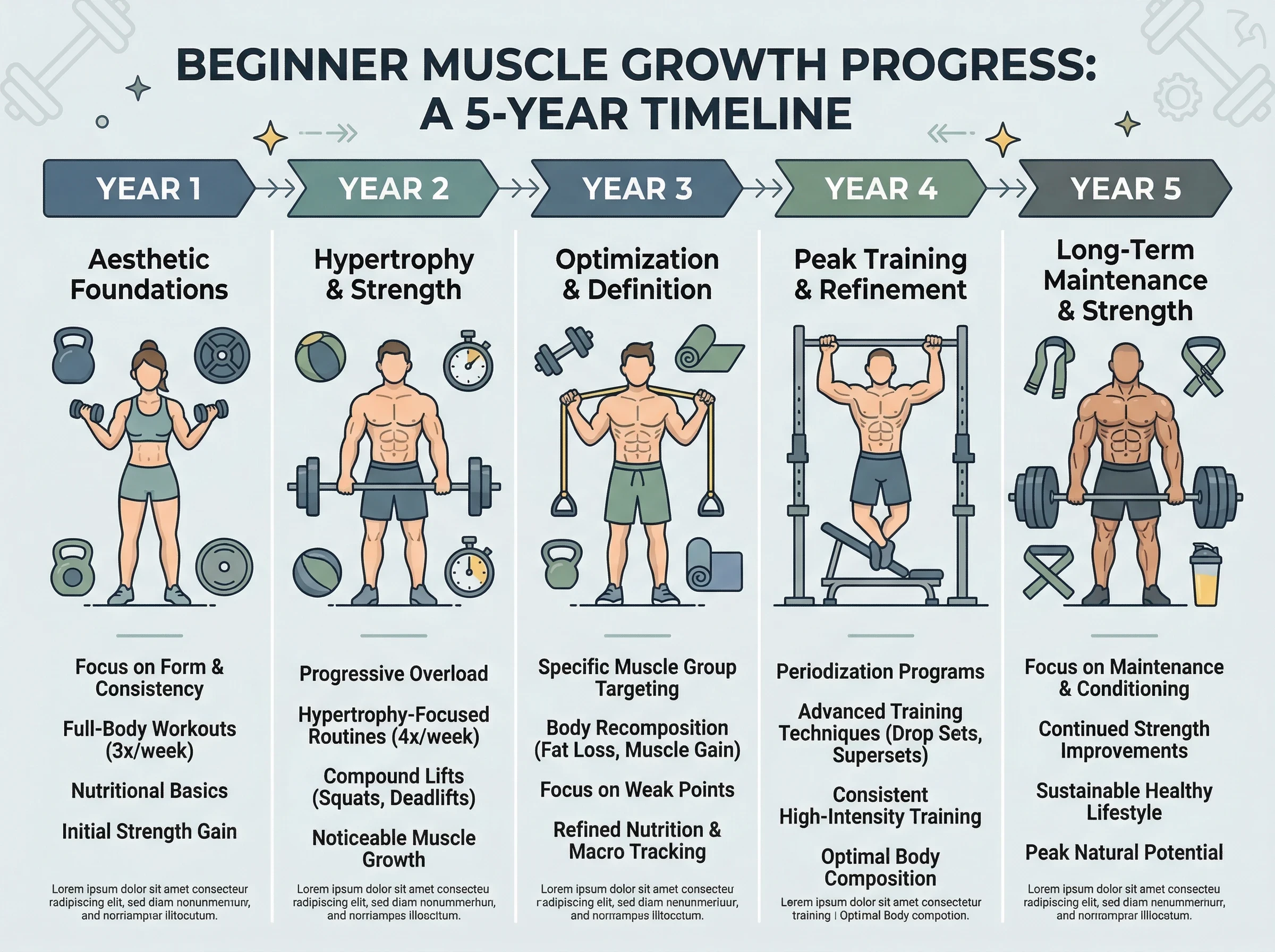
Starting a new strength training program often brings some of the fastest muscle gains you’ll experience. Many call this the “newbie gains” phase, which usually happens within the first year of lifting weights. Most strength training guidelines and research agree that beginners can see stronger and more noticeable muscle growth over the first 12 months compared to later years.
Some evidence-based estimates and coaching models suggest that beginners can gain muscle more rapidly during their first year of training compared to later years. However, exact muscle gain varies widely depending on consistency, nutrition, genetics, and training quality.
Many coaching-based models estimate that muscle gain is fastest in the first year and gradually slows over time, rather than continuing at the same rate long term.
After the first year, the rate of muscle growth starts to slow down. Here’s how it breaks down for most people under normal, consistent training:
- Year 1: Muscle gain is typically fastest during the first year, with steady progress occurring when training, nutrition, and recovery are consistent
- Year 2: Muscle growth slows compared to the first year
- Years 3 to 5: Progress continues but at a much slower rate
This slow-down after the first year is normal and just means your body is adapting as you get stronger. Muscle gain is fastest in the beginning because it’s all new to your body.
Why Muscle Growth Takes Time
Muscle grows through a process called muscle protein synthesis. When you train with weights, you create small tears in your muscle fibers. Your body repairs these tears, building bigger and stronger muscles over time. This process can’t be rushed, no matter how hard you train. Your body needs time to heal, adapt, and lay down new muscle tissue. This process also depends on applying the right amount of training volume each week so your muscles are stimulated without being overworked.
Even though you might feel stronger or look a little different after a month or two, building clear, visible muscle usually takes closer to 2 to 3 months. Some people may see strength improvements within 2 to 4 weeks, but seeing changes in the mirror often requires 6 to 12 weeks of consistent training and proper nutrition.
Key Factors That Affect Muscle Growth Speed
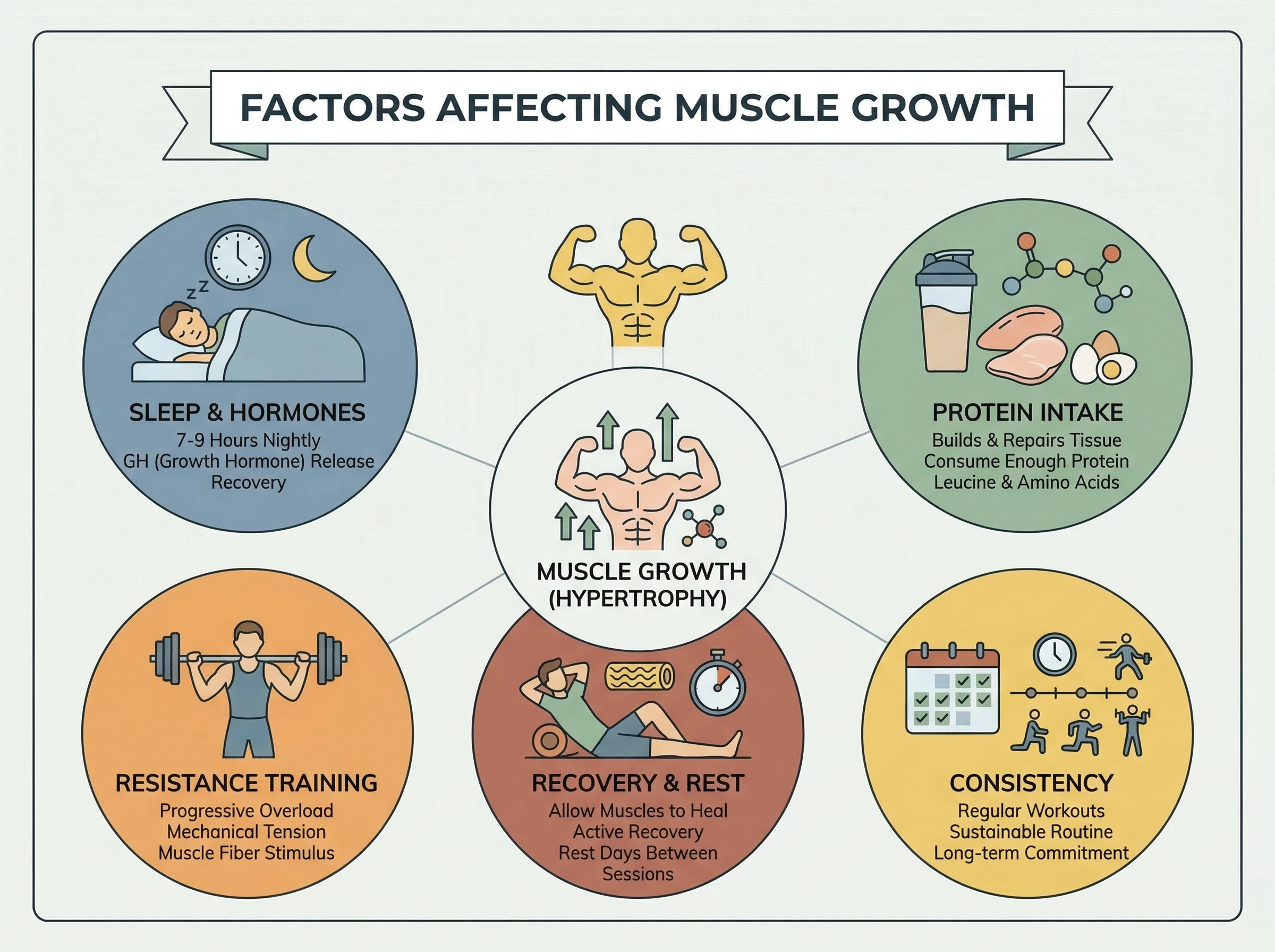
Muscle building is affected by several important things beyond just lifting weights. Knowing these factors can help you focus on what matters most for faster, more reliable progress.
- Genetics: Everyone has a unique rate of muscle gain, which is partly genetic. Some people gain muscle quicker than others, while some need to work harder for results.
- Training Age: Beginners build muscle faster than experienced lifters. The longer you’ve already trained, the slower your rate of new muscle growth.
- Sex Differences: Men tend to build more muscle than women in the same time frame. This is mostly due to natural differences in hormones like testosterone.
- Diet and Calorie Intake: Eating enough calories gives your body the energy it needs to build muscle. If you’re unsure how much beginners should eat, see my guide on how many calories beginners should eat to build muscle. If you’re unsure how to structure your diet for muscle growth, this Muscle Building Nutrition Guide for Beginners explains calories, protein targets, and meal planning.
- Protein Intake: Protein is needed to repair and grow muscles. Most beginner guidelines suggest 0.7 to 1 gram of protein per pound (1.6 to 2.2 g/kg) of bodyweight daily. For more information about protein, read How Much Protein Beginners Need to Build Muscle.
- Sleep and Recovery: Muscle repairs and grows while you rest. Getting enough sleep (7 to 9 hours each night) makes a big difference. Muscle growth doesn’t happen during the workout itself — it happens during recovery. Proper sleep and rest days are critical, which is why understanding Muscle Recovery Tips for beginners is so important.
- Training Consistency: Training consistency: Sticking with your workouts, week after week, is especially important if you want to see results. Following a structured program helps maintain consistency and progression. Making sure your weekly training volume is appropriate also plays a major role, which is why understanding Muscle Group Sets Per Week For Beginners is important for steady progress.
- Progressive Overload: Challenging your muscles with heavier weights or more reps over time is necessary for continued growth. If you’re unsure where to start with your weekly training volume, read my guide on beginner weight training sets and reps. One of the most important principles behind muscle growth is progressive overload, which means gradually increasing weight, reps, or training difficulty over time.
- Lifestyle Stress Levels: High stress and poor recovery slow down muscle growth.
How Beginners Can Maximize Muscle Growth
Beginners can do a lot to get the most out of their first year of training. These tips can speed up your results and make your progress more noticeable.
- Follow a Structured Workout Program: Many beginner programs recommend working out 3 to 4 days a week using full-body routines or upper/lower splits. Those programs work even better when you understand Beginner Weight Training Sets and Reps. This frequent practice helps build a balance of strength and size in all muscles.
- Focus on Progressive Overload: Try to increase the weight, reps, or number of sets each week, even if it’s just a little. This forces muscles to adapt and grow. Another variable you can adjust is rest between sets — this guide on how to structure workout rest periods explains how rest length influences strength, muscle growth, and workout performance. It also helps to understand how many total sets you should be doing per muscle group each week, which is explained in this guide on Muscle Group Sets Per Week For Beginners.
- Eat Enough Protein: Protein gives your body the building blocks it needs. Try including high-protein foods at every meal, such as chicken, fish, tofu, beans, or Greek yogurt.
- Prioritize Recovery: Take rest days, get enough quality sleep, and don’t skip stretching or foam rolling. Recovery is when your muscles actually grow stronger.
- Be Consistent: Skipping workouts or changing routines every week slows your results. Most strength training guidelines agree that steady consistency works best.
Following a structured workout routine is one of the most important steps for beginners. If you’re unsure where to start, you can follow a Beginner Bodybuilding Workout Plan (12-Week Foundation Blueprint) that focuses on full-body training, progressive overload, and proper recovery.
Many beginners also start with a 3 Day Workout Schedule for Beginners, which allows enough training stimulus while still giving muscles time to recover between sessions.
What Are “Newbie Gains,” and Why Do They Happen?
The term “newbie gains” pops up a lot in bodybuilding and fitness circles. It describes the fast, noticeable muscle and strength improvements most people experience during their first year of lifting. The body responds strongly to new stress from resistance training, quickly getting stronger and bigger as a self-defense mechanism.
In other words, the first time you introduce your muscles to weight training, your body becomes more efficient at building new muscle tissue. But as your muscles grow and adapt, building new muscle gets harder and happens more slowly. This makes it really important to stick with your program during your first year, so you don’t miss out on this rapid improvement window.
Managing Expectations: What Can Beginners Realistically Achieve?
Setting honest expectations from the start is really important. Transformation photos online are often the result of years of work, not weeks. For most beginners with a good training program and supportive diet, here’s what to expect:
- Noticeable strength increases in 2 to 4 weeks. You might lift more weight or do more push-ups quickly, even before seeing big changes in the mirror.
- Visible muscle growth in 6 to 12 weeks. This is when you’ll likely notice your muscles looking fuller, especially arms, shoulders, and thighs.
- Bigger, more defined muscles after 12 months of consistent training, nutrition, and recovery.
Trying to shortcut the process with extra workouts or fancy supplements rarely works better than following a basic, effective plan consistently. Trust steady progress over time. If you’re working hard, eating enough, and recovering well, your results will come.
Body Recomposition: Losing Fat While Gaining Muscle
Many beginners wonder if they can lose fat and build muscle at the same time. Studies show that for those who are new to strength training, body recomposition is possible, especially in the first few months. This means you can get leaner and stronger at the same time, particularly if you’re coming from a place of little or no previous weight training experience.
This effect is most pronounced in those who have more body fat to lose or who are coming back to training after a long break. The approach usually involves eating enough protein, slightly reducing calories (if fat loss is a goal), and staying consistent with your workouts. Over time, your body can swap fat for muscle, leading to a firmer, leaner look even if your weight does not change much on the scale.
Practical Tips for New Lifters
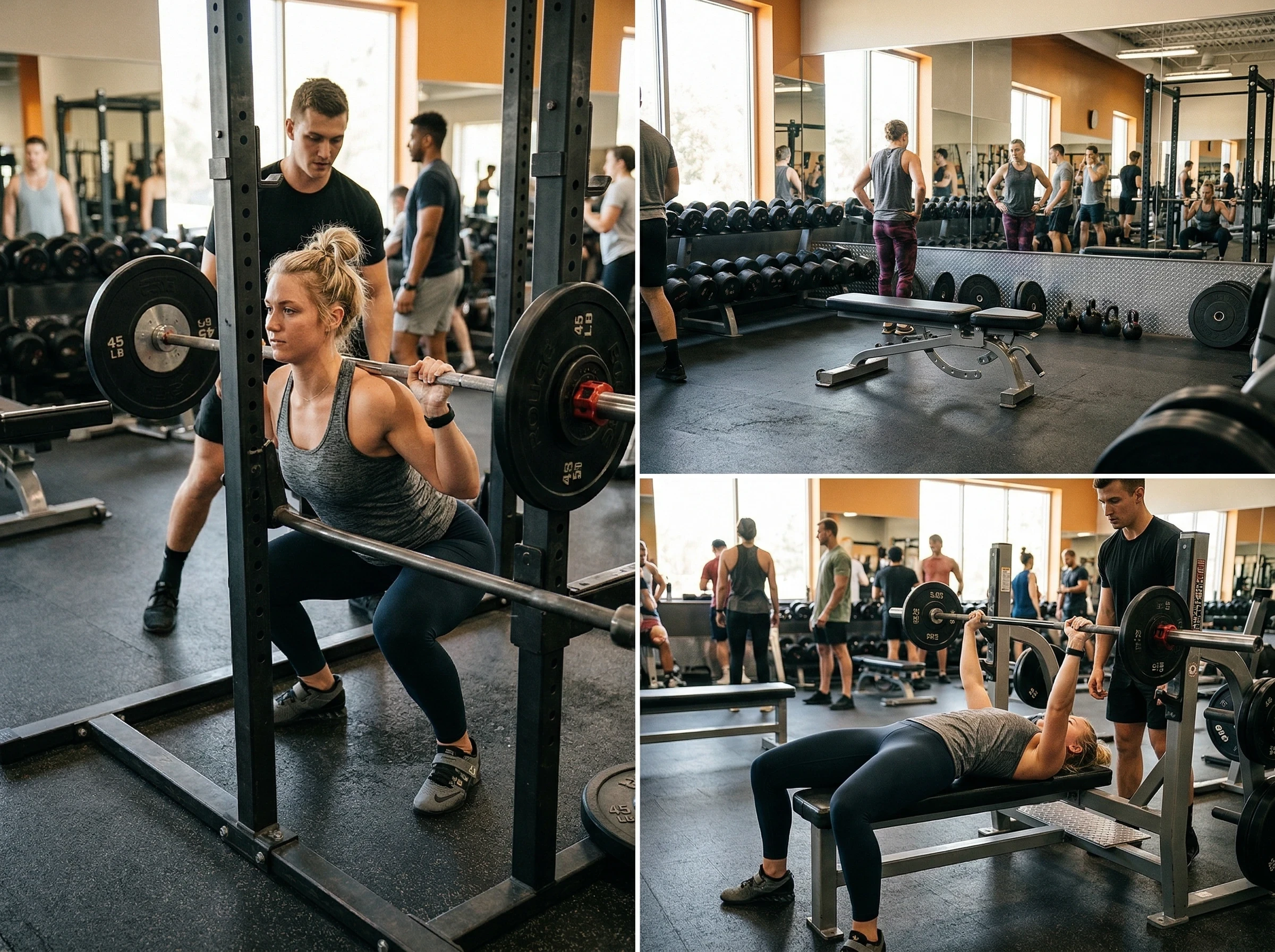
- Stick to full-body workouts that use big compound lifts like squats, deadlifts, bench press, and rows. These exercises work several muscles at once and speed up progress.
Because squats are one of the most technically demanding beginner exercises, learning proper mechanics early is essential for both safety and long-term progress. Beginners can follow this step-by-step barbell squat tutorial to understand correct setup, depth, and execution.
- Track your workouts by writing down what weight, sets, and reps you do. Keeping a journal helps you spot improvements and stay motivated.
- Don’t chase new programs every few weeks. Most beginner programs suggest sticking with the same major lifts for at least 3 to 6 months so you can fully benefit from the “newbie gains” period.
- Focus on form over heavy weight. Good technique keeps you safe and helps the right muscles grow.
- Add healthy foods that support muscle, such as eggs, dairy, whole grains, lean meat, fish, beans, nuts, fruit, and plenty of vegetables. Hydration helps, too.
- Ask for guidance if you’re unsure of a movement or how to organize your workouts. Many gyms offer beginner classes or trainers who can help you establish a routine.
Progress also depends on selecting the right training movements early on. These beginner bodybuilder exercises form the foundation of most effective beginner programs.
Common Beginner Questions About Muscle Building
How long does it take to see muscle growth?
Most beginners notice strength gains first, within 2 to 4 weeks. Visible increases in muscle usually show up after 6 to 12 weeks of consistent training and good nutrition. Changes in your body take time but will show up if you keep at it.
How fast can beginners gain muscle?
Men may gain 10 to 25 pounds of muscle in their first year, while women often gain 6 to 15 pounds when following an effective plan. Progress is fastest in the beginning and slows over time.
How much muscle can a beginner realistically build in one year?
Most research suggests beginners can gain 1 to 2 pounds of muscle per month, especially in the first year. The upper end is more likely for younger men with supportive diets and consistent programs. Women tend to gain muscle a bit more slowly, but steady progress adds up over several months.
Why do beginners gain muscle faster than experienced lifters?
When you first start strength training, your body is not used to the new stress. It quickly builds muscle as a natural protective response. After the initial phase, your muscles become more adapted, so progress slows down and requires even more effort.
Can you build muscle while losing fat?
Many beginners can gain muscle and drop fat at the same time, especially during the first 6 to 12 months of training. This is called body recomposition. As you become more experienced, it gets harder to do both at once, and focusing on one goal at a time may work better.
Getting Started: What You Need to Focus on First
Building muscle as a beginner doesn’t require fancy equipment or advanced techniques. Many beginner strength programs focus on basic movements using free weights, machines, or even bodyweight exercises. These programs are most effective when built around a structured progression system and an appropriate amount of weekly training volume. If you’re unsure how much volume beginners should use, see this guide on Muscle Group Sets Per Week For Beginners. Here are a few beginner friendly programs and ideas that work well for most newcomers:
- Beginner Full-body Program: Three days a week, performing squats, push-ups, rows, and overhead presses, works all major muscle groups and allows enough time for recovery.
- Upper/Lower Split: Alternates between upper-body and lower-body workouts. Many beginner plans recommend four workouts per week, which gives each muscle time to recover.
- Bodyweight-Only Routine: Includes push-ups, pull-ups (or assisted pull-ups), lunges, planks, and glute bridges. Great for home training and getting used to new movements before adding weight.
Whichever beginner workout you choose, the most important part is to follow the program regularly, focus on good form, and slowly increase the challenge as you get stronger. It also helps to understand Beginner Weight Training Sets and Reps so your program stays productive without becoming overwhelming. Keeping your routine simple and sticking with it pays off far more than trying to do everything all at once.
Muscle Recovery: Rest Days and Protein Intake
Rest and recovery matter as much as your workouts. Muscles don’t grow while you’re lifting. They repair and strengthen in the time after your sessions. Most beginners benefit from having at least one or two rest days each week.
Protein is another key part of the muscle building process. Research usually suggests beginners aim for 0.7 to 1 gram per pound of body weight (1.6 to 2.2 g/kg) per day. Good sources include lean meats, eggs, dairy, beans, and protein shakes if you have trouble getting enough from food alone. Spreading protein intake across your meals throughout the day can help your body use it more efficiently for muscle repair. Protein plays a major role in muscle repair and growth. If you’re unsure how much protein you need daily, this guide explains how much protein beginners need to build muscle.
Frequent Mistakes Beginners Should Avoid
- Skipping leg day, which slows overall progress. Training all muscle groups helps everything grow together.
- Doing too much too soon, which leads to soreness, burnout, or even injury.
- Changing programs every month. Sticking to one plan helps you see where you’re making progress.
- Forgetting about sleep and nutrition. Training alone won’t bring results without proper rest and food.
- Letting impatience lead to quitting. Slow, steady work leads to the most noticeable changes over time.
Many new lifters slow their progress by making simple training errors. Learning about common workout mistakes beginners make can help you avoid these setbacks.
Key Takeaways
- Most beginners gain strength within 2–4 weeks, while visible muscle growth typically appears after 6–12 weeks of consistent training.
- Muscle growth is fastest during the first year due to “newbie gains,” then gradually slows over time.
- Progress depends heavily on consistency, proper nutrition, recovery, and progressive overload.
- Building muscle takes time, and unrealistic expectations can lead to frustration or quitting early.
- Focusing on simple habits—training consistently, eating enough protein, and recovering properly—leads to the best long-term results.
Final Thoughts
Building muscle as a beginner is a gradual process that rewards patience, consistency, and simple good habits. Staying realistic about your timeline helps prevent frustration and keeps you focused on long-term progress rather than quick results. If you train consistently, apply progressive overload, eat enough protein, recover properly, and follow a structured plan, your results will come. Muscle growth compounds up over time. What matters most is showing up consistently and trusting the process—one workout at a time.
Beginner Bodybuilding Guides on Lift & Nurture
If you want to understand exactly how to speed up muscle growth as a beginner, these guides will help:
- 3 Day Workout Schedule for Beginners – Structure your weekly workouts
- How to Implement Progressive Overload for Beginners – Learn how to progress safely
- How Much Protein Beginners Need to Build Muscle – Optimize muscle repair and growth
- How Many Calories Should Beginners Eat to Build Muscle? – Support growth with proper nutrition
- Muscle Recovery Tips for Beginners – Improve recovery and performance
- Beginner Weight Training Sets and Reps – Structure your training volume
- Muscle Group Sets Per Week For Beginners – Learn how many sets each muscle group needs per week and how to structure your total training volume for consistent muscle growth.
- Workout Mistakes Beginners Should Avoid – Avoid common training errors
References
Resistance training adaptations and muscle hypertrophy study. Available at: https://pmc.ncbi.nlm.nih.gov/articles/PMC3831787/
About the Author
Angel Carcamo is the founder of Lift & Nurture, a beginner bodybuilding platform focused on structured training, muscle growth fundamentals, and long-term progress.
As a beginner himself, Angel creates content based on evidence-backed principles commonly recommended in strength training, breaking them down into clear, simple steps for new lifters.
His guides focus on key fundamentals like progressive overload, recovery, and nutrition — helping beginners build muscle without confusion, shortcuts, or unrealistic expectations.
Start here: Beginner Bodybuilding Roadmap
Foundation guide: Beginner Bodybuilding Workout Plan (12-Week Foundation Blueprint)
I have been in the health care profession most of my life, never really got into the muscle building side of the profession. Articles and layout of site basic and to the point and very easy to understand.
Continue with the basic and work for more advanced studies. I will continue to watch and learn.
Hi Danny,
Thank you for taking the time to read the article and share your thoughts. I really appreciate hearing feedback from someone with experience in the healthcare field.
You’re absolutely right that the goal of the site is to keep things clear and beginner-friendly. When I first started learning about strength training, I noticed that a lot of fitness information online was either overly complicated or focused on advanced lifters. My aim with Lift & Nurture is to simplify the fundamentals so beginners can build muscle safely and consistently.
You may also notice that some older articles are no longer available. I recently made the decision to rebuild the site from the ground up so that everything focuses specifically on beginner bodybuilding and structured muscle-building principles. Because of that, I removed earlier posts that didn’t fully match the direction I want the site to take long-term.
Right now the focus of the site is helping beginners understand the foundations of muscle growth, including structured workout programs, progressive overload, recovery, and proper nutrition. My goal is to create a resource where someone brand new to strength training can learn the fundamentals step by step without feeling overwhelmed.
Thank you again for your encouragement and for taking the time to leave such a thoughtful comment. I’m glad the content and layout were easy to follow, and I hope the future guides continue to be helpful as the site grows.
Angel
Love the infographics. Good reminders to not be disappointed with immediate gains and to realize it takes consistent effort and plan. Great tips as well, I often get in a rut and stick to the same exact workout. This can lead to boredom and plateauing where I am almost wasting my time. It’s definitely super important to keep increasing intensity and trying new exercises. Great breakdown of what to expect reasonably and how to approach it at a slow, gradual pace. To many people jump in to aggressively and get burned out. Never heard of “Newbie Gains” as a term before but have definitely seen it in others.
Thanks for the thoughtful comment, John — I really appreciate you taking the time to share your experience.
You made a great point about people getting discouraged when they don’t see immediate results. One of the biggest challenges beginners face is expecting rapid changes when muscle building actually happens gradually over months of consistent training, proper recovery, and good nutrition.
I also agree with what you mentioned about sticking to the exact same workout for too long. While consistency is important, small changes over time — like adjusting exercises, increasing weights, or improving training technique — can help prevent plateaus and keep progress moving forward. That’s where progressive overload becomes really important.
You’re also absolutely right that jumping in too aggressively can lead to burnout. For beginners especially, building a sustainable routine that balances effort, recovery, and nutrition tends to work much better in the long run.
Out of curiosity, when you noticed yourself plateauing before, did you find that adjusting your training volume or simply rotating exercises helped the most?
This is a really clear breakdown, especially the timeline. I think a lot of beginners get discouraged in those first few weeks when they don’t see changes yet, even though they’re getting stronger.
One thing I’ve always wondered—when someone isn’t seeing visible changes after that 6–12 week mark, is it usually more of a nutrition issue or a consistency issue with training?
Thank you, Jason — I really appreciate that.
You’re absolutely right that the first few weeks can be discouraging for beginners, especially when strength is improving before visible muscle changes show up. That early phase often feels slow in the mirror even when real progress is happening under the surface.
To your question, if someone still is not seeing visible changes after that 6–12 week mark, it is usually not just one issue by itself. More often, it comes down to a combination of factors, but the biggest ones are usually training consistency, nutrition, and overall recovery.
In a lot of beginner cases, nutrition is the missing piece. Someone might be training hard, but if they are not eating enough total calories or not getting enough protein, muscle growth will be much slower and less noticeable. At the same time, inconsistent training also plays a major role. If workouts are being skipped often, effort is low, or there is no progressive overload, the body does not get a strong enough reason to build new muscle.
Recovery matters too. Poor sleep, high stress, and not taking recovery seriously can make progress much harder to notice, even if training and food are decent.
So in most cases, I would say it is usually a combination issue rather than only nutrition or only training. Beginners who train consistently, apply progressive overload, eat enough protein and calories, and recover well are much more likely to start seeing changes over time.
Thanks again for the thoughtful question.