
By Angel Carcamo, founder of Lift & Nurture. Learn about the author and editorial process.
Most lifters buy supplements before they fix anything else. This guide reverses that order. It is an evidence-based look at the best supplements for muscle growth, which ones the research supports, how to check that a product is what its label says, and how to decide whether you need any of them at all.
The framework comes from the tier approach in The Muscle & Strength Pyramid: Nutrition, Third Edition, a system associated with Dr. Eric Trexler. The explanations, tables and wording here are original. Where newer sources say something different from older guidance, this guide follows the newer source and says so. Everything below is education, not personal medical advice, and the disclaimer at the end applies to every dose mentioned.
Quick answer: Which supplements are actually worth considering?
Creatine monohydrate has the strongest evidence for improving strength, training capacity, and lean-mass gains alongside resistance training, although its additional effect on directly measured muscle growth is relatively small. Protein powder is useful when it helps you meet your daily protein target, but it is not uniquely muscle-building. Caffeine can improve performance during individual workouts, while dietary nitrate and citrulline may offer smaller, more context-dependent benefits. Vitamins, minerals, and omega-3 supplements are most useful when individual dietary or health circumstances justify them. None of these replaces effective training, adequate nutrition, or recovery.
What supplements can and cannot do: the fifth and last layer of the pyramid
In the Muscle & Strength Pyramid, supplements are the top layer, and the layers underneath do most of the work: consistent training, enough total energy, enough protein, and sleep. A supplement may provide an additional benefit, but it cannot compensate for ineffective training, inadequate nutrition, or poor recovery. Even when a supplement works, its contribution is generally much smaller than the progress made possible by consistently applying the fundamentals. A lifter who trains two erratic sessions a week and sleeps five hours will gain more from fixing those two things than from any product.
So “do I need a supplement?” is the wrong first question. Ask whether your base is solid. Before spending money on supplements, evaluate whether your training is sufficiently consistent and appropriately challenging, your calorie and protein intake match your current goal, and your recovery is adequate. For many resistance-trained adults, approximately 0.7 g of protein per pound of body weight per day is a useful evidence-based reference point, although individual needs vary. A calorie deficit may be intentional during fat loss or contest preparation; the objective is to manage it appropriately, not to avoid all deficits. Adults generally need at least seven hours of sleep, and many benefit from more. None of these considerations means a beginner must wait several months before creatine can be effective. If you are unsure about the training part, the guide on training adherence covers how to build a plan you will actually follow.

Supplements can do three things:
- Raise performance in a single session, such as caffeine for a harder workout.
- Add a small, slow benefit over months, such as creatine increasing the work you can do and the lean mass you gain.
- Correct a deficiency, such as vitamin D when blood levels are low.
They cannot replace training stimulus, make up for a calorie shortage, or deliver the results shown in advertising. The most useful habit is to keep two questions separate for every product. The first is whether it helps one workout. The second is whether it changes how much muscle you hold after a year. Many products answer yes to the first and have no evidence for the second.
Placebo, testimonials and self-efficacy: why supplements feel like they work
You can feel a supplement working without it doing anything. Expectation changes perceived effort, motivation and pain tolerance, and those changes are real even when the capsule is inert. In some performance studies, people told they had taken caffeine performed better even when they had not. That makes the placebo effect a genuine, if small, performance factor, which is also why your own impression is a weak test of a product.
Self-efficacy, your confidence that you can complete the lift, is part of the mechanism. A pre-workout ritual can raise it. If a ritual makes you train harder, that is fine, but you should not pay a supplement-level price for something a good playlist might provide.
Testimonials mislead for reasons that have nothing to do with honesty:
- Timing. People start supplements when they are motivated and newly consistent, so progress that would have happened anyway gets credited to the product.
- Regression to the mean. Someone who starts after a bad few weeks will usually improve afterwards.
- Survivorship. The people who saw nothing do not post.
- Incentives. Sponsored athletes and affiliate reviewers are paid when you buy, whatever the product does.
- Hidden drugs. A physique built with anabolic drugs and attributed to a legal supplement says nothing about that supplement.
Controlled trials exist to filter out these effects. When you read a claim, look for a placebo-controlled study in people like you, not a before-and-after photo.
Safety, regulation and contamination: what the FDA does and does not do
In the United States, dietary supplements are regulated under the Dietary Supplement Health and Education Act of 1994. The FDA does not approve supplements for safety or effectiveness before they are sold. Manufacturers are responsible for the safety of their products and the truthfulness of their labels. The FDA can act after a product is on the market, for example by issuing warnings or requesting recalls when a product is found to be adulterated or unsafe. Manufacturers must also follow current good manufacturing practice rules, but compliance with those rules does not guarantee that a given bottle contains what it claims.
Contamination is documented. An often-cited analysis funded by the International Olympic Committee and published in 2004 tested hundreds of supplements from many countries. A meaningful share contained prohormones or steroids that were not listed on the label. Products are made in different facilities with different standards, and cross-contamination between production lines is one route.
Tested athletes carry extra risk. Under the World Anti-Doping Code, athletes are generally responsible for whatever is in their body, whether or not they knew it was in a product. “It was in my supplement” is not a defense. USADA’s Supplement Connect resource states that no supplement can be guaranteed safe or free of prohibited substances, and it directs athletes to risk information and certification programs. If you compete in a drug-tested natural federation, treat that as your situation, because those federations usually run their own testing and banned lists.
Three practical rules follow:
- Choose single-ingredient products when you can, because fewer ingredients means fewer places for a problem.
- Be most skeptical of products that promise muscle gain, fat loss or testosterone increases, because these categories have the most documented adulteration.
- Check any prohibited-substance list that applies to you before using anything, then verify the exact product as described next.
How to verify third-party certification
A third-party certification means an outside organization tested or audited a product. The programs differ in what they check, so a logo alone is not enough.
| Program | What it generally checks | What to remember |
|---|---|---|
| NSF Certified for Sport | Product content, specified contaminants, prohibited substances, and manufacturing controls. | Particularly relevant to tested athletes. Verify the product through NSF’s official database. |
| Informed Sport | Screens every certified product batch for a broad range of prohibited substances; reviews manufacturing systems. | Verify the product, formulation, flavor, and batch or lot number. |
| BSCG Certified Drug Free | Screens finished-product lots for prohibited and other specified drugs; evaluates label claims, quality specifications, and manufacturing controls. | Verify the exact product and certified lot in BSCG’s database. |
| USP Verified | Ingredient identity and amounts, specified contaminants, product breakdown and release, and manufacturing standards. | Focuses on supplement quality, not specifically sport anti-doping certification. |
| ConsumerLab | Independently tests selected supplements for quality, ingredient content, purity, and other product-specific criteria. Also offers a voluntary Quality Certification Program. | Publishes product reviews and certified-product listings. Qualifying products can carry an authorized approval seal. Its quality approval is not equivalent to sport-specific prohibited-substance screening. |
Verification takes three steps. Search the certifier’s official database for the exact product and applicable formulation, flavor, or batch information. Some programs provide batch- or lot-specific verification, while others certify products using different testing and surveillance procedures. Check the information required by that particular program rather than assuming every certification uses the same system. Confirm the listing is current. Then check that the Supplement Facts panel lists the dose you intend to take. Certification lowers risk, and it does not remove it or prove the product works.

The five evidence tiers explained
The following table paraphrases the evidence-tier framework discussed in The Muscle & Strength Pyramid: Nutrition, Third Edition. These classifications are specific to the outcome being evaluated and can change as new, higher-quality research becomes available.
| Tier | Meaning | Bodybuilding application |
|---|---|---|
| Tier 1 | Strong, consistent evidence demonstrates reliable and practically meaningful benefits for the outcome being evaluated. | Creatine monohydrate for muscle and strength development. |
| Tier 2 | Evidence supports a benefit, but the effects may be smaller, less consistent, more specialized, or supported by less long-term research. | Caffeine, dietary nitrate, citrulline, EPA/DHA, and targeted micronutrients in appropriate circumstances. |
| Tier 3 | Evidence remains insufficient to determine conclusively whether a supplement meaningfully helps, has no effect, or causes harm for the stated purpose. | Emerging or uncertain bodybuilding applications of products such as ashwagandha, betaine, collagen, and ginger. Beta-alanine also fits here at best for conventional strength and hypertrophy goals. |
| Tier 4 | Sufficient evidence suggests that the supplement does not provide a practically meaningful benefit for a particular application. | BCAAs for additional muscle growth when complete protein intake is sufficient; HMB for improving typical resistance-training adaptations. |
| Tier 5 | Sufficient evidence establishes that the ingredient itself is harmful to health or performance for the application being evaluated. | Requires an ingredient-specific finding of harm, rather than categorizing every contaminated or poorly labeled product as Tier 5. |
The tiers describe evidence for particular outcomes, not a universal ranking of every possible use of an ingredient. For example, a substance may have meaningful benefits for sustained endurance exercise without meaningfully improving muscle hypertrophy. A Tier 3 classification means uncertainty, not proven ineffectiveness. Tier 4 means sufficient evidence of no practically meaningful benefit for the stated use. Tier 5 means demonstrated harm from the substance itself. Contamination, undeclared drugs, and inaccurate product labels are serious safety concerns that should be evaluated separately from these efficacy tiers.
Evidence classifications can change as new, higher-quality research becomes available. Within the MSP3 framework, creatine monohydrate is the only Tier 1 supplement for muscle and strength development. Tier 2 products should be considered according to the reader’s actual goals and circumstances rather than automatically added to a supplement routine.
Tier 1: Creatine monohydrate
Creatine monohydrate is the only Tier 1 supplement for lifters. Muscle stores creatine as phosphocreatine, which helps regenerate ATP during short, hard efforts. Raising stores allows slightly more work per session, and over months that extra work accumulates. The International Society of Sports Nutrition (ISSN) position stand on creatine (2017) concludes it is the most effective supplement available for increasing high-intensity exercise capacity and lean mass during training.
Acute versus long-term. Creatine is not a stimulant and you do not feel it working in a single workout. Its benefit is long-term and cumulative: more reps at a given load across weeks, and a modest advantage in strength and lean mass over a training block.
The size of creatine’s effect also depends on what researchers measure. A 2024 meta-analysis of resistance-training studies in adults younger than 50 reported approximately 1.14 kg greater gains in lean body mass with creatine than with resistance training alone. However, lean body mass includes water and other nonfat components; it is not identical to newly developed muscle tissue. A separate meta-analysis using direct measurements such as ultrasound, MRI, and CT found a very small average additional hypertrophy effect. Creatine therefore has a strong evidence base for improving strength, training capacity, and lean-mass outcomes, but it should not be presented as producing dramatic additional muscle growth.
Dosing. The standard maintenance dose is 3 to 5 g of creatine monohydrate per day, taken whenever is convenient. Timing relative to the workout has not been shown to matter much, so consistency is the thing to aim for. Without loading, muscle stores take about four weeks to fill. Loading is optional: the research protocol is about 0.3 g per kg of bodyweight per day for 5 to 7 days (about 24 g per day for an 80 kg adult, split into four doses), followed by the maintenance dose. Loading gets you to the same place faster and can upset the stomach.
Water weight. Creatine draws water into muscle cells, so a small rise in bodyweight in the first weeks is expected. It is not fat. A lifter cutting for a weigh-in or a show should know this and plan for it.
Safety questions.
- Kidneys. Research in healthy people at recommended doses has not shown kidney harm. Creatine can raise blood creatinine, which is a marker doctors use, so tell your doctor you take it. Anyone with kidney disease should get medical advice first.
- Hair loss. Concerns about creatine and hair loss largely originated from a small 2009 study reporting increased dihydrotestosterone (DHT), without directly measuring hair loss. A 2025 randomized controlled trial involving resistance-trained men examined DHT and hair-related outcomes after 12 weeks of creatine use and found no significant differences compared with placebo. This provides additional reassurance, although the relatively small study and limited duration cannot establish every possible long-term outcome in every population. Current evidence does not support claiming that ordinary creatine supplementation causes hair loss.
- Stomach upset. More likely with large single doses, which is another reason to skip loading if you are sensitive.
Vegetarians and vegans. Dietary creatine comes mainly from meat and fish, so people who do not eat them tend to have lower muscle creatine at baseline. The same dose is used, and some research suggests vegetarians may respond more. Creatine monohydrate produced by synthesis is generally vegan-friendly, but check the capsule shell and any additives.
Age caution. Most research is in adults. People under 18 should not adopt adult supplement routines, and a pediatrician should be involved in any decision. This is education for adults, not a recommendation for minors. The American Academy of Pediatrics published updated guidance in October 2026 emphasizing a food-first approach and caution with creatine use among teenagers. This differs in emphasis from some sports-nutrition reviews discussing supervised adolescent use, so adult recommendations should not automatically be extended to minors.
Pick plain creatine monohydrate. Other forms cost more and have not shown an advantage. Verify the specific product through a certifier if you are tested.
Tier 2: Caffeine
Caffeine is the best-supported acute performance aid on this list. The ISSN position stand on caffeine (2021) reports benefits for muscular strength, muscular endurance, and many types of exercise performance at doses of 3 to 6 mg per kg of bodyweight, taken about 60 minutes before training.
Acute versus long-term. The effect is acute. It can make a session feel easier and let you do a little more. There is no good evidence that caffeine itself increases long-term muscle growth. The plausible route is indirect: better sessions, repeated over time. That route is unproven, and it is cancelled if caffeine wrecks your sleep.
Doses. For an 80 kg lifter, 3 mg per kg is 240 mg and 6 mg per kg is 480 mg. The FDA states that for healthy adults, up to 400 mg a day (about four or five cups of coffee) is generally not associated with dangerous negative effects. The top of the research range therefore exceeds that guidance for a heavier lifter, and there is no reason to go there when a lower dose may do. Start low, around 2 to 3 mg per kg, and stay at the lowest dose that helps. Sensitivity varies a lot between people, and pregnant lifters and anyone with a heart condition or anxiety should get medical advice before using it.
Never use pure caffeine powder. The FDA warns that a single teaspoon of pure powdered caffeine is equivalent to about 28 cups of coffee, and it is easy to overdose when measuring by hand.
Sleep. Caffeine has a half-life of roughly five hours in many adults, and it varies by person. A controlled study found that 400 mg taken six hours before bedtime still reduced sleep time. If you train in the evening, caffeine can cost you the sleep that drives recovery. A common approach is a cutoff early enough that the dose has mostly cleared by bedtime, and for evening training, skipping it.

Not a fat burner. Caffeine has a small effect on energy expenditure, and it is not a reliable fat-loss tool. Its benefit during a diet is the same as at any other time: it may help training quality. For fat loss itself, see the guides on energy balance and cardio. Regular caffeine users may develop tolerance to some subjective stimulant effects, and abruptly stopping caffeine can produce withdrawal symptoms. However, research does not consistently show that habitual caffeine intake eliminates its performance-enhancing effects during resistance exercise. Sleep quality, individual sensitivity, total daily intake, and the magnitude of the benefit remain more important considerations than assuming a regular caffeine user must continually increase the dose.
Tier 2: Dietary nitrate and beetroot
Dietary nitrate is found in leafy greens and beets. Bacteria in the mouth convert it to nitrite, and the body can then convert nitrite to nitric oxide, which widens blood vessels and affects how muscle uses oxygen. Dietary nitrate has been studied for both endurance and muscular performance. A 2025 umbrella review covering 20 systematic reviews with meta-analyses found beneficial effects on several outcomes, including muscular endurance and peak power, while other performance outcomes showed inconsistent or nonsignificant results. For bodybuilders, these findings support a possible acute performance benefit, especially for muscular endurance, but they do not establish that nitrate supplementation produces greater long-term muscle hypertrophy or strength adaptations.
Food first. Beets, spinach, arugula and other leafy greens are high-nitrate foods you can eat daily. A diet that regularly supplies meaningful quantities of nitrate-rich vegetables may make a separate nitrate supplement unnecessary. However, nitrate concentrations vary among foods, and simply eating a small serving of vegetables does not guarantee an intake equivalent to that used in performance studies.

Research dose and verified content. Studies typically use around 6 to 8 mmol of nitrate taken two to three hours before exercise. One millimole of nitrate is 62 mg, so that is about 370 to 500 mg. Beetroot products vary widely in how much nitrate they actually contain, so the nitrate figure on the label matters more than the serving size or the word “beetroot.” If the label does not give nitrate in mg or mmol, you cannot compare it to the research dose.
Oral bacteria. Because oral bacteria help convert nitrate into nitrite, antibacterial mouthwash may reduce nitrate-related effects. This is an interaction worth understanding, not a reason to stop a mouthwash prescribed or recommended for dental health. Anyone using medically directed oral-care products should discuss potential changes with their dental professional.
Tier 2: L-citrulline and citrulline malate
Citrulline is an amino acid that the kidneys convert to arginine, which the body uses to make nitric oxide. Marketing claims it gives bigger pumps and more reps. The evidence is mixed, and the effect on repetitions in trials is small at best.
The two nitric oxide routes work differently:
| Comparison | Nitrate pathway | Citrulline pathway |
|---|---|---|
| Starting material | Dietary nitrate from beets and greens | L-citrulline, from supplements or watermelon |
| Key steps | Nitrate → nitrite (needs oral bacteria) → nitric oxide | Citrulline → arginine (in the kidneys) → nitric oxide |
| Main research focus | Endurance and blood pressure | Repetitions to failure and perceived effort |
| What can interfere | Antibacterial mouthwash | Low doses, or a dose miscalculated from the label |
Research protocols. Studies examining resistance-training performance commonly use approximately 6–8 g of citrulline malate or 3–4 g of plain L-citrulline, often around 60 minutes before exercise. Other doses and protocols have also been investigated. Meta-analyses suggest that any acute performance improvements are generally small and not consistently observed across every outcome. These research protocols are educational references, not universal dosing requirements or proof of long-term hypertrophy benefits.
Label differences. Citrulline malate combines citrulline with malate, but the actual composition can differ by product. If a product genuinely contains citrulline and malate in a 2:1 ratio by mass, 8 g of that mixture would theoretically provide approximately 5.3 g of citrulline. Do not assume every commercial product accurately follows this ratio. Plain L-citrulline and citrulline malate are not interchangeable gram-for-gram. A pre-workout that lists “citrulline malate” inside a proprietary blend may contain far less than either research dose, and you cannot tell how much. Check whether the label gives the form and the amount.
Acute versus long-term. Any effect is acute, and no good evidence shows citrulline changes muscle growth over months. It is a reasonable optional add-on for people who like it, with limits on expectations. Mild stomach upset is the most commonly reported side effect.
Tier 2: EPA and DHA
EPA and DHA are omega-3 fatty acids found mainly in fatty fish. They have established links to heart and general health. For muscle growth in young, healthy lifters, the evidence is much weaker. Some trials, mainly in older adults, suggest effects on muscle protein synthesis, and results in younger lifters are inconsistent. The strongest reason to consider EPA and DHA is general health, particularly if you rarely eat fish.
Food first. The Dietary Guidelines for Americans recommend at least about 8 ounces of seafood per week. Salmon, sardines, trout and mackerel are the usual high-EPA/DHA choices. Meeting seafood recommendations can contribute meaningfully to EPA and DHA intake, but the actual amount depends on the types and portions of fish consumed. Whether additional supplementation is useful depends on dietary intake, health circumstances, and the intended outcome—not merely whether someone eats seafood twice per week.
Reading a fish oil label. The number on the front is often total oil, and EPA plus DHA is a smaller part of it. A capsule labeled 1,000 mg fish oil can contain well under half that as EPA plus DHA. The Supplement Facts panel lists them separately, and that is the figure to use. Vegetarians and vegans can use algal oil, which provides DHA and sometimes EPA directly from algae.
Current intake and safety guidance. The NIH Office of Dietary Supplements notes that there is no established recommended dietary allowance specifically for EPA and DHA. Intakes used in research depend on the outcome and population, and there is no universal EPA/DHA dose that every bodybuilder needs for muscle growth. The MSP3 framework discusses approximately 1–3 g/day of combined EPA and DHA in relevant contexts, adjusted for habitual fatty-fish intake. This is not an automatic recommendation to supplement at that amount.
The NIH’s current omega-3 fact sheet reports that the FDA has concluded dietary supplements providing no more than 5 g/day of combined EPA and DHA are safe when used as recommended. That safety assessment is not an ideal target dose and does not mean higher intakes are beneficial or appropriate for every person. It also should not be confused with older guidance that referenced 3 g/day combined EPA/DHA and no more than 2 g/day from supplements.
Atrial fibrillation and individualized safety. Some large randomized trials involving people with cardiovascular disease or elevated cardiovascular risk found a slightly increased risk of atrial fibrillation with approximately 4 g/day of omega-3 supplementation over several years. This matters particularly for readers with heart-rhythm conditions or other cardiovascular risk factors. Potential medication interactions and bleeding-related concerns should also be reviewed individually. Do not treat a high research dose as a general health recommendation.
Tier 2: Vitamins and minerals
Vitamins and minerals are individualized: they help when you are deficient and generally do little when you are not. A multivitamin may help address certain dietary shortfalls, but it is not guaranteed insurance against nutrient deficiencies, disease, or poor performance. Whether it is useful depends on an individual’s dietary intake, health circumstances, and the product’s ingredients and dosages.
Deficiency-driven. The common ones for lifters are vitamin D, iron, B12, calcium, zinc and magnesium, with the risk depending on diet and circumstances. Vegans need a reliable B12 source, either a supplement or fortified foods. Menstruating lifters have a higher iron requirement than men, and endurance and low-calorie training can add to it. Lifters who spend little time in sunlight may have low vitamin D.

Testing sensibly. Ask a doctor about blood tests if you suspect a deficiency, such as persistent fatigue, frequent illness or a restrictive diet. NIH ODS describes vitamin D below 12 ng/mL (30 nmol/L) as deficient, and iron is tested through markers such as ferritin and hemoglobin. Guessing is a poor method, particularly for iron.
Risks of excess. For generally well-nourished adults without specific deficiencies or increased needs, routinely taking vitamins or minerals has not been established as a reliable strategy for improving bodybuilding performance. The U.S. Preventive Services Task Force also recommends against using beta-carotene or vitamin E supplements specifically for the primary prevention of cardiovascular disease or cancer in the population covered by its recommendation. These findings do not negate appropriately targeted treatment of nutrient deficiencies.
More is not better. The upper limits for adults are set by the Institute of Medicine and reported by NIH ODS: 100 mcg (4,000 IU) per day for vitamin D, 45 mg per day for iron, and 40 mg per day for zinc. Excess iron is especially risky for people who do not need it, and high zinc can cause copper deficiency over time. The Recommended Dietary Allowance (RDA) is an intake target designed to meet the needs of nearly all healthy people in a particular age and sex group; it is not a toxicity threshold. The Tolerable Upper Intake Level (UL), when established, represents a different concept: the highest chronic daily intake unlikely to cause adverse effects for most people in the applicable group. UL values generally include intake from food, beverages, and supplements unless stated otherwise. Some medically supervised treatments appropriately exceed an RDA or even a UL for a specific period. The objective is to avoid unnecessary supplementation and excessive total intake, particularly of nutrients such as iron, vitamin D, and zinc. The guide to micronutrients for bodybuilding covers food sources for each.
Overrated, unsupported or context-dependent
These products are heavily marketed. Each is judged here for what it is claimed to do.
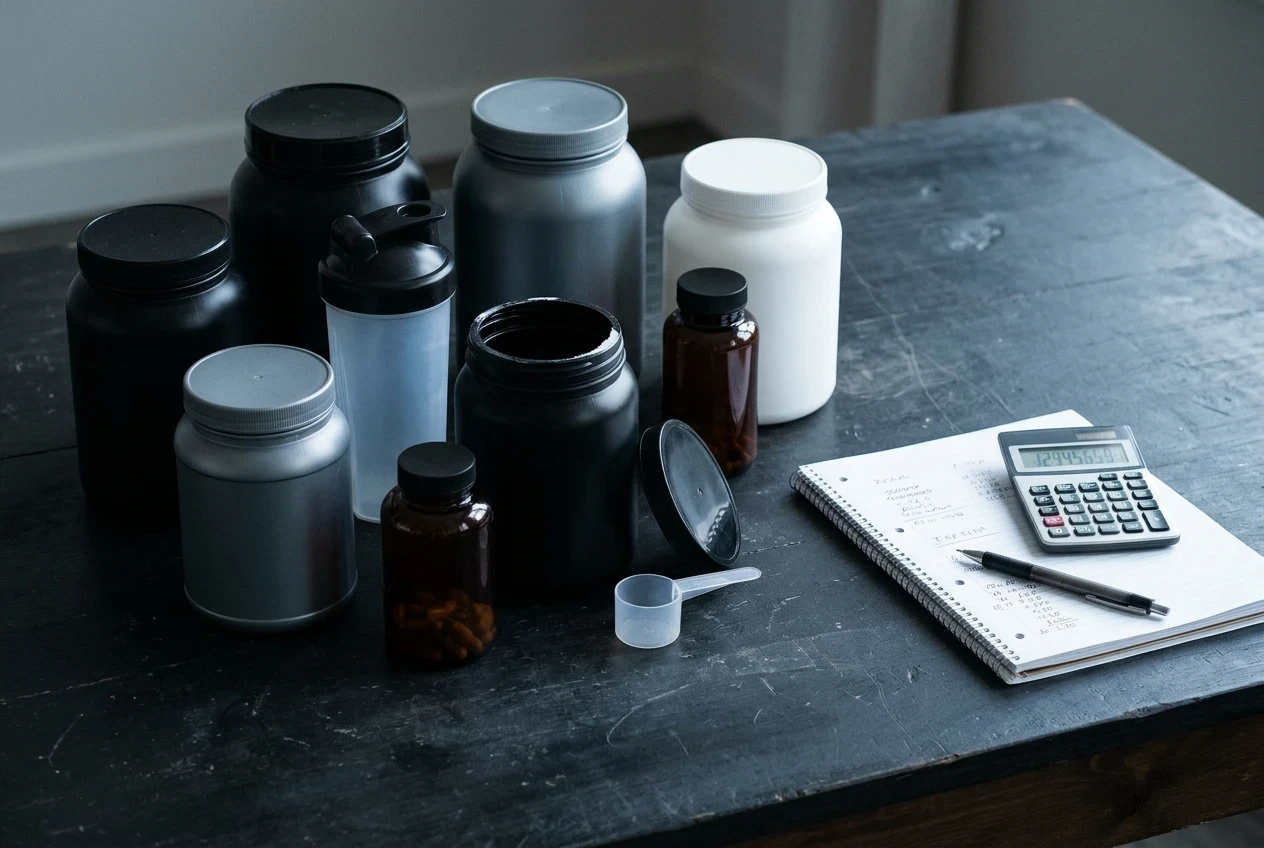
- BCAAs. If your daily protein is adequate, extra branched-chain amino acids add nothing in the evidence reviewed here, because complete protein already contains them. They are an expensive way to buy a small fraction of what protein provides.
- HMB. Beta-hydroxy beta-methylbutyrate is a leucine metabolite promoted for reducing muscle breakdown and increasing muscle growth. Early research attracted considerable interest, but later meta-analyses have not demonstrated a reliable, practically meaningful additional improvement in strength or body composition among typical resistance-training populations. The MSP3 framework places HMB in Tier 4 for muscle and strength development. This classification addresses its proposed bodybuilding effects, not every possible clinical application.
- Beta-alanine. Beta-alanine increases muscle carnosine, which helps buffer changes in acidity during sustained, high-intensity exercise. Its effectiveness depends heavily on the exercise task and duration. A 2024 meta-analysis reported clearer performance benefits during maximal efforts lasting approximately 4–10 minutes. These findings do not establish meaningful improvements in conventional bodybuilding hypertrophy or strength outcomes, and meta-analytic evidence has not established a body-composition advantage. The MSP3 framework classifies beta-alanine as Tier 3 at best, potentially Tier 4, for typical muscle and strength goals. It may be more useful in sports involving longer sustained high-intensity efforts.
- Ashwagandha. Some small trials report improved strength or recovery, but study quality is limited. Rare reports of liver injury exist, and people who are pregnant or have thyroid or autoimmune conditions should avoid it unless a doctor agrees.
- Betaine. Results on strength and power are mixed.
- Collagen. Collagen is not a complete protein suitable for replacing high-quality dietary protein sources for maximizing muscle protein synthesis. Interest in collagen peptides for connective-tissue adaptation, training recovery, and other outcomes is developing, but these applications should be evaluated separately from muscle hypertrophy. Current evidence does not justify treating collagen as an established muscle-building supplement. The MSP3 authors identify collagen as an emerging area of research rather than an established Tier 1 or Tier 2 bodybuilding supplement.
- Ginger. Ginger has been investigated for exercise-related soreness and several health and body-composition outcomes, but the relevance and magnitude of its benefits for long-term bodybuilding adaptations remain uncertain. Ordinary culinary consumption and taking a concentrated supplement are not equivalent interventions. Ginger should not be presented as a proven hypertrophy supplement or automatically assigned Tier 4 without sufficient outcome-specific evidence.
- Testosterone boosters. Ingredients such as tribulus and D-aspartic acid have not reliably raised testosterone or muscle in trained people. Some products in this category have been found to contain undeclared drugs, which makes them a particular risk for tested athletes.
- Fat burners. Most are stimulant blends with modest effects and documented adverse events, including racing heart and sleep disruption. Fat loss comes from an energy deficit.
- Proprietary blends. Labels list the blend’s total weight but not the amount of each ingredient, so you cannot compare against any research dose. The expensive ingredients may be present in token amounts.
A supplement that fits more than one of these categories, such as a stimulant-heavy testosterone booster sold as a blend, is a clear signal to skip it.
Protein powder: a convenient food, not a special supplement
Protein powder is sold as a dietary supplement, but nutritionally it is best understood as a convenient source of dietary protein rather than a special muscle-building substance. Whey, casein, soy, pea, and other protein sources supply amino acids that contribute to the body’s protein requirements. Different sources vary in amino-acid composition, digestibility, convenience, and cost. A protein powder is useful when it makes meeting an appropriate daily protein target easier; it does not possess a unique anabolic advantage simply because it comes in powdered form.

Whey and casein are dairy proteins, and soy, pea and blended plant proteins suit vegans. The ISSN position stand on protein (2017) supports that protein distributed through the day, from food or powder, is what matters for muscle. If your overall protein intake and quality already meet your needs, adding more protein powder is unlikely to provide a meaningful additional muscle-building advantage merely because it is a supplement. The guide to macronutrients for bodybuilding covers targets for every level, and the nutrient timing guide covers whether the timing of your protein matters.
If you compete in a tested federation, protein powder can be contaminated like any other supplement, so third-party certification applies here too.
The supplement decision framework: ten questions and five possible verdicts
Answer these in order for any product you are considering.
- Is my base solid? Consistent training, adequate protein, no unplanned energy deficit, sleep of seven hours or more.
- What specific problem am I trying to solve? Name it in one sentence.
- Is the benefit acute or long-term? Match this to your goal.
- What tier is the evidence? Use the table above.
- Does food do the same job? If yes, food comes first.
- Do the research dose and population match me? Consider age, sex, training status and diet.
- Are there safety or medical concerns? Medications, conditions, pregnancy, age under 18.
- Do I compete in a drug-tested federation? If so, what substances and products are prohibited under that federation’s rules, and what additional precautions are appropriate? Independent sport-specific certification is an important risk-reduction strategy, but it does not guarantee safety or replace checking the federation’s current requirements.
- Is this exact product verified, and does the label show the research dose? Check the certifier’s database.
- How will I judge it, and when will I stop? Change one thing at a time, and set a review date.
The five verdicts:
| Verdict | Meaning |
|---|---|
| Take it | Strong evidence, no conflicts, product verified |
| Take it with limits | Useful in a defined context, with a dose or timing cap |
| Test first | Only if a blood test or a doctor shows a need |
| Food first, skip for now | The base or diet should be fixed before spending |
| Avoid | Weak evidence, safety risk, or hidden contents |
If you reach question 10 without a clear plan, the verdict is “food first, skip for now.” The guide on how to know if you are building muscle helps with judging results.

Real-world scenarios
Beginner. Creatine monohydrate is the one reasonable consideration, once training and protein are consistent. Beginners gain quickly without any supplement, so skipping everything is also a sound verdict.
Advanced lifter. Gains come slowly, so small effects matter more. Creatine fits first. Caffeine suits hard sessions if sleep is protected. Beyond that, most products are unlikely to be worth the cost.
Dieting or contest prep. Supplements cannot compensate for low energy availability. Creatine continues to work, and caffeine may help training quality but can interfere with sleep and increase stress. Diuretics and “cutting” products carry risk and are best avoided.
Natural competitor. Review your federation’s current prohibited-substance list, testing policies, and eligibility requirements before using any supplement. Prefer products with transparent ingredients and reputable, sport-specific third-party certification; verify the relevant product and batch information when the certifier provides it. Single-ingredient products can simplify evaluation, but they are not automatically contamination-free, and certification does not eliminate anti-doping risk. Keep relevant purchase records, packaging, and batch information. Avoid assuming that a product permitted by one bodybuilding federation is automatically permitted by another.
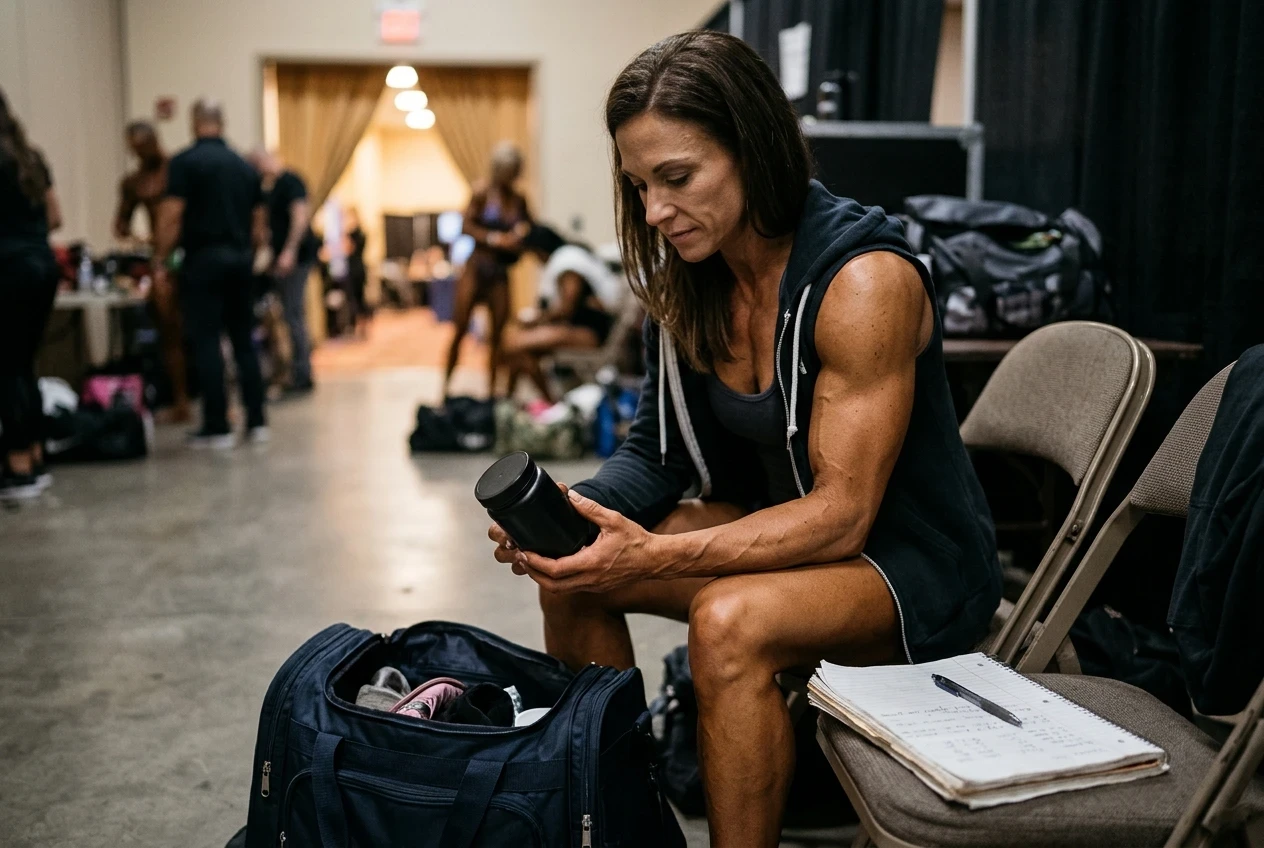
Vegan lifter. The priorities are a reliable B12 source, protein from varied plants, and creatine, since baseline stores tend to be lower. Algal oil can replace fish oil. Vitamin D, iron, zinc and iodine are worth testing or reviewing with a doctor.
Late-day trainee. Skip caffeine or use a lower dose with an early cutoff. Creatine and citrulline do not interfere with sleep in the same way. Stimulant-free pre-workouts are an option if you verify the label.
Documented deficiency or a predictable dietary gap. Targeted supplementation can be important when a deficiency is identified or when dietary assessment reveals a reliable need. For example, vitamin B12 supplementation or an adequate supply of fortified foods is essential for many people following fully vegan diets, even before symptoms develop. Other examples include medically evaluated iron or vitamin D deficiency. Testing should be selected according to symptoms, dietary history, risk factors, and professional judgment rather than performed indiscriminately for every nutrient.
Master comparison table
| Supplement | Tier | Main use | Research intake or dose (adults) | Acute vs. long-term | Limits and safety | Food-based option |
|---|---|---|---|---|---|---|
| Creatine monohydrate | Tier 1 | Strength, high-intensity training capacity, and lean-mass gains. | 3–5 g/day; optional loading approximately 0.3 g/kg/day for 5–7 days, followed by maintenance. | Chronic benefits; additional directly measured hypertrophy generally small. | Muscle-associated water-weight increase, possible GI upset; medical advice with kidney disease. | Meat and fish provide smaller quantities. |
| Caffeine | Tier 2 | Acute muscular endurance and sometimes strength and power. | Often 3–6 mg/kg around 60 minutes before training; lower doses may help. | Acute performance; additional long-term hypertrophy unproven. | Sleep disruption, palpitations, anxiety; FDA’s approximately 400 mg/day reference for most healthy adults still matters. | Coffee and tea. |
| Dietary nitrate / beetroot | Tier 2 | Potential acute muscular endurance and power improvements. | Approximately 6–8 mmol (370–500 mg) nitrate, around 2–3 hours before exercise. | Acute; long-term hypertrophy unproven. | Outcomes depend on protocol and population; verify nitrate content; antibacterial mouthwash can interfere. | Beets, spinach, arugula, and other nitrate-rich vegetables. |
| L-citrulline / citrulline malate | Tier 2 | Possible small improvements in repetitions and perceived exertion. | Approximately 3–4 g L-citrulline or 6–8 g citrulline malate, often 60 minutes before exercise. | Acute; additional long-term muscle growth unproven. | Forms are not interchangeable gram-for-gram; verify the formula and amount; GI discomfort possible. | Watermelon supplies citrulline, usually in much smaller practical amounts. |
| EPA and DHA | Tier 2, context-specific | General health, omega-3 adequacy, and possible modest recovery benefits. | No universal bodybuilding dose; MSP3 discusses approximately 1–3 g/day combined EPA/DHA in selected circumstances, considering dietary intake. | Longer-term nutritional and health outcomes; hypertrophy unproven. | Higher-dose trials raise atrial-fibrillation concerns in some cardiovascular-risk populations; consider medication interactions. | Fatty fish; algal oil is a non-fish supplemental alternative. |
| Vitamins and minerals | Tier 2, when needed | Correct an identified deficiency, inadequate intake, or individualized need. | Individualized through medical or dietary assessment. | Longer-term correction of inadequate nutrient status. | Excessive intake can be harmful; consider RDA, UL, interactions, and total intake. | Appropriate foods and fortified foods. |
| Beta-alanine | Tier 3 at best; potentially Tier 4 for conventional bodybuilding | Potential benefit during sustained high-intensity efforts; not established for typical hypertrophy. | Research commonly uses 4–6 g/day in divided doses over several weeks for relevant performance outcomes. | Muscle carnosine increases over weeks; bodybuilding adaptations unproven. | Tingling may occur; usefulness depends on exercise duration and intended outcome. | No equivalent practical food-based performance protocol. |
| BCAAs | Tier 4, when complete protein is adequate | Marketed for additional muscle growth without convincing extra benefit at sufficient protein intake. | No additional bodybuilding dose warranted with adequate protein. | No reliable added hypertrophy advantage in this context. | Limited value compared with complete protein. | Complete protein foods and powders. |
| HMB | Tier 4 for typical muscle and strength goals | Marketed to reduce muscle breakdown and improve strength and lean mass. | No routine bodybuilding dose recommendation warranted by the evidence reviewed. | Reliable additional long-term training adaptations not established. | Classification applies to typical bodybuilding outcomes, not every clinical application. | Appropriate dietary protein and effective training remain priorities. |
| Protein powder | Protein food; not an efficacy tier | Conveniently helps meet daily protein requirements. | Use as needed to reach an appropriate individual protein target. | Supports adaptations through total dietary protein. | Not uniquely anabolic when protein needs are already met; tested athletes should verify product certification. | Meat, fish, dairy, eggs, soy, legumes, and other protein foods. |
The quantities shown are research-based examples for adults, provided for education rather than individualized prescription. Evidence tiers refer to specific applications, not every possible use of an ingredient. Tier 5 examples are intentionally omitted because assigning that tier requires evidence of harm from the ingredient itself.
Where supplements fit in the Lift & Nurture system
Fix these first, in this order:
- Training. A realistic, consistent plan you will follow. See how to build a bodybuilding program.
- Nutrition. Energy intake and protein that match your goal, covered in the nutrition guides on macronutrients, micronutrients and nutrient timing.
- Recovery. Sleep and stress management, covered in the Lifestyle pillar.
- Competition. If you compete, your federation’s rules shape what you can use, and the Competition pillar covers prep.
Then, and only then, ask whether one supplement passes the checklist. For pre-session nutrition that may overlap with caffeine or nitrate, see pre-workout nutrition for muscle growth.
Any product link on this site is a convenience, and the tier assigned to an ingredient does not depend on it.
How we evaluate supplement recommendations. Lift & Nurture evaluates supplement ingredients according to their scientific evidence, practical usefulness, safety, and relevance to bodybuilding goals. Evidence for an ingredient is assessed separately from the quality of any particular brand or product. Where affiliate links are used, the site may earn a commission from qualifying purchases at no additional cost to the reader. Affiliate compensation does not determine an ingredient’s evidence tier or establish that a product is effective. Readers should independently review ingredient amounts, current certification status, price, and suitability before making a purchase.
Sources, further reading and educational disclaimer
Sources to check directly:
- The Muscle & Strength Pyramid: Nutrition, Third Edition, for the tier framework associated with Dr. Eric Trexler.
- NIH Office of Dietary Supplements fact sheets, including Omega-3 Fatty Acids, Vitamin D, Iron, Zinc, and Dietary Supplements for Exercise and Athletic Performance.
- FDA pages on dietary supplement regulation and on caffeine (the 400 mg guidance and the warning on pure caffeine powder).
- USADA Supplement Connect.
- Certifier databases: NSF Certified for Sport, Informed Sport, BSCG, USP Verified, ConsumerLab.
- ISSN position stands: creatine (Kreider and colleagues, 2017), caffeine (Guest and colleagues, 2021), protein (Jäger and colleagues, 2017), and beta-alanine (Trexler and colleagues, 2015).
- Gencer and colleagues, Circulation, 2021, on omega-3 supplementation and atrial fibrillation.
- Geyer and colleagues, 2004, on undeclared prohormones in supplements.
- Dietary Guidelines for Americans, for seafood recommendations.
Research on supplements changes, so check the current version of each source before relying on any figure.
Educational and medical disclaimer. This article is for education only and is not medical advice, diagnosis or treatment. Doses are research figures for healthy adults, not recommendations for you. Talk to a doctor or registered dietitian before starting any supplement, especially if you are pregnant, under 18, take medication, or have a medical condition. Adult doses should not be given to minors. No supplement is guaranteed free of prohibited substances, and tested athletes remain responsible for what they take. This site does not promise results.
Before you buy anything, audit your training, protein, sleep and consistency; then, if a supplement still passes the ten-question checklist, verify the exact product with the certifier’s official database.