This guide is general education on micronutrients for bodybuilding and is not individualized medical advice. Anyone with a medical condition, who takes medication, is pregnant, or is considering supplements at doses above food levels should check with a doctor or registered dietitian first.
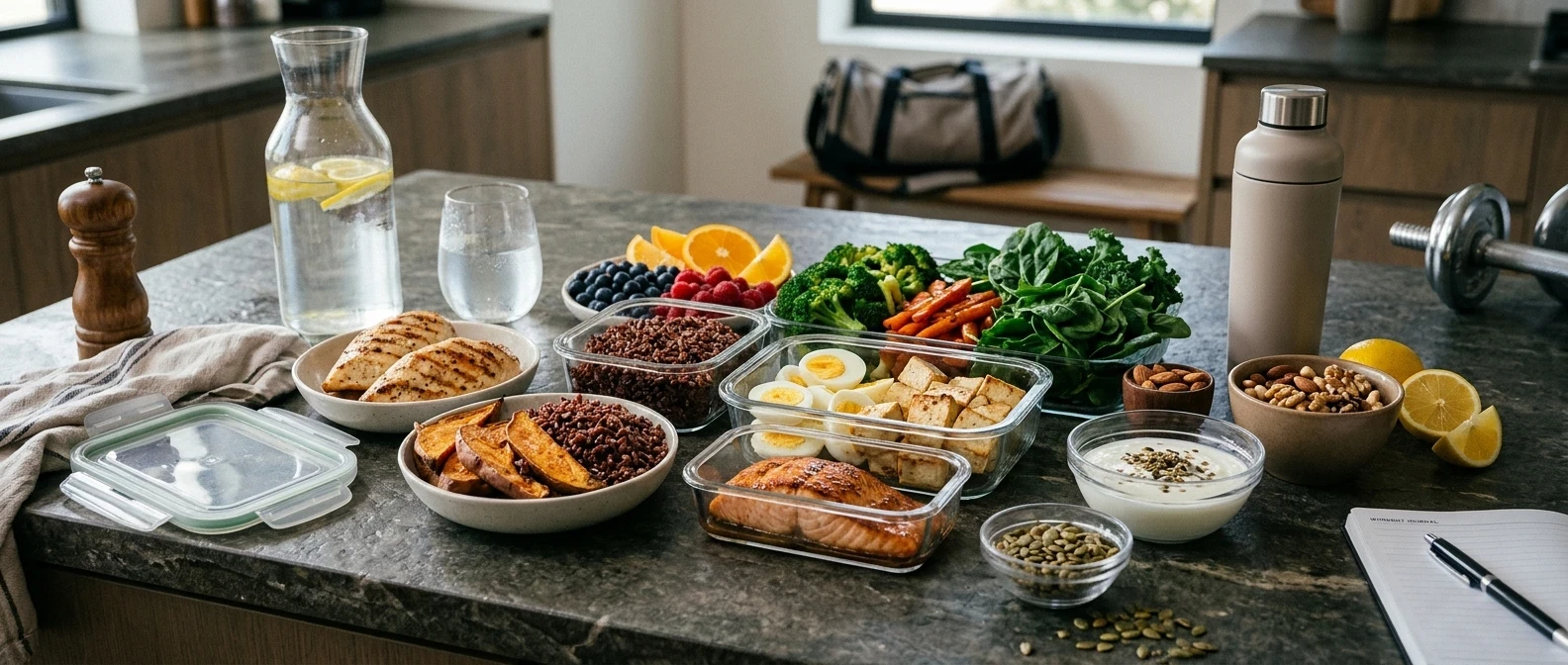
Calories, protein and training get most of the attention in bodybuilding. The vitamins, minerals, fiber and fluids that sit behind them get far less, even though a shortfall in any of them can affect how you train, recover and feel. This guide covers each one in plain terms, with portions and targets you can use in a real week of eating.
Three labels run through the article so you can tell how much weight a claim deserves:
- Strong evidence: supported by consistent research or by major health authorities.
- Moderate or mixed evidence: research points one way but is limited, or applies mainly to other populations.
- Practice heuristic: a common rule of thumb among lifters and coaches that is reasonable but not well tested.
What You’ll Learn
By the end you will know:
- What micronutrients are, which ones matter most for lifters, and where to find them in food
- How to check whether your intake is adequate, and when a supplement makes sense
- What the US, UK and WHO guidelines agree on, and where bodybuilding needs differ
- How to build a plate for easy, moderate and hard training days
- What plant-based lifters need to watch
- How much fiber, fruit, vegetables, fluid and sodium to aim for
- How to use a daily checklist and a 7-day plan
Micronutrients Are Foundational, Not Optional
Protein, carbohydrate and fat are macronutrients, and you eat them in gram quantities. Micronutrients are needed in milligrams or micrograms, but they run the chemistry that turns those macros into results. They take part in energy production, oxygen transport, muscle contraction, nerve signaling, bone maintenance and immune function.
Strong evidence: Outright deficiency of a micronutrient impairs performance and health. Iron deficiency reduces oxygen delivery to tissue, which shows up as poor training capacity and fatigue. Low calcium and vitamin D over time weaken bone. Low potassium and magnesium affect muscle and nerve function.
Moderate evidence: Once you are meeting your needs, extra vitamins and minerals do not improve muscle growth or strength in any dependable way. The benefit comes from fixing a gap, and the supplement aisle sells the idea that more is always better. It is not, and several micronutrients have upper limits above which harm is possible.
This matters for bodybuilders in particular because the usual way of eating works against variety. Repeating the same few meals is practical and makes tracking easy, but it narrows the range of foods you eat. Dieting narrows it further. When calories drop during a cut, the amount of food drops with them, and so does the chance of hitting every nutrient by accident. Planning for micronutrients is cheap insurance, and it costs little more than choosing different vegetables and a few other foods.
What Are Micronutrients? Vitamins, Minerals and Electrolytes
Micronutrients fall into groups, and knowing which group a nutrient belongs to tells you how your body handles it.
Vitamins
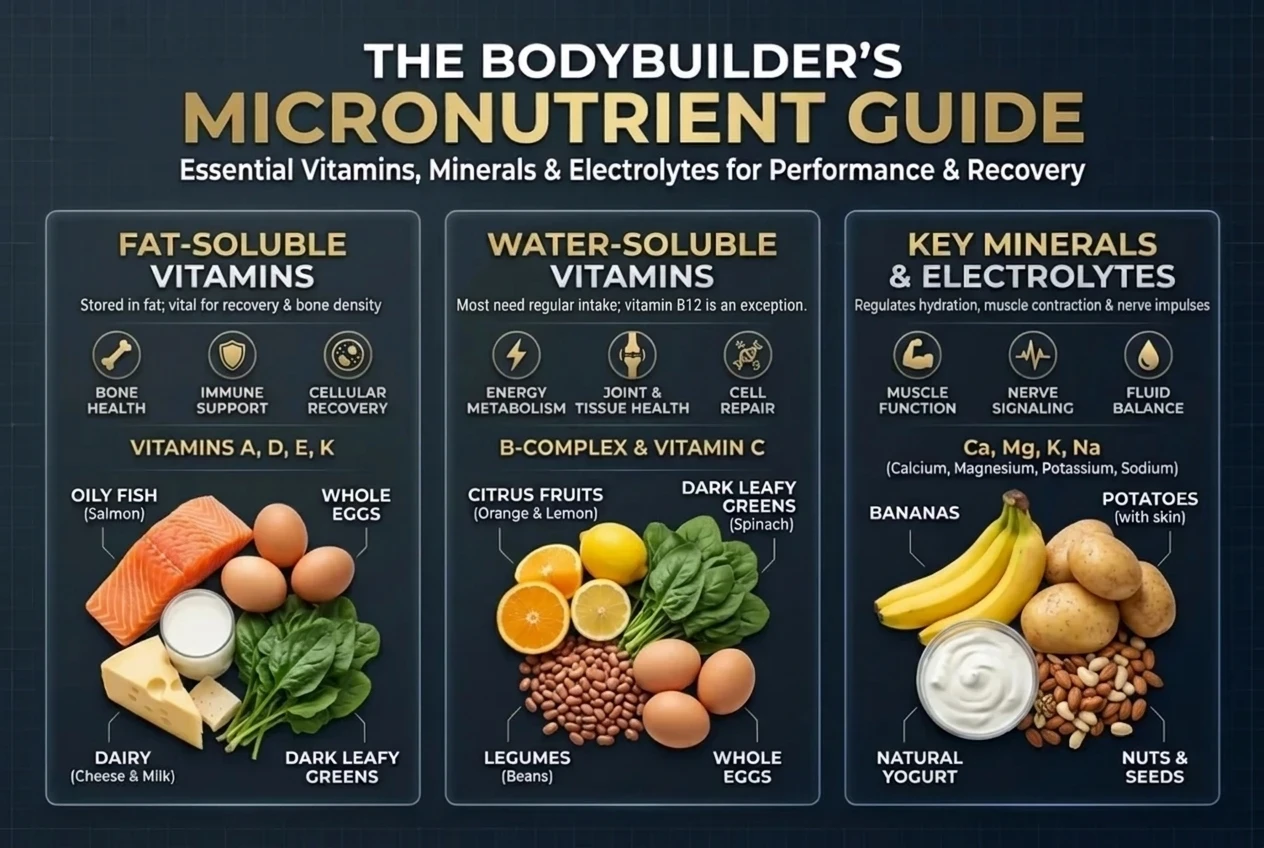
Fat-soluble vitamins (A, D, E, K) dissolve in fat and are stored in body tissue. Storage means a short run of low intake rarely causes problems, and it also means excess can accumulate. Vitamin D is the one lifters most often hear about: it supports bone health and muscle function, and the body makes it from sunlight on skin. People at higher latitudes, with darker skin, or who cover up or spend most of the day indoors can run low, particularly in autumn and winter. UK public health advice is for adults to consider a 10 microgram (400 IU) vitamin D supplement during those months.
Water-soluble vitamins (C and the B vitamins) are not stored in large amounts, apart from B12, so you need them regularly. B vitamins help release energy from food, make red blood cells and support the nervous system. Vitamin C supports collagen formation and iron absorption. Excess is usually excreted, though very high supplement doses can cause side effects.
Minerals
Major minerals are needed in larger amounts: calcium, phosphorus, magnesium, sodium, potassium and chloride. Trace minerals are needed in tiny amounts but are just as essential: iron, zinc, iodine, selenium, copper and manganese. Iron and zinc deserve the most attention in lifters’ diets, because shortfalls are more common there than in others, particularly for menstruating women and for people who eat little meat.
Electrolytes
Electrolytes are minerals that carry an electrical charge in body fluid: sodium, potassium, chloride, magnesium and calcium. They control fluid balance, nerve signals and muscle contraction. You lose them in sweat, sodium and chloride mostly, and you replace them through food and drink. The sodium section below covers them in more detail.
A Note on Antioxidant Supplements
Moderate evidence: Some trials found that high-dose vitamin C and E supplements blunted certain training adaptations. Not every trial agrees, but the pattern is enough to favor getting antioxidants from fruit, vegetables and other whole foods rather than from large-dose pills, unless a clinician has recommended otherwise.
Practical Micronutrient Reference Table
The table lists adult intake targets from the US Dietary Reference Intakes (NASEM). Targets vary by age, sex and life stage, and the values below are for adults aged roughly 19 to 50 unless stated. Meals and food sources matter more than hitting a figure to the milligram.
| Nutrient | Why lifters care | Adult target per day | Common food sources |
|---|---|---|---|
| Vitamin A | Vision, immune function, skin | 900 mcg RAE men, 700 mcg women | Sweet potato, carrots, eggs, liver |
| Vitamin D | Bone health, muscle function | 15 mcg (600 IU); upper limit 100 mcg (4,000 IU) | Oily fish, eggs, fortified foods, sunlight |
| Vitamin E | Antioxidant, cell membranes | 15 mg | Nuts, seeds, plant oils |
| Vitamin K | Blood clotting, bone | 120 mcg men, 90 mcg women | Leafy greens, broccoli |
| Vitamin C | Collagen, iron absorption | 90 mg men, 75 mg women | Peppers, citrus, berries, kiwi |
| Folate | Red blood cells, DNA synthesis | 400 mcg DFE | Legumes, leafy greens, fortified grains |
| Vitamin B12 | Nerves, red blood cells | 2.4 mcg | Meat, fish, dairy, eggs, fortified foods |
| Calcium | Bone, muscle contraction | 1,000 mg | Dairy, fortified plant milk, calcium-set tofu, canned fish with bones |
| Iron | Oxygen transport | 8 mg men, 18 mg women (to age 50); upper limit 45 mg | Red meat, lentils, beans, fortified cereal |
| Magnesium | Muscle and nerve function, energy | 400–420 mg men, 310–320 mg women | Pumpkin seeds, legumes, whole grains, greens |
| Zinc | Immune function, protein synthesis | 11 mg men, 8 mg women; upper limit 40 mg | Meat, shellfish, legumes, seeds |
| Potassium | Fluid balance, muscle contraction | 3,400 mg men, 2,600 mg women (adequate intake) | Potatoes, beans, bananas, yogurt, leafy greens |
| Iodine | Thyroid hormone | 150 mcg | Iodized salt, fish, dairy |
Two points make the table more useful. First, “upper limit” figures for supplements exist for a reason: high-dose zinc can cause copper deficiency, and extra iron without a diagnosed need can cause harm. Second, these are population targets. Your individual needs may differ. A qualified healthcare professional can evaluate suspected deficiencies using dietary history, symptoms, and appropriate laboratory testing when indicated. Not every nutrient deficiency can be reliably identified with a single blood test.
Ensuring Adequate Micronutrient Intake
The most reliable approach is to eat a wide range of whole foods and then check for gaps. Three layers cover most people.
Layer 1: Variety by color and category
Practice heuristic: Each day, include foods from these groups: leafy or cruciferous vegetables, orange or red vegetables or fruit, a legume or whole grain, a dairy or fortified alternative, a source of animal or plant protein, and nuts or seeds. Rotating choices week to week covers more nutrients than any single “perfect” meal. A fuller shopping list is in the muscle building grocery list for beginners.
Layer 2: Check with a food log
A tracking app that displays micronutrients can show where you are consistently low. Treat the numbers as approximations: food databases vary and absorption differs. If one nutrient shows up low across a week or two, add a specific food for it rather than chasing precision. Low calcium might mean adding yogurt or fortified soy milk. Low magnesium might mean adding pumpkin seeds or beans.
Layer 3: Supplements, only where there is a reason
Strong evidence: Supplements correct diagnosed deficiencies and cover known gaps. Vitamin B12 for vegans, vitamin D in low-sun months, and iron for diagnosed iron deficiency are the standard examples.
Moderate evidence: A basic multivitamin can act as insurance for people on restricted diets, such as a long cut or a very limited food list. It does not improve performance in people who are already meeting needs, and it does not replace food variety.
Where supplements go wrong: Stacking several fortified products (a multivitamin, a pre-workout, a protein powder with added minerals, fortified cereal) can push some nutrients, such as zinc, vitamin A as retinol, or niacin, past the upper limit without you noticing. Add up what you take from all sources before adding anything new.
Healthy Eating Guidelines: What Does the Evidence Say?
Bodybuilders sometimes assume general health guidelines do not apply to them. For the foods that provide micronutrients, they largely do. The bodybuilding-specific changes are mostly about protein, total energy and meal timing.
US Dietary Guidelines for Americans 2025-2030
The 2025–2030 Dietary Guidelines for Americans, released in January 2026, emphasize nutrient-dense foods, including protein sources, vegetables, fruits, whole grains, dairy or suitable alternatives, and healthy fats. They also encourage limiting highly processed foods, added sugars, and excess sodium.
For a 2,000-calorie reference diet, the guidelines recommend approximately:
- Vegetables: 3 servings per day.
- Fruit: 2 servings per day.
- Whole grains: 2–4 servings per day.
These amounts should be adjusted to individual energy requirements. The general sodium recommendation is below 2,300 mg daily for people aged 14 and older, although highly active individuals with substantial sweat losses may require individual adjustments.
Official source: https://realfood.gov/guidelines
UK Eatwell Guide
The NHS Eatwell Guide shows proportions on a plate: plenty of fruit and vegetables (at least 5 portions a day, with a portion about 80 g), starchy carbohydrate foods with higher fiber options preferred, protein foods including beans, pulses, fish, eggs and meat, dairy or fortified alternatives, and small amounts of unsaturated oils. It advises limiting foods high in fat, salt and sugar, and suggests 6 to 8 cups or glasses of fluid a day.
WHO healthy diet guidance
The World Health Organization recommends at least 400 g of fruit and vegetables a day, free sugars under 10 percent of energy intake, total fat under 30 percent, saturated fat under 10 percent, trans fat under 1 percent, and under 5 g of salt (about 2 g sodium) per day. Its potassium guideline for adults is at least 3.5 g per day.
Healthy Diet Indicator 2020
TheHealthy Diet Indicator is a scoring approach that rates how closely a diet matches WHO-based targets for items such as fruit, vegetables, fiber and limits on sugar, sodium and processed meat. A higher score means a closer match. It is useful as a self-audit, and the same target categories show up in the checklist below. Because versions differ in the details of how each item is scored, treat it as a framework rather than a rule.
The 2020 Healthy Diet Indicator includes the following quantitative scoring criteria:
| Dietary element | Scoring criterion |
|---|---|
| Fruits and vegetables | ≥400 g/day |
| Beans and other legumes | More than 0 g/day |
| Nuts and seeds | More than 0 g/day |
| Whole grains | More than 0 g/day |
| Dietary fiber | More than 25 g/day |
| Total fat | Less than 30% of daily energy |
| Saturated fat | Less than 10% of daily energy |
| Sodium | Less than 2 g/day |
| Free sugars | Less than 10% of daily energy |
| Processed meat | 0 g/day |
| Unprocessed red meat | Less than 71 g/day |
Important: These are criteria used by a particular diet-quality scoring system, not absolute requirements for every bodybuilder. In particular, a zero-gram scoring criterion does not mean that one occasional serving of processed meat automatically causes harm. Similarly, the total-fat criterion is not a universal bodybuilding macronutrient prescription. Overall dietary quality and long-term eating patterns remain the priorities.
Where the guidelines agree
All four sources point to the same core: more vegetables, fruit, legumes and whole grains; less sodium, added sugar and processed foods. These recommendations apply to lifters and non-lifters alike, so they are a safe baseline.
Where bodybuilding differs
- Protein: Higher than general guidelines. This site uses about 0.7 g per pound (1.6 g per kg) of bodyweight as a starting point for most lifters.
- Total energy: Higher when gaining, lower when cutting, which changes how many micronutrients fit in the day.
- Carbohydrate timing and fiber: Often adjusted around training for comfort, covered below.
- Sodium and water around a show: Competitors sometimes manipulate these, and the evidence for doing so is limited.
Building a Bodybuilder’s Plate: Easy, Moderate and Hard Training Days
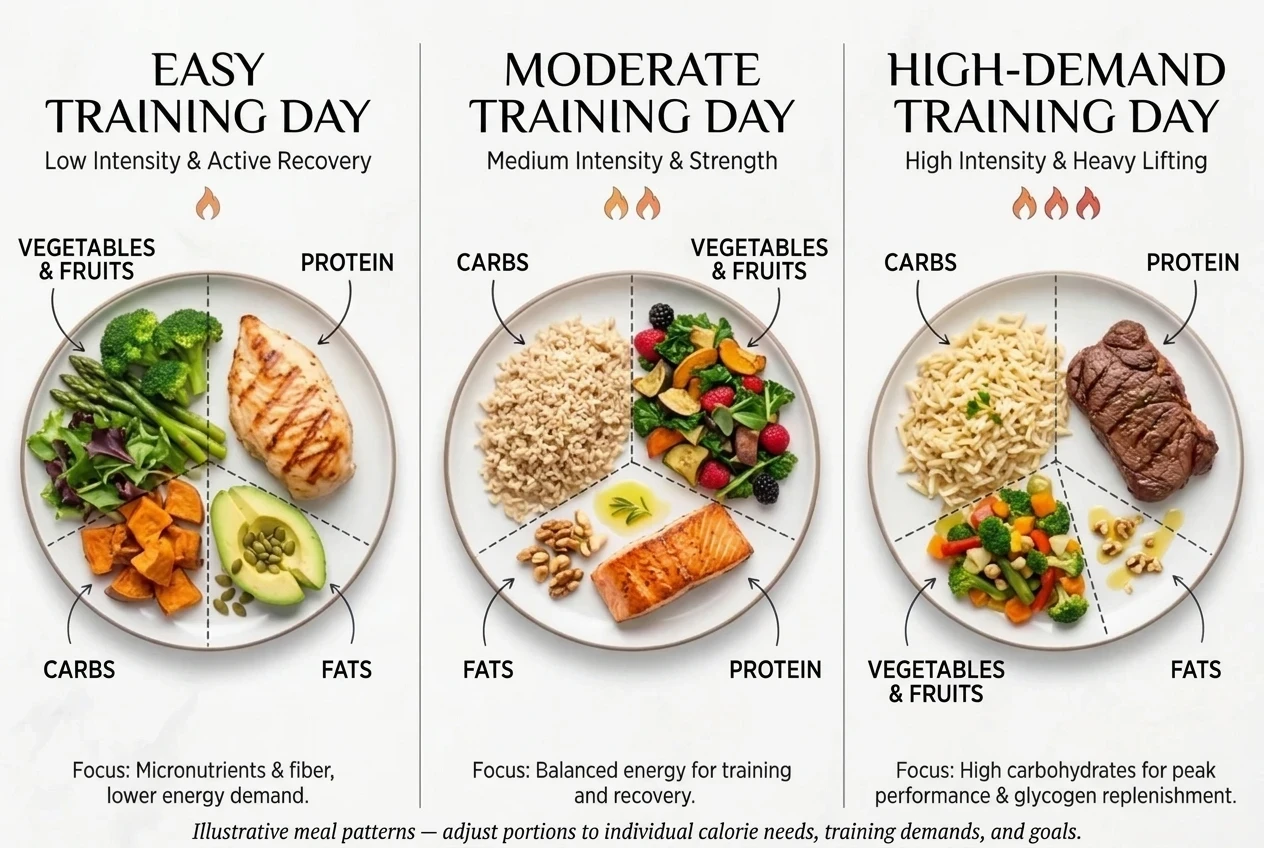
A plate model puts the micronutrient advice into practice without counting everything. The proportions below are practice heuristics: scale the total amount of food to your calorie needs, and keep the structure.
Every meal:
- A palm- to two-palm-sized portion of protein (meat, fish, eggs, dairy, tofu, tempeh, legumes)
- One to two fist-sized portions of vegetables or fruit
- A small serving of fat (oil, nuts, avocado, or the fat that comes with the protein)
- A carbohydrate portion that varies by training day
Easy days (rest, light activity): Vegetables take up about half the plate. Carbohydrate is a smaller portion, and it comes mostly from high-fiber sources like beans, oats, whole grains and potatoes with skin. Fiber and fruit are easiest to hit here because meals are smaller and less rushed.
Moderate days (standard lifting session): Vegetables take about a third to a half of the plate, with a larger carbohydrate portion around the session. Place most of the carbohydrate in the meals before and after training, and choose lower-fiber options if heavy fiber upsets your stomach in a session. Meal ideas are in pre-workout nutrition for muscle growth.
Hard days (high-volume sessions, legs, two-a-days): The carbohydrate share rises further, and fluids and sodium matter more because sweat losses are higher. Fruit and vegetables still need to appear, and they are easier to fit in as juice-free options like berries, bananas, cooked vegetables in a rice dish, or a smoothie that blends whole fruit with greens.
After a session, a mix of protein, carbohydrate and vegetables works well. See what to eat after the gym for muscle recovery for ideas.
Plant-Based Bodybuilding Considerations
Plant-based lifters can build muscle effectively when total protein and calories are adequate. The micronutrient planning differs, because several nutrients are scarce or less absorbable from plants.
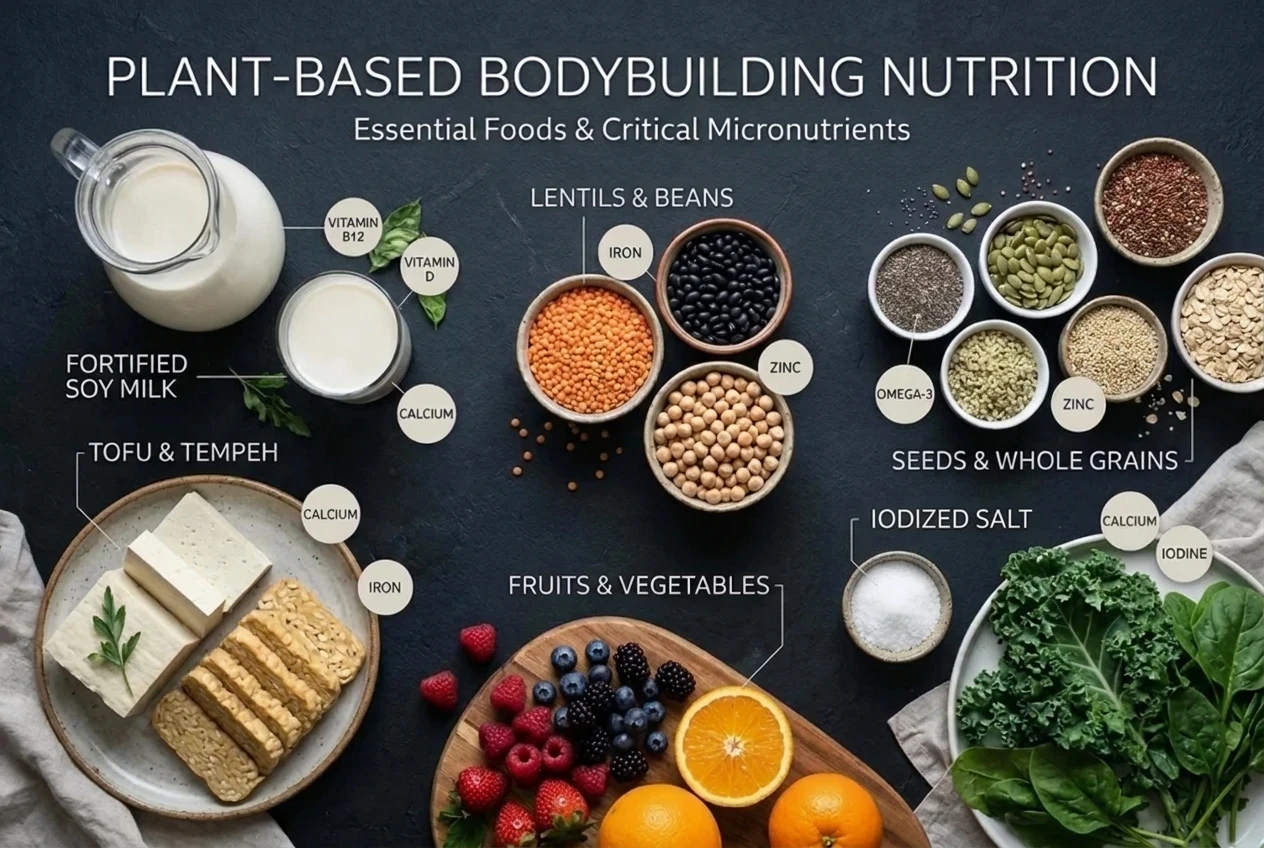
Vitamin B12 (strong evidence): Plants do not reliably supply it. A B12 supplement or fortified foods are necessary for vegans, not optional.
Iron: Plants provide non-heme iron, which is absorbed less efficiently than the heme iron in meat. Vegetarian and vegan targets are higher than the standard figure in the table. Eat iron-rich foods (lentils, beans, tofu, fortified cereals) with a vitamin C source like peppers or citrus, and avoid drinking tea or coffee with the meal.
Zinc: Phytates in grains and legumes reduce zinc absorption. Soaking, sprouting and fermenting reduce phytate, and eating zinc-rich foods such as seeds, legumes and tofu daily helps.
Calcium: Choose calcium-fortified plant milks, calcium-set tofu, and certain greens such as kale and bok choy.
Iodine: Unless you use iodized salt, seaweed in controlled amounts or a supplement, intake can be low.
Vitamin D and omega-3: Vitamin D follows the same sun and season rules as everyone. Direct sources of the long-chain omega-3 fats EPA and DHA come from fish and from algae-based supplements.
Fiber: Plant-based diets are naturally high in fiber, which helps overall health but can make hitting calorie targets harder during a bulk. Using more refined carbohydrate options, blended foods, oils and nut butters helps.
A plant-based lifter does not need a stricter checklist than anyone else, but should confirm B12, iron, zinc, calcium, iodine and omega-3 are covered, and consider a blood test with a clinician.
Dietary Fiber: Why Bodybuilders Need It
Dietary fiber consists of carbohydrates that are not fully digested in the small intestine. Traditionally, fiber has been classified as soluble or insoluble. Some soluble fibers dissolve in water and form gels, while many insoluble fibers contribute to stool bulk and bowel regularity. However, these categories do not completely explain how different fibers behave.
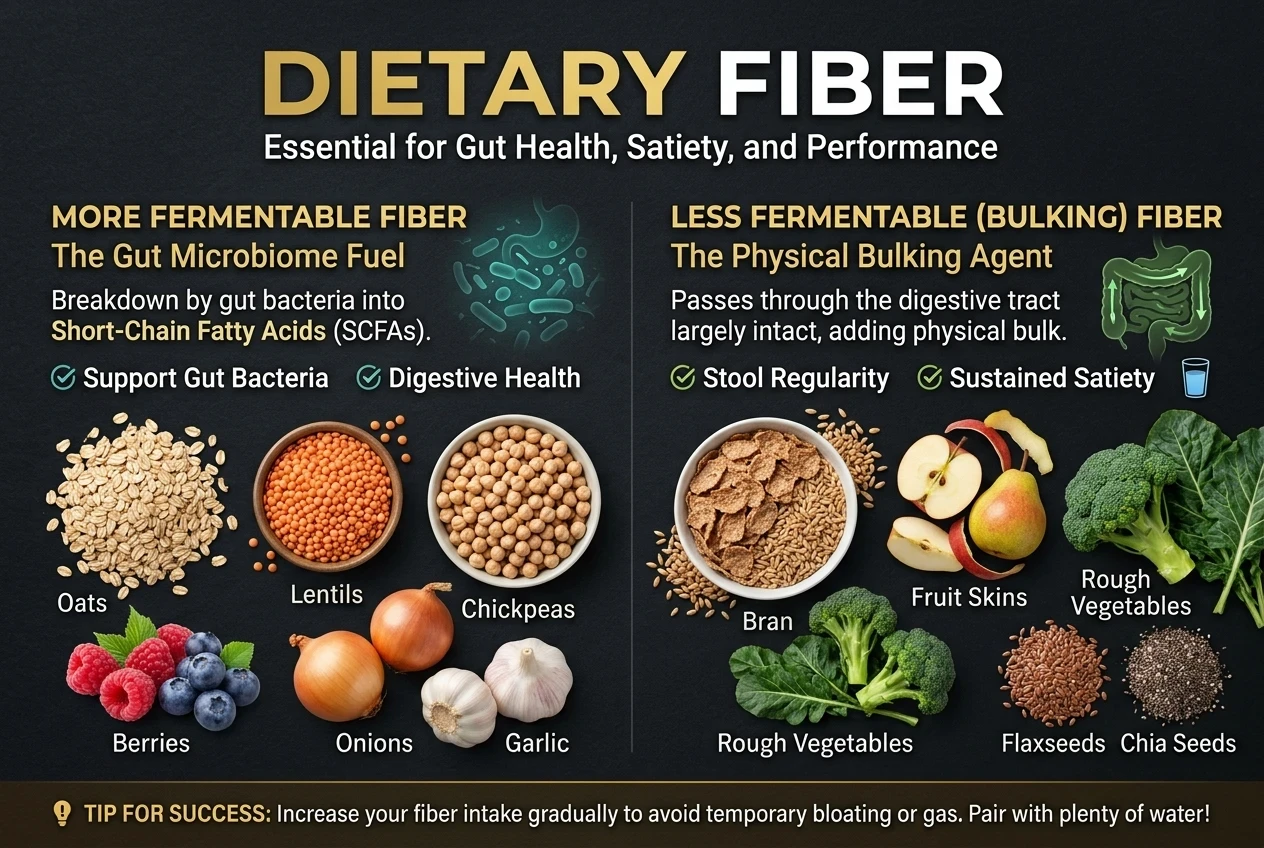
Another useful distinction is fermentability: how readily gut microorganisms can break down a particular fiber. Certain fermentable carbohydrates, sometimes called microbiota-accessible carbohydrates (MACs), can be used by intestinal microorganisms to produce compounds such as short-chain fatty acids.
Foods containing more readily fermentable carbohydrates include onions, garlic, lentils, chickpeas, and certain other legumes. Less fermentable fibers, including some components of bran and fruit skins, can contribute to stool bulk. However, individual foods often contain multiple types of fiber, so these are examples rather than rigid classifications.
Both fermentable and less fermentable fibers can support digestive health. More fermentable foods may cause greater gas or bloating in susceptible individuals, especially when intake increases suddenly. The most practical approach is to consume a variety of fiber-rich foods and adjust sources, amounts, and timing according to digestive tolerance.
Strong evidence: Higher fiber intake is associated with lower risk of cardiovascular disease, type 2 diabetes, colorectal cancer and early death. A large analysis of observational studies and trials published in The Lancet found benefits were greatest when comparing the lowest and highest intakes, with a notable gain at 25 to 29 g per day. Fiber also supports regular bowel movements and feeds gut bacteria.
Moderate evidence: Fiber increases fullness and lowers the energy density of meals, which helps with appetite on a cut. Observational data and some trials support this, but fiber is not a fat-loss tool by itself.
Practice heuristics specific to lifters:
- High-fiber foods before a session can cause bloating or discomfort in some people. Lowering fiber in the meal before training, and keeping it high at other meals, is a simple adjustment. Test it on regular training days.
- During a bulk, very high fiber can make it hard to eat enough calories because meals are filling. Mixing in lower-fiber foods helps.
- Competitors sometimes lower fiber in the final days before a show to reduce stomach content. Evidence for this is limited, and it should be practiced in the off-season, not tried for the first time at a show.
Exactly How Much Fiber Should You Eat?
A widely used U.S. dietary reference is approximately 14 g of fiber per 1,000 calories, while the World Health Organization recommends at least 25 g daily for adults. These provide useful general-health benchmarks.
For bodybuilding meal planning, The Muscle & Strength Pyramid: Nutrition also describes a practical rule of thumb: begin with an average of approximately 20 g/day at 1,500 calories, then add about 1 g of fiber for each additional 100 calories.
| Daily calories | Practical MSP3-derived target |
|---|---|
| 1,500 kcal | 20 g |
| 1,600 kcal | 21 g |
| 2,000 kcal | 25 g |
| 2,500 kcal | 30 g |
| 3,000 kcal | 35 g |
| 3,500 kcal | 40 g |
This is a flexible planning heuristic, not a universal requirement. Very high fiber intakes are not necessarily better, particularly if they cause bloating, cramping, excessive fullness, or difficulty meeting calorie targets.
MSP3 suggests approximately 40 g/day as a conservative general planning ceiling unless higher intakes are already well tolerated. This is not an established toxic upper limit. Individual needs and tolerance should guide adjustments.
How to raise fiber without problems (practice heuristic):
- Increase gradually, by roughly 5 g per week, so your gut can adapt.
- Drink more fluid as fiber goes up. Fiber with little fluid can cause constipation.
- Spread fiber across meals instead of loading one meal.
- Swap before you add: choose whole-grain bread over white, beans over a portion of rice, fruit with skin over juice.
Easy sources: oats (about 4 g per cup cooked), lentils and beans (about 7 to 8 g per half cup), raspberries, pears, broccoli, chia seeds, whole-grain bread and potatoes with the skin. Food labels show exact amounts.
Very high-fiber diets can slightly reduce absorption of some minerals, such as iron and zinc. This matters mainly if those nutrients are already low, which is another reason to check intake.
Do Fiber Calories Count?
Some dietary fibers are fermented by gut microorganisms and provide a modest amount of usable energy. Others contribute little or no metabolizable energy.
For everyday food tracking, the simplest approach is to use the calorie values provided on food labels or in reputable nutrition databases. Applicable labeling calculations already account for fiber’s energy contribution.
You generally do not need to subtract fiber from the listed calories or perform a separate fiber-calorie calculation.
Instead, focus on three things: meeting your overall calorie target, consuming sufficient carbohydrates for your needs, and achieving an appropriate average fiber intake.
Fruit and Vegetable Intake for Bodybuilding
Fruit and vegetables are the most efficient way to cover potassium, vitamin C, folate, vitamin K, magnesium and fiber at once, along with plant compounds that supplements do not replicate.
Strong evidence: Higher fruit and vegetable intake is associated with lower risk of heart disease, stroke and early death. One large meta-analysis found risk continued to fall for some outcomes up to roughly 800 g per day, with the steepest gains at lower intakes.
Targets from the guidelines:
- WHO: at least 400 g per day
- UK: 5 portions per day, about 80 g each (juice and smoothies count as a maximum of one portion)
- US: amounts depend on calorie level, and are typically a couple of cups of fruit and a few cups of vegetables for moderate calorie intakes
A useful general-health starting point is at least five portions, or approximately 400 g, of fruit and vegetables combined daily. Bodybuilders can also adjust their food choices and serving distribution according to energy intake and dietary phase.
MSP3 provides the following practical serving guidelines:
Fruits
- Approximately one serving per 1,000 calories, rounding up.
- Aim for at least two servings daily.
Vegetables
- At maintenance or in a calorie surplus: approximately one serving per 1,000 calories, rounding up.
- In a calorie deficit: approximately one serving per 500 calories, rounding up.
For example:
| Daily calories and phase | Fruit servings | Vegetable servings |
|---|---|---|
| 2,000 kcal, cutting | 2 | 4 |
| 2,500 kcal, maintenance | 3 | 3 |
| 3,000 kcal, gaining | 3 | 3 |
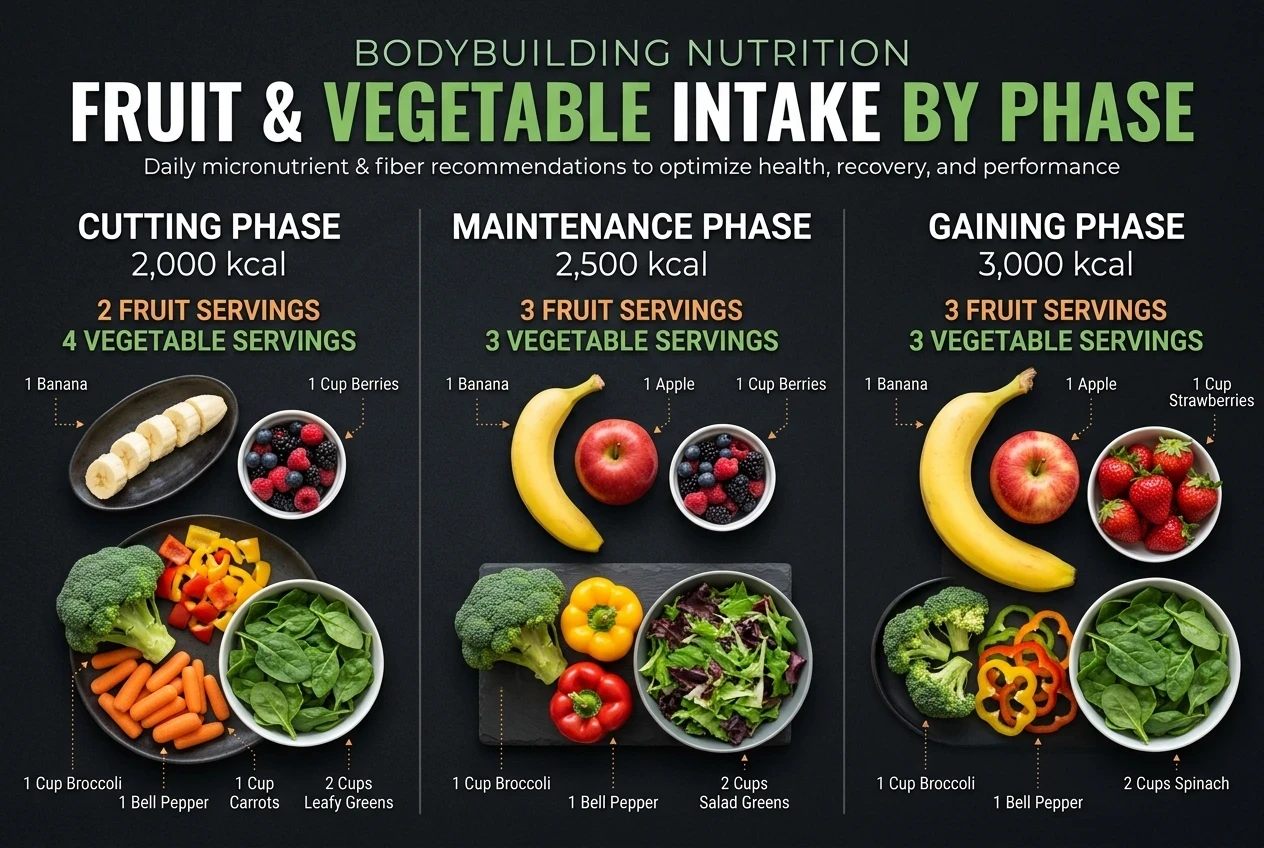
These are flexible bodybuilding-oriented planning methods, not replacements for general dietary guidelines. When the calculation produces fewer than five combined portions, additional fruit or vegetables may be appropriate to support overall dietary quality.
During a calorie deficit, emphasizing fibrous, lower-energy-density vegetables can help increase meal volume and satiety. During a gaining phase, larger energy requirements may justify choosing more easily digestible foods and adjusting vegetable portions to avoid excessive fullness.
Examples of a serving include one medium fruit, approximately one cup of berries, half a cup of cooked vegetables, one cup of raw vegetables, or two cups of leafy greens. Serving definitions can vary between dietary guidelines.
Hydration and Bodybuilding Performance
Water makes up a large share of muscle and is involved in nearly every body process. Fluid loss through sweat reduces blood volume, which makes exercise feel harder.
Strong evidence: Losing about 2 percent of bodyweight as fluid reduces endurance performance. Reviews of the research on strength and power found reduced performance with dehydration too, with larger effects as losses go beyond about 3 percent. The effect on single maximal lifts is smaller and less consistent than on high-repetition work, which is the style of training in bodybuilding.
Practical implications:
- Arriving at the gym already under-hydrated can lower the quality of your hard sets.
- Hot gyms, long sessions and high-volume leg days raise sweat losses.
- Mild dehydration can also affect concentration and perceived effort.
Moderate or mixed evidence: Caffeine in typical doses does not appear to cause meaningful dehydration in habitual users, and coffee and tea count toward fluid intake. Creatine does not cause dehydration or cramping in controlled research, although it increases water held inside muscle cells.
How Much Fluid Should Bodybuilders Drink?
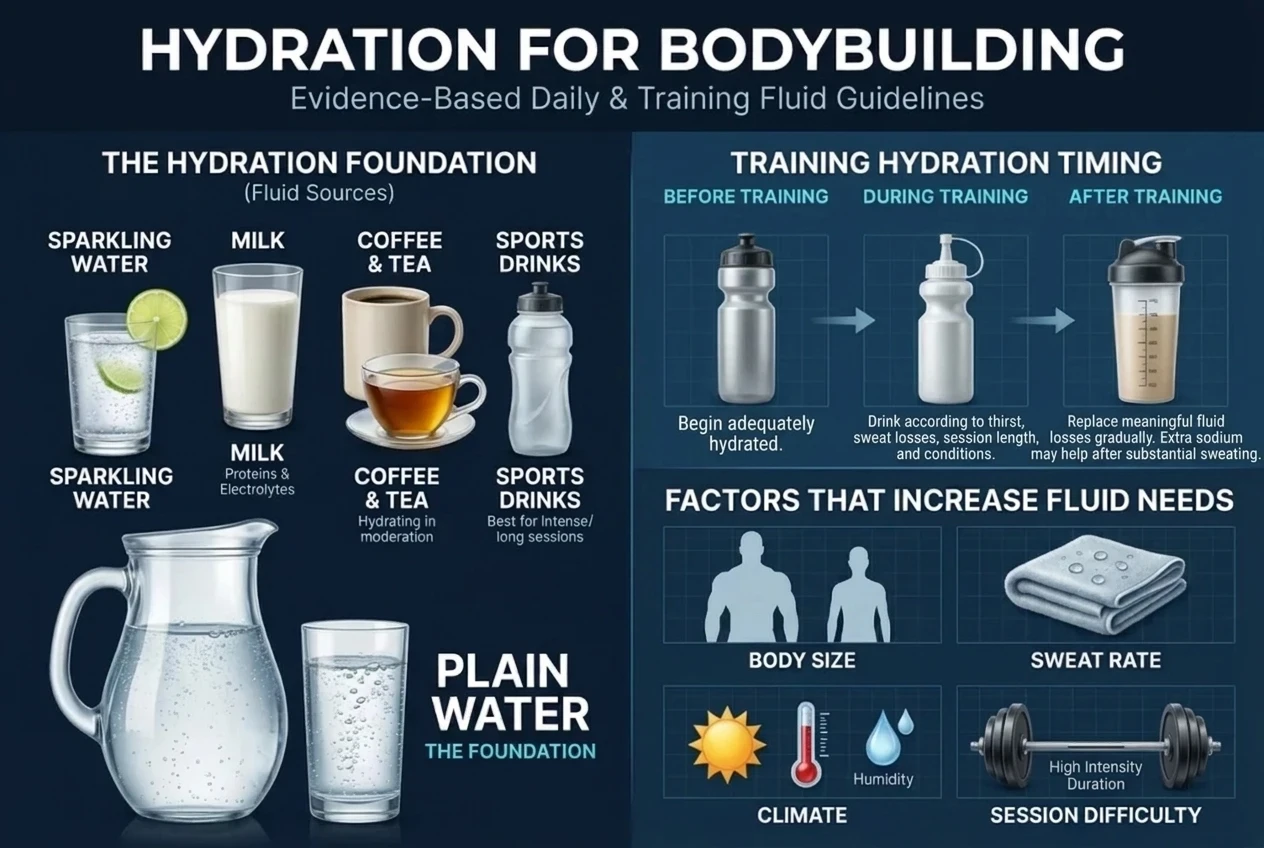
No single number suits everyone, because needs depend on body size, climate, sweat rate and diet. These reference points are a starting place.
Total water intake (adequate intake, NASEM): about 3.7 L per day for men and 2.7 L for women, from all beverages and food combined. About 20 percent typically comes from food, which is one more reason vegetables and fruit help.
Around training (ACSM guidance):
- Before: about 5 to 7 mL per kg of bodyweight, roughly 2 to 4 hours ahead (for an 80 kg lifter, about 400 to 560 mL).
- During: drink to limit weight loss to under 2 percent of bodyweight. Sipping between sets is enough for most sessions.
- After: if you want to measure, weigh yourself before and after training. For each kilogram lost, drink about 1.25 to 1.5 L over the following hours.
Practice heuristic: Thirst is a reasonable guide for most days, but if you train hard, sweat heavily or train in heat, relying on thirst alone can leave you behind.
Weight-Based Fluid Estimates
MSP3 describes two approximate starting methods for estimating daily beverage intake:
| Method | Approximate starting estimate |
|---|---|
| Imperial | Body weight in pounds × 2/3 = US fluid ounces per day |
| Metric | About 1 liter per 23 kg of body weight |
For example, a 180 lb person would obtain a starting estimate of approximately 120 US fluid ounces (3.55 liters) per day. A 69 kg person would obtain approximately 3 liters daily.
These are rough planning estimates, not mandatory minimums. Actual requirements differ according to sweat rate, climate, physical activity, food intake, health conditions, and other individual factors. Unlike the National Academies’ total-water values, these estimates refer to fluids consumed as beverages.
Water, sparkling water, milk, coffee, tea, and other nonalcoholic drinks can contribute to hydration. Plain water and nutritious, lower-sugar beverages are generally sensible everyday choices. Some drinks retain fluid differently in the short term, but this does not mean they must replace water.
Combine sensible intake estimates with thirst, exercise conditions, fluid losses, and urine appearance rather than relying on any single number.
The 1-to-8 Urine Color Guide
Urine color is a simple, free check, based on a scale developed by hydration researcher Lawrence Armstrong.
| Color score | Meaning |
|---|---|
| 1–2 (very pale straw) | Well hydrated |
| 3 (pale yellow) | Adequately hydrated |
| 4 (yellow) | Borderline, drink a little more |
| 5–6 (dark yellow to amber) | Under-hydrated |
| 7–8 (dark amber to brownish) | Significantly under-hydrated |
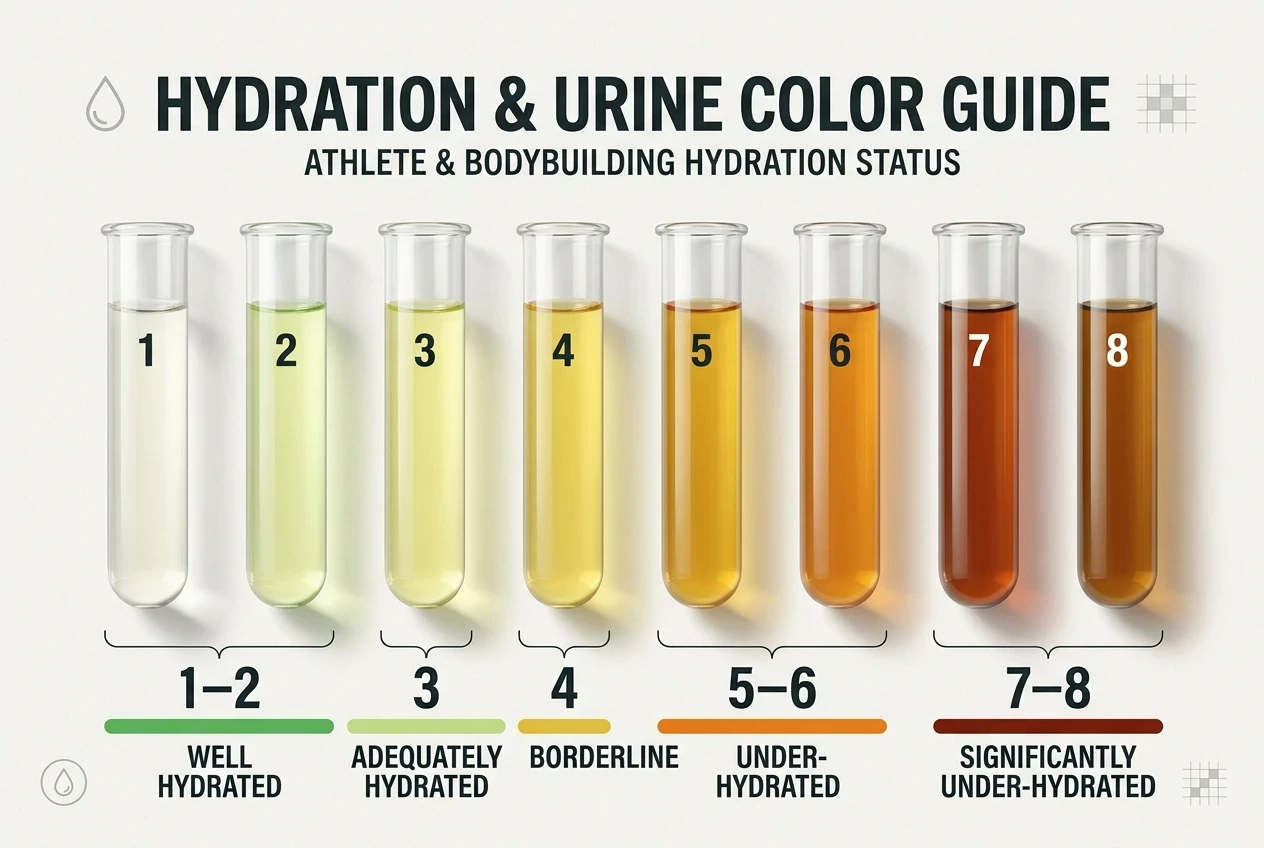
Check urine appearance at different times of day. The first urination after sleeping is often more concentrated and darker, so it should not be interpreted in isolation. Focus on the overall pattern across the day, while remembering that urine color is only an approximate indicator of hydration status. Certain B vitamins, beetroot, some medications and some foods change urine color regardless of hydration, so treat it as a rough indicator. Persistently dark urine, or brown or red urine, needs medical attention.
Too much fluid is a risk too. Drinking very large volumes in a short time can lower blood sodium. Deliberate “water loading” and water cutting before competition are advanced practices with real risk and limited evidence. They should be done only with qualified supervision, and never for the first time close to a show.
Sodium and Electrolyte Intake
Sodium has a bad reputation, and for people with high blood pressure or other conditions it deserves attention. Healthy lifters also have reasons to avoid cutting it too far.
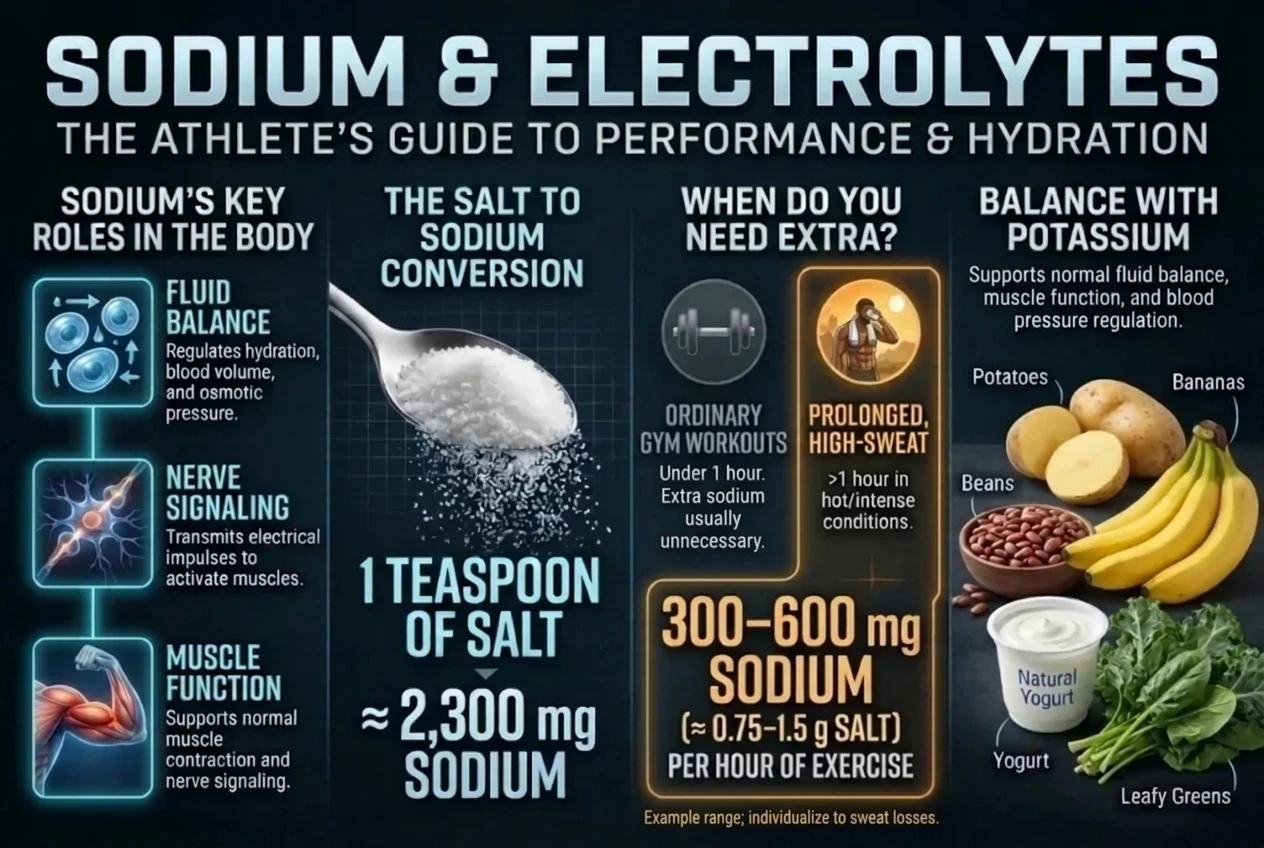
Strong evidence: Sodium regulates fluid balance and nerve and muscle function. Public health bodies recommend limiting intake, because high intakes raise blood pressure in many people. The common reference points are:
- US: under 2,300 mg sodium per day
- WHO: under 2,000 mg sodium (5 g salt)
- UK: no more than 6 g salt (about 2,400 mg sodium)
Salt is about 40 percent sodium, so 1 teaspoon (about 6 g) of salt holds roughly 2,300 mg of sodium.
Sweat losses vary widely. People differ a lot in how much sodium they lose in sweat. Heavy sweaters in hot conditions may need more than the general limit, while someone training in a cool gym probably does not. Visible white salt marks on clothing and a strong salty taste on the skin hint at higher losses, though they are not a precise measure.
Potassium offsets some of sodium’s effect on blood pressure. The WHO recommends at least 3.5 g of potassium a day, which is easy to reach with vegetables, fruit, beans and dairy, and hard to reach without them.
Practice heuristics:
- Keep sodium consistent from day to day. Large swings cause changes in water retention, which affect scale weight and how full muscles look, and make progress harder to read.
- Most sodium in typical diets comes from processed and restaurant foods. Cooking at home with whole foods lets you season to taste without overshooting.
- During prolonged training or exercise in hot conditions involving substantial sweating, additional sodium may be appropriate. MSP3 discusses approximately 300–600 mg of sodium per hour of exercise as a sports-nutrition rule of thumb. This equals roughly 0.75–1.5 g of table salt, but it is not a universal recommendation for routine bodybuilding workouts. Actual needs depend on sweat volume, sweat sodium concentration, the usual diet, and medical circumstances. Most ordinary gym sessions do not require additional sodium supplements. Individuals with hypertension, kidney disease, cardiovascular conditions, or medications affecting fluid balance should seek individualized professional guidance.
- Competitors often adjust sodium and water in the final days before a show. Evidence that these manipulations improve appearance is limited and the results are individual. Practice any plan in the off-season, and do not make big changes right before stepping on stage.
Magnesium and calcium are electrolytes too. Meeting their food-based targets matters more than supplementing them for cramps, since evidence for supplements preventing exercise cramps is weak in people with adequate intake.
Special Situations and Individualization
General guidelines work for most healthy adults, and some situations call for changes.
- Cutting: As calories fall, micronutrient density per bite matters more. Prioritize vegetables, fruit, legumes, dairy or fortified alternatives, and lean protein, and consider a basic multivitamin when intake is low for weeks. Fiber and fluid also help with fullness. For how fast to cut, see energy balance for lifters.
- Bulking: Calorie surplus makes micronutrients easy to hit, but a diet based on processed foods can still miss vegetables, fiber and potassium.
- Contest prep: Calories and body fat are lowest, and nutrient gaps and electrolyte shifts are more likely. Work with a qualified coach or dietitian, and get blood work if you have symptoms such as persistent fatigue, dizziness, hair loss, missed periods or frequent illness.
- Female lifters: Iron needs are higher before menopause, especially with heavy periods. Calcium and vitamin D matter for bone, and low energy availability can harm both bone and hormones.
- Older lifters: Vitamin D, calcium, B12 and protein needs shift with age. Absorption of B12 can decline, and targets for calcium rise for some groups.
- Hot climates and heavy sweaters: Fluid and sodium needs rise.
- Medical conditions and medications: Kidney disease, high blood pressure, digestive disorders and certain medications change what is safe. Follow professional advice over any general guideline here.
- Allergies and intolerances: Replace the missing food group’s nutrients deliberately, such as calcium and iodine when avoiding dairy.
If any of these apply, a registered dietitian can build a plan that this guide cannot.
Your Daily Micronutrient, Fiber and Hydration Checklist
Use this as a daily check. Scale portions to your calorie needs.
Daily checklist:
- 5 or more portions of fruit and vegetables, with at least 2 or 3 different colors
- A leafy green or cruciferous vegetable
- A legume, whole grain, or both
- A calcium source (dairy, fortified alternative, or calcium-set tofu)
- A nut or seed serving
- Fiber near 14 g per 1,000 kcal
- Protein spread across meals, near 0.7 g per pound of bodyweight
- Urine color 1 to 3 through most of the day
- Water or other fluids at each meal and around training
- Sodium mostly from home-cooked food, consistent day to day
- Supplements, if any, matched to a reason (B12, vitamin D, diagnosed deficiency)
Example days
Easy day: Oats with berries and chia seeds. Lentil and vegetable soup with whole-grain bread. Greek yogurt with a pear. Baked fish or tofu, roasted vegetables and a modest portion of potato with skin. Fluids spread through the day.
Moderate day: Eggs or tofu scramble with spinach and toast. Rice, chicken or beans, peppers and broccoli before training, with lower-fiber choices if needed. A banana and milk or fortified soy milk after the session. Salmon or tempeh, sweet potato and a salad at dinner.
Hard day: Larger oat bowl with banana and nut butter, and extra fluids with breakfast. Pasta or rice with lean meat or lentils and cooked vegetables before training. A smoothie with whole fruit, yogurt or soy milk and spinach after the session, plus a salted snack if you sweat heavily. A big stir-fry with vegetables, protein and rice in the evening.
7-day plan
| Day | Focus | Action |
|---|---|---|
| 1 | Baseline | Log a normal day of food and note urine color at morning and evening. |
| 2 | Vegetables | Add one extra vegetable portion at two meals. |
| 3 | Fiber | Add a legume or whole grain, and raise fluids. |
| 4 | Calcium and vitamin D | Include dairy or a fortified alternative, and an oily fish or fortified food. |
| 5 | Iron and vitamin C | Pair an iron-rich food with a vitamin C food at one meal. |
| 6 | Hydration and sodium | Weigh before and after training, and replace fluid losses. |
| 7 | Review | Check your log for gaps, and pick one change to keep for next week. |
After the week, repeat the plan with different foods. Variety over time covers more nutrients than any one week can.
Frequently Asked Questions
Do bodybuilders need more vitamins and minerals than other people? Most people who train hard do not need dramatically higher micronutrient targets, but they eat more food, which usually covers needs when the diet is varied. Exceptions include iron in some female athletes, sodium and fluids in heavy sweaters, and any nutrient affected by a restricted diet.
Should I take a multivitamin? It is reasonable insurance if you eat a narrow diet or are in a long calorie deficit. It will not improve performance if you already meet needs, and it does not replace vegetables, fruit and fiber.
How do I get enough micronutrients on a cut? Choose nutrient-dense foods: vegetables, fruit, legumes, dairy or fortified alternatives, eggs, fish and lean meat. Smaller meals leave less room for low-nutrient foods.
How much water should I drink? Around 2.7 L (women) to 3.7 L (men) of total water including food is the reference point. Use urine color 1 to 3 as a daily check, and increase fluids when you sweat more.
Does fiber get in the way of muscle gain? There is no strong evidence that fiber reduces muscle growth. High-fiber meals can make it harder to eat enough calories or cause discomfort before training, which you can fix by adjusting food choices and timing.
Is sodium bad for bodybuilders? For most healthy people, normal intake is fine, and extremely low intake is not necessary. Stay near the guideline limits unless you sweat heavily, and talk to a clinician if you have high blood pressure.
Are greens powders a substitute for vegetables? They can add some nutrients, but they lack the fiber and volume of whole vegetables, and their ingredient amounts vary by product. Whole foods are the better first choice.
Sources and References
Titles are listed so you can find the current versions. Guidelines are updated periodically, so check the latest edition for exact figures.
- National Academies of Sciences, Engineering, and Medicine. Dietary Reference Intakes (vitamins, minerals, electrolytes and water).
- NIH Office of Dietary Supplements. Fact sheets on vitamin D, iron, zinc, magnesium, calcium, vitamin B12 and others.
- US Department of Agriculture and Department of Health and Human Services. Dietary Guidelines for Americans, 2025-2030.
- NHS. The Eatwell Guide, and NHS advice on vitamin D.
- World Health Organization. Healthy diet fact sheet; Guideline: Sodium intake for adults and children; Guideline: Potassium intake for adults and children.
- Healthy Diet Indicator 2020 and the WHO-based dietary quality scoring literature it builds on.
- Reynolds A, et al. Carbohydrate quality and human health: a series of systematic reviews and meta-analyses. The Lancet, 2019.
- Aune D, et al. Fruit and vegetable intake and the risk of cardiovascular disease, total cancer and all-cause mortality. International Journal of Epidemiology, 2017.
- Sawka MN, et al. American College of Sports Medicine position stand: Exercise and fluid replacement. Medicine & Science in Sports & Exercise, 2007.
- Savoie FA, et al. Effects of hypohydration on muscle endurance, strength, anaerobic power and capacity and vertical jumping ability: a meta-analysis. Sports Medicine, 2015.
- Armstrong LE, et al. Urinary indices of hydration status, and the urine color chart research.
- Thomas DT, Erdman KA, Burke LM. Position of the Academy of Nutrition and Dietetics, Dietitians of Canada, and the American College of Sports Medicine: Nutrition and Athletic Performance, 2016.
Start with the daily checklist and the 7-day plan above, and repeat the plan with different foods for a few weeks. Then explore the related Lift & Nurture pillars on nutrition fundamentals, calories and macros, and recovery, so micronutrients, fiber and fluids sit alongside the rest of your nutrition and training.