If you have just landed on this site, the quickest way to find useful information is to pick one of two tracks. Beginner Foundations is for people building a first routine or restarting after a long break. Intermediate & Competition Prep is for lifters whose basics are in place and who want finer control over volume, progression and, if it applies, a stage date.
Both tracks follow the same framework and the same evidence standard. They differ in how much detail you need and how soon you need it.
Which Path Fits You
Answer these honestly, because the wrong track costs you time. Someone new to lifting who starts with advanced material may copy a complicated program without knowing why it works. Someone experienced who stays in beginner material rereads what they already do.
Start with Beginner Foundations if any of these describe you:
- You have no written routine, or you have one but have never followed it for more than a few weeks.
- You are unsure how many sets, reps or training days a week make sense.
- You are returning after a break and want a sensible way back in.
- You train at home or in a gym and want a plan that does not need much equipment.
Start with Intermediate & Competition Prep if these fit better:
- You train consistently and your progress has slowed.
- You already track sets, loads and effort, and you want to adjust them with more precision.
- You are considering a show, or you are in prep and want the training, nutrition and stage details to line up.
If you are still unsure, the section near the end for lifters between the two tracks gives a simple test.
Path 1: Beginner Foundations
This track is built around one idea: the plan you will keep doing beats the plan that looks best on paper. Research on exercise motivation supports this. Work by Fishbach and Choi found that people who focus on the process of exercising outlast and outperform their own predictions, compared with people who focus only on outcomes. So the beginner material puts enjoyment and realistic scheduling ahead of optimization.
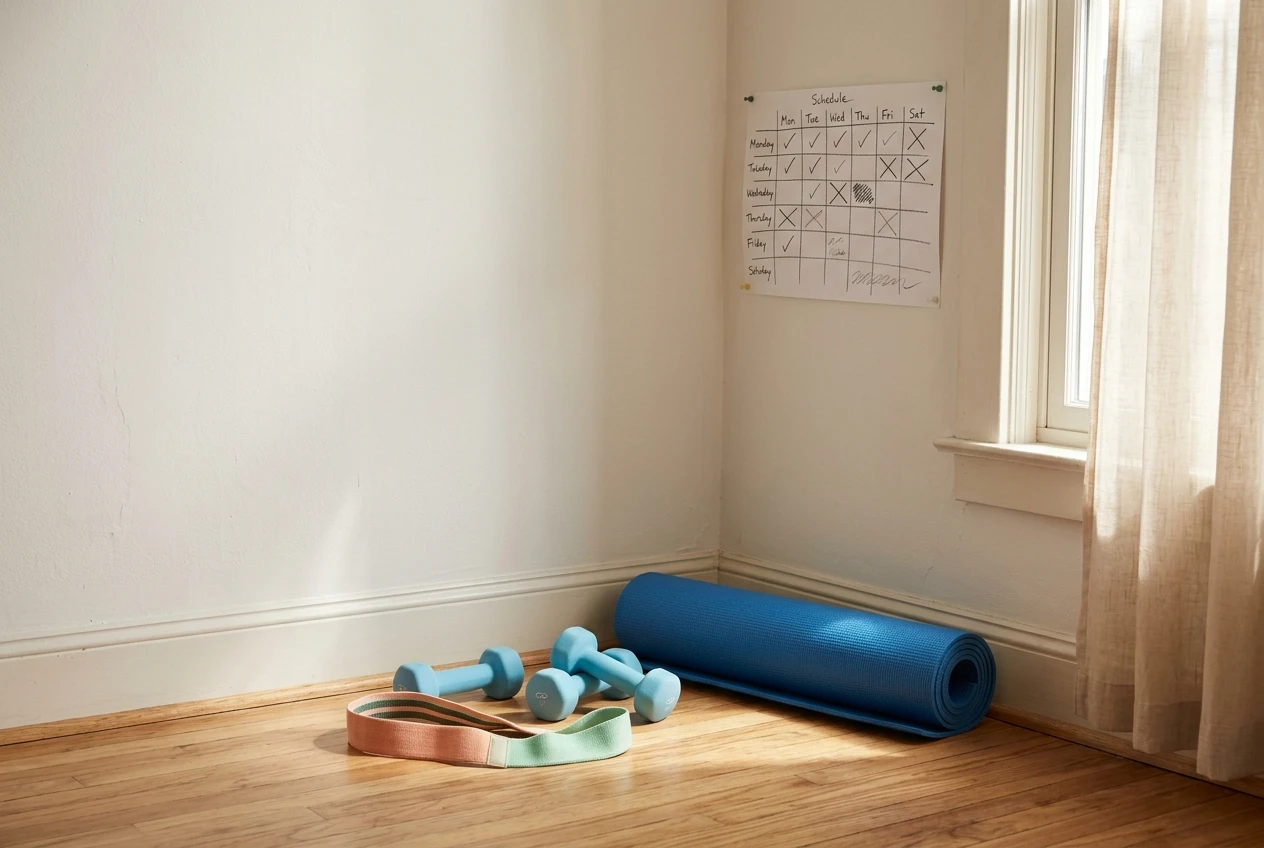
Realistic means sizing your plan to the time you truly have each week, not the time you wish you had. Flexible means leaving room to adjust when sleep, stress or work gets in the way. A plan that survives a bad week is worth more than a perfect one that collapses in week three.
Here is a sensible order for working through the beginner material.
Pick a routine
Choose a structure first. A full body plan is the simplest place to start, and an upper lower split is the main alternative. The difference is how each one distributes your weekly work across sessions. Most goals are well served by 3 to 6 sessions per week, and 2 can work for novices who are short on time.
Set how hard to train
Effort matters as much as exercise choice. Beginners do not need to grind every set to the limit, so the material explains proximity to failure and how to rate it. It also covers how to judge whether you are building muscle, using signs you can check yourself instead of guesswork.
Train where you are
You do not need a full gym to start. Home training is covered for several equipment levels: bodyweight only, dumbbells, and resistance bands. If you train in a gym and the machines look confusing, there is a guide to which ones are worth using and how to use them.
Feed the training
Nutrition belongs in the foundations from the first week. Protein intake of at least 0.7 g per pound of bodyweight is the benchmark used throughout this site. The food material shows how to reach it on a budget, from which foods to prioritize to a grocery list and a meal prep routine that makes it repeatable.
Path 2: Intermediate & Competition Prep
This track assumes you can already train consistently. Your main question shifts to what you should change, and in what order.
A common mistake at this stage is changing too many things at once. A lifter adds sets, switches exercises, cuts calories and lengthens sessions in the same month, then cannot tell which change helped or hurt. The material here is organized around a fixed order of questions, so you change one variable at a time.
Volume, frequency and effort
Weekly volume is the foundation of any program at this level. The guidelines on this site use these ranges for a single muscle group:
- 4 to 10 weekly sets: train it 1 to 2 times per week.
- 11 to 20 weekly sets: train it 2 to 3 times per week.
- 21 to 30 weekly sets: train it 3 or more times per week.
Frequency spreads your volume rather than adding to it. The practical trigger is session size: once a muscle group goes past roughly 11 fractional sets in a single session, split that work across more days. For strength goals, aim for at least two exposures per lift each week, even if one of them is light, because repeated practice builds skill separately from fatigue.
Volume and proximity to failure also interact. Both have diminishing returns, so pushing for the most sets and the closest-to-failure effort at the same time tends to backfire. High-volume protocols often pull lifters further from failure just to get through the workload, which cancels the benefit they were chasing. Treat these numbers as averages across a training block.
When progress stalls
If your progress stops, check the basics before touching your program:
- Sleep at least 7 hours.
- Make sure you are not in an energy deficit.
- Eat at least 0.7 g of protein per pound.
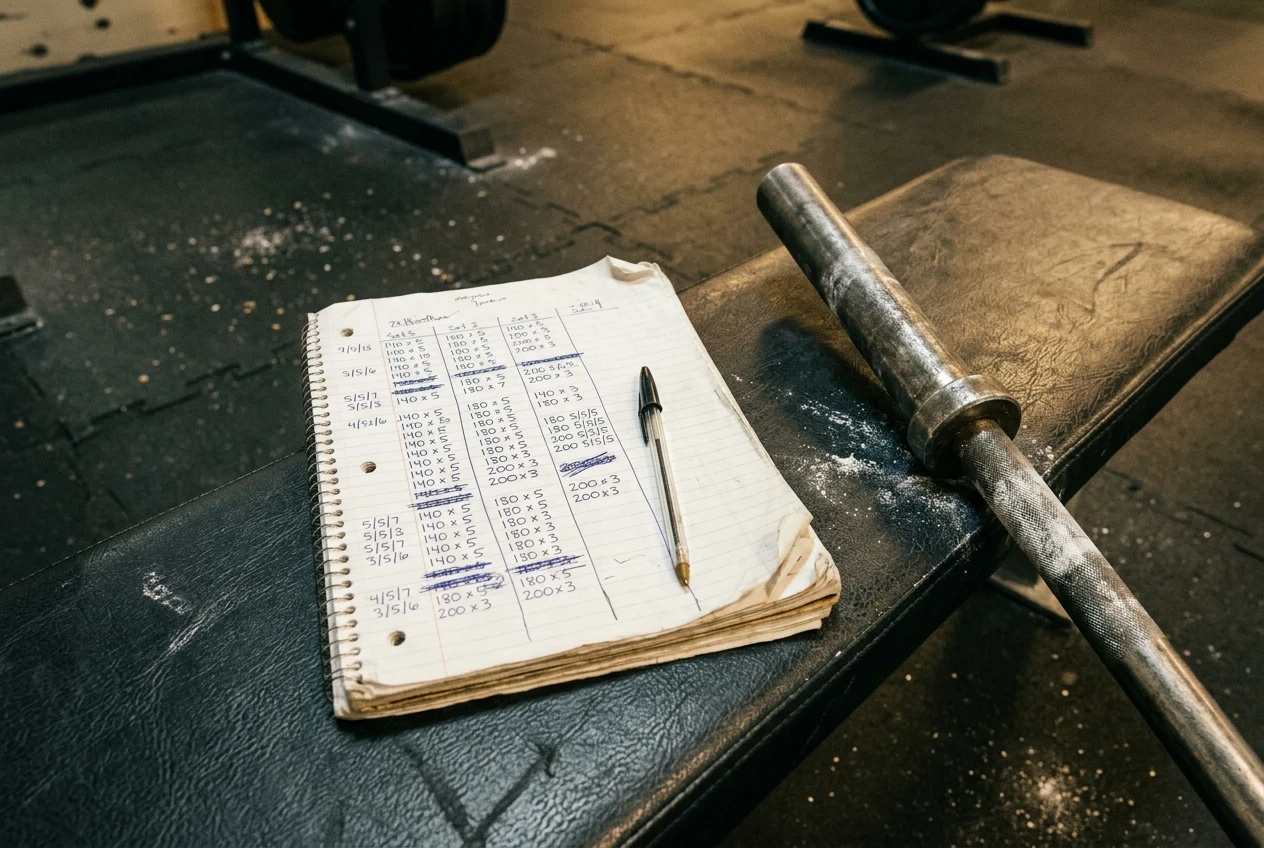
- Rate effort accurately, so your RPE matches reality.
- Train each muscle or lift at least twice per week for strength goals.
- Keep exercise selection, range of motion and tempo consistent so you can compare sessions.
If all of that holds, look for signs of under-recovery: dreading the gym, worse sleep, falling loads or reps, more aches, or higher life stress. If you are recovering well, your training dose may need to go up. If you are not, take a light week and reassess before deciding whether to reduce or reorganize your volume for good.
Progression and intensity techniques
Once the basics hold, the question becomes how to keep progressing. Simple progressive overload works for a while, then runs out. The advanced material covers what comes next, including how periodization differs from adding weight to the bar, and how deloads and tapers fit in.
Techniques that save time or add stimulus, such as drop sets, come with a recovery cost. The material explains where they fit in a program and where the extra fatigue is not worth it.
Competition
The Competition pillar covers prep, posing and judging criteria. It is written for both male and female competitors, from a first local show to professional level. Contest prep also draws on the Nutrition and Lifestyle pillars, because diet phases, recovery and mindset decide how well your training holds up in the final weeks.

The Framework Behind Both Paths
Every training article follows the Muscle & Strength Pyramid, or MSP3, a six-level hierarchy of priorities. The bottom levels drive roughly 80% of results, so they get attention first:
- Adherence: a plan that is realistic, enjoyable and flexible enough to sustain for years.
- Volume and intensity: how many sets, how hard, how often.
- Progression: overload, periodization, deloads and tapers.
- Exercise selection: choosing movements for your goal and your body structure.
- Rest periods: how long to rest, and time-saving techniques like supersets.
- Lifting tempo: how to control the eccentric, concentric and transition phases.
This order explains how the two paths relate. Beginners spend most of their time on levels 1 and 2. Intermediate and competitive lifters still need those two levels, and they build on them with levels 3 to 6. A competitor who ignores adherence or weekly volume will not be rescued by a better tempo.
If You Sit Between the Two
Many lifters fall in the middle: they have trained for a while but are unsure whether they know the basics well enough to move on. Use this test. Can you say how many hard sets you did for your chest last week, how close to failure you took them, and whether your recent sessions are getting better, staying flat or getting worse? If not, start with Beginner Foundations. It will go quickly, and filling those gaps is what makes the advanced material usable.
If you can answer all of that and your progress is flat anyway, go to the stall checklist in Path 2 and work through it in order.
Keep in mind that the ranges on this site describe averages for most beginner to intermediate lifters. They are not fixed rules for one person in one week, and the right mix changes across a lifting career. Fractional set counting, such as treating a bench press as half a triceps set, is a useful approximation rather than a literal count, so exercise selection still matters.
Pick a Track and Begin
Choose the track that matches where you are today. You can move between them at any time. If you are a beginner, set up a full body routine and start this week. If you are experienced, begin with the stall checklist, change one variable at a time, and give each change a full training block before judging it.
Pick the track that fits you and start there.