
By Angel Carcamo, founder of Lift & Nurture. Learn about the author and editorial process.
If you have ever searched for how much protein, carbs and fat to eat, you have probably found numbers that disagree with each other. One source says 1 gram of protein per pound, another says 0.7, and a third says carbs should be high or low depending on whom you ask. Most of that disagreement comes from treating three different questions as one: what is the least you can eat, what is a sensible place to start, and what might work better for your situation.
This article sets out a framework that answers all three, in a fixed order. The order of priorities follows The Muscle & Strength Pyramid: Nutrition, 3rd Edition, and the wording and examples here are our own. Calories come first, then protein, then a fat minimum, then a carbohydrate minimum, then a flexible remainder you can split to suit your preferences, and finally a monitoring loop that tells you when to change something. It is built for everyone from a beginner learning what a macro is to a competitor managing a prep.
Quick Answer: How Much Protein, Carbs, and Fat Do Bodybuilders Need?
The following guidelines are adapted from The Muscle & Strength Pyramid: Nutrition, 3rd Edition. They describe minimum daily intakes based on your calorie status and, for protein during a deficit, your level of body fat. These are starting boundaries for planning—not guarantees of optimal performance or results.
| Situation | Protein minimum | Fat minimum | Carbohydrate guidance |
|---|---|---|---|
| Maintenance | 1.6 g/kg total mass OR 2.2 g/kg lean mass | About 40–60 g/day | Adjust to training needs |
| Calorie surplus | 1.6 g/kg total mass OR 2.2 g/kg lean mass | About 40–60 g/day | At least 2.0 g/kg total mass |
| Deficit, higher body fat | 1.6 g/kg total mass OR 2.2 g/kg lean mass | About 40–60 g/day | At least 1.0 g/kg total mass if necessary |
| Deficit, leaner | 2.0 g/kg total mass OR 2.5 g/kg lean mass | About 40–60 g/day | At least 1.0 g/kg total mass if necessary |
Higher-body-fat categories in this framework refer to men above approximately 19% and women above approximately 27% body fat; the leaner categories are at or below these levels. These are research-derived planning categories, not exact biological cutoffs. Protein calculations based on total or lean body mass are alternatives, not requirements to combine. The fat guideline is an approximate body-size-adjusted daily minimum for healthy adults, not an ideal upper limit. Carbohydrate intake will often be higher than the listed minimums, particularly during demanding training.
Calories sit above all three. If total calories are wrong for your goal, a perfect macro split will not produce the result you want. The energy balance pillar covers how to find maintenance and set a gaining or cutting rate, and this article starts from the calorie number you get there.
What Are Macronutrients?
Macronutrients are the nutrients you eat in large amounts that supply energy: protein, carbohydrate and fat. Protein and carbohydrate each provide about 4 calories per gram, and fat provides about 9. Alcohol also supplies energy at about 7 calories per gram, though it is not considered an essential macronutrient.
Those energy values let you convert between grams and calories, which is what makes macro targets workable. A target of 150 g protein, 80 g fat and 300 g carbohydrate adds up to (150 × 4) + (80 × 9) + (300 × 4) = 600 + 720 + 1,200 = 2,520 calories.
Macros differ from micronutrients, which are the vitamins and minerals you need in small amounts. Those matter too, and they are the subject of the next pillar on micronutrients and diet quality. Water provides no calories, while certain types of fiber contribute some energy. The standard 4/4/9 calculation remains a useful approximation.
Protein: Building and Repairing Tissue
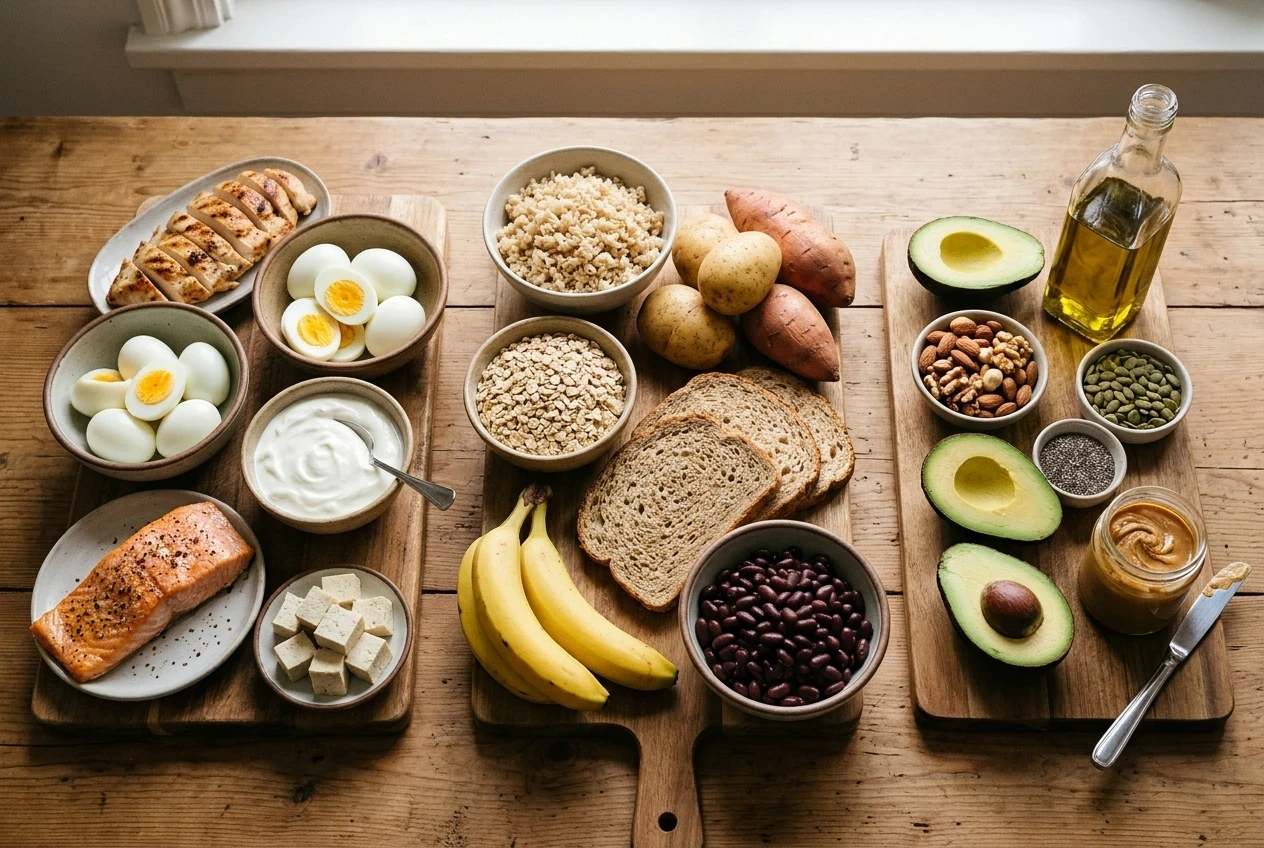
Protein supplies amino acids, the raw material for building and repairing muscle, along with enzymes, hormones and connective tissue. Muscle is in constant turnover, with protein being built and broken down all day. Training raises the rate of building, and eating protein supplies the amino acids that building draws on.
For lifters, the most useful finding is that benefits plateau. A 2018 meta-analysis of resistance training trials (Morton and colleagues) found that extra protein improved gains in muscle mass up to about 1.6 g/kg per day, with the upper end of the confidence interval at about 2.2 g/kg. Eating more than that range is not harmful for healthy people, but the added muscle benefit is small to nonexistent.
Protein also keeps you full more than carbs or fat do, and it has a higher energy cost to digest. Both effects help when you are dieting. Protein requirements can increase during a calorie deficit, particularly for leaner lifters who face a greater risk of losing muscle. The appropriate intake also depends on body-fat level, training, and the size of the deficit, as explained below.
Carbohydrates: Fueling Training
Carbohydrate is stored in muscle and liver as glycogen, and glycogen is a major fuel for hard, repeated sets. A typical bodybuilding session of many sets across several exercises draws on those stores. When they run low, some lifters notice fewer reps at a given load and slower recovery between sessions.
Unlike protein and fat, carbohydrate has no essential minimum. The body can make the glucose it needs from other sources. That does not make carbs optional for bodybuilders. Their value is that they support training quality and are a flexible, inexpensive energy source, so they are the macro most often adjusted up or down.
Carbohydrate-rich foods such as fruit, potatoes, rice, oats and beans also bring fiber and micronutrients. That is a reason to choose mostly minimally processed carbohydrate sources, though the amount matters more to your physique than the specific type.
Fat: Supporting Essential Physiological Functions
Fat is the most calorie-dense macro, and some of it is essential. Your body cannot make linoleic acid and alpha-linolenic acid, so they must come from food. Dietary fat is also needed to absorb the fat-soluble vitamins A, D, E and K, and it is part of cell membranes and hormone production.
Because fat has 9 calories per gram, small differences in grams change your calorie total quickly. A tablespoon of oil can contribute approximately 120 calories, which can easily go unlogged. This is one reason dietary fat deserves attention when you are measuring food portions and tracking calories.
Very low fat intakes have been linked with lower testosterone in men. A 2021 systematic review and meta-analysis (Whittaker and Wu) found that low-fat diets were associated with modestly lower androgen levels. Whether that changes muscle gain in practice is not established, but it is one reason to treat fat as a floor rather than something to cut as far as possible, particularly for lean lifters in prep.
Why Macronutrient Needs Differ Between Bodybuilders
Two lifters can eat the same macros and get different results, because several factors change what they need.
- Body size and composition. Targets scale with bodyweight, so a heavier lifter needs more grams. Very lean lifters in a deficit tend to need more protein, and very heavy lifters with high body fat are often better served by scaling to fat-free mass or goal weight.
- Goal. Gaining, maintaining and fat loss shift calories and, with them, the room left for carbs and fat.
- Training volume and type. A high-volume program places greater demands on glycogen than a low-volume one.
- Food preferences and culture. Some people feel better on higher carbohydrate and some on more fat. If protein and the minimums are covered, both can work.
- Sex, age and health. The framework is the same for all genders, with specific cautions covered later.
- Experience. Beginners can make large gains from simple habits. Competitors have smaller margins and more reason to be precise.
Because the minimums are fixed and the remainder is flexible, the framework adapts to all of these differences without changing its structure.
How Much Protein Do You Need for Bodybuilding?
At maintenance calories or in a calorie surplus, the Muscle & Strength Pyramid: Nutrition, 3rd Edition recommends at least 1.6 g of protein per kilogram of total body weight per day (approximately 0.7 g/lb). Alternatively, someone with a reasonably accurate estimate of their lean body mass can use at least 2.2 g/kg of lean body mass. These are alternative ways to set a protein minimum, not two separate targets to add together.
A 2022 systematic review and meta-analysis by Nunes and colleagues found that additional dietary protein can improve gains in lean body mass during resistance training, although the additional benefits become smaller and less certain at higher intakes. Beyond approximately 2 g/kg of total body weight during maintenance or a surplus, further improvements in muscle growth are not consistently demonstrated. This does not make 2 g/kg a strict limit, and slightly exceeding an appropriate protein target is generally unnecessary rather than automatically harmful.
During a calorie deficit, protein requirements depend partly on how lean you already are. Under the book’s framework, lifters with higher body-fat levels—men above approximately 19% and women above approximately 27%—can use the same starting minimums as those at maintenance or in a surplus. For leaner lifters, the recommended minimum increases to at least 2.0 g/kg of total body weight or 2.5 g/kg of lean body mass per day.
This higher-protein approach is supported by the systematic review and meta-regression by Refalo, Trexler, and Helms. Their analysis found that higher protein intakes were associated with more favorable fat-free-mass changes during energy restriction, particularly among leaner resistance-trained individuals. However, these findings represent uncertain average relationships across studies, not guarantees that a particular intake will prevent muscle loss. Resistance-training quality, the size of the calorie deficit, and other recovery-related factors remain critically important.
The book also discusses approximate upper planning limits of 3.0 g/kg total body weight or 4.0 g/kg lean body mass during dieting. These are not mandatory targets or universal medical safety limits. Consuming unnecessarily large amounts of protein can leave fewer calories available for carbohydrates and dietary fat, potentially compromising training performance, food quality, or dietary sustainability.

For distribution, aim for protein in three to five meals across the day. Research reviewing per-meal doses (Schoenfeld and Aragon, 2018) pointed to roughly 0.4 g/kg per meal across at least four meals as a reasonable pattern. Total daily protein matters more than exact meal timing, so this is a convenience rather than a rule you have to hit every time.
Healthy people with normal kidney function have not been shown to be harmed by protein in these ranges. If you have kidney disease or another medical condition, check with your clinician before raising protein.
How Much Fat Do You Need for Bodybuilding?
The Muscle & Strength Pyramid: Nutrition, 3rd Edition uses approximately 40–60 g of dietary fat per day as a practical minimum for healthy adults, adjusted for body size and energy needs. A smaller lifter may use the lower end as a minimum, while a larger lifter may need the upper end. Importantly, these figures are minimum planning guidelines—not ideal targets or upper limits. The book relates this range roughly to 20% of maintenance calories and discusses potentially favoring somewhat higher intakes, around 25% or more of maintenance calories, when feasible. Prolonged low energy availability and extremely low body fat can also affect hormonal health more strongly than modest differences in dietary fat intake.
Very-low-fat diets sometimes appear in advanced bodybuilding contest preparation, but the book’s lower physiological minimum estimates are uncertain and should not be treated as everyday dietary recommendations. Intakes as low as 20–30 g/day are not appropriate default targets for beginners or general bodybuilding nutrition. Highly restrictive competition-preparation strategies require individualized assessment and careful attention to health, recovery, and performance.

For a starting target, 20 to 35% of calories is a widely used range and matches general health guidance for fat intake. Within it, choose based on preference. If you like eggs, nuts, olive oil and fattier cuts of meat, the upper half is fine. If you prefer rice, fruit and lean proteins, the lower half leaves more room for carbohydrate.
Fat intake also affects how filling a diet is and how hard it is to hit your calories. When you are trying to gain and struggling to eat enough, adding fat is the easiest way to raise calories without adding bulk. When you are dieting, fat is the most calorie-dense item on the plate, so it is often the first place where grams add up unnoticed.
Include a mix of fat types. Emphasize unsaturated sources such as olive oil, nuts, seeds and fatty fish, and include omega-3 fats from fish or a suitable supplement if you rarely eat fish. Saturated fat does not need to be eliminated, but it makes sense to keep it moderate as part of overall diet quality.
How Many Carbohydrates Do You Need for Bodybuilding?
Unlike essential amino acids and essential fatty acids, carbohydrates do not have a strict physiological minimum that everyone must consume to survive. However, that does not mean carbohydrates are unimportant for bodybuilding. They help replenish glycogen and can support repeated hard sets, higher training volumes, and overall training performance.
For bodybuilding nutrition, the Muscle & Strength Pyramid: Nutrition, 3rd Edition recommends at least 2.0 g of carbohydrate per kilogram of total body weight per day during a calorie surplus. During a calorie deficit, the recommended lower limit is 1.0 g/kg/day when necessary to maintain the intended calorie shortfall. These are practical minimum guidelines rather than universally optimal targets. The book does not establish a separate fixed carbohydrate minimum for maintenance; intake should reflect training demands and the available calorie budget.
In practice, many lifters will perform and recover better with substantially more carbohydrate than these minimums, especially during high-volume hypertrophy training. Reducing carbohydrate below approximately 2.0 g/kg/day during a cut can be a compromise when calories are limited—not something every dieting bodybuilder should aim for. If training performance begins to decline, examine total calorie intake, recovery, training fatigue, and carbohydrate availability before deciding what to adjust. Whenever possible, preserve sufficient carbohydrate intake to support productive resistance training.
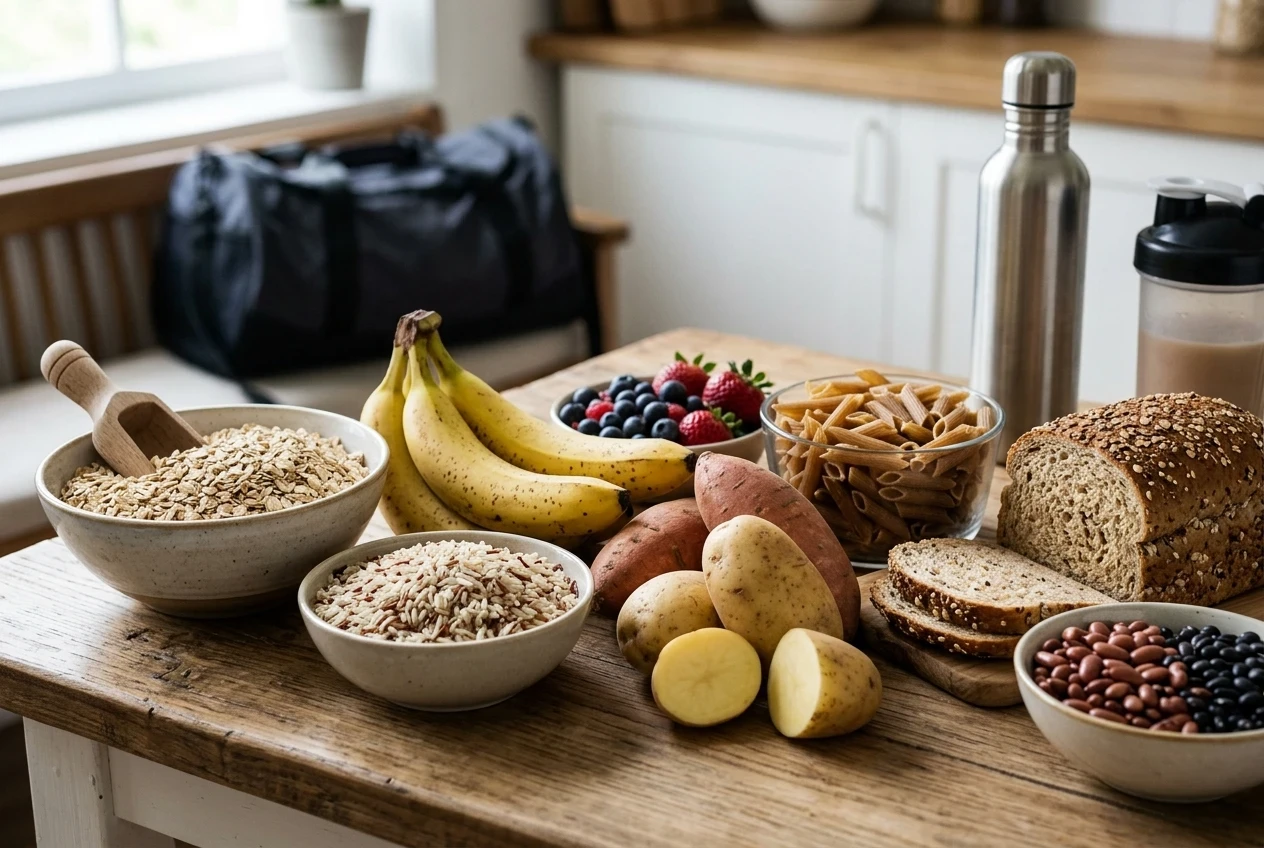
Carbs around training can help sessions without changing the daily total. Some lifters prefer a meal with carbohydrate and protein in the hours before training. The daily total matters more than the timing.
Minimum, Starting Target, or Better Intake: A Critical Distinction
Most macro advice blurs three different ideas, and separating them removes a lot of confusion.
Minimum. The least you can eat before something is likely to suffer. For protein, that is the level where muscle-gain benefits begin to level off. For fat, it is the intake that covers essential fats and vitamin absorption. For carbohydrate, it is whatever intake still lets you train well.
Starting target. A reasonable place to begin that sits above the minimum and works for most people. It is a best first guess that you will adjust based on results.
Potentially better intake. A level that might help in some circumstances, such as higher protein for a lean lifter in a hard cut. The evidence is weaker, or applies to specific groups, so you try it when it fits your situation instead of adopting it by default.
The reason to hold these apart is that a minimum is not a goal, and a better intake is not a requirement. If you are hitting the starting target and progressing, you do not need to chase higher numbers. If you are below the minimum, the first fix is to get above it. Dropping below a minimum in pursuit of a “better” figure elsewhere defeats the point.
How to Calculate Your Macros Step by Step
The sequence below follows the priority order: calories, protein, fat minimum, carbohydrate minimum, then the flexible remainder.
- Establish your calorie target. Estimate your maintenance calorie intake, then choose an appropriate calorie surplus, maintenance intake, or deficit based on your goal. See our energy-balance pillar for the complete process.
- Convert your body weight if necessary. Divide pounds by 2.20462 to obtain kilograms. If using a reasonably accurate body-fat estimate, calculate lean body mass as: total body weight in kilograms × (1 − body-fat percentage ÷ 100).
- Calculate your protein minimum. During maintenance or a surplus, use at least 1.6 g/kg total body weight or 2.2 g/kg lean body mass. During a deficit, use those same minimums at higher body-fat levels, but increase to at least 2.0 g/kg total body weight or 2.5 g/kg lean body mass if leaner. Use one calculation method rather than adding the two.
- Set your dietary-fat minimum. Select an appropriate practical minimum from approximately 40–60 g/day, considering body size and energy requirements. Remember that this is a floor, not a maximum or necessarily your ideal daily intake.
- Calculate your carbohydrate minimum. During a surplus, use at least 2.0 g/kg total body weight. During a deficit, 1.0 g/kg is a lower limit when needed to achieve the intended energy deficit. At maintenance, choose an intake that supports your training demands. When feasible, consume more than these minimums, especially during high-volume training.
- Calculate the energy from your minimums and distribute the remainder. Multiply protein grams by 4, fat grams by 9, and carbohydrate grams by 4. Add these amounts to find the calories already allocated. Subtract that total from your daily calorie target. Distribute the remaining calories among additional carbohydrates, dietary fat, and appropriate additional protein according to training demands, preferences, and dietary quality. If the minimums exceed your calorie budget, reconsider the plan rather than forcing an impossible combination.
- Monitor and adjust. Follow the plan consistently, track body-weight trends and training performance, and reassess after approximately two to three weeks when practical. Adjust total calories when the rate of weight change differs from your goal; adjust the macro distribution when performance, recovery, food preferences, or adherence suggest a better balance is needed.
Using the framework in this order matters because each layer protects the one above it. Calories drive weight change. Protein protects and builds muscle. Fat and carbohydrate share what remains, so you can trade between them without breaking the earlier priorities.

Worked Macronutrient Examples for Muscle Gain and Fat Loss
These are illustrative lifters with made-up numbers, used to show the arithmetic. They are not recommendations for any real person.
Example 1: Setting Macros for a 75 kg Bodybuilder Gaining Muscle
Consider a bodybuilder weighing 75 kg (approximately 165 lb) with an illustrative gaining target of 2,800 calories per day.
First, establish the minimum macronutrient intakes:
- Protein: 1.6 × 75 = 120 g/day.
- Fat: 50 g/day, using an illustrative midrange minimum.
- Carbohydrates: 2.0 × 75 = 150 g/day.
Now convert these minimums into calories:
| Macronutrient | Minimum | Calories |
|---|---|---|
| Protein | 120 g | 480 kcal |
| Fat | 50 g | 450 kcal |
| Carbohydrates | 150 g | 600 kcal |
| Total | 1,530 kcal |
Subtract the calories assigned to these minimums from the daily calorie target:
2,800 − 1,530 = 1,270 calories remaining.
These remaining calories are flexible. They can be distributed among additional carbohydrates, fat, and appropriate additional protein, depending on the lifter’s training needs and dietary preferences.
For example, one possible completed 2,800-calorie plan is:
- Protein: 150 g = 600 kcal.
- Fat: 80 g = 720 kcal.
- Carbohydrates: 370 g = 1,480 kcal.
Total: 2,800 kcal.
This is an illustrative distribution, not a universal optimal macro split. It satisfies the initial minimums while allowing sufficient additional energy for a gaining phase.
Example 2: Comparing Gaining and Cutting for a 90 kg Bodybuilder
Consider an intermediate male bodybuilder weighing 90 kg (approximately 198 lb), with an estimated 19% body fat.
His estimated lean body mass is:
90 × (1 − 0.19) = 72.9 kg, approximately 73 kg.
For this example, assume his maintenance intake is 3,000 calories per day. We’ll compare a gaining target of 3,250 calories and a cutting target of 2,500 calories.
These calorie targets are illustrative assumptions rather than recommendations for all 90 kg athletes.
Gaining Phase
At maintenance or in a surplus, the protein minimum using total body weight is:
1.6 × 90 = 144 g, rounded to approximately 145 g/day.
Alternatively, using lean body mass:
2.2 × 72.9 = approximately 160 g/day.
These are two alternative approaches, not amounts to combine.
Using the total-body-weight approach, the minimum plan is:
| Macronutrient | Minimum | Calories |
|---|---|---|
| Protein | 145 g | 580 kcal |
| Fat | 60 g | 540 kcal |
| Carbohydrates | 180 g | 720 kcal |
| Total | 1,840 kcal |
At a 3,250-calorie gaining target, this leaves:
3,250 − 1,840 = 1,410 discretionary calories.
If the alternative 160 g lean-mass-based protein minimum is used, the calories from minimums increase to 1,900 kcal, leaving 1,350 discretionary calories.
The lifter can allocate these additional calories according to food preferences and training demands while ensuring that the final intake remains suitable for the intended gaining rate.
Cutting Phase
At exactly 19% body fat, this example follows the book’s leaner-deficit category.
Protein minimum:
2.0 × 90 = 180 g/day.
Alternatively, using lean body mass:
2.5 × 72.9 = approximately 182 g/day, which is approximately 180 g when rounded to a practical 5 g increment.
The cutting-phase minimums are:
| Macronutrient | Minimum | Calories |
|---|---|---|
| Protein | 180 g | 720 kcal |
| Fat | 60 g | 540 kcal |
| Carbohydrates | 90 g | 360 kcal |
| Total | 1,620 kcal |
At a 2,500-calorie cutting target, this leaves:
2,500 − 1,620 = 880 discretionary calories.
Those calories can be used to support additional carbohydrate, dietary fat, or appropriate protein intake.
For example, a completed 2,500-calorie diet could contain:
- Protein: 180 g = 720 kcal.
- Fat: 80 g = 720 kcal.
- Carbohydrates: 265 g = 1,060 kcal.
Total: 2,500 kcal.
This demonstrates why a 90 g carbohydrate minimum does not imply that a cutting bodybuilder should actually restrict carbohydrates to 90 g every day.
The appropriate finished plan should account for resistance-training performance, individual preferences, and recovery.
What Both Examples Teach
The first calculation establishes minimum nutritional requirements. It does not finish the diet.
After meeting those minimums, the remaining calories can be distributed flexibly. Consistency, adequate overall nutrition, and adjustments based on actual results matter more than achieving one supposedly perfect macro ratio.
How to Turn Macro Targets Into Daily Meals
A gram target only helps if it turns into food. The simplest method is to start with protein, since it is the target that most often goes missing.
Divide your daily protein across three to five meals. In Example 1, the completed plan provides 150 g of protein, which works out to approximately 37–38 g per meal when distributed across four meals. Put a clear protein source at the center of each meal, such as meat, fish, eggs, dairy, tofu or legumes, and read labels or use a nutrition database to check the amount.
Then add carbohydrate and fat sources to approach your other targets. Rice, potatoes, oats, bread, fruit and legumes cover carbohydrate. Oils, nuts, seeds, avocado and the fat in your protein foods cover fat. Cooking oil and nut butter are easy to underestimate, so measure them for the first few weeks.
Preparing meals in advance makes hitting targets more reliable. For routines and shopping help, see our guides to meal prep for muscle gain, a muscle-building grocery list and cheap bulk meals. If you need ideas about which foods fit best, best foods for building muscle covers the basics.
How Accurately Do You Need to Track Macros?
Accuracy needs depend on your level and your goal. Precision costs time and attention, so spend it where it changes results.
- Beginners can often make most of their progress with protein at every meal, mostly whole foods and a weekly bodyweight check. Tracking for a short period is useful for learning what portions look like.
- Intermediate lifters usually benefit from tracking calories and protein, because small errors in either can hide for weeks.
- Competitors have the least margin, so weighing food and tracking all three macros makes sense, especially in the final weeks of a prep.
Self-reported intake is often lower than actual intake. A well-known study in the New England Journal of Medicine (Lichtman and colleagues, 1992) found people substantially underreported what they ate. That study was done in a different population, but the lesson carries over: unmeasured oils, snacks and weekend meals are where logged intake and real intake diverge.
Weekly averages matter more than any single day. If you land a little over on Monday and under on Tuesday, the week still comes out close. Aim to meet your daily protein, fat, and context-appropriate carbohydrate minimums consistently. Some variation above these minimums is fine, while calorie intake can also be evaluated using longer-term averages.
Macros Across Bodybuilding Phases and Special Populations
Gaining phases
Calories are above maintenance, so protein is at the standard starting target and the fat and carbohydrate remainder is large. A higher-carb, moderate-fat split suits many lifters because it supports high-volume training. Protein beyond about 2.2 g/kg gives little extra benefit.
Fat loss phases
Protein goes toward the upper end, fat sits near or above its floor, and carbohydrate shrinks to what is left. The leaner you are and the steeper the deficit, the more important protein and the fat floor become.
Contest prep
Prep puts very lean lifters in a deficit for an extended time, which is the situation where the highest protein recommendations and the fat floor apply. Carbs often end up at their lowest of the year, so monitoring training performance, sleep, mood and recovery carries extra weight. The review by Helms, Aragon and Fitschen (2014) is the reference point for natural contest preparation.
Women
The per-kilogram framework is the same for all genders. Fat intake deserves attention, because very low energy availability, including from low-fat, low-calorie diets, is linked with menstrual disruption and other problems collectively described as relative energy deficiency in sport (REDs). If periods stop or become irregular during a diet, treat it as a signal to raise energy intake and seek medical advice.
Older lifters
Older adults may benefit from protein toward the upper end of the range, since muscle can respond less strongly to a given protein dose with age. The framework still applies. Resistance training and total protein remain the main levers.
Vegetarian and vegan lifters
The framework works with plant-based diets, but protein sources vary in digestibility and amino acid content. Combining sources such as soy, legumes, grains and seeds, and aiming for the upper half of the protein range, gives a margin. A protein powder from soy, pea or a blend can make hitting targets easier.
Teens and people with medical conditions
Children and adolescents who are still growing should not apply these adult macro guidelines unchanged or pursue aggressive deficits, and anyone with a medical condition, a history of disordered eating, or kidney or liver disease should work with a qualified clinician or dietitian before changing their diet.
How to Adjust Your Macros as You Progress
Targets are starting points. What your body does over the next few weeks tells you whether to keep them.
Track bodyweight at least a few mornings a week and look at the weekly average. Give any new target two to three weeks before judging it, because daily weight moves with water, sodium, digestion and the menstrual cycle.
Then use the direction and rate of change:
- Gaining too fast. Reduce calories slightly, usually by trimming carbohydrate or fat while holding protein.
- Not gaining. Raise calories by adding carbohydrate, fat or both. Before changing, check that you are actually eating what you logged.
- Losing too slowly. Verify intake first. If it checks out, reduce carbohydrate or fat a little, keeping protein steady and fat above its floor.
- Losing too fast. Add calories, ideally carbohydrate, particularly if training performance is dropping.
Also watch non-scale signals: strength trends, gym performance, hunger, sleep and mood. If you are dieting and these decline together, your intake or deficit may be too aggressive for your current phase. When body weight is changing but strength is steady or rising, you are probably on track.
As bodyweight changes, recalculate. A lifter who gains 5 kg has a higher protein target in grams than at the start, and a lifter who loses weight needs fewer calories to maintain the same deficit.
Common Macronutrient Mistakes
- Setting macros before calories. The split cannot make up for a calorie target that does not match your goal.
- Chasing unnecessarily high protein. During maintenance or a surplus, protein beyond approximately 2.0–2.2 g/kg of total body weight has not consistently demonstrated meaningful additional muscle-growth benefits. Higher intakes may be appropriate during fat loss, particularly for leaner lifters, but excessive protein can crowd out carbohydrates and fats needed for a balanced, performance-supporting diet.
- Cutting fat too low. Pushing fat under its floor to make room for carbs or to save calories risks essential fat and hormone issues.
- Cutting carbs by default. Low-carb works for some people, but if training quality declines it costs you more than it saves.
- Eating the same macros regardless of weight change. Targets that suited you at 70 kg may be wrong at 78 kg.
- Ignoring cooking oils, sauces and drinks. These are the common sources of unlogged calories.
- Judging a target after a few days. Daily weight swings are mostly water, so a plan needs two to three weeks before you change it.
- Treating every number as exact. Food labels and databases carry some error, so a range is more realistic than a single figure.
- Skipping micronutrients and fiber. Hitting macros with a narrow set of foods can leave gaps. Diet quality is the topic of the next pillar.
Frequently Asked Questions
Do I need to count macros to build muscle?
No. Many people build muscle by eating enough calories and protein from whole foods and training consistently. Tracking becomes more useful as progress slows, when you need to know what you are eating, or when you are preparing for a show.
Is 1 gram of protein per pound of bodyweight necessary?
It sits within the evidence-supported range but is not required. The meta-analysis evidence points to benefits leveling off around 1.6 g/kg (0.7 g/lb), with 2.2 g/kg (1.0 g/lb) as a reasonable upper starting point. Choose a figure you can reach consistently.
Should I base my protein on total bodyweight or lean mass?
For lean lifters, total bodyweight is fine. For lifters with a lot of body fat, using a goal weight or a lean-mass-based figure avoids overshooting. In practice, the starting range is wide enough that either approach lands in a similar place for most people.
Can I build muscle on a low-carb or keto diet?
Muscle can be built with lower carbohydrate intakes if calories and protein are adequate and training volume is appropriate. Many lifters find higher-volume training is easier with more carbohydrate, so the best choice depends on how your sessions feel.
How low can carbs go during a cut?
Under the MSP3 framework, 1.0 g/kg of body weight per day is a lower-end guideline during a calorie deficit when necessary. It is not the ideal intake for every cutting bodybuilder. Higher carbohydrate intake is preferable when your calorie budget allows it, particularly during high-volume resistance training. Training performance, recovery, and the size of the deficit should guide adjustments.
Do I need to eat protein immediately after training?
Not strictly. Total daily protein matters most, and spreading it over several meals is a sensible way to reach it. Eating a protein-containing meal in the hours before and after training is convenient and fine, but there is no need to rush.
Your Next Steps
Work through this list in order.
Research and References
- Helms E, Morgan A, Valdez A. The Muscle & Strength Pyramid: Nutrition, 3rd Edition.
- Morton RW, et al. A systematic review, meta-analysis and meta-regression of the effect of protein supplementation on resistance training-induced gains in muscle mass and strength in healthy adults. British Journal of Sports Medicine, 2018.
- Helms ER, Zinn C, Rowlands DS, Brown SR. A systematic review of dietary protein during caloric restriction in resistance trained lean athletes: a case for higher intakes. International Journal of Sport Nutrition and Exercise Metabolism, 2014.
- Helms ER, Aragon AA, Fitschen PJ. Evidence-based recommendations for natural bodybuilding contest preparation: nutrition and supplementation. Journal of the International Society of Sports Nutrition, 2014.
- Iraki J, Fitschen P, Espinar S, Helms E. Nutrition recommendations for bodybuilders in the off-season: a narrative review. Sports, 2019.
- Schoenfeld BJ, Aragon AA. How much protein can the body use in a single meal for muscle-building? Implications for daily protein distribution. Journal of the International Society of Sports Nutrition, 2018.
- Burke LM, Hawley JA, Wong SH, Jeukendrup AE. Carbohydrates for training and competition. Journal of Sports Sciences, 2011.
- Whittaker J, Wu K. Low-fat diets and testosterone in men: systematic review and meta-analysis of intervention studies. Journal of Steroid Biochemistry and Molecular Biology, 2021.
- Lichtman SW, et al. Discrepancy between self-reported and actual caloric intake and exercise in obese subjects. New England Journal of Medicine, 1992.
- Nunes et al. (2022) — Nunes EA, et al. Systematic review and meta-analysis of protein intake to support muscle mass and function in healthy adults. Journal of Cachexia, Sarcopenia and Muscle. 2022;13(2):795–810. DOI: 10.1002/jcsm.12922.
- Refalo, Trexler & Helms (2026) — Refalo MC, Trexler ET, Helms ER. Effect of Dietary Protein on Fat-Free Mass in Energy Restricted, Resistance-Trained Individuals: An Updated Systematic Review With Meta-Regression. Strength & Conditioning Journal. 2026;48(4):398–412. DOI: 10.1519/SSC.0000000000000888.
- King et al. (2022) — King A, Helms E, Zinn C, Jukic I. The Ergogenic Effects of Acute Carbohydrate Feeding on Resistance Exercise Performance: A Systematic Review and Meta-analysis. Sports Medicine. 2022;52:2691–2712. DOI: 10.1007/s40279-022-01716-w.
- Hevia-Larraín et al. (2021) — Hevia-Larraín V, et al. High-Protein Plant-Based Diet Versus a Protein-Matched Omnivorous Diet to Support Resistance Training Adaptations: A Comparison Between Habitual Vegans and Omnivores. Sports Medicine. 2021;51(6):1317–1330. DOI: 10.1007/s40279-021-01434-9.
- Mountjoy et al. (2023) — Mountjoy M, et al. 2023 International Olympic Committee’s (IOC) consensus statement on Relative Energy Deficiency in Sport (REDs). British Journal of Sports Medicine. 2023;57(17):1073–1098. DOI: 10.1136/bjsports-2023-106994.
Once your macro targets are set and running, work through the Your Next Steps checklist above, then continue to Pillar 9 on micronutrients and diet quality.