
Building muscle isn’t just about lifting weights; it’s also about fueling your body properly. Calories play a pivotal role in that, especially when beginners are trying to figure out how many calories they should eat to build muscle. They serve as the energy your body needs not just for the workouts, but also for recovery and muscle repair afterward.

When you’re hitting the gym, the aim is to make your muscles work harder than they’re used to, which essentially breaks them down. After the workout, this leads to muscle growth as your body repairs these fibers. For effective recovery, you need sufficient calories, giving your body the energy that allows those fibers to rebuild stronger than before.
Calories do more than provide energy; they help deliver crucial nutrients to your muscles. If you’re skimping on calories, you’ll struggle to supply your body with the vitamins, minerals, and other building blocks it needs for growth.
Balancing calorie intake is important—it’s about providing just enough to fuel muscle growth without accumulating excess body fat. This balance, often referred to as a ‘caloric surplus,’ ensures you’re consuming more calories than you burn. Without this surplus, your muscles might not get the energy they need for optimal growth.
Decoding ‘Calories In vs Calories Out’
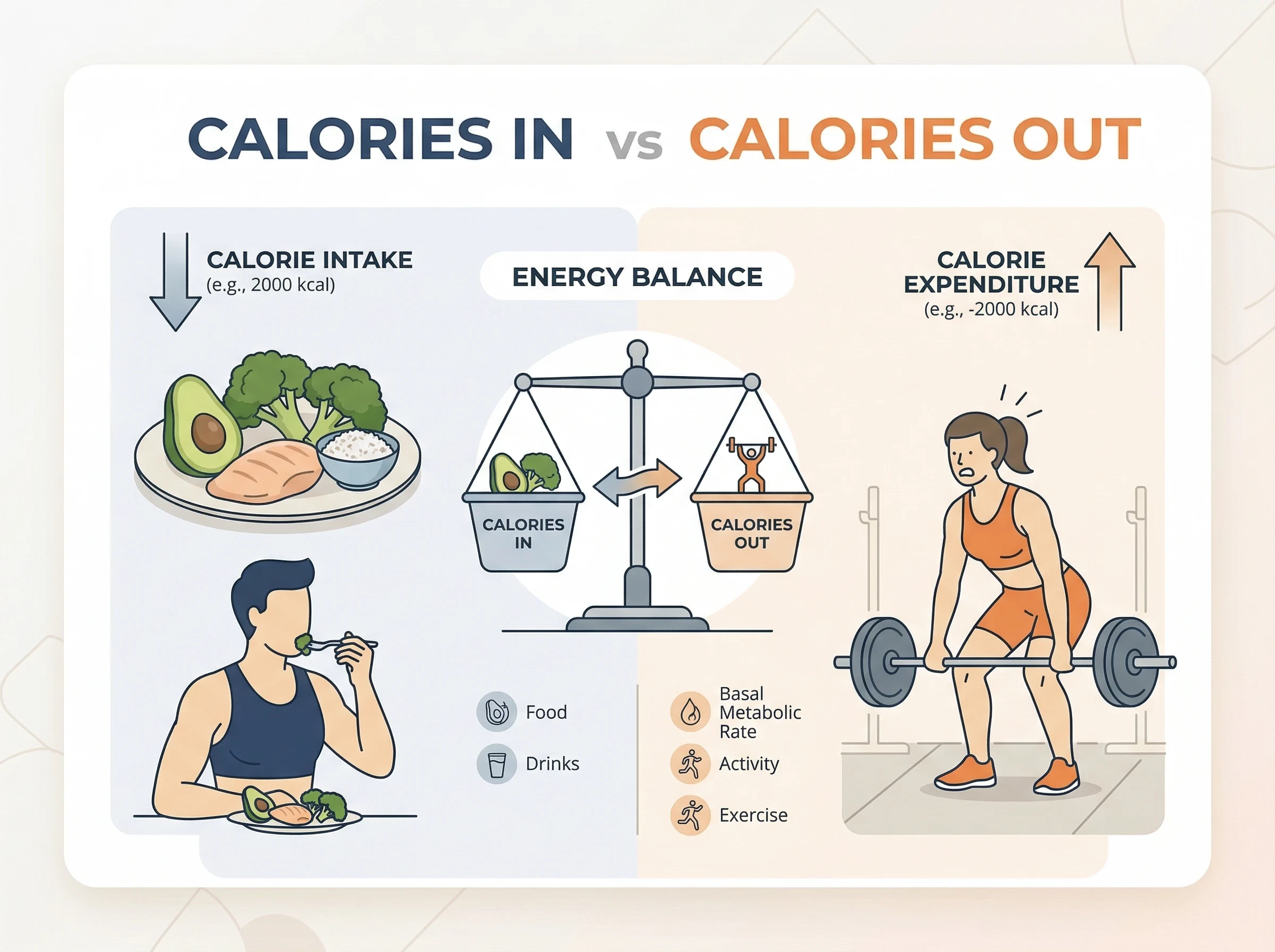
Everyone’s heard the phrase ‘calories in vs. calories out,’ but what does it really mean when building muscle? Essentially, it’s about energy balance—how many calories you consume compared to how many you burn. For muscle growth, you want to tip the scale towards consuming more than you burn, creating a calorie surplus.
An energy surplus gives your body the resources it needs to grow muscle, but it’s important to know what that surplus should look like. Too much and you’re setting yourself up for gaining unnecessary body fat; too little, and you’re likely not giving your body enough fuel to maximize muscle development.
Maintenance calories, on the other hand, are what you need to keep your current weight steady. This is a balance point where the calories you eat equal those you expend. Understanding this is crucial in deciding how much extra you should aim for in your diet to encourage growth without tipping the scales towards too much fat gain.
Everyone’s calorie needs are different, hinging on factors like age, sex, weight, and activity level. To figure out your maintenance calories, you could start by multiplying your weight by 15 or use an online calculator for a more tailored estimate. Once you know where you stand, you can adjust from there, usually by adding a small percent increase to encourage muscle gain.
Remember, muscle building is as much about calories as it is about how you balance those calories with expenditure. Keeping track can help you adjust food intake to line up with your body’s needs as you grow and change.
Estimating Maintenance Calories

Getting a handle on your maintenance calories is key to planning a muscle-building diet. It’s like finding your starting point before charting a course. A lot of people use the simple method of multiplying their body weight by 15 as a rough estimate of how many calories they need each day just to maintain their current weight.
This rough estimate is a good jumping-off point, but remember, it’s not set in stone. Everyone’s unique, and a more personalized approach might suit you better. Many folks find online calorie calculators helpful because they factor in other details like age, sex, and activity level to give a more tailored calorie count.
Another practical way to zero in on your maintenance calories is to track your food intake and body weight for a couple of weeks. Jot down everything you eat and drink, noting the calorie count and weigh yourself consistently at the same time of day. If your weight stays more or less stable over those two weeks, you’ve got a decent idea of your maintenance level.
This step is not one-size-fits-all, but it helps you understand your starting point better. Once you’ve got a handle on your maintenance needs, you’ll be better equipped to decide how much of a surplus you need to start building muscle effectively.
Crafting Your Optimal Calorie Surplus

So, you’ve figured out your maintenance calories and now you’re wondering how many extra calories you should eat to pack on muscle without unnecessary fat. Most research suggests starting with a modest calorie surplus—roughly 5 to 10% above maintenance.
For instance, if your maintenance level is about 2500 calories a day, a small surplus might land you somewhere between 2700 and 2800 calories. This gradual approach is less likely to lead to excess fat gain than jumping straight to a high surplus.
Now, what’s the deal with larger surpluses? Some folks think that going big is better for faster gains, but that usually results in storing more fat along with the muscle you gain. Lean bulking with a small surplus is more strategic; it’s a safer bet for beginners focused on minimizing fat gain while promoting muscle growth.
If you find your weight not budging week after week, you might need to tweak your intake a bit higher. But remember, scaling up slowly is usually the wiser choice. More doesn’t always mean better when it comes to calorie surpluses, especially for those just starting out with muscle building.
Nutritional Essentials Beyond Calories

While calories are key to muscle growth, the quality of what you eat matters just as much. Protein intake is crucial because it directly supports muscle repair and growth. If you’re unsure how much protein beginners should eat, see my guide on how much protein beginners need to build muscle. Most guides suggest aiming for around 1.6 to 2.2 grams of protein per kilogram of body weight. It’s the building block for those muscles you’re working hard to build.
Meal frequency also plays a role. Eating every few hours helps maintain energy levels and supplies your muscles with protein they need throughout the day. Whether it’s three meals or five, consistency is the name of the game.
Hydration might not seem like a big deal, but it sure is. Water supports everything from nutrient transportation to muscle contraction during workouts. Dehydration can zap your strength and focus, which isn’t ideal when you’re trying to lift heavier and grow muscle.
Alcohol is another sneaky factor in recovery. While the occasional drink probably won’t derail your progress, regularly going overboard can impede muscle recovery and increase fat storage.
Focusing on nutrient-dense whole foods over processed snacks helps ensure you give your body the vitamins and minerals it needs. Think colorful veggies, whole grains, lean proteins, and healthy fats.
By diversifying your diet, you arm your body with the resources to not only grow muscle but also to keep your energy up and support your overall health. It all ties back to providing enough fuel and recovery support for the muscle-building journey.
Progress Monitoring and Caloric Adjustments
Keeping tabs on your progress is as important as the calorie intake itself. Weighing yourself weekly and noting the average can offer insights into how your plan is working. If you’re not seeing the scale go up after a few weeks of consistent effort, it might be time to tweak those calories up a notch.
Progressive overload in your workouts is the cornerstone of muscle building. If you’re new to this concept, read my guide on how progressive overload works for beginners. But also, without enough calories and protein, the gains you want might stall. Your diet supports recovery and growth, allowing you to lift heavier over time, which promotes more muscle growth.
If adjustments are needed, do it gradually—by about 100-200 calories at a time. This keeps sudden fat gain in check and ensures your body has just what it needs.
Monitoring isn’t just about watching the numbers on the scale; it’s about recognizing how your patterns impact your results. Recovery also plays a huge role in muscle growth, since muscles actually repair and grow during rest periods rather than during the workout itself. Pay attention to clothes fit, and gym performance too. All these elements combined give a clearer picture of your progress.
Using these tactics helps align your dietary efforts with your fitness goals, allowing for continual adjustments as you grow stronger.
Calories alone won’t build muscle without proper training. If you’re new to resistance training, start with a structured program like my Beginner Bodybuilding Workout (12-Week Foundation Blueprint), which explains how to combine training, nutrition, and recovery for consistent muscle growth.
Common Pitfalls and FAQs
Getting caught in common traps can sideline your muscle-building efforts, especially when it comes to calorie intake. Many beginners struggle by eating too few calories, thinking less is more when in fact, they might be stunting their growth potential. Nutrition mistakes are just one part of the problem. Many beginners also unknowingly make training mistakes that slow down muscle growth.
On the other end of the spectrum are those who go all-in on huge surpluses, assuming it’ll speed up gains. This usually leads to unnecessary fat, rather than lean muscle. Balancing that calorie surplus is crucial, as outlined earlier.
Protein intake often gets overlooked too, with some focusing solely on calories. Remember, protein is key in rebuilding and strengthening those muscle fibers you’ve worked hard on. Without it, the gains just won’t come as effectively.
A well-rounded diet needs proper training to truly make an impact. Simply eating more calories without the right kind of exercise won’t result in the muscle growth you’re aiming for. It’s the combination of both that drives results.
Here are some frequently asked questions:
1. How many calories should beginners eat to build muscle? Start with a small surplus of 5–10% above maintenance.
2. Should beginners bulk or recomposition? Bulking with a controlled surplus is generally more effective for beginners.
3. Can beginners build muscle without a surplus? While possible, it’s much slower. A surplus supports quicker gains.
4. How fast should beginners gain weight? Aim for about 0.5 to 1 pound per week to keep fat gain at bay.
5. How do I calculate my maintenance calories? Use the bodyweight × 15 rule, or online calculators for a rough estimate, then adjust based on your actual weight stability.
Final Thoughts
Building muscle isn’t just about lifting heavier weights. Nutrition plays a major role in determining how well your body can recover, adapt, and grow stronger over time.
For beginners, the key is balance. Start by estimating your maintenance calories, add a small surplus, prioritize protein intake, and monitor your progress weekly. Small adjustments made consistently will produce far better results than extreme diet changes.
When proper calorie intake is combined with structured strength training, progressive overload, and good recovery habits, beginners can steadily build muscle without unnecessary fat gain.
Focus on consistency rather than perfection. Over time, these small habits will support long-term muscle growth and better overall health.