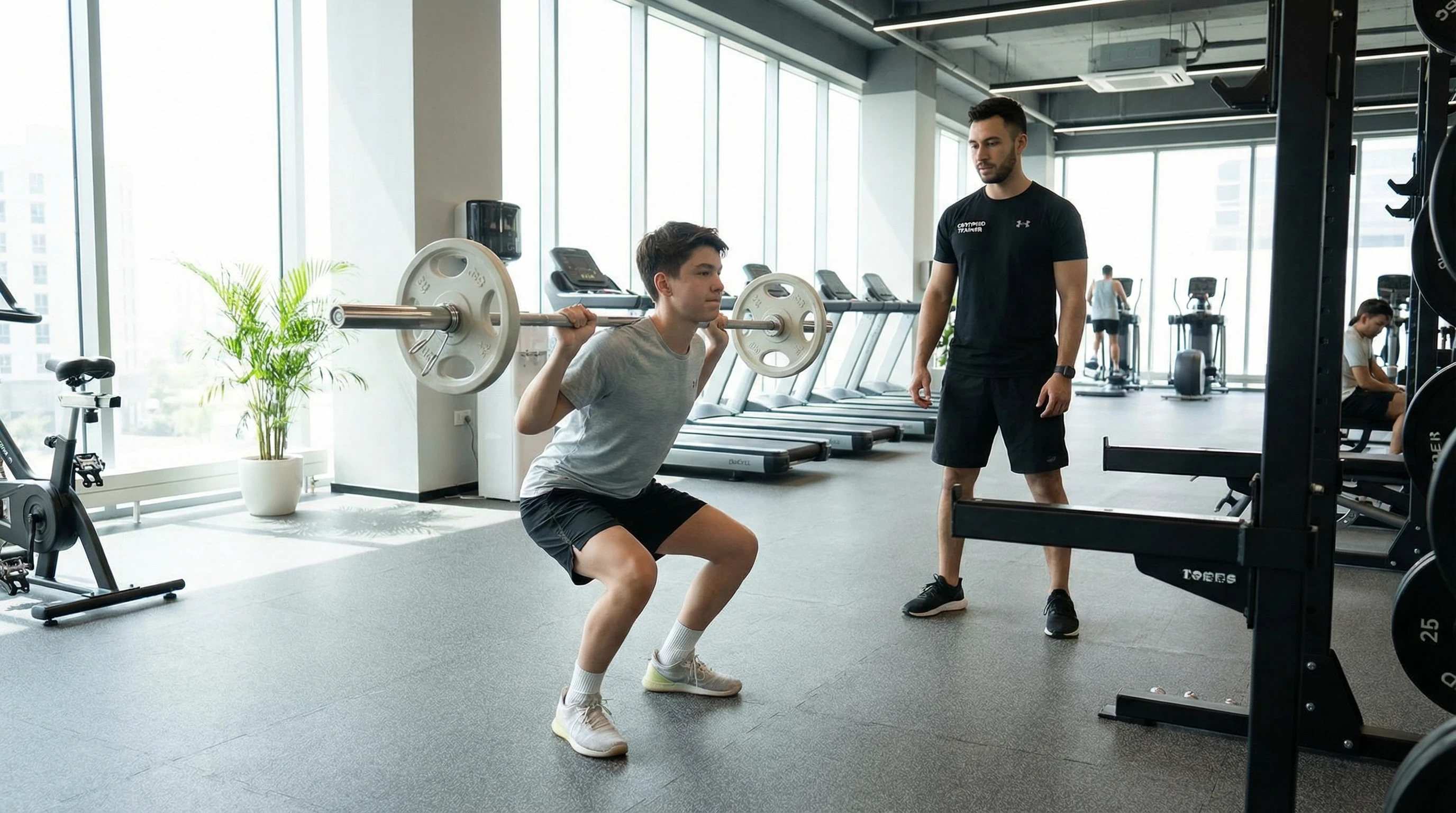
Looking for a structured beginner bodybuilding workout plan that actually builds muscle? This 12-week foundation blueprint breaks down full-body training, progressive overload, recovery, and nutrition — without hype or extreme methods.
If you’re new to bodybuilding, the biggest mistake you can make isn’t choosing the wrong split.
It’s skipping the foundation.
Most beginners don’t fail because workouts don’t work.
They fail because they:
- Jump into advanced routines too early
- Chase intensity without understanding progression
- Ignore recovery
- Change exercises every week
- Focus on motivation instead of structure
This guide is built differently.
This is your 12-week foundation blueprint — designed around structure, clarity, and sustainable muscle growth.
No hype.
No extreme methods.
Just principles that work.
The Foundation-First Training Structure
For beginners, complexity is the enemy.
A 3-day full body split is one of the most effective ways to build muscle early on. If you want a step-by-step weekly schedule with exact exercise examples and progression structure, see my complete 3 day full body workout plan for beginners.
Example weekly layout:
- Monday – Full Body A
- Wednesday – Full Body B
- Friday – Full Body A
(Alternate weekly)
Why full body?
Because it:
- Allows high-quality practice of foundational lifts
- Stimulates each muscle group multiple times per week
- Balances volume and recovery
- Builds skill alongside strength
Before intensity, you need repetition and structure.
Sample 3-Day Beginner Program
Each session should include:
- 1 squat pattern
- 1 hip hinge
- 1 horizontal press
- 1 vertical press
- 1 horizontal pull
- 1 vertical pull
- Optional isolation work
Example Workout
Lower Body
- Squats – 3–4 sets (6–8 reps)
- Romanian Deadlifts – 3 sets (8–10 reps)
Upper Body Push
- Bench Press – 3–4 sets (6–8 reps)
- Dumbbell Shoulder Press – 3 sets (8–12 reps)
Upper Body Pull
- Lat Pulldown or Pull-ups – 3 sets (8–12 reps)
- Seated Row – 3 sets (8–12 reps)
Optional
- Biceps curls – 2–3 sets
- Triceps extensions – 2–3 sets
Rest:
- 2–3 minutes for compound lifts
- 1–2 minutes for isolation work
Workout duration: 60–90 minutes.
For a simplified version of this layout organized into alternating Workout A and Workout B sessions, refer to the full 3 day schedule breakdown here.
Warm-Up Protocol (Don’t Skip This)
A proper warm-up improves performance and reduces injury risk.
General Warm-Up (5–10 minutes)
- Light cardio (bike, treadmill, rower)
- Dynamic leg swings
- Arm circles
- Light mobility work
Exercise-Specific Warm-Up
For heavy compound lifts:
- 1–3 ramp-up sets
- Gradually increase weight
- Stay far from failure
Isolation lifts often only need one light warm-up set.
The goal is preparation — not fatigue.
Progressive Overload: The Core Principle

Muscle grows when tension increases over time.
This tension creates microscopic muscle damage, which your body repairs during recovery. When proper nutrition and sleep are present, the muscle adapts by becoming slightly stronger and larger. That adaptation process is the foundation of hypertrophy.
But overload should be structured — not emotional.
The most reliable beginner method is double progression.
Example rep range: 6–8 reps.
Week 1: 3×6
Week 2: 3×7
Week 3: 3×8
Week 4: Increase weight → return to 3×6
This method:
- Keeps form clean
- Makes progress measurable
- Prevents ego lifting
- Builds confidence
Small improvements compound.
If you want a deeper breakdown of how progressive overload works and how to apply it correctly long-term, I’ll cover that step-by-step in a dedicated guide.
How Hard Should You Train? (RIR Explained)
You don’t need to train to failure every set.
Use Reps in Reserve (RIR):
- Early sets: stop with 2–3 reps left
- Final set: stop with 0–1 reps left
That’s enough intensity for growth without excessive fatigue.
Advanced techniques like drop sets and forced reps are unnecessary for beginners.
Master the basics first.
You’ll see this RIR structure applied directly inside the full 3 day beginner program so you know exactly how hard each set should feel.
When to Rotate Exercises
Every exercise has a lifespan.
For beginners:
Stick with your main lifts for at least 3–6 months.
Rotate only when:
- Progress stalls for multiple weeks
- Pain or discomfort appears
- You’ve exhausted progression methods
Progress builds muscle.
Novelty does not.
Nutrition: Supporting the Stimulus
Training creates the signal.
Nutrition builds the muscle.
Protein
0.8–1.0g per pound of bodyweight.
Calories
- Slight surplus for muscle gain
- Maintenance for slow recomposition
Focus on whole foods first.
Supplements are optional:
- Creatine monohydrate (3–5g daily)
- Protein powder if intake is low
Supplements enhance consistency — they don’t replace fundamentals.
Cardio Without Compromising Growth
Cardio supports heart health and recovery.
Recommended:
- 2–4 light sessions per week (20–30 minutes)
- Avoid excessive HIIT early on
- Separate intense cardio from heavy leg days
If strength declines, adjust cardio volume first.
Recovery: Where Growth Actually Happens
Muscle isn’t built during the workout.
It’s built during recovery.
Sleep
7–9 hours per night.
Hydration
Stay consistent daily.
Deloads
Every 6–8 weeks, reduce volume or intensity for one week.
Fatigue management is part of intelligent programming.
Deloads are more important once you begin training close to failure consistently. Many true beginners won’t need frequent deloads during their first few months.
Stress Management: The Overlooked Growth Variable

High stress impacts:
- Sleep quality
- Hormone balance
- Recovery speed
- Training performance
Muscle growth requires recovery capacity.
Support it by:
- Maintaining a consistent sleep schedule
- Taking daily walks
- Limiting late caffeine
- Managing unnecessary stressors
- Avoiding overtraining
If stress is high, reduce cardio before reducing lifting.
Long-term progress depends on managing stress intelligently.
Common Beginner Mistakes
- Doing too much too soon
- Training to failure constantly
- Switching programs weekly
- Ignoring sleep
- Undereating protein
- Comparing your timeline to others
Muscle development is measured in years — not weeks.
What Results Should You Expect After 12 Weeks?
Twelve weeks is enough time to see meaningful progress — if you train consistently and manage recovery properly.
Here’s what most beginners can realistically expect:
Strength increases within the first 2–4 weeks.
Better exercise technique and control.
Noticeable improvements in muscle fullness and posture.
Slight visible muscle growth, especially in the shoulders, chest, and arms.
Improved confidence in the gym.
However, a full physical transformation does not happen in 12 weeks.
Muscle development is measured in months and years — not weeks.
The real value of your first 12 weeks isn’t dramatic size. It’s building:
– Proper lifting mechanics
– Consistent training habits
– Structured progression
– Nutrition awareness
– Recovery discipline
Those habits compound.
If you follow this blueprint for 12 weeks, you won’t just gain strength — you’ll build the foundation required for long-term muscle growth.
And that foundation determines everything that comes after.
Frequently Asked Questions About Beginner Bodybuilding
How many days per week should a beginner bodybuilder train?
Most beginners grow best training 3 days per week using a full-body split. This allows each muscle group to be stimulated multiple times while still recovering properly between sessions.
Training more is not automatically better. Recovery capacity determines progress.
If you want an exact example of how to structure those 3 days, see the complete 3 day full body workout schedule here.
How long does it take to see results from a beginner bodybuilding workout plan?
Strength increases often happen within 2–4 weeks.
Visible muscle changes typically become noticeable around 8–12 weeks when training, nutrition, and recovery are consistent.
Major physical transformations take months to years — not weeks.
Should beginners bulk?
Extreme bulking is unnecessary.
A small calorie surplus is enough to support muscle growth. Focus on hitting your protein target and maintaining consistent training rather than chasing rapid weight gain.
Sustainability beats aggressive bulking.
Is cardio bad for muscle growth?
Cardio is not bad for muscle growth when managed properly.
Light cardio (2–4 sessions per week) supports heart health and recovery. Excessive high-intensity cardio can interfere with strength progress if overdone.
If strength drops, reduce cardio before reducing lifting volume.
Can beginners build muscle without supplements?
Yes.
Supplements are optional tools, not requirements.
If your training, protein intake, sleep, and recovery are consistent, muscle growth will occur without expensive products.
Creatine and protein powder can help with convenience, but they are not substitutes for fundamentals.
Final Thoughts
Lift & Nurture is built on one belief:
Foundations determine outcomes.
If you train with structure, progress gradually, manage recovery, and stay consistent for 12 weeks, you will build:
- Strength
- Muscle
- Confidence
- Long-term habits
This isn’t about extreme routines.
It’s about intelligent repetition done consistently.
Lift with intention.
Nurture long-term growth.
— Angel