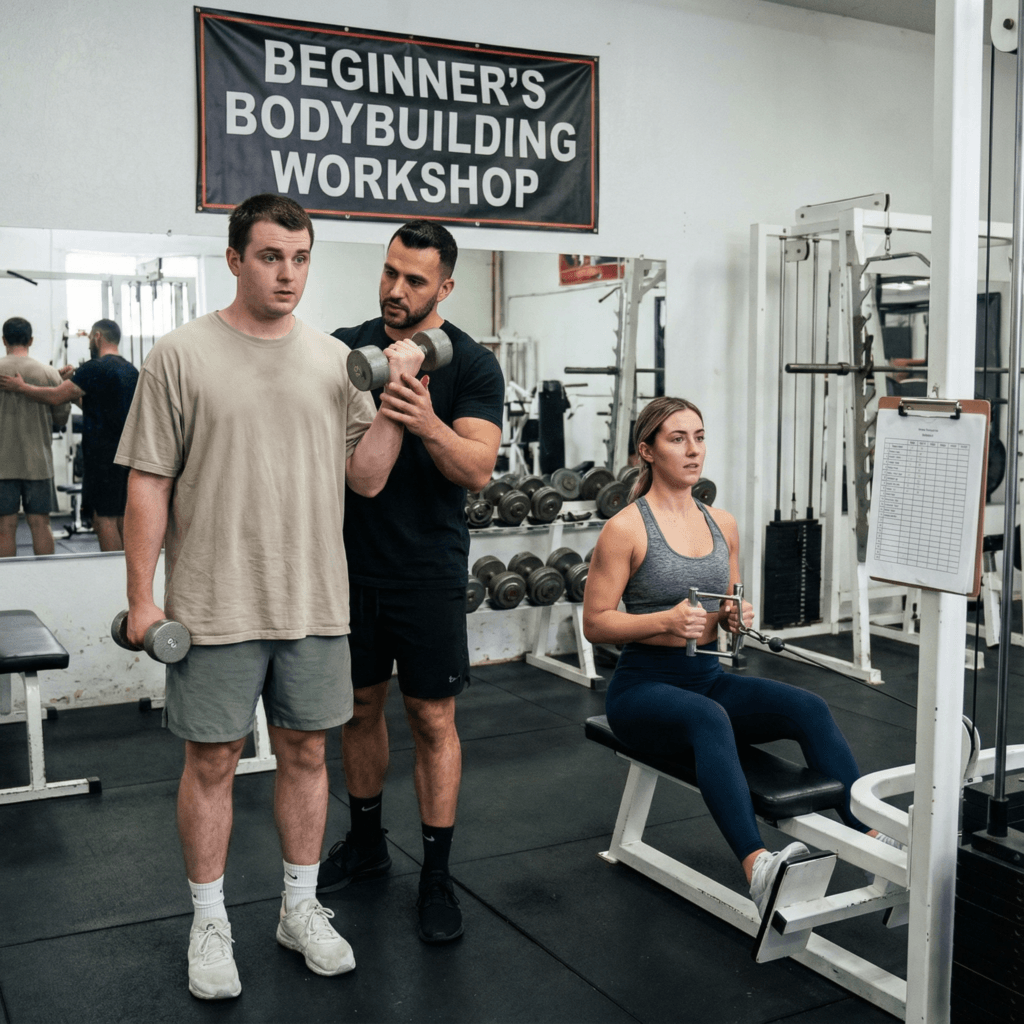
So, you’re ready to hit the weights and build some serious muscle? Great choice! Let’s lay down a solid foundation that sets you up for success. A good beginner bodybuilding routine isn’t about lifting the heaviest weights on the rack on day one. It’s about creating a structured plan that gradually builds strength and confidence.
Goals are like your roadmap in this journey. Setting realistic goals means understanding where you’re starting from and where you hope to go. Increase your weights gradually, improve your form, or even stick to a routine for six months. Consistency trumps all!
Why are full-body workouts often recommended for beginners? Simple, they work! In the initial stages, it’s crucial to engage multiple muscle groups. Think of exercises like squats, deadlifts, and bench presses. These heavy compound exercises are your bread and butter, providing a strong foundation to start with.
Knowing how many days a week to train is part of the puzzle. Generally, 2-4 days a week is excellent for beginners. This gives you enough frequency to stimulate growth without overtaxing your muscles. Feel out what works best for your schedule and lifestyle, remember, we’re aiming for sustainable gains here.
Don’t forget the boring stuff—warm-ups and cooldowns. They might seem tedious, but they prep your muscles for what’s to come and ease them back down, preventing injuries. Skipping these is like leaving the house without shoes, you’ll feel it later.
In those first steps, focus on moving your body correctly and getting the hang of each exercise. It’s not about being perfect from the start, but about making steady progress. You’ve got this!
PS- Grab yourself a FREE, descriptive workout plan at the end of the article that you can follow!
Structuring Effective Workouts: Training Routines for Beginners
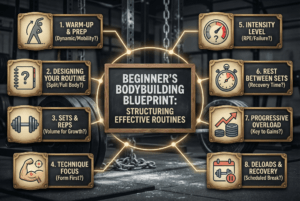
Alright, now that we’ve got the basics covered, let’s talk about structuring workouts that get you closer to those muscle goals. One of the big questions is whether to go for full-body routines or split routines. Here’s the scoop: as a beginner, full-body routines can be your best friend. They allow you to flexibly hit those major muscle groups frequently, generating more gains early on before moving into the splits.
A good warm-up should get you ready to lift—not wear you out. Start with a few minutes of easy movement to get your heart rate up, then loosen up any tight spots with some quick dynamic stretches or light foam rolling for large muscles (about 30–60 seconds per area) and lacrosse balling for smaller muscles (about 30–60 seconds per area) if something feels especially stiff. After that, ease into your workout by doing a few low-rep sets that get a little heavier each time. These sets should feel smooth and help wake up the muscles you’re about to train. Heavy compound lifts usually need 2–4 warm-up sets, while lighter compounds move only needing 1-3 and smaller isolation moves only needing 0-2 light ones.
When designing your workouts, think variety. Mix heavy compound exercises like squats or deadlifts with lighter compounds like lat pulldowns or pull-ups, and isolation moves like curls or lateral raises—muscle-wise, it’s like having your cake and eating it too. Compound lifts hit multiple muscles at once, giving you more bang for your buck early in your bodybuilding journey. Pick a few solid exercises per muscle group and stick with them long enough to improve. Focus on adding reps or weight over time, and only swap movements when progress slows or something starts to feel off.
So, how many sets and reps should you aim for? A solid starting point is 3 sets of 6-10 reps for heavy free weight and machine compound exercises, and 2-3 sets of 8-15 reps for isolation exercises and light compound movements. This range is fantastic for building muscle while keeping it beginner-friendly. It’s enough to give your muscles a good challenge and stimulate growth.

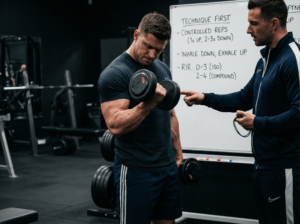
Good technique matters more than lifting heavy. Focus on clean, controlled reps, even if it means using lighter weight at first. Make sure you control the weight on both the lifting and lowering phases, aiming for about one second up and one to three seconds down with a good stretch each rep. And don’t forget your breathing—inhale as you lower the weight and exhale as you contract the muscle.
When you’re new to bodybuilding, it’s important to know how hard to push each set. A simple guideline is to stop when you feel you could do 1–3 more reps with good form—enough to challenge your muscles without burning out. Save true failure (0 more reps with good form) for the last set of safer isolation exercises and lighter compound movements, and keep 1–2 reps in reserve on earlier sets for both. For big lifts like squats or machine bench, leave around 2–4 reps in reserve on all sets since they’re more demanding. Beginners often think they’re closer to failure than they are, so watching how your reps slow down helps. In the long run, smart, consistent training beats going all-out every time.
Rest is just as important as the exercises. Take 3–5 minutes for heavy compound lifts, 2–3 minutes for heavy machine or lighter compound moves, and 1–2 minutes for isolation work. Don’t rush, but don’t drag out the workout either—rest just long enough to hit each set with proper intensity.
Progressive overload is an essential concept to grasp. It’s all about gradually increasing the weight, reps, or intensity. This principle ensures you’re always pushing your muscle fibers to adapt and grow. Be patient, and listen to your body as it adapts, ensuring growth without burnout.
Deloading is easy to overlook, but it’s crucial for long-term progress. After several hard weeks, fatigue builds up, so a lighter week helps your body recover without stopping completely. Just reduce your weights, volume, or both. Most people need a deload every 4–12 weeks to prevent burnout and keep strength and muscle gains moving forward.
Fueling Your Body: Nutrition and Supplements for Muscle Gain

Building muscles isn’t just about what you do in the gym—it’s also about how you fuel your body outside of it. Good nutrition is your secret weapon to complement those intense workouts. Think of food as fuel that powers your muscle-building machine.
First, understand your macros. Protein is essential—aim for 0.7–1 g per pound of body weight when bulking or recomping, and about 0.8–1.2 g per pound when cutting, with leaner individuals sticking to the higher end to protect muscle. Carbs fuel your workouts, so don’t cut them too low, and fats support hormone health, so keep them in a balanced range.
Calculating your daily caloric intake helps to ensure you’re eating enough to support muscle growth. You don’t need to go overboard, but you should be in a slight caloric surplus to support growth. Bulking or gaining usually means adding around 250-500 extra calories a day to your maintenance calories.
Hydration is often overlooked but super crucial. Staying well-hydrated helps with recovery, keeps your energy levels balanced, and prevents muscle cramps during workouts. Make water your best friend.
Supplements, you ask? They’re like the cherry on top. Protein powders can be helpful if you struggle to meet your protein goals through food alone. Creatine is another common supplement used for boosting energy in your muscles.
Meal frequency doesn’t have to be complicated, but think regular and balanced. Eating every 3-4 hours can provide your muscles with a steady supply of nutrients. Don’t stress over meal timing too much—getting the right balance throughout the day is what matters most.
Rest, Recovery, and Avoiding Common Pitfalls

You’ve been hitting the gym and refueling properly, but there’s another piece of the puzzle you can’t ignore — rest and recovery. These are your body’s time to repair and grow stronger. Getting enough rest is just as vital as pumping iron.
Aim for about 7-9 hours of quality sleep each night. Sleep is where a lot of your recovery magic happens. Underestimating the power of a good night’s rest can hinder your muscle growth and overall performance.
Overtraining is real and can be a serious setback. Feeling constantly fatigued, headaches, and mood changes may be signs. Listen to your body, it knows when it needs a break. Rest days are a necessary part of any training regimen, allowing your muscles to heal and grow.
To prevent hitting a plateau or burning out, consider implementing deload weeks, again. These are periods where you reduce your workout intensity, like lifting lighter or focusing on form. This helps your body recover from constant stress and set you up for future gains.
Stress has a major impact on muscle growth, even if most beginners don’t realize it. Your body treats workout stress and everyday stress the same, so lack of sleep, work pressure, and poor recovery can slow progress just as much as bad training. Pushing harder in the gym won’t help if your stress is already high. Managing stress, sleep, recovery, and training volume allows your body to grow, stay motivated, and avoid burnout over time.
The mind-muscle connection isn’t just gym jargon. Focusing on the muscle you’re working can improve the quality of your lifts. It helps in recruiting the right muscles and getting more out of every rep.
Tracking your progress is key too. Whether it’s keeping a workout journal or using an app, it gives you a clear view of where you started and how far you’ve come. Seeing tangible progress keeps you motivated and helps tweak your routine when needed.
Staying Motivated: Strategies for Beginner Bodybuilders
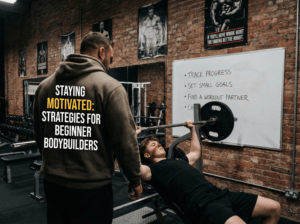
Staying motivated on this journey can be as challenging as the workouts themselves. Building a sustainable routine that you actually enjoy is key here. Imagine looking forward to the gym because the process is just as rewarding as the results.
Variability can kick those motivation slumps to the curb. Integrate different exercises, find a supportive training partner or a supportive bodybuilding community (physically or digitally), or switch up your workout playlist. Keeping things fresh prevents boredom and keeps you excited about what’s coming next.
Tracking progress doesn’t have to be a chore. Use apps, journals, or even simple photos to chart your improvements. Seeing real evidence of your growth can be the best motivator, especially on those days when you don’t feel the gains.
Setting both short and long-term goals gives you targets to aim for. Short-term goals should be achievable, like fixing your form or increasing your reps. Long-term goals need to challenge you more, like hitting a new personal best in a major lift.
Motivation isn’t purely physical—it also requires a mental clarity which can be aided by strategies such as visualization and positive affirmations. Picture yourself achieving your goals. Trust that self-talk can be incredibly powerful.
Working with a personal trainer or engaging with online resources helps as well. Guidance from experts can refine your technique and boost your confidence. Plus, sometimes the extra push from someone else is exactly what you need to lace up those sneakers again.
Incorporating Cardio and Overall Lifestyle Adjustments
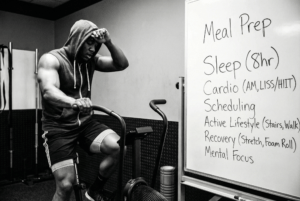
Many beginners overlook cardio, but it improves overall fitness, supports lifting, and aids recovery. Start with 30–60 minutes of easy LISS 2–5 times per week, or 1–2 low-impact HIIT sessions under 30 minutes, either after lifting or in a separate session. Cardio done after lifting can also serve as a cooldown when followed by static stretching for major muscle groups; otherwise, 5 minutes of light cardio plus static stretching works well. Longer sessions provide additional cardiovascular benefits, but some cardio is always better than none. Cardio is especially helpful if you’re inactive during the day, while physically demanding jobs may require less. If strength or energy drops, reduce volume and recover. Cardio also helps lower stress, improve mood, and enhance focus.
Scheduling workouts can seem daunting with our busy lives, but finding the right time to train is essential. Early birds might get their dose of endorphins in the morning, whereas night owls could thrive with a late workout. It’s all about figuring out what feels right to you and fits your lifestyle.
Muscles aren’t solely built in the gym. Lifestyle habits play a major role. Big adjustments like proper nutrition, reducing stress, sleeping enough, and staying more active either inside or outside the gym contribute to a healthier and happier lifestyle, supporting your muscle-growing efforts.
Preventing soreness and injuries is crucial as you progress. Incorporating proper warm-ups, staying hydrated, and using stretching or foam rolling helps keep those muscles in tip-top shape. No one wants to be sidelined by a preventable injury.
Sustainable changes bring about lasting results. Focus on making health-conscious decisions both in and out of the gym to support your overall well-being. Your journey isn’t a sprint; it’s a marathon, so pacing yourself ensures you’re here for the long haul.
Lastly, cardio helps with more than just physical fitness. The mental benefits—stress relief, mood boosts, and enhanced focus—will make your bodybuilding journey smoother and more enjoyable. Embrace it as part of a balanced lifestyle.
FREE Workout Plans
2 days/week Beginner Full-Body Workout Plan:
3 days/week Beginner Full-Body Workout Plan:
4 days/week Beginner Full-Body Workout Plan:
4 days/week Beginner Upper-Lower Split Workout Plan: